TLDR
ActiveCampaign is an email first automation platform with contact management included. SMS, WhatsApp, and deal pipelines run through separate plans or add ons. Starts at $15/mo. Delivers the deepest workflow automation at a price midsize teams can budget for.
HubSpot is a marketing automation platform with the strongest CRM in this category, plus sales and service tools on the same database. The free CRM covers basic use. Full marketing automation starts at $800/mo on annual billing.
ActiveCampaign wins for ecommerce, email first businesses, and teams that need complex workflows on a modest budget.
HubSpot wins for B2B companies that run on sales motion, teams that span multiple departments, and businesses where the CRM sits at the center of everything.
The platform matters less than most businesses expect. Setup, workflow design, and team training decide the real outcome.
If you are reading another activecampaign vs hubspot comparison, you have probably already seen 5 of them. They all look the same, with a feature table, some star ratings, and a vague conclusion that says “it depends on your needs.”
We are going to do something different here.
At Clixlogix, we set up both ActiveCampaign and HubSpot for midsize businesses across ecommerce, SaaS, healthcare, real estate, and professional services. We have watched companies pick the wrong platform, spend 3 months configuring it, and then start over. We have also seen companies pick the right one and get their first automated lead nurture sequence running in under 2 weeks.
Those 2 outcomes split on 2 decisions, how you choose the platform and how you implement it.
This guide is the comparison we wish someone had given our clients before they signed up for either platform. We walk you through each tool honestly, compare them head to head, tell you which one fits which type of business, and then cover the part nobody else talks about, why your marketing automation strategy matters more than which logo sits on your dashboard.
What Is ActiveCampaign?
ActiveCampaign Overview
ActiveCampaign has been around since 2003, and it has built a reputation as the marketing automation platform you graduate to when basic email tools stop cutting it. As of 2026, it serves over 180,000 businesses worldwide.
The core pitch is straightforward. Full featured marketing automation at a price midsize businesses can afford. Email marketing and contact management are included in every paid plan; SMS, WhatsApp, and deal pipelines come through separate plans or add ons. The automation builder is the standout capability, and it is what shows up in nearly every user comparison.
In May 2025, ActiveCampaign launched Active Intelligence, a conversational AI workspace available on Pro and Enterprise plans. It generates email drafts and multi step automations from a stated goal, builds audience segments from plain language descriptions, answers natural language questions about campaign performance, and investigates dips such as a falling open rate with recommended fixes. Predictive sending remains a separate pre existing feature.
ActiveCampaign Features That Matter
ActiveCampaign has many features. The ones that move the needle for most businesses are these:
Visual automation builder - Drag and drop. Set triggers based on contact behavior, website visits, purchases, or form submissions. Unlimited automation actions on Plus plans and above. The Starter plan caps you at 5 actions per automation, which is enough for a simple welcome series.
Conditional content in emails - Show different content blocks to different contacts within the same email. ActiveCampaign offers this starting on Pro at $79/mo. HubSpot’s comparable smart content feature is on Marketing Hub Professional at $890/mo.
AI Actions Library - AI tasks that run inside automation steps. The library covers summarize, analyze, translate, classify intent, determine sentiment, and build your own prompt. Every plan includes 500 AI credits per month, and each AI Action typically consumes 0.04 credits per contact run. Additional credit packs start at $10/mo for 100 credits.
Predictive sending (Pro plan and above) - The system calculates when each individual contact is most likely to open your email and sends at that time. Each contact receives the email at their own peak engagement window, so the delivery works per contact across your list.
Split testing inside workflows - Test different paths inside an automation, including subject lines and whole workflow branches. Available on Pro tier.
Contact and lead scoring - Score contacts based on engagement, page visits, email opens, and custom criteria. Contact scoring is included on Plus and above with no add on required. Deal scoring requires the Enhanced CRM add on.
1,000+ integrations - Shopify, WooCommerce, Salesforce, Zapier, and most major platforms connect natively.
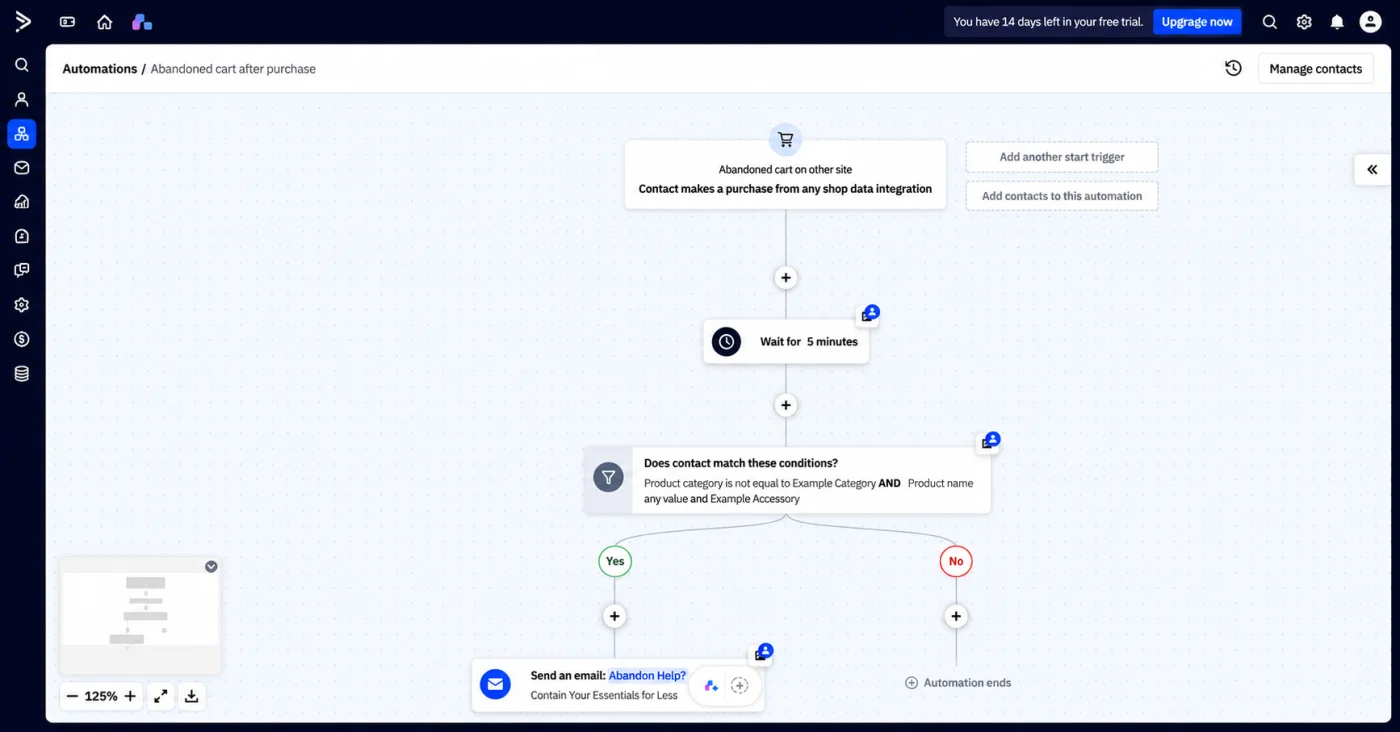
Fig 1 - ActiveCampaign’s drag and drop automation builder supports unlimited workflow actions on Plus plans and above.
ActiveCampaign Pricing in 2026
ActiveCampaign prices across 3 product lines, Email, WhatsApp, and Email + WhatsApp bundles. All plans price by contact count, so your cost scales with your list size. For accounts created on or after November 3, 2025, all contacts count toward the billing limit, including unsubscribed, unconfirmed, and bounced contacts.
Email Plans (annual billing, 1,000 contacts)
Table 1 - ActiveCampaign plan pricing at 1,000, 5,000 and 10,000 contacts
Monthly billing adds roughly 25% (Starter goes from $15 to $19, Plus from $49 to $59, and so on).
WhatsApp Plans (annual billing)
ActiveCampaign offers standalone WhatsApp messaging through Core, Advanced, and Premium tiers. Core includes 3 users and 2 WhatsApp lines. Outbound templated messages draw from prepaid credits that reset monthly and expire if unused. Credit cost per message varies by recipient country and message category (marketing, utility, authentication, service), with marketing messages costing most. Overage credits bill at the same per credit rate and cap at 4x your plan’s monthly volume.
Email + WhatsApp Bundles (annual billing, 1K email + 5K WhatsApp contacts)
Table 2 - What each ActiveCampaign bundle adds beyond email alone
Bundle plans include 1, 3, or 5 users matching the email tier, plus up to 5 WhatsApp lines. Standalone WhatsApp plans ship with their own allowances (Core includes 3 users and 2 lines).
One more thing to note. Enhanced CRM (pipelines and sales engagement tools) is a paid add on available on Plus, Pro, and Enterprise. Starter cannot purchase it.
There is no free plan. ActiveCampaign offers a 14 day trial with Professional plan features. The trial allows as many contacts as needed, with a cap of 1 user and 100 email sends. No mandatory onboarding fees on any plan.
The pricing can climb fast as your list grows. A Plus plan that looks like $49/mo at 1,000 contacts runs $189/mo at 10,000 contacts.
Source: ActiveCampaign’s official pricing page (verified October 2026).
ActiveCampaign, What We Like and What We Do Not
What works well
Best automation builder at this price point. We have built automations with 30+ steps, multiple branches, and goal driven exits, and the builder handles the work without slowing down.
Basic contact management is included on every paid tier. Contact scoring starts on Plus. For deal pipelines, deal scoring, and sales engagement, ActiveCampaign offers the Enhanced CRM add on, available on Plus, Pro, and Enterprise. The combined cost stays well below HubSpot Professional.
Predictive sending and conditional content come in at the Pro tier ($79/mo at 1K contacts), which is a fraction of what HubSpot charges for similar capability.
No onboarding fees. You sign up and start building.
Where it falls short
The Enhanced CRM add on covers basic pipeline management for small sales teams, and it falls short of HubSpot on complex deal stages, quote generation, and reporting that spans departments.
Reporting covers email performance and automation results well. The core Conversion Attribution report assigns conversion credit using the last touch model while preserving the preceding touchpoint path. HubSpot’s configurable multi touch revenue attribution reports require Marketing Hub Enterprise.
Learning curve on advanced automation. The builder is capable, and building a 20 step workflow with nested conditions takes real skill and planning.
No free plan. If you are testing the waters, the 14 day trial is all you get, limited to 1 user and 100 email sends.
What Is HubSpot?
HubSpot Overview
HubSpot started in 2006 with the inbound marketing playbook and has grown into one of the largest marketing automation and CRM platforms in the world. ActiveCampaign leads with its automation builder. HubSpot leads with its shared database. Marketing Hub, Sales Hub, Service Hub, Content Hub, and Operations Hub all sit on top of one customer record.
That shared database is where HubSpot pulls ahead on certain use cases. When your marketing team sends an email, your sales team sees the engagement. If a support ticket gets opened, the marketing team knows to hold the promotional email that same day. Everything connects because everything lives in one place.
HubSpot’s AI capability, Breeze AI, launched in 2024 and has expanded through 2026 across content, sales, and service. It includes a copilot for content creation, a prospecting agent for sales teams, and a customer agent chatbot for service. Even the free plan gets limited Breeze AI access.
HubSpot sits among the leading enterprise marketing automation platforms recognized across the category.
HubSpot Features That Matter
HubSpot’s feature list is long. Here is what makes a difference when you are choosing between it and ActiveCampaign:
Full CRM with custom objects (Enterprise) - On the Professional tier, you get standard CRM objects and custom properties. On Enterprise, you can create entirely custom object types such as projects, vehicles, or properties, and build workflows around them.
Workflow automation (Professional tier and above) - Professional includes up to 300 workflows and Enterprise up to 1,000, with no stated cap on actions per workflow. Workflows can span marketing, sales, and service, such as creating a deal when a marketing lead hits a score threshold or assigning a sales rep. HubSpot notes that workflows exceeding 500 actions can run into cloning issues. Enrolling a contact in a sales sequence from a workflow requires Sales Hub or Service Hub Enterprise.
Multi touch revenue attribution (Enterprise) - HubSpot Enterprise traces closed revenue back through every marketing touchpoint. Marketing Hub Professional includes basic contact level attribution tracking only; revenue, deal create, and multi touch attribution reports sit on Enterprise.
Social media and SEO tools - Marketing Hub Professional includes social media scheduling (up to 50 connected accounts, 10,000 posts per month) and SEO recommendations and audits, with no add on fees.
ABM tools (Professional and Enterprise) - Account based marketing with target account dashboards, company scoring, and automation keyed to the account level. Available on Marketing Hub Professional and Enterprise, and on Sales Hub Professional and Enterprise.
Breeze AI - Content generation, email subject line suggestions, prospecting suggestions, and a customer agent chatbot. Available across tiers with varying depth.
2,000+ integrations - The HubSpot App Marketplace connects to Salesforce, Slack, Zoom, Shopify, and hundreds of other tools natively.
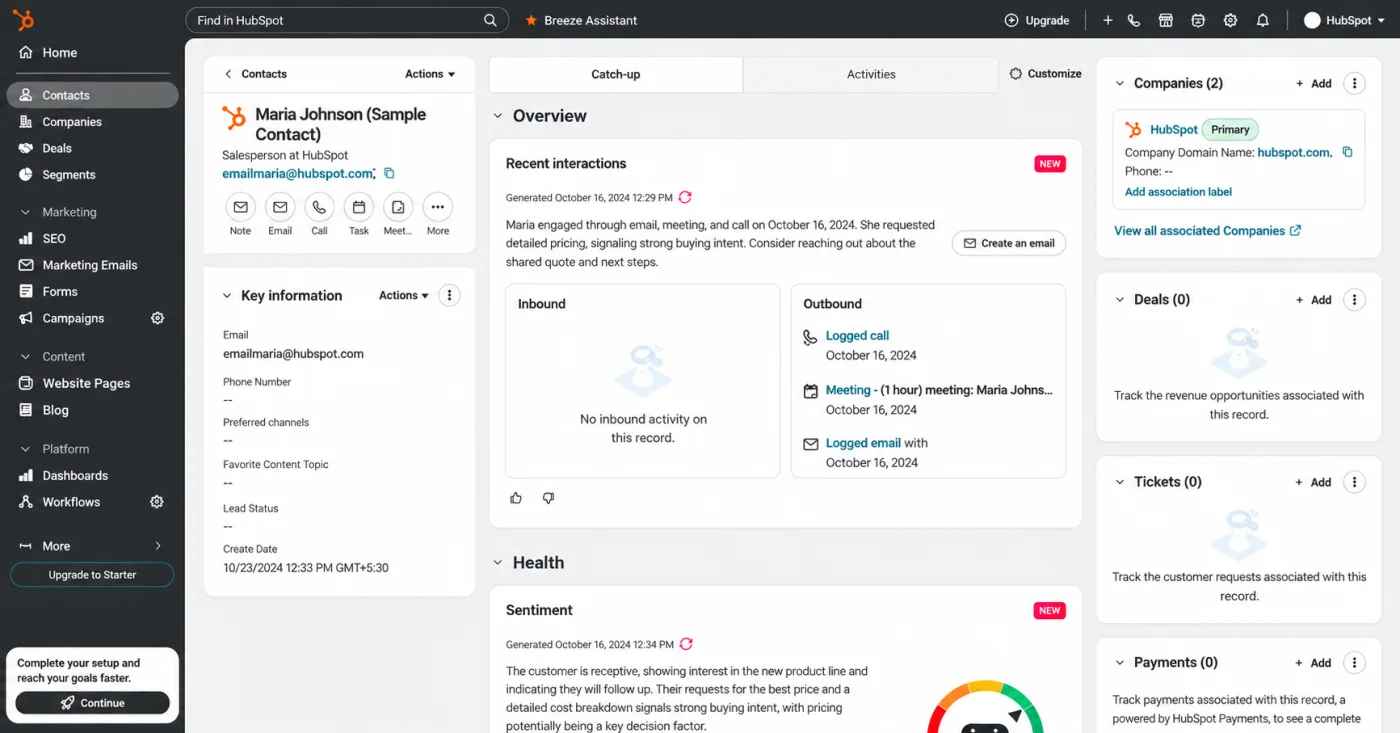
Fig 2 - HubSpot’s CRM contact overview brings recent activity and associated customer records into one workspace.
HubSpot Marketing Hub Pricing in 2026
HubSpot’s pricing model differs in shape from ActiveCampaign. The free CRM is free in actual use. The jump from free to paid, and from Starter to Professional, is steep.
Table 3 - HubSpot Marketing Hub pricing on monthly and annual billing, with onboarding fees
*Marketing Hub Starter currently starts at $7/seat/mo on annual billing, roughly 65% off the $20 list price. The promo is time limited and applies to new customers only.
**Free supports contact storage in the general CRM but does not use the paid Marketing Hub marketing contacts tier. Free email marketing is capped at 2,000 sends per month with HubSpot branding.
The gap between Starter and Professional is where most businesses get stuck. Starter gives you email, forms, and limited simple automation (up to 10 actions per email workflow). It stops short of an advanced workflow builder, A/B testing, and custom reporting. The features most people want sit behind the Professional tier.
Additional costs to keep in mind:
Extra marketing contacts on Professional - $250/mo per 5,000 contacts
Extra seats - $50/mo on Professional ($45/mo on annual billing), $75/mo on Enterprise
Onboarding fees - Mandatory one time fee. $3,000 for Professional, $7,000 for Enterprise
HubSpot Credits for AI features - 3,000 included on Professional, 5,000 on Enterprise
Source: HubSpot’s official pricing page (verified October 2026, screenshots captured from live page).
HubSpot, What We Like and What We Do Not
What works well
The free CRM is useful in practice. Contact management, basic email, forms, and live chat at no cost. For a startup that needs a CRM before it needs marketing automation, this is a strong starting point.
Every department works from one database. Marketing can see what sales is doing. Sales can see what support is handling. That visibility is hard to get anywhere else without expensive custom integrations.
Reporting is the best we have seen at this tier. Marketing Hub Enterprise provides multi touch revenue attribution and full funnel revenue reporting. Custom dashboards and the drag and drop report builder are available on Professional.
The partner network is mature. If you outgrow your internal team’s ability to manage HubSpot, thousands of certified partners can step in.
Where it falls short
The price jump from Starter to Professional is steep. Starter list price $20/mo per seat (currently starts at $7/mo per seat on annual billing for new customers) to Professional at $890/mo, plus a $3,000 onboarding fee. Many midsize businesses cannot justify that jump.
Full workflow automation sits behind Professional. HubSpot Starter supports simple email automation with up to 10 actions. Advanced workflows, conditional branching, and automation that spans hubs all require the Professional tier. If serious automation is the reason you are shopping, Starter will leave you wanting.
Contact costs add up fast. 10,000 marketing contacts on Professional runs $800/mo base annual plus $500/mo for the 2 additional 5,000 contact increments (at $250/mo each). The total reaches roughly $1,300/mo on annual billing.
Can be overkill. If your team only needs email automation and a simple CRM, you are paying for social scheduling, blog tools, SEO features, and ABM capabilities you will likely never open.
ActiveCampaign vs HubSpot, Head to Head Comparison
Automation
ActiveCampaign wins this round. The automation builder gives you unlimited actions starting at the Plus tier ($49/mo). Conditional branching, split testing inside workflows, predictive sending, and goal driven exits all arrive at a fraction of what HubSpot charges.
HubSpot’s automation is capable. Full workflows require Professional ($890/mo). Starter gives you basic actions and no real workflow builder. If you are buying a platform because you need B2B marketing automation workflows, ActiveCampaign gives you more at every price point.
CRM and Sales Pipeline
HubSpot has the stronger CRM in this comparison. Marketing Hub Professional includes Smart CRM with basic deal tracking, custom properties, and shared records between marketing and sales. Sales sequences, quote generation, and multi touch revenue attribution sit in separate products or on the Enterprise tier. Custom objects (Enterprise) take the CRM further. The shared record means your automation workflows can trigger actions across departments.
ActiveCampaign’s Enhanced CRM add on handles deal tracking, pipeline management, and lead scoring. It works well for a sales team of 3 to 5 people running a straightforward pipeline. For businesses where the CRM needs to connect marketing, sales, and service data, HubSpot offers more depth.
Reporting and Analytics
HubSpot wins again. The custom report builder uses drag and drop and performs well. Multi touch revenue attribution on Enterprise connects marketing spend to closed revenue. You can build up to 100 dashboards on Enterprise and 75 on Professional.
ActiveCampaign gives you campaign reports, automation reports, and deal reports. The core Conversion Attribution report credits using last touch, with visibility into the preceding touchpoint path. ActiveCampaign’s marketing page describes first, last, and multi touch models, and the shipped reporting credits last touch for ecommerce revenue. HubSpot Enterprise provides configurable multi touch revenue attribution models that ActiveCampaign does not match in its reports.
Email Marketing
This one is closer. ActiveCampaign offers 250+ email templates, conditional content blocks, and predictive send time optimization. The email builder gives you more creative control.
HubSpot’s email builder is cleaner and more polished, with 50+ templates and smart content tied to CRM data. HubSpot’s AI content suggestions cover subject lines and preview text.
For businesses that live and die by email performance, ActiveCampaign edges ahead. For businesses where email is one channel among many, HubSpot’s CRM integration makes every email smarter.
AI Features
HubSpot has broader AI coverage. Breeze AI runs across marketing, sales, and service. Content copilot, prospecting agent, and customer service chatbot sit inside the platform. Even the free plan gets limited access.
ActiveCampaign’s Active Intelligence is more targeted. Predictive sending, AI content generation, and the AI Actions Library in automations cover the core use cases. If you are interested in how AI is changing digital marketing workflows, both platforms are making real progress here.
HubSpot wins on breadth. ActiveCampaign wins on AI depth tied to automation.
Integrations
HubSpot has 2,000+ in the App Marketplace. ActiveCampaign has 1,000+. Both connect to the major players such as Shopify, Salesforce, Slack, and Zapier. HubSpot’s partner network is bigger, and its certified partner program gives you more options for support and custom builds.
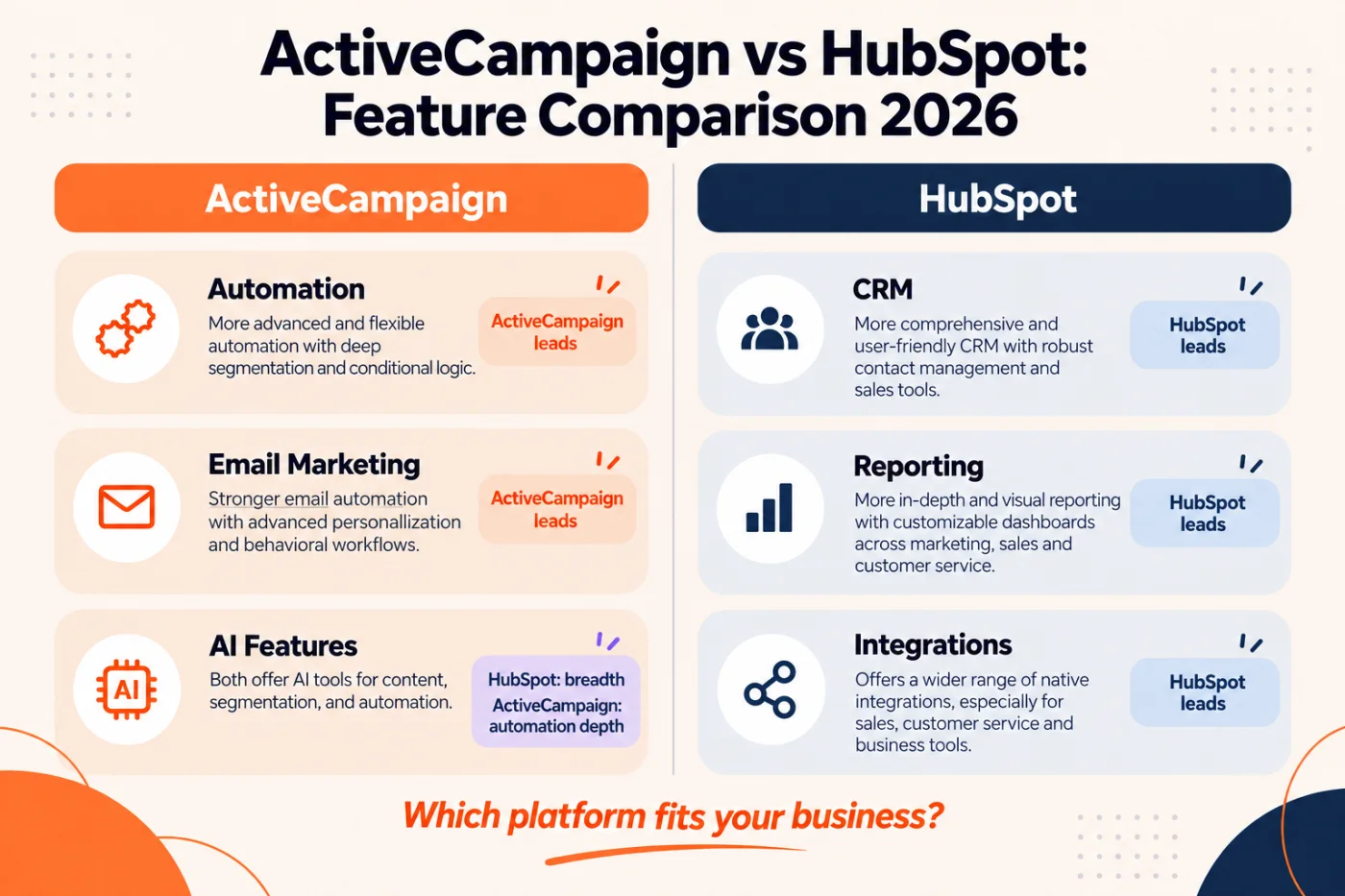
Fig 3 - ActiveCampaign leads on automation and email. HubSpot leads on CRM, reporting, and integrations.
Pricing Comparison, What You Will Actually Pay
Here is the comparison most articles skip. Not the starting prices. The real prices at real contact volumes, with the hidden costs included.
Table 4 - Monthly cost at 4 contact tiers, ActiveCampaign against HubSpot on annual billing
*Marketing Hub Starter promotional annual rate (list $20/seat). Prices shown on annual billing.
Here is what this table is saying. HubSpot Starter supports simple email automation with up to 10 actions. Comparing it to ActiveCampaign Plus misleads the picture. The real comparison is ActiveCampaign Plus ($189/mo at 10K contacts) versus HubSpot Professional at 10K contacts. With the base price of $800/mo plus 2 additional contact increments at $250/mo each (to cover the 8,000 contacts above the included 2,000), HubSpot Professional at 10K contacts runs roughly $1,300/mo, plus a $3,000 onboarding fee in year one.
At that level, ActiveCampaign runs roughly 7x cheaper for comparable automation capability. In exchange, HubSpot Professional gives you stronger custom reporting, contact create attribution, and cross hub workflow capabilities that ActiveCampaign does not offer. Configurable multi touch revenue attribution requires Enterprise.
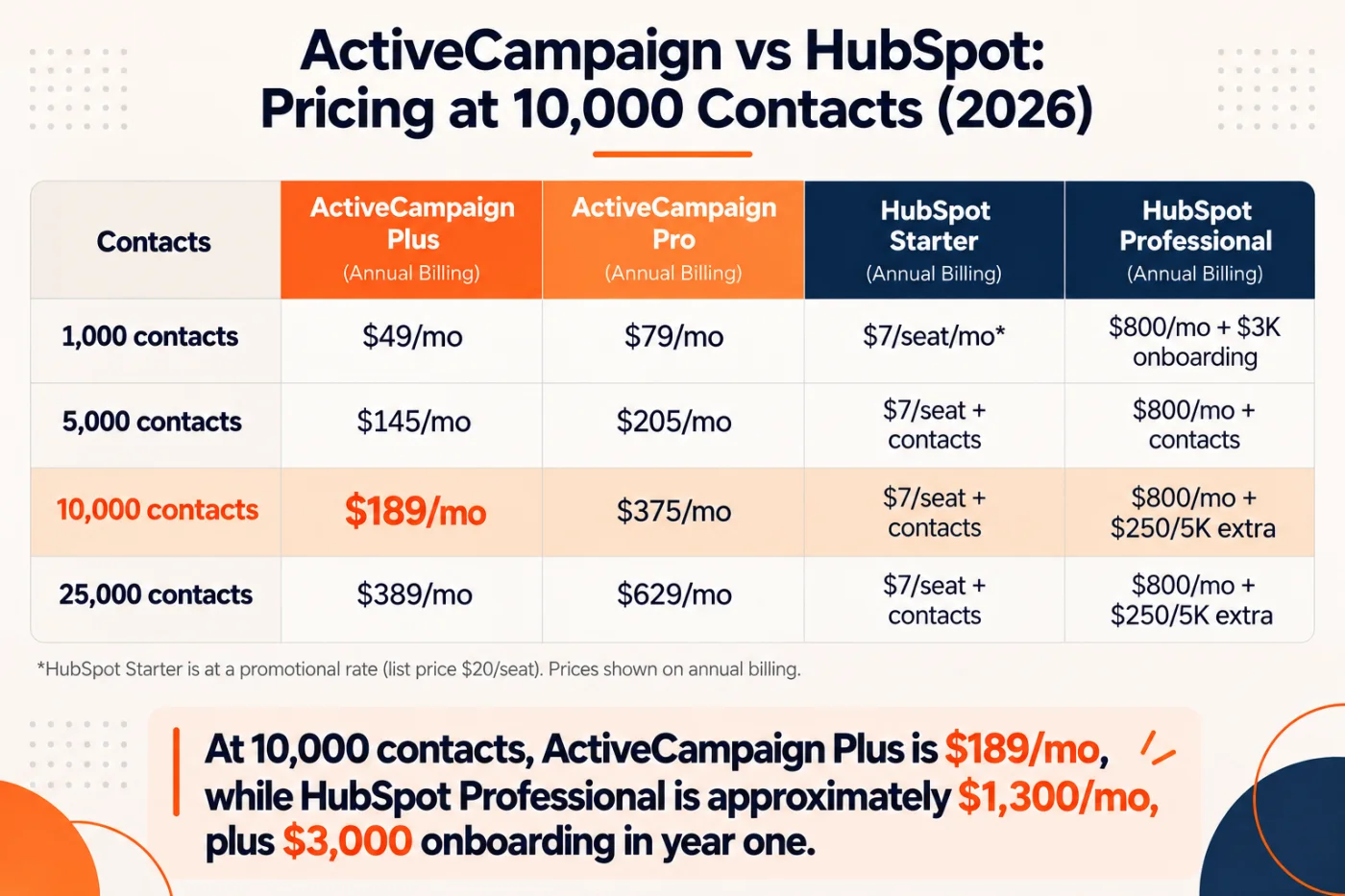
Fig 4 - At 10,000 contacts on annual billing, ActiveCampaign Plus costs $189/mo against roughly $1,300/mo for HubSpot Professional.
This is the section that most comparison articles skip. Features and pricing matter, and the honest answer to “ActiveCampaign or HubSpot?” depends on what your business actually does.
Ecommerce (DTC and Online Retail)
Winner - ActiveCampaign
Ecommerce businesses run on email flows. Cart abandonment, browse abandonment, post purchase upsells, win back campaigns, and loyalty tiers all drive revenue. You need a platform that can build 15 to 20 automation workflows without hitting a price ceiling.
ActiveCampaign’s pricing by contact count fits ecommerce because subscriber lists tend to run large (10K to 100K contacts) and the automation builder handles complex conditional flows well. The Shopify and WooCommerce integrations are mature. For ecommerce marketing automation, ActiveCampaign is the stronger pick.
B2B SaaS
Winner - HubSpot
SaaS companies with sales teams need a CRM that sits at the center of gravity. The handoff from marketing to sales is the most critical moment in the SaaS funnel. With Marketing Hub Professional and Sales Hub seats configured, HubSpot can create the deal and assign a sales rep automatically. Enrolling the contact in a sales sequence from a workflow requires Sales Hub or Service Hub Enterprise. All of that needs to run across departments, inside one system.
HubSpot does this natively. ActiveCampaign covers parts of it. The ActiveCampaign CRM runs short for SaaS sales cycles that span multiple stages, multiple stakeholders, quote approvals, and contract workflows.
Professional Services (Law, Accounting, Consulting)
Winner - HubSpot
Professional services firms care more about relationship management than email volume. They need to track client interactions, manage referral pipelines, and nurture long sales cycles. HubSpot’s CRM is built for exactly this. Deal tracking, meeting scheduling, proposal workflows, and client reporting all live in one place.
Healthcare and Wellness
Winner - ActiveCampaign
Healthcare practices and wellness businesses need patient or client communication workflows that include appointment reminders, follow up sequences, and reactivation campaigns. The contact volume runs smaller (2K to 15K), and the workflows need precise timing.
ActiveCampaign’s pricing works better for teams that are not storing protected health information, where the automation builder handles appointment driven workflows cleanly on Plus and Pro tiers. For PHI, both platforms require Enterprise tier. ActiveCampaign Enterprise is where HIPAA support lives. HubSpot requires an Enterprise subscription, a signed Business Associate Agreement in account configuration, and use only of supported features and services. HubSpot’s HIPAA offering is also not available in every region, so verify eligibility in your region before committing. We have done this exact setup for a healthcare marketing automation project where the workflow design and compliance configuration mattered more than the platform choice.
Real Estate
Winner - HubSpot
Real estate is a relationship business with long sales cycles. Agents need to track leads across months (sometimes years), manage property pipelines, and nurture contacts with content tied to specific locations. HubSpot’s CRM handles this well, and the real estate CRM workflows we have built show how much pipeline management matters in this industry.
Agencies and Freelancers
Winner - Depends on your budget
Small agencies and freelancers spending under $200/mo on tools should look at ActiveCampaign. You get real automation, basic contact management (with the Enhanced CRM add on for pipeline needs), and enough capability to run client campaigns and your own lead generation.
Agencies that want to rebrand or resell the platform itself should look at ActiveCampaign Agency Partner, which supports logo replacement, hidden ActiveCampaign branding, custom nav, email header and footer control, and a white labeled landing pages domain. Growing agencies managing multiple client pipelines or needing client facing reports should lean toward HubSpot, where custom reporting, management across multiple pipelines, and a mature certified partner network give you a system that scales.
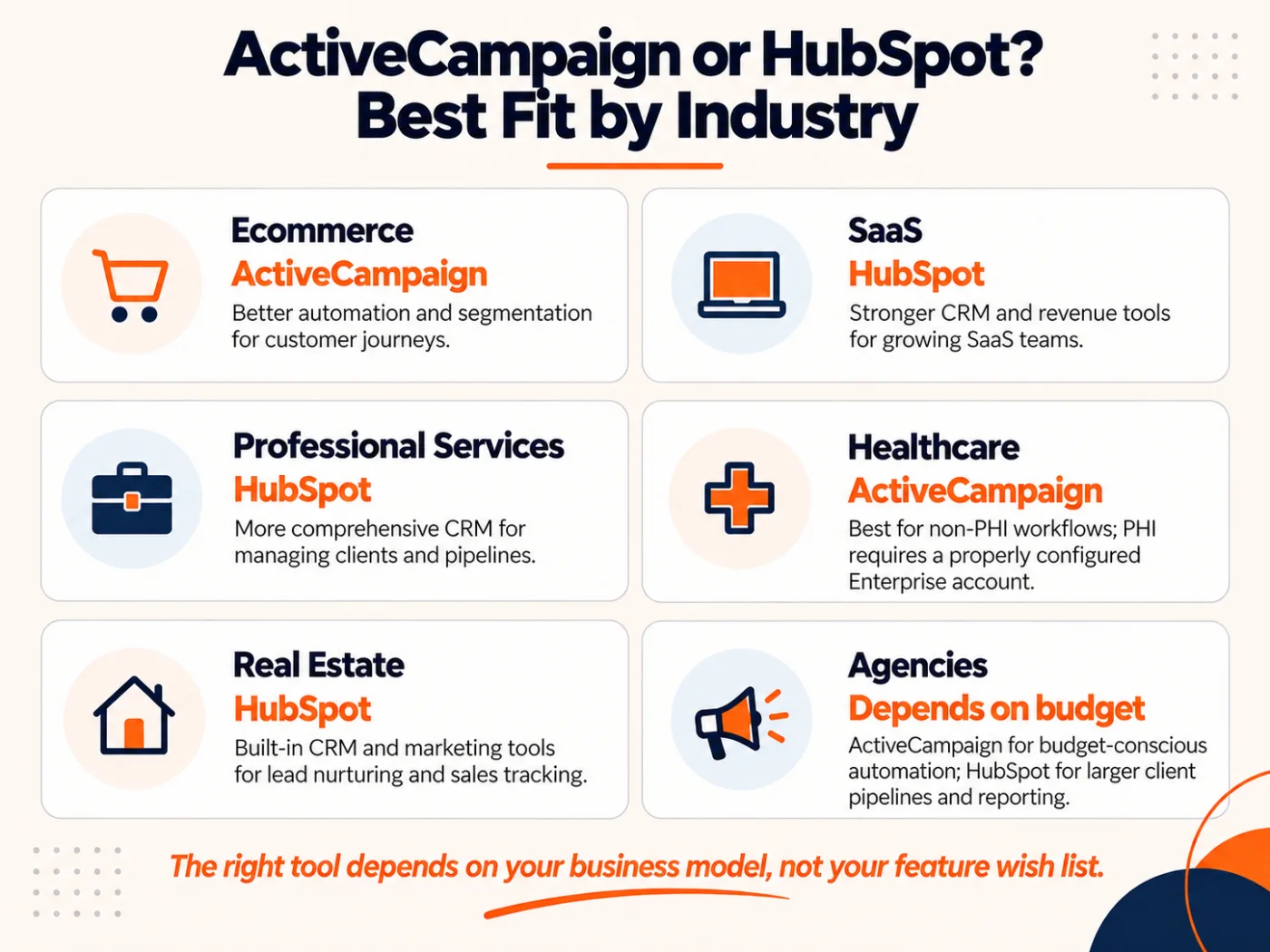
Fig 5 - The right platform follows from your business model.
We say this to every client. The platform you pick matters less than most businesses expect. The bigger part of the outcome lives in the work that happens after you sign up.
That work includes mapping your customer lifecycle stages, deciding what happens at each stage, building the automation workflows that move people from one stage to the next, connecting your CRM data to your campaigns, and training your team to use the system daily.
We have seen businesses spend $890/mo on HubSpot Professional and run it as a glorified email sender. Nobody mapped the workflows, built the lead scoring, or connected the sales pipeline to the marketing sequences. The tool sat there without a strategy behind it.
We have also seen businesses on ActiveCampaign Plus build 40 automation workflows that contradict each other. Contact A enters 3 sequences at once and gets 5 emails in a day. The root cause sits in the planning. The ActiveCampaign product is working as designed.
The tool is an engine. Without someone who knows the roads, it sits in the garage. This is why your digital marketing strategy comes first, with tool selection downstream.
Common Marketing Automation Mistakes That Cost You Money
Most businesses pick ActiveCampaign or HubSpot based on a blog post (like this one, honestly) or a sales demo. Then they try to reverse engineer their marketing workflows to fit the tool. That gets the order wrong. Map what you need first. Pick the tool that fits the map after.
Paying for Features You Will Not Use
HubSpot Professional costs $890/mo. That includes social media scheduling, SEO tools, ABM features, and custom reporting. If you only need email automation and a CRM, you are paying for capabilities that will sit untouched. In those cases, ActiveCampaign Pro at $79/mo covers what you need at a tenth of the price.
An automation without proper segmentation sends the wrong message to the wrong person at the wrong time. That is worse than no automation at all. Before you build a single workflow, you need clean contact data, defined segments, and a clear picture of who gets what content and when. We have written about how lead reactivation through marketing automation works when the segmentation is right, and how it backfires when it is not.
Ignoring Data Hygiene
Both platforms are only as good as the data going in. Duplicate contacts, missing fields, stale email addresses, and inconsistent tags break every automation you build. If you are migrating from one platform to another, cleaning your data is the first step and belongs in the plan from day one.
Not Training the Team
The person who bought the tool is rarely the person who uses it daily. If your marketing coordinator or sales rep does not know how to build a workflow, read a report, or update a contact record, the tool becomes shelfware. Training runs as an ongoing investment, with regular refresh cycles as the platform updates and the team changes.
How We Help You Get Marketing Automation Right
Here is what the engagement covers:
- Audit your current marketing tools and customer lifecycle to find the gaps
- Identify the platform that fits your business model, team size, and budget (and tell you honestly when the cheaper option is the better one)
- Build the automation workflows, email sequences, lead scoring rules, and CRM integrations
- Connect your marketing data to your sales pipeline so you can track leads and measure campaign performance
- Train your team to use the tool independently, so you are not dependent on us for basic changes
Whether you choose ActiveCampaign or HubSpot, we move you from “we just signed up” to “this is generating leads” within a few weeks. Most of our clients reach that state faster than they expected. We have done this across ecommerce, SaaS, healthcare, and professional services. Here is an example of an AI driven marketing automation setup we built for a SaaS company that needed lead nurturing and sales handoff automated end to end.
The Bottom Line on ActiveCampaign vs HubSpot
ActiveCampaign gives you deeper automation at a lower price, with the added flexibility of WhatsApp and cross channel bundles. It is the right pick for ecommerce brands, email first businesses, healthcare teams running non PHI workflows (or Enterprise accounts properly configured for PHI), and cost sensitive teams that need real workflows without a big financial commitment.
HubSpot gives you stronger reporting, Enterprise tier multi touch revenue attribution, and a shared database where marketing, sales, and service data all live together. It is the right pick for B2B SaaS, professional services, real estate, and companies where visibility across departments matters as much as the automation itself.
Both are sound choices, and the risk sits in picking either one without a plan for how to use it. If you are still unsure, talk to a team that has implemented both. We are that team.
Ready to stop guessing and start building? Our marketing automation team helps midsize businesses pick the right platform, build the workflows, and get the system producing leads. Whether it is ActiveCampaign, HubSpot, or a Zoho setup, we build it to work from day one.
Talk to us about your automation strategy.
Get started