WhatsApp DM Us 🇮🇳 +91-(120)-4137067 🇺🇸 +1-(315) 215-3533
Clixlogix
About
About
Why Clixlogix
Why fast-growing brands trust Clixlogix for digital success.
How We Work
Focused but flexible, explore our agile & collaborative approach.
Culture & Diversity
We bring diverse people together to drive growth-oriented culture.
Client Security
See how we ensure your intellectual property safety to protect you.
Our Team
Make some noise for our talented team powering your digital journey!
Partnership
Looking for a true end-to-end partner to drive growth?
Mission, Vision & Values
The fuel! What keeps us going?
Reviews & Testimonials
Clients love us. We stay humble. See what they have to say?
Know More About Us
Case Studies
Services
Services
All Services
One partner for all things AI & digital.
Digital Engineering
Custom web, mobile, cloud. Precision at AI assisted velocity.
Digital Marketing
AI assisted acquisition that earns its budget.
AI & ML
Agents, models, and RAG built for growth and production load.
QA & Testing
AI Assisted testing & defect catching before you ship.
Enterprise Software
Faster close, cleaner data, lower ops cost.
Emerging Technologies
Blockchain, IoT, AR, and edge systems your roadmap can absorb.
Creative & Design
Higher conversion, stronger recall, less friction.
Consulting Service
Defensible roadmaps, lower risk, sharper ROI math.
More About Services
Solutions
Industries
Careers
Blogs
Contact Us
  • View all About › Why ClixlogixHow We WorkCulture & DiversityClient SecurityOur TeamPartnershipMission, Vision & ValuesReviews & Testimonials
  • Case Studies ›
  • View all Services › Digital EngineeringDigital MarketingAI & MLQA & TestingEnterprise SoftwareEmerging TechnologiesCreative & DesignConsulting Service
  • Solutions ›
  • Industries ›
  • Careers ›
  • Blogs ›
  • Contact Us ›
Contact Us →
WhatsApp Us Call Us
Clixlogix
  • About
    • Why Clixlogix
    • How We Work
    • Culture & Diversity
    • Client Security
    • Our Team
    • Partnership
    • Mission, Vision & Values
    • Reviews & Testimonials
  • Case Studies
  • Services
    • Digital Engineering
    • Digital Marketing
    • AI & ML
    • QA & Testing
    • Enterprise Software
    • Emerging Technologies
    • Creative & Design
    • Consulting Service
  • Solutions
  • Industries
  • Careers
  • Blogs
  • Contact Us
We are available 24/ 7. Call Now.

+1-315-215-3533

info@clixlogix.com

Contact information

c-84, sector 65, Noida

On this page
01 How We Deliver02 Services03 Why Clixlogix04 Teams05 Industries06 Architecture07 Platforms08 Engagement09 Investment10 Security11 Case Studies12 Contact13 FAQ14 Blogs
On this page
01 How We Deliver02 Services03 Why Clixlogix04 Teams05 Industries06 Architecture07 Platforms08 Engagement09 Investment10 Security11 Case Studies12 Contact13 FAQ14 Blogs
Home / Services / Digital Engineering / Low Code App Development
Speed Without the Lock In

Fast, Integration Ready, Low Code App Development

Build MVPs, refine processes, scale 3x faster.

Capabilities Results
★★★★★ 4.8/5 Avg. rating
How leading brands rate our low code delivery
ClutchUpworkGoodFirmsTrustpilot

Just Drop Us A Line!

We are here to answer your questions 24/7

Invalid value

Describe Your Project / Idea
Max 20MB
Secure SSL Encryption
We will respond in 2 Mins
100% NDA Protected
MagooshRonatiReonomyWattaxiApp My Communityo3 VetsMagooshRonatiReonomyWattaxiApp My Communityo3 Vets

Table of Contents

  • How We Deliver the Best Low Code App Development Services
  • Our Structured Low Code Engineering Approach
  • Low Code Development Services We Deliver
  • Why Clixlogix for Your Low Code Development Project
  • Advanced Capabilities for Enterprise Grade Low Code Systems
  • How Low Code Creates Impact Across Teams
  • Industries We Serve With Low Code Systems
  • Low Code Platforms We Work With
  • Engagement Models for Low Code Delivery
  • Solutions & Use Cases We Excel At

How We Deliver the Best Low Code App Development Services

Low code platforms offer exceptional delivery speed. But the true advantage emerges only when the approach is guided by clear processes, well structured data models, and governed integrations. When a low code framework is applied with an engineering mindset, organizations gain rapid MVP creation, efficient process refinement, and predictable scaling. All this while keeping implementation risks low and iteration cycles short.

The platform itself is only part of the equation, the method used to shape workflows, logic, and integrations determines how much long term value a low code solution delivers. Low code, applied with discipline, becomes more than a fast way to build, it becomes a reliable foundation for continuous improvement and long term scalability.

Our Approach

How We Remove Risk From Every Stage of Low Code Delivery

Requirements mapped before the build begins

Pitfalls that drain value

Teams rush into building screens before mapping logic, leading to rework, missed edge cases, and unclear ownership.

How Clixlogix eliminates them

We map processes visually, refine edge cases with AI, and create a logic blueprint so the build phase stays fast and consistent.

A data model engineered to scale

Pitfalls that drain value

Fields get added “as needed,” causing reporting gaps, inconsistent data, and blocked scalability.

How Clixlogix eliminates them

We engineer structured data models with defined relationships, constraints, and schema validation to maintain long term accuracy.

Workflows that hold up in real operations

Pitfalls that drain value

Automations work for happy path scenarios but break in real operations (handoffs, exceptions, multi role steps).

How Clixlogix eliminates them

We design governed workflows with branching logic, exception resolution paths, and process coverage.

Integrations that sync completely and surface failures

Pitfalls that drain value

Connectors sync only part of the data or fail silently, creating invisible data mismatch and manual cleanup work.

How Clixlogix eliminates them

We build integration intelligence: monitored API calls, fallback logic, and anomaly detection for true cross system reliability.

Testing that traces behaviour before launch

Pitfalls that drain value

Low code is often deployed with little testing, leading to user confusion, inconsistent results, and untraceable behaviour.

How Clixlogix eliminates them

We validate real world scenarios, run multirole walkthroughs, and use AI roleplay prompts to identify missing steps or contradictory rules.

Delivery on predictable sprints

Pitfalls that drain value

“Build as you go” delivery makes the project feel unpredictable; timelines slip because logic evolves mid build.

How Clixlogix eliminates them

We follow defined sprints, freeze logic before execution, and use AI backed sprint planning to maintain predictable velocity.

Low Code Development Services We Deliver

Select a capability set

We help teams build reliable, scalable low code solutions that support operations, decision making, and growth. Our services cover the full lifecycle, from concept to scale, ensuring each module, workflow, and integration behaves predictably under real operational conditions.

AI First Low Code Application Development

Design and development of apps that combine low code speed with AI powered logic, data interpretation, and workflow intelligence, enabling teams to launch more adaptable systems from day one.

Workflow Automation & Process Orchestration

Design and implementation of multi step workflows, approvals, escalations, and automation rules that streamline work across teams and systems.

System Integrations & Data Sync

Integration of low code systems with CRM, ERP, finance platforms, analytics tools, and custom systems, with clear guardrails and monitored data flows.

Low Code for Startups

Focused for teams building MVPs or early product versions. We help you launch fast while ensuring the architecture can evolve without rebuilds with integration ready foundations.

Migration & Re Engineering of Legacy Low Code Apps

Rebuilding or restructuring existing low code applications into stable, scalable versions with clean data models and predictable workflows.

Low Code Audit

Structured review of existing low code apps, workflows, automations, data models, and integrations. We identify risks, then prepare a remediation roadmap.

Low Code Consultation

We help you define the right workflows, data structures, and platform choices before development begins.

Low Code App Maintenance

Ongoing workflow refinement, integration monitoring, and evolution planning to ensure the system stays aligned with business growth.

Low Code Project Rescue

For systems facing instability. We stabilize workflows, rebuild components, isolate risk, restore data integrity, and reconstruct automations.

Low code platforms make it easy to ship quickly, but sustaining speed, stability, and evolution requires deeper engineering discipline. Teams choosing low code expect fast delivery, predictable behavior, and a system that doesn’t become fragile as more workflows and roles are added. This section outlines Clixlogix’s capabilities that ensure your low code foundation remains stable, governable, and ready for controlled growth, without increasing operational risk.

Multi Environment Lifecycle & Safe Change Management

Low code updates move fast, but unstructured rollouts introduce silent breakage.

Enterprise Grade Governance & Auditability

Systems need traceability, who changed what, when it ran, and why logic behaved a certain way.

Integration Guardrails & Sync Stability Under Load

Integrations are where low code systems usually fail. We ensure data stays consistent even when systems are under pressure.

Data Behavior Optimization for Scale

As the system grows, data volume, query limits, and platform quotas can slow execution. We ensure workflows stay fast as usage increases.

Performance Engineering for High Volume Workflows

Distributed approvals, frequent automations, or branch level operations create concurrency issues. We ensure execution stays consistent across locations, roles, and peak usage.

Platform Limit Navigation & Controlled Extensibility

Low code platforms have limits. The challenge is knowing when to extend, without breaking. We keep the system scalable while maintaining a clean and controlled core.

Runtime Monitoring & Issue Isolation

Low code systems need operational visibility. We set up monitoring to detect slow steps, failed runs, API errors, and logic loops, isolating issues before they affect users or downstream systems.

Team Logic Management Across Departments

When 4 to 8 teams share the same app, logic becomes fragile. We implement role based orchestration, ownership boundaries, and change impact checks so updates don’t break processes.

Why Clixlogix for Your Low Code Development Project

1 12+ years of workflow and integration engineering experience applied to modern low code stacks.
2 140+ low code applications delivered across operations, finance, logistics, service, and customer facing workflows.
3 70% faster launch timelines compared to traditional delivery for equivalent workflow complexity.
4 300+ governed workflows implemented, covering approvals, escalations, automations, and cross department processes.
5 95% of projects integrate with CRM, ERP, or internal systems, without introducing data drift or workflow conflicts.
6 Enterprise grade extensions delivered on Power Apps, Salesforce Lightning, Zoho Creator, and Apps Script environments already in production.
7 MVP to product transitions completed for 40+ startups using Bubble and FlutterFlow without rebuilds.
8 Zero unplanned rebuilds due to platform limitations, all evolution planned upfront with modular logic and controlled data structures.
Microsoft Power Platform Developer
Zoho Creator Registered Developer
12+ Years Experience
140+ Low Code Apps Delivered
70% Faster Launch Timelines
300+ Governed Workflows

Discover how our structured low code engineering approach keeps delivery predictable and aligned with your workflow and platform requirements.

More about our process

Teams We Support With Low Code Development Services

Low code delivers the most value when the system mirrors how a team actually works. Some teams need to launch fast, some need order across complex workflows, and some run across many locations where consistency matters. We shape low code delivery around each of these realities, so the groups below get the clarity, control, and predictability their work depends on.

Startups & Product Teams

Early stage products benefit most when the system can move quickly without creating future constraints. Low code enables these teams to test assumptions, adjust features, and refine the product path while keeping the underlying structure stable enough to evolve. The impact is strongest where speed and controlled iteration matter more than full customization.

Typical focus areas:
MVP Launch SpeedControlled IterationFeature FlexibilityScalable FoundationsWorkflow ValidationInvestor Readiness

Operations, IT & Internal Teams

Internal processes rely on predictable workflow behavior, clean data, and integrations that don’t break under volume. Low code strengthens these areas by turning operational rules into structured pathways, ensuring teams maintain control as processes expand or intersect with other systems. The impact is clearest where stability, consistency, and governance are priorities.

Typical focus areas:
Workflow GovernanceData ConsistencyIntegration StabilityProcess AutomationAccess ControlsAudit Trails

Field, Franchise & Multi Location Teams

Distributed teams need tools that support real world activity while keeping every location aligned to the same operating standards. Low code enables mobile friendly execution, consistent task patterns, and traceable reporting across branches or sites. The impact is most visible where on site reliability and cross location consistency determine operational performance.

Typical focus areas:
Mobile ExecutionCross Location ConsistencyStandardized TasksOffline ReliabilityBranch ReportingRole Based Access

Industries We Serve With Low Code Systems

Low code is most effective when teams need clarity, controlled workflows, multi role coordination, and fast iteration without increasing operational risk. Our approach supports industries where processes change frequently, integrations matter, and decision makers require visibility and predictable evolution. Below are the sectors where low code creates repeatable, measurable improvements across operations, workflows, and internal systems.

Manufacturing & Production
Retail & E Commerce
Automotive & Mobility
Transportation & Logistics
Real Estate & Property Management
BFSI & FinTech Operations
Healthcare & Life Sciences
Agriculture & AgriTech
Energy & Utilities
Education & eLearning Providers
Media, Entertainment & Sports
Consumer Services & Franchise Ops

See how low code strengthens operations across your industry with real examples and proven delivery patterns.

Explore More

Low Code Solution Architecture

As a business owner, what you are really paying for is a system that still earns its place a year from now. Solution architecture is the discipline that decides whether it does. When the foundations are shaped around how your company makes money and runs day to day, the application grows with you as you add products, roles, and locations, and each new requirement stays small in cost while the system holds its shape. This is how your early investment keeps compounding, your budgets stay predictable, and your teams trust the system enough to run real operations on it.

Why Architecture Decisions Compound

The platform and structure you choose in the first few weeks shape cost, speed, and stability for years. A data model that works in a demo can stall under real volume. A workflow that skips exception paths breaks the first time operations deviate. An integration that lacks fallback logic fails when a connected system changes. The platform you choose is the decision everything else compounds on, which is why we map the landscape before we build.

How Low Code Solution Architecture Pays Off

The right platform for your needs, recommended on merit.

We build across every major low code platform, so the solution we recommend is shaped by your goals, budget, and existing systems. Our teams have shipped real applications on each one, so you get an architecture chosen purely on fit and a recommendation you can act on with confidence.


6 Platforms
140+ Apps Delivered
12+ Years
Platform Landscape

Where each low code platform lands

The six platforms we work with, plotted by how quickly you can build against how ambitious an app you can ship. Select any platform to read its full profile.

Steep · code heavy Instant · no code Full custom products Lightweight tools Ease of build → Output ambition → FFlutterFlow BBubble PPower Apps SSalesforce Lightning ZZoho Creator AAppSheet

Tap a platform on the map to switch profiles.

Z

Zoho Creator

~$12/user/mo · billed annually

Primary Focus
Internal business process & workflow automation
Target Audience
Business analysts, IT teams, medium businesses
Learning Curve
Low to Medium
App Type
Web, mobile, tablet
Database
Built in (scalable)
Ecosystem
Native to the Zoho suite
AI Bottom Line
Most complete AI of the six: build, run, and agents are all native through Zia, included in the subscription with no data retention. Best AI value for SMBs.
B

Bubble

$29 to $59/mo + workload units

Primary Focus
Robust custom web apps & SaaS products
Target Audience
Web developers, startup founders, solo builders
Learning Curve
Medium
App Type
Web only (responsive)
Database
Built in (flexible relational)
Ecosystem
Independent (API heavy)
AI Bottom Line
AI builds the app visually and the edits stay auditable, but in app AI relies on external APIs you wire yourself. Strong for control, thin out of the box.
P

Microsoft Power Apps

$5 to $20/app or /user · mo

Primary Focus
Internal enterprise apps tied to Microsoft
Target Audience
Enterprise IT, Microsoft 365 users
Learning Curve
Medium to High
App Type
Canvas & model driven (web/mobile)
Database
Microsoft Dataverse
Ecosystem
Native to Microsoft 365 / Azure
AI Bottom Line
Deepest enterprise AI and agent supervision, but most Copilot features need a separate M365 Copilot license at roughly $30 per user.
S

Salesforce Lightning

Includedin CRM plan / add on

Primary Focus
Custom apps & extensions inside Salesforce CRM
Target Audience
Salesforce admins, devs, enterprise teams
Learning Curve
Medium to High
App Type
Web & mobile (Salesforce app)
Database
Salesforce CRM objects
Ecosystem
Native to Salesforce
AI Bottom Line
Most mature autonomous agents (Agentforce) and the strongest trust layer, but priced as a premium addition on top of an already costly platform.
A

AppSheet

$5/user/mo · Pro tier

Primary Focus
Spreadsheet driven mobile & field apps
Target Audience
Non technical users, field & Workspace teams
Learning Curve
Very Low
App Type
Mobile first with web views
Database
Sheets, Excel, Airtable, Cloud SQL
Ecosystem
Native to Google Workspace / Cloud
AI Bottom Line
Narrowest but most practical AI: Gemini extract, summarize, and categorize tasks run natively inside automations. Locked to the Enterprise Plus tier.
F

FlutterFlow

~$24 to $30/mo · free plan avail.

Primary Focus
High performance custom UI mobile & web apps
Target Audience
Developers, technical founders, designers
Learning Curve
Steep
App Type
Cross platform native mobile & web
Database
Firebase, Supabase, custom APIs
Ecosystem
Independent (custom front ends)
AI Bottom Line
AI is purely an integration layer (Gemini, GPT, Claude). Maximum model flexibility and no platform markup, but no build assistance on the developer side.
Positions are relative, not absolute · pricing reflects published entry tiers

Low Code Platforms We Work With

We use a focused set of low code platforms chosen for how reliably they support workflow behavior, data structures, and long term evolution. Each platform below is applied where it fits naturally, based on the processes it handles well, the integrations it supports cleanly, and the operational patterns it scales with.

  1. 01 Microsoft Power Apps
  2. 02 Salesforce Lightning
  3. 03 AppSheet
  4. 04 Bubble
  5. 05 Zoho Creator
  6. 06 FlutterFlow
Microsoft Power Apps

Microsoft Power Apps

Used when teams need structured workflows and dependable role management inside a Microsoft first environment. Power Apps works well for internal processes that must align tightly with Dynamics or Microsoft 365, without introducing shadow systems.

Salesforce Lightning

Salesforce Lightning

Applied in organizations where customer operations run on Salesforce and workflow logic must follow CRM rules. Lightning is a strong fit when approvals, escalations, and data visibility need to stay consistent across sales and service functions.

AppSheet

AppSheet

Used when teams need workflow automation, data processing, and system extensions within the Google Workspace ecosystem. Apps Script fits cases where processes revolve around Sheets, Forms, Docs, or Calendar, and require controlled logic with minimal overhead.

Bubble

Bubble

Chosen for web applications that require rapid iteration while maintaining predictable logic and a structured data foundation. Bubble suits teams building systems that must evolve module by module without rewriting core behavior.

Zoho Creator

Zoho Creator

Best for multi role business applications that rely on governed workflows and reliable integrations across the Zoho ecosystem and external platforms. Creator supports operational visibility and steady evolution as processes expand.

FlutterFlow

FlutterFlow

Applied for mobile applications requiring visual build speed and predictable runtime behavior. FlutterFlow is chosen when teams need quick UI development backed by the stability and extensibility of generated Flutter code.

Clixlogix Team

Your Low Code Cost Map In 5 Minutes

Tell us what you want to build. We will send back a one page cost map.

Send me the cost map

Engagement Models for Low Code Delivery

Low code projects vary widely. Some teams need a partner to design, build, and govern their entire system. Others simply need specialists who can extend their existing platform, refine workflows, or stabilize data structures. And many organizations prefer flexible models that match the speed and evolution of low code work. We offer multiple engagement models so you can work with us in the way that feels most predictable, controlled, and aligned with your roadmap.

Engagement that turns low code speed into lasting business value.

Five ways to work with us, each shaped to give you predictable cost, controlled risk, and a system that keeps earning as your business grows.

70%Faster launch
100%Cost transparency
TopVetted engineers only
6+Platforms, chosen on fit
Clixlogix low code delivery team
★Built around your low code maturity, scoped to your stage.
Low Code Team Augmentation

Full Stack Low Code Delivery

Rely on Clixlogix to handle the full low code lifecycle: process mapping, data modeling, workflow design, UI modules, integrations, testing, rollout, and controlled evolution. Ideal when you need a single partner to own outcomes across systems and teams.

Get in touch →

Dedicated Team

Low code specialists (BA, developers, testers, integrators) who work as an extension of your team. Ensures continuity, predictable velocity, and alignment with your internal processes. Best for multi phase product work or long term low code ownership.

Get in touch →

Flexible On Demand Expertise

Access specialists only when you need them, for workflows, data models, integrations, UI modules, or platform extensions. All this without long term commitments. Ideal for roadmap items that require specific skills at specific moments.

Get in touch →

Time and Material

Pay only for actual tracked hours. Ideal for discovery heavy work, evolving requirements, integrations, optimization cycles, or enhancement sprints where flexibility matters. Provides transparency and a controlled pace for fast moving teams.

Get in touch →

Fixed Cost

Best for well defined low code builds with clear scope and logic paths. Scope, timelines, and budget are agreed upfront. Ensures predictability for module rollouts, integrations, migrations, or compliance driven workflows.

Get in touch →

Investment Analysis Of Time & Cost in Low Code

Low code delivery is faster than traditional builds, but the actual timeline and investment depend on how your workflows, data, and integrations translate into platform specific execution rules. Each platform, whether Power Apps, Salesforce, Zoho Creator, Bubble, AppScript, or FlutterFlow – applies its own limits around API volume, workflow execution, branching logic, and environment promotion. Because of this, two projects with the same “features” can behave very differently during delivery. Before estimating timelines or cost, we evaluate the engineering determinants that shape effort and predictability. Below is the structured technical view of the factors that materially affect time and cost.

Effort Determinants

AreaWhat Impacts the InvestmentHow It Influences Time & Cost
Workflows & Business LogicNumber of workflow steps, branching logic, approvals, exception pathsComplex or nested branching increases design cycles and multiplies test case volume
Data Model StructureTable relationships, validation rules, sources of truthClean models accelerate delivery; unclear models require discovery, normalization, and refactoring
Integrations & Sync BehaviorCRM/ERP systems, finance apps, HR systems, middleware, custom APIsNative connectors are fast; throttled APIs, multi hop syncs, or custom endpoints add heavy QA + engineering time
Role Based Access & PermissionsRole count, field level restrictions, cross team visibility, approval pathsMore roles increase rule tuning effort and exponentially expand the QA matrix
Volume of UI SurfacesForms, dashboards, portals, mobile screensEach UI surface adds configuration, data binding, state logic, and cross role behavior mapping
Automation ComplexitySimple triggers vs logic chains, event driven flows, timed automationsAdvanced automations require platform specific safeguards, more validation, and monitoring
Existing Platform HealthClean vs fragmented environments, legacy workflows, undocumented custom scriptsClean setups reduce effort; fragmented setups require cleanup to avoid regressions
Scalability RequirementsExpected user load, record volume, concurrency, data retention needsHigher scale requires query optimization, batching, indexing, or stress testing
Governance & ComplianceAudit logs, SOP alignment, approval trails, restricted actionsMore governance adds configuration overhead and increases validation cycles

Low Code Pricing & Timeline Framework

Low code pricing can’t be reduced to generic templates because each platform behaves differently under load. For example, Power Apps enforces delegation limits and API quotas. Salesforce has governor limits and flow execution constraints. Zoho Creator requires explicit Deluge logic. Bubble workflows multiply with conditional states. AppScript and Workspace scripts operate within strict quota windows. Because of this, timelines and budgets must be tied to the shape of your system, not screen counts or feature lists. To keep delivery predictable, we evaluate low code builds through three engineering determinants:

Workflow Logic Role Driven Access Integration Complexity

These determine where your project sits on the timeline and investment curve.

TierWhat is involvedTypical TimelineInvestment
A. Workflow Apps (Shallow Logic & Single Integration)
  • 1 - 3 workflows
  • 1 - 2 roles
  • 1 system integration
  • Simple exception handling
3 to 6 weeksLight branching and a clean data model allow rapid delivery and testing.$2,500 to $15,000Predictable logic, shallow data modeling, and minimal sync complexity.
B. Department Level Automation Systems
  • 4 - 8 workflows
  • 4 - 6 roles
  • 2 - 3 integrations (CRM/ERP/Finance)
  • Reporting + exception flows
  • Cross team access rules
6 to 12 weeksMore workflows and role combinations increase test case volume and integration stabilization.$12,000 to $40,000Role intensive workflows + 2 to 3 integrations + reporting and exception behaviors.
C. Multi Module Platforms / MVP Systems
  • 8 - 15+ workflows
  • Multi team or multi location logic
  • Portals or mobile screens
  • 3 - 5 integrations
  • Vendor or branch level behavior
10 to 20+ weeksHigh dependency chains, environment promotion, and regression cycles drive longer timelines.$18,000 to $90,000+Vendor level logic, multi environment rollouts, portals/mobile, and multiple integrations.

How We Keep Delivery Predictable

Every estimate we provide is anchored in real engineering inputs. Before committing to a timeline or budget, we evaluate your system the same way we evaluate our own builds.

What We Clarify Before Estimating

  • Workflow paths, branching logic, approvals, and exception states
  • Data structures, validation rules, and sources of truth
  • Integration surfaces, API limits, sync timing, and connector behavior
  • Role based access boundaries and cross team visibility
  • UI surfaces and how they connect to workflows (forms, dashboards, portals, mobile)

What Every Estimate Includes

  • A sprint by sprint delivery plan
  • Integration architecture and data flow mapping
  • Environment promotion path (Dev to Test to Prod)
  • Change impact logic to prevent regressions
  • Testing strategy covering roles, sync behavior, and end to end flows

What This Gives Your Team

  • Predictable timelines - no hidden dependencies
  • Transparent cost behavior - you see how each component affects effort
  • Controlled evolution - the system can grow without breaking existing paths
  • Operational clarity - you always know what is happening, when, and why

This is why our clients choose low code with us - speed where it’s possible, stability where it’s required, and predictability across the entire system.


Get a Clear Timeline & Cost for Your Low Code Project. Share your workflows, integrations, and system goals, we’ll map the logic, outline the effort, and give you a predictable delivery plan tailored to your platform.

Talk to a Low Code Architect
Security · Built in, not bolted on

Security Assurance with Low Code

Low code platforms run on secure, vendor managed infrastructure. Microsoft, Salesforce, Google, Zoho, and Bubble each bring their own certifications, encryption standards, and compliance frameworks. But real security is how workflows, roles, data access, and integrations behave inside your system as it grows.

We ensure your low code foundation is governed, traceable, and resistant to silent failures, even as more teams and modules get added.

Explore Client Security & Compliance

Low Code Development Case Studies

Discover case studies of our low code work, scoped, built, and shipped to production with measurable outcomes.

Featured image of the Zoho CRM, Inventory and Shopify integration case study Clixlogix delivered for an eyewear brand.

Zoho CRM, Inventory and Shopify Integration for an Eyewear Brand

Digital Engineering Zoho Consulting Service Enterprise Software
Featured image

Odoo Booking System for a Multi Studio Music Network

Digital Engineering Media, Entertainment & Sports Enterprise Software
Odoo
Python
XML
Growth Marketing and Zoho One Implementation for a 30 Year Toronto HVAC Company

Growth Marketing and Zoho One Implementation for a 30 Year Toronto HVAC Company

Digital Engineering Zoho Digital Marketing Home Services Enterprise Software
Zoho One
Google Ads
Zoho Desk
Full Lifecycle Digital Engineering for a Nordic RPM Startup, Across 3 Growth Stages

Full Lifecycle Digital Engineering for a Nordic RPM Startup, Across 3 Growth Stages

Digital Engineering Healthcare & Life Sciences AI Enterprise Software
Magento
Shopify
PHP
Zero code marketplace platform for antique dealers, case study banner

Zero Code Marketplace Platform Modernized for Antique Dealers’ Workflow Automation

Digital Engineering Retail & E-Commerce AI Enterprise Software
Zoho CRM
Zoho Creator
Midjourney
Canadian multi carrier shipping SaaS and operations invoicing platform engineering case study

Canadian Multi Carrier Shipping SaaS Went Live Across 7 Engineering Workstreams

Web Development Digital Engineering Quality Assurance & Testing Transportation & Logistics
View All Case Studies

Just Drop Us A Line!

We are here to answer your questions 24/7

File should not exceed more than 20MB
🔒 SECURE SSL ENCRYPTION
Get in touch

Get In Touch Instantly

Get all your questions answered.

Business Enquiriesinfo@clixlogix.com
Employment Verificationhr@clixlogix.com
Join Our Teamcareer@clixlogix.com
Connect With Us OnWhatsApp

FAQs

What is low code development?

Low code development uses visual tools, prebuilt components, and configurable logic to build applications faster than traditional coding. Instead of writing everything from scratch, workflows, data models, UI screens, and integrations are assembled using platform capabilities. The result is quicker delivery with predictable behavior across modules.

Why do companies choose low code over traditional development?

Companies choose low code to shorten delivery cycles, reduce dependency on large engineering teams, and avoid long rewrites. It allows teams to validate workflows quickly, make controlled changes, and align systems across departments without heavy custom code. For many internal and customer facing modules, low code provides the right balance of speed, structure, and reliability.

What are the main benefits of low code development?

Low code accelerates delivery, reduces rework, and makes system behavior more predictable. It supports faster experimentation, improves visibility over workflows, and creates systems that can evolve without major rebuilds. For organizations with changing processes, low code reduces long term operational risk and simplifies maintenance.

How do I choose the right low code platform for my use case?

Platform choice depends on your existing systems, integration needs, data model complexity, role structure, performance expectations, and long term roadmap. For example, Power Apps suits Microsoft centric environments, Salesforce works well for CRM driven ecosystems, Zoho Creator fits cross team business workflows, Bubble enables front end rich MVPs, and FlutterFlow supports mobile first use cases. The best platform is the one that aligns with your operational landscape, not the most flexible or powerful on paper.

What is low code business process automation?

Low code BPA uses visual workflows and rule engines to automate approvals, escalations, notifications, handoffs, data updates, and repetitive tasks across teams. Instead of building automation logic in custom code, processes are defined through configurable steps that remain transparent and easier to maintain as rules change.

Which low code platform is best for enterprise apps?

Power Apps, Salesforce Lightning, and Zoho Creator are most common in enterprise environments because they support strong permission models, audit logs, governed workflows, and stable integrations with CRM/ERP systems. The best platform ultimately depends on the systems your teams already rely on and the complexity of your workflows.

Can low code handle complex workflows and multi team systems?

Yes, when workflows are designed with clear branching logic, role boundaries, and validation rules. Low code platforms can support multi step approvals, escalations, compliance driven processes, and cross team visibility. Complexity is manageable as long as the data model and workflow paths are structured correctly from the start.

Can low code integrate with CRM, ERP, or custom APIs?

Most low code platforms provide native connectors for leading systems and allow custom API integration when needed. The reliability of an integration depends on API limits, data volume, error handling, and sync timing, not the platform itself. With proper orchestration and monitoring, low code integrations can be stable and predictable.

How scalable are low code systems as my business grows?

Low code scales well when the data model, workflow execution paths, and integrations are structured correctly. As usage increases, platforms handle more records, more users, and more automation, provided that logic doesn’t become dependent on tightly coupled workflows. With proper governance, systems can evolve without instability.

What kinds of apps can realistically be built with low code?

Low code is ideal for workflow heavy systems, internal tools, operational portals, customer modules, booking flows, delivery tracking, dashboards, and early stage MVPs. It is less suitable for real time apps, media heavy platforms, complex social networks, and applications requiring highly custom backend logic.

How long does a low code project usually take?

Simple workflow apps take 3 to 6 weeks. Department level systems with multiple roles and integrations require 6 to 12 weeks. Multi module platforms or MVPs that involve portals, mobile surfaces, and cross system automation typically take 10 to 20+ weeks. Timelines depend on workflow clarity, data structures, and integration complexity.

How much does a low code project cost?

Costs generally range from $7,000 to $90,000+.. Investment is determined by workflow depth, integration surfaces, role structure, and how many UI modules or portals are required.

Our Featured Blogs

Insights, ideas, and field notes from our engineering, marketing, and consulting teams.

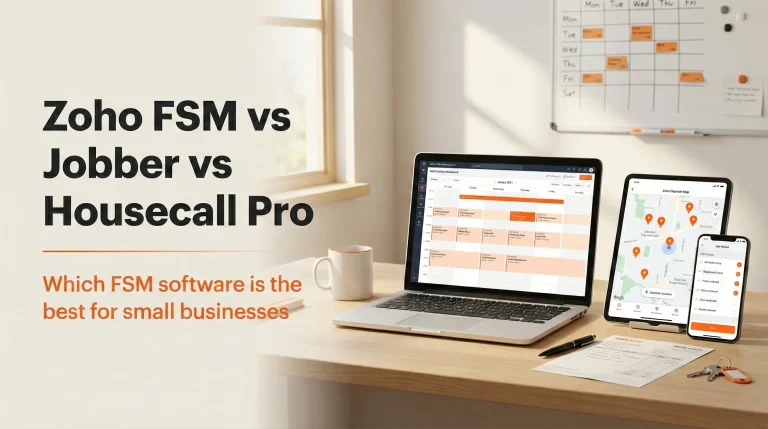
Best Field Service Management Software for Small Business (2026) – Zoho FSM vs Jobber vs Housecall Pro
IT ConsultingFeb 19, 2026

Best Field Service Management Software for Small Business (2026) – Zoho FSM vs Jobber vs Housecall Pro

READ MORE
Best Low Code Platform: Zoho Creator vs. Flutterflow vs. Bubble.io
IT ConsultingSep 2, 2024

Best Low Code Platform: Zoho Creator vs. Flutterflow vs. Bubble.io

READ MORE
How AI Real Estate Video Production Works in 2026
Creative & DesignJul 8, 2026

How AI Real Estate Video Production Works in 2026

READ MORE
EXPLORE ALL BLOGS
About
  • Company
  • Our Team
  • How We Work
  • Partner With Clixlogix
  • Security & Compliance
  • Mission Vision & Values
  • Culture and Diversity
  • Case Studies
  • Industries
  • Solutions
  • We’re Hiring
  • Contact
Services
  • Mobile App Development
  • Web Development
  • Low Code Development
  • AI Software Development
  • SEO
  • Online Advertising
  • Social Media Management
  • More
Solutions
  • Automotive & Mobility
  • Information Technology & SaaS
  • Healthcare & Life Sciences
  • Telecommunications
  • Media, Entertainment & Sports
  • Consumer Services
  • And More…
Resources
  • Blogs
  • Privacy Policy
  • Latest Zoho Updates
  • Terms Of Services
  • Sitemap
  • Refund Policy
  • Delivery Policy
  • Disclaimer
Follow Us
  • 12,272 Likes
  • 2,831 Followers
  • 4.2 Rated on Google
  • 22,526 Followers
  •   4.5 Rated on Clutch
© 2026 Clixlogix Technologies Pvt. Ltd. All rights reserved. DMCA Protected GSTIN : 09AAECC5421E1ZZ CIN : U74140UP2011PTC129448