TL;DR
- AI search engines like ChatGPT, Perplexity, and Google AI Overviews name brands that trusted independent sources already talk about.
- Google’s own guide says its AI features draw on what people say about products and services across the web, in blogs, videos, and forum discussions.
- The guide also warns that seeking inauthentic mentions does not help, because the same systems that block spam govern the AI features.
- The strategies that earn real mentions are industry publication placement, YouTube and community presence, expert visibility, and clean brand data.
- Tracking closes the loop, and the Generative AI performance report in Google Search Console is where to start.
For about 20 years, SEO had one scoreboard. That scoreboard was your rank on Google. You built links, fixed pages, and climbed the list. That scoreboard still counts. A second one now sits on top of it, and it keeps score in a different way.
When a buyer asks ChatGPT for a vendor shortlist, or reads a Google AI Overview before clicking anything, the answer names a few brands. The buyer considers those brands. Everyone else drops out of that conversation.
In traditional search, you rank. In AI search, the answer names you, or it skips you.
So if you want to know how to increase brand mentions for AI SEO, start with why mentions carry so much weight now. Then build a plan to earn them honestly. We follow that order in this guide.
Why Brand Mentions Matter More Than Backlinks for AI Search Visibility
People use 2 acronyms for this shift. GEO stands for Generative Engine Optimization, and AEO stands for Answer Engine Optimization. Both mean the same practical thing. You work to get your brand named inside AI answers, on top of your work to rank in a list of links.
Google has a clear view on the labels. Its official guide to optimizing for generative AI features says that from Google’s side, this work is still SEO. We agree with that framing. The fundamentals did not go away. What changed is which signals carry the most weight.
Google’s own guide describes what its AI features draw on. It says the features show what people say about products and services across the web, including in blogs, videos, and forum discussions. The guide also warns that seeking inauthentic mentions “isn’t as helpful as it might seem”, because the same ranking systems that filter spam govern the AI features. Read those 2 statements together and the direction is clear. Real people saying your name in trusted places drives inclusion in AI answers. Purchased or artificial mentions run into the spam systems that block them.
We see the same behavior in our own tracking. Our GEO team monitors 5 to 10 client brands every week across ChatGPT, Perplexity, Gemini, and Google AI Mode, and we watch what happens to AI answers when a client earns coverage outside their own site. A client example and a published campaign show the effect.
A Clixlogix client earned a feature on Marketresearch.com. In the 30 days after publication we tracked 185 brand mentions across the web, up from 72 in the 30 days before. That is a 157% lift. Mention volume peaked 2 days after publication and stayed 38% above baseline after 4 weeks. Category prompts began naming the client in AI Overviews and ChatGPT answers inside the same window.
A published creator campaign outside our own roster shows the same pattern at a larger scale. Music videos from Todrick Hall, The Gardiner Sisters, AJ Rafael, and Macy Kate featured ViewSonic products. Across YouTube and Instagram, the placements produced 3.8 million views, 10.1 million impressions, and 76,000 clicks, at a 2.5% CTR that ran 142% above target. Coverage on that scale seeds brand discussion in comments, reaction videos, and forum threads, which is the exact form of coverage Google names in its guide.
Look across the 2 examples and the direction is the same. When credible sources talk about a brand in places AI systems already read, the AI answer starts to include that brand for the questions the coverage is relevant to. We see this as correlation. Causation is harder to isolate, because brands that draw broad coverage also tend to have better products, active PR, and real customers. The mentions are partly a signal that a brand is already known. That direction of travel is enough to act on. Earn the coverage, and the AI visibility follows.
If you want the foundations first, we wrote a detailed guide on what Generative Engine Optimization is and how it works.
How AI Search Engines Decide Which Brands to Mention and Cite
You make better decisions when you know what happens behind the answer box. Here is what the platforms themselves have said, and where the evidence stops.
According to Google’s own guide, Google built AI Overviews and AI Mode on its core ranking and quality systems. These features use retrieval augmented generation, which means the model pulls pages from the Search index and builds its answer on them. They also use a technique Google calls query fan out. The model runs several related searches behind the scenes to cover subtopics. So Google can pull your page into an answer for a related question even if you do not rank first for the main query.
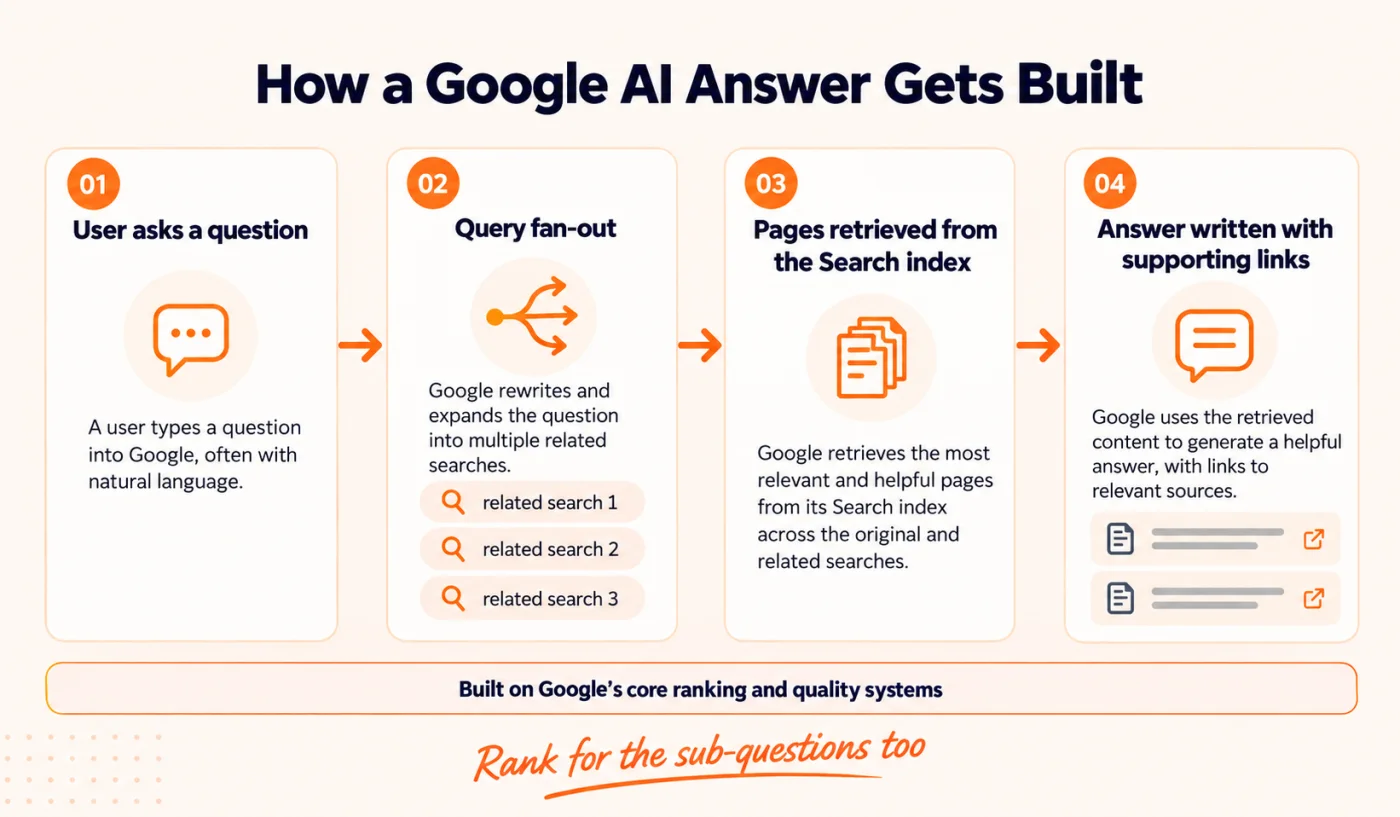
Fig 1 – Google builds AI answers on its Search index and runs related searches to cover subtopics
ChatGPT answers from 2 places. The first is what it learned during training. The second is live web results when it searches. That is why offsite mentions matter twice. They shape what the model already learned about you, and they show up in the pages it retrieves.
Platforms do not behave identically. In our client tracking, Google AI Mode shows the strongest link to branded authority signals. ChatGPT shows weaker links to classic metrics like domain rating. Visibility in one engine does not guarantee visibility in another, so you have to check each one.
The Difference Between a Brand Mention and a Citation
These 2 words get mixed up constantly, and each one needs different work.
A mention is when the AI names your brand in its answer. Mentions come from how widely and consistently the web talks about you.
A citation is when the AI links to a specific page as a source. Citations come from having a specific page that answers the question better than any other.
A strong program earns both.
The Strategies We Use to Increase Brand Mentions for AI SEO
These are the strategies we have tested and use for our clients at Clixlogix. None of them are shortcuts. Each one gives real people a reason to say your brand name in places AI systems already trust.
They also work best together, because editors cite original research, those citations bring podcast invites, podcast episodes land on YouTube, and consistent brand facts tie every one of those mentions back to the same company.
We usually follow this order.
- Earn coverage in the industry publications your buyers already read.
- Build real presence on the platforms AI models pull answers from, like YouTube, Reddit, and review sites.
- Give AI systems clean, consistent facts about who you are and what you do.
- Earn expert mentions by putting your team in front of other people’s audiences.
Start with the first one if you have limited time or budget. It creates the raw material the other 3 build on.
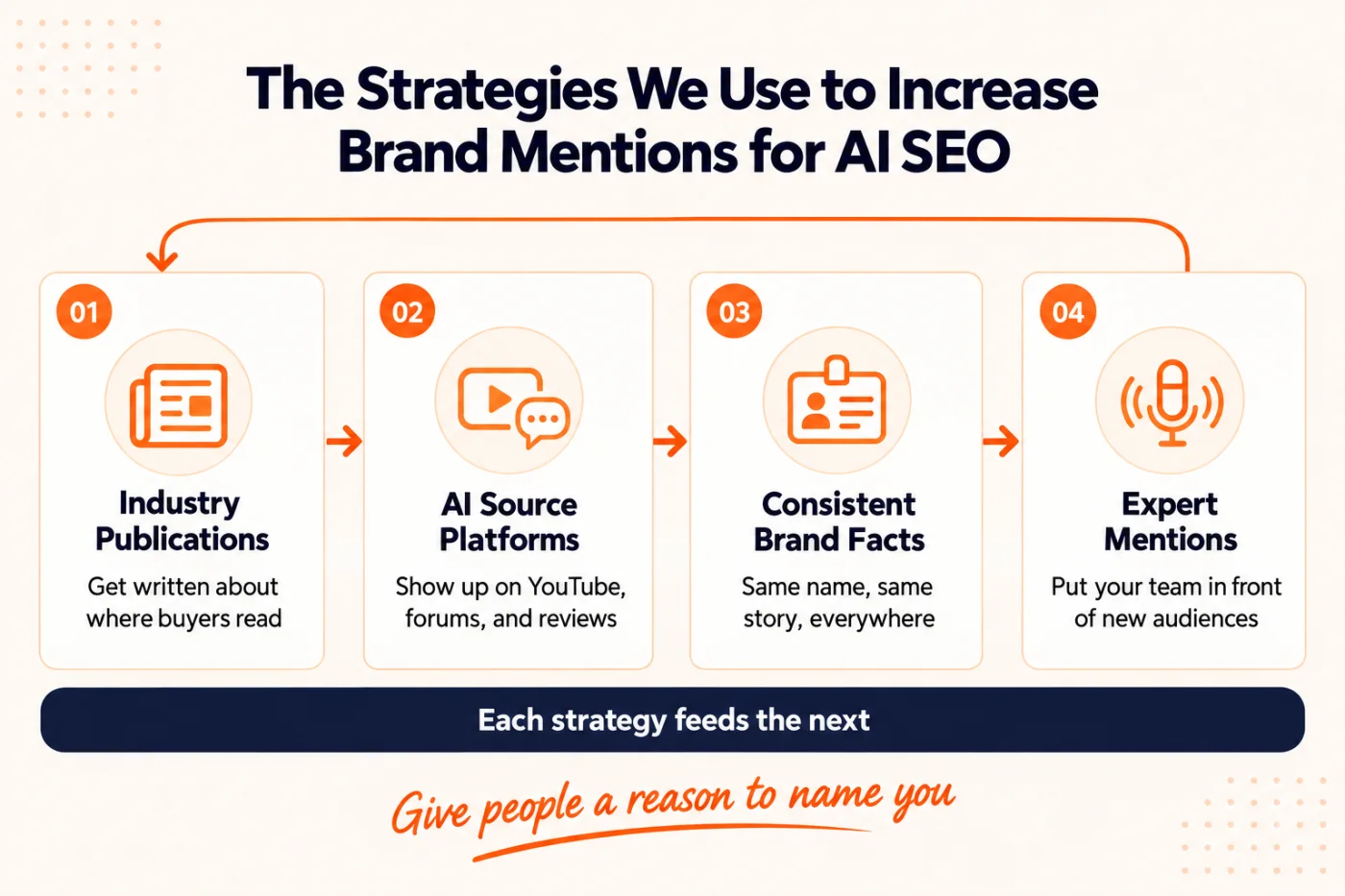
Fig 2 – 4 strategies that build on each other to get your brand named in AI answers
Increase Brand Mentions for AI SEO Through Industry Publications
The most dependable way to earn mentions is to have other sites write about you. Your blog helps you win citations. Other people’s publications build the consensus that leads AI systems to name you.
This is digital PR, pointed at AI visibility. Here is how we approach it.
- Contribute to trade publications your buyers read - The mention is the value here, with or without a link. When a respected industry site describes your brand in the context of a specific problem, AI systems learn that association.
- Publish original data - This is the strongest move on this list. Run a survey, analyze your own anonymized customer data, or publish benchmarks from your work. Every writer who cites the number mentions your brand, which creates mentions across many domains from a single asset.
- Pitch useful angles over company news - Editors publish what helps their readers. That means a surprising stat, a bold take backed by evidence, or a practical framework. A pitch about how great your company is goes nowhere.
- Aim for topical fit over raw domain strength - One mention on the trade site your buyers trust is worth more than 5 mentions on general blogs that have nothing to do with your category.
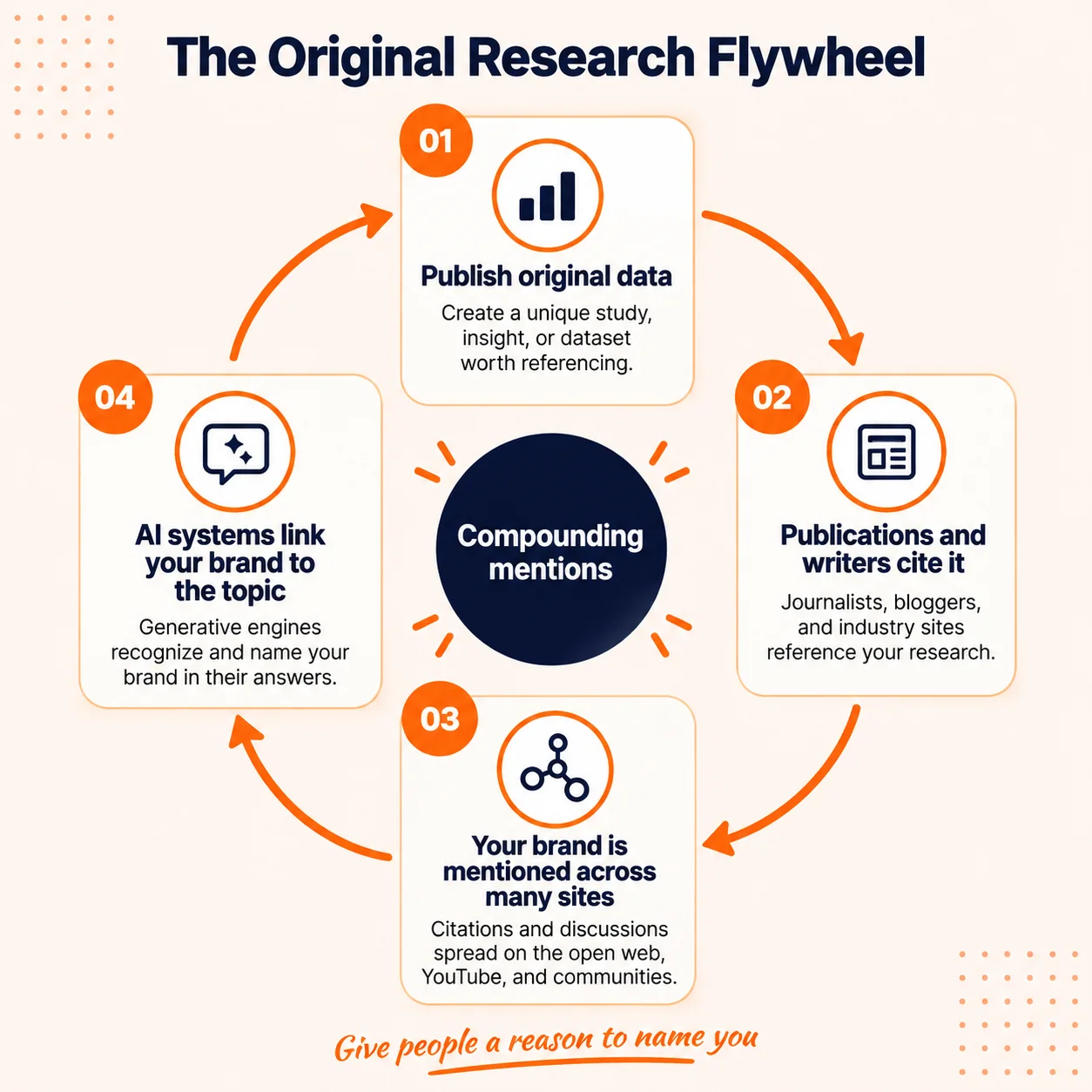
Fig 3 – One strong original data asset can produce mentions across dozens of domains
Google’s own guide backs this up. It notes that its AI features can show what people say about products and services across the web, including in blogs, videos, and forum discussions. That matches what we see. A link is a bonus. The mention in the right context does the heavy lifting.
Some platforms show up in AI answers far more than others. Here is where we would focus first.
Table 1 – Where AI answers pull community and review signals from, and what to do on each platform
YouTube deserves extra attention. The ViewSonic campaign above shows the shape that works. Those placements ran across 4 creators of different reach, which builds a broad base of brand discussion across many videos. That is good news for smaller businesses, because many modest mentions are easier to earn than 1 viral moment. If you need the videos made, our AI video production team builds them.
Influencers and creators are another fast route into video and social mentions. We covered that approach in our guide on building an influencer strategy that improves AI search visibility.
Why Fake Mentions Backfire
This is where a lot of AI SEO advice goes wrong, so we want to be direct about it.
Google’s guide lists seeking inauthentic mentions as a myth, saying it “isn’t as helpful as it might seem”. Google’s generative features rely on the same systems that rank quality content and block spam. Bought forum posts, fake reviews, and mass self promotion work against you, because those systems exist to filter them out. The only version that lasts is a brand people mention on their own.
Give AI Systems Clean, Consistent Facts About Your Brand
There is a lot of hype around schema markup and AI, so here is what Google has actually said.
Google’s guide states that its generative AI features do not require structured data, and that there is no special markup to add. It still says to keep using structured data as part of normal SEO, because it supports rich results. Some features, like shopping prices and availability, rely heavily on structured data. Others barely need it.
So we do not sell schema as a secret switch for AI mentions. We see brand clarity as hygiene that removes doubt about who you are. That hygiene covers 3 things.
- One consistent description of your brand - Your name, what you do, and who you serve should read the same on your site, your review profiles, your social bios, and your directory listings. Consistency across sources is what lets any system describe you accurately.
- Organization markup with sameAs links - Google documents Organization structured data for telling it your official name, logo, and profiles. The sameAs property connects your site to your verified profiles elsewhere.
- Clear authorship - Real author names, bios, and credentials on your articles make your expertise visible to readers and to machines.
Organization schema for your own siteJSON-LD, 77 lines
<script type="application/ld+json">
{
  "@context": "https://schema.org",
  "@type": "Organization",
  "@id": "https://www.example.com/#organization",
  "name": "Your Company Name",
  "alternateName": ["YCN", "Your Company"],
  "legalName": "Your Company Name Pvt. Ltd.",
  "url": "https://www.example.com/",
  "logo": {
    "@type": "ImageObject",
    "url": "https://www.example.com/images/logo.png",
    "width": 512,
    "height": 512
  },
  "image": "https://www.example.com/images/office.jpg",
  "description": "One or two plain sentences on what you do and who you serve. Match the wording on your About page.",
  "slogan": "Your tagline",
  "foundingDate": "2011-01-01",
  "founder": {
    "@type": "Person",
    "name": "Founder Name",
    "sameAs": "https://www.linkedin.com/in/founder-profile"
  },
  "numberOfEmployees": {
    "@type": "QuantitativeValue",
    "minValue": 100,
    "maxValue": 250
  },
  "email": "info@example.com",
  "telephone": "+1-555-555-5555",
  "address": {
    "@type": "PostalAddress",
    "streetAddress": "123 Main Street, Suite 400",
    "addressLocality": "City",
    "addressRegion": "State",
    "postalCode": "00000",
    "addressCountry": "US"
  },
  "contactPoint": [
    {
      "@type": "ContactPoint",
      "contactType": "sales",
      "telephone": "+1-555-555-5555",
      "email": "sales@example.com",
      "areaServed": ["US", "GB", "AE", "IN"],
      "availableLanguage": ["English"]
    },
    {
      "@type": "ContactPoint",
      "contactType": "customer support",
      "email": "support@example.com",
      "availableLanguage": ["English"]
    }
  ],
  "areaServed": ["US", "GB", "AE", "IN"],
  "knowsAbout": [
    "Your Primary Service",
    "Your Second Service",
    "Your Third Service"
  ],
  "taxID": "YOUR-TAX-ID",
  "vatID": "YOUR-VAT-ID",
  "duns": "000000000",
  "leiCode": "YOUR-LEI-CODE",
  "naicsCode": "541511",
  "sameAs": [
    "https://www.linkedin.com/company/your-company",
    "https://x.com/yourcompany",
    "https://www.facebook.com/yourcompany",
    "https://www.youtube.com/@yourcompany",
    "https://www.instagram.com/yourcompany",
    "https://www.crunchbase.com/organization/your-company",
    "https://www.wikidata.org/wiki/Q00000000"
  ]
}
</script>
When we ran GEO and content restructuring for a Series B medical financing platform, clean brand data was one piece of the work, alongside content rebuilt around the questions buyers actually ask. You can see how that played out in our case study on earning 34 AI Overview citations.
Earn Expert Mentions Through Thought Leadership
People talk about brands, and they also talk about the people behind them. When your team shows up as a named expert, those mentions attach to your brand too.
- Become a quoted source in other people’s articles - Journalists and editors look for expert sources every day. Keep a short list of topics your team can speak to with real data, and respond fast when a request fits.
- Appear on podcasts - Episodes produce transcripts and show notes, and many shows publish on YouTube too. One good appearance can create mentions in several places at once.
- Speak at industry events - Speaker pages, agenda listings, and recap articles each mention you, across domains you do not control.
- Publish case studies with specific numbers - Writers quote specific results. They skip vague success stories.
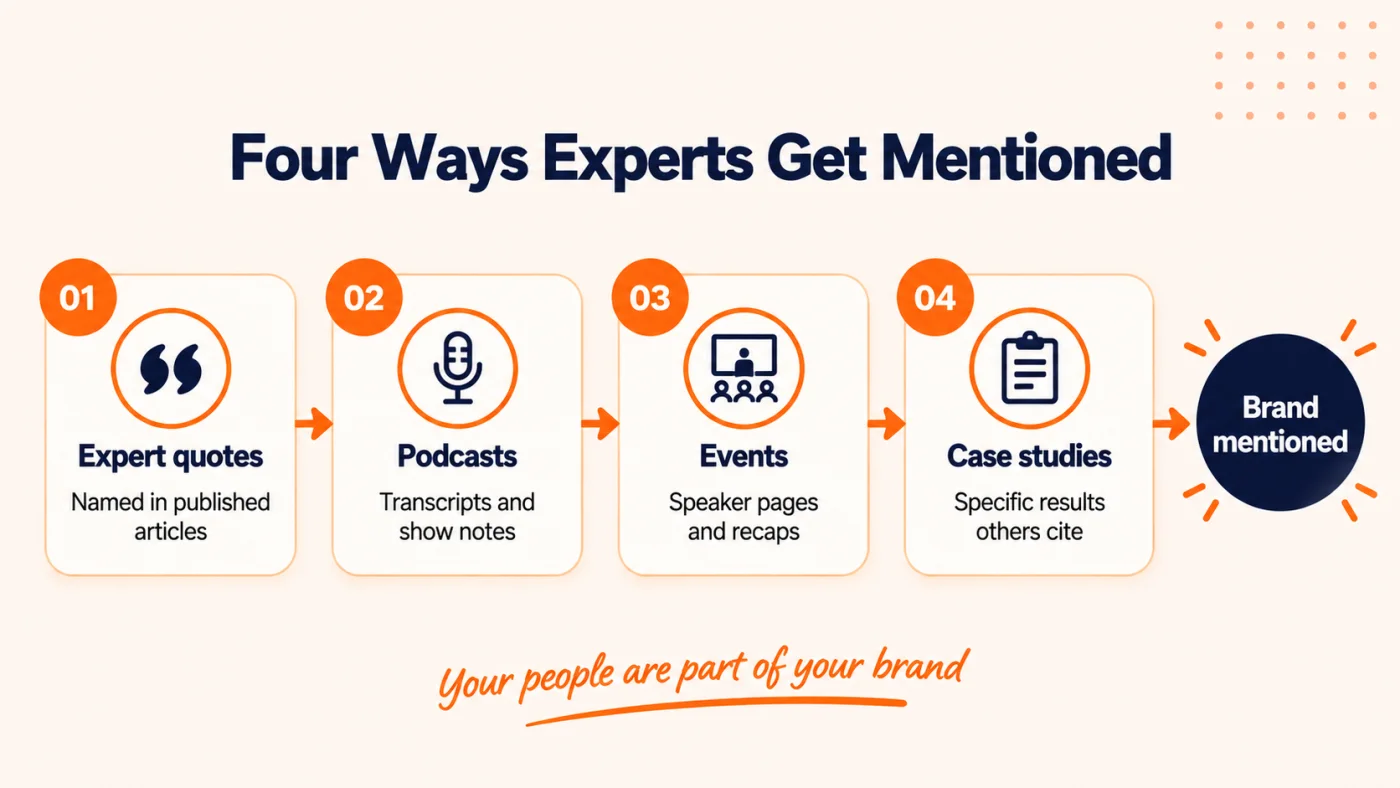
Fig 4 – Each channel puts your team's name, and your brand's, on sites you do not own
That is the thread through every tactic here. Be worth mentioning, then put yourself in the rooms where mentions happen.
How to Track Brand Mentions in AI Search
You cannot manage what you do not measure. Here is the tracking setup we use.
- Check Google’s own data first - Search Console now has a Generative AI performance report that shows how your content performs in Google’s AI features. Start there before paying for anything else.
- Run a fixed prompt set - Pick 20 to 30 questions your buyers ask. Run them in ChatGPT, Perplexity, Gemini, and Google AI Mode every 2 weeks. Record whether you appear, what the answer says about you, and which other brands the answer names.
- Watch branded search volume - When AI answers mention you more, more people search your name. A steady rise in branded searches, without a matching rise in ad spend, is a good sign.
- Monitor mentions across the web - Alerts on your brand name tell you where new mentions land, so you can respond and build on what works. Our online reputation management service runs this monitoring alongside review responses.
- Track competitor overlap - If AI answers name your competitors for a prompt and skip you, that prompt is your next content and PR target.
For a fuller framework, our GEO implementation checklist covers tracking alongside the optimization steps.

Fig 5 – A repeatable tracking routine shows whether your strategy is moving the needle
Get Your Brand Named in AI Answers
If AI answers name your competitors and skip you, you are losing buyers before they ever reach your website. Our GEO and SEO team builds the mention strategy, content, and brand foundation that puts your business in the answer, and we track it across the major AI engines every week.
Talk To Our Team
Frequently Asked Questions