c-84, sector 65, Noida
You sell more with a store built for agentic first commerce.
Just Drop Us A Line
We are here to answer your questions 24/7


Ecommerce in 2026 operates differently than the storefronts most brands launched 5 years ago. Buyers arrive through AI search, agent assistants, social feeds, and marketplaces before they reach a brand site. First party data drives acquisition since third party cookies lost browser support. Platform fees, return costs, and payment orchestration shape margin as heavily as cost of goods. Large language models read product catalogs and generate shopping answers before a shopper clicks, so product data now serves machine readers as a primary audience.
Clixlogix builds ecommerce systems that match this reality. The Clixlogix architecture team designs catalogs, storefronts, and backend integrations so product data reads cleanly to AI retrieval, flows through ERP and OMS, and defends margin at the SKU level. Marketplace fees, return rates, acquisition cost, and payment orchestration enter the operating economics before engineering begins. The engagement produces a commerce system that holds its shape as channels, agents, and buyer behavior keep shifting.
What you can hand us runs from the first build to the replatform and the operations that follow.
Search, then brand site.
AI search, social, marketplace, then brand.
0.0vs 4.2 touchpoints per shopper Think with Google, 2025
Shoppers compared product pages in tabs.
AI Mode summarizes, compares, and recommends.
0M people a day in Google AI Mode Google, Q3 2025
Large retailers set the pace.
They run AI in production. Retail trade lags.
0pts gap, 37% of large firms to 14% in retail trade US Census BTOS, 2026
17.1% of US retail, Q2 2026. Commerce reaches your SKUs through machines first. Engineer accordingly.
US Census, Q2 2026These cover the work most stores come to us for, from the first build through to the replatform and the support that follows. You can hand us the whole lifecycle or plug us into one stage, such as a migration, a checkout rebuild or an ERP integration.
We build your storefront from catalog model to checkout, on the platform that fits how you price, fulfil and sell. You get a store your merchandisers can run without a developer in the loop.
We extend your existing storefront with the templates, components and logic your catalog actually needs. Your design system stays intact and platform upgrades do not overwrite the work.
We separate your storefront from your ecommerce backend so each can change on its own schedule. You get faster pages, reusable APIs and a front end you can rebuild without touching orders.
We rebuild the path from cart to confirmation around the friction your analytics already shows. Fewer steps, saved payment methods, and address and tax handling that does not lose customers at the last screen.
We move your catalog, customers, orders and SEO equity to a new platform without losing history or rankings. Cutover runs to a runbook with a rollback available at every stage.
We build recurring billing, plan changes, pauses and dunning into your store rather than bolting a second system beside it. Your revenue reporting stays in one place.
We build multi vendor platforms with seller onboarding, commission logic, split payouts and dispute handling. You run the marketplace instead of the spreadsheets behind it.
We connect your store to ERP, OMS, PIM, WMS and your accounting stack so stock, pricing and orders agree across every channel. Failures surface as alerts rather than as missed shipments.
We route payments across gateways and methods by cost, geography and success rate, with retries on soft declines. You recover revenue a single gateway quietly loses.
We keep your store current after launch with platform upgrades, security patches, release testing and a backlog you prioritise. Peak season gets planned for rather than survived.
These are the capabilities an AI first storefront needs and most stores do not yet have. They decide whether your products are visible to agents, whether your data can be read by machines, and whether your store holds its margin and its speed as traffic shifts.
We make your store transactable by AI agents through the live protocols, ACP, UCP, AP2 and MCP, and open your bot rules to the agents you want. Your products stay eligible when the purchase happens outside your site.
We restructure your catalog so machines can read it, with stable identifiers, complete attributes, clean variants and feeds that stay in sync. Incomplete data is the usual reason a product never enters the shortlist.
We expose stock, pricing and availability through APIs that answer fast enough to be counted, with consistent schemas and rate limits that do not break an agent mid task. Slow or inconsistent responses get your products excluded.
We decide with you what to decompose and what to leave alone, then build search, checkout, pricing or loyalty as services you can swap. Modernising the platform you already run is often the shorter route.
We put AI behind site search, recommendations and merchandising rules so the right product surfaces for each visitor. Your merchandisers keep control of the rules that carry commercial weight.
We profile and fix what makes your store slow, from image delivery and third party scripts to template rendering and cache strategy. Speed gets measured on your real traffic, not a lab score.
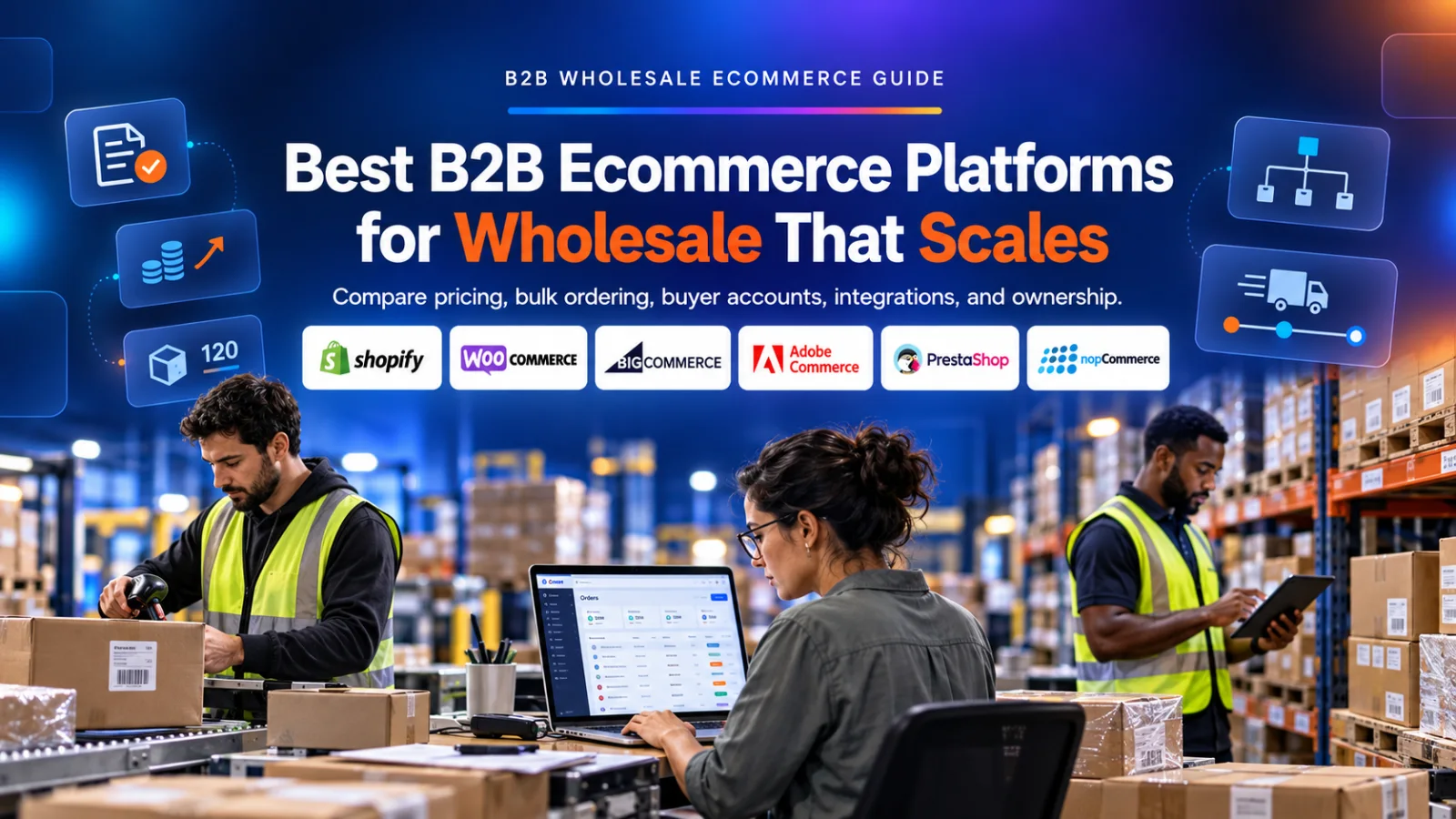
We build, extend and migrate on six storefront platforms. Which one fits depends on how you price, how you fulfil and how much of the stack you want to own, and we will tell you when the platform you already run is the shorter route.
We build and extend Shopify stores with custom themes, private apps, checkout extensibility and Plus level B2B and multi store setups. Our largest body of delivered ecommerce work sits on this platform.
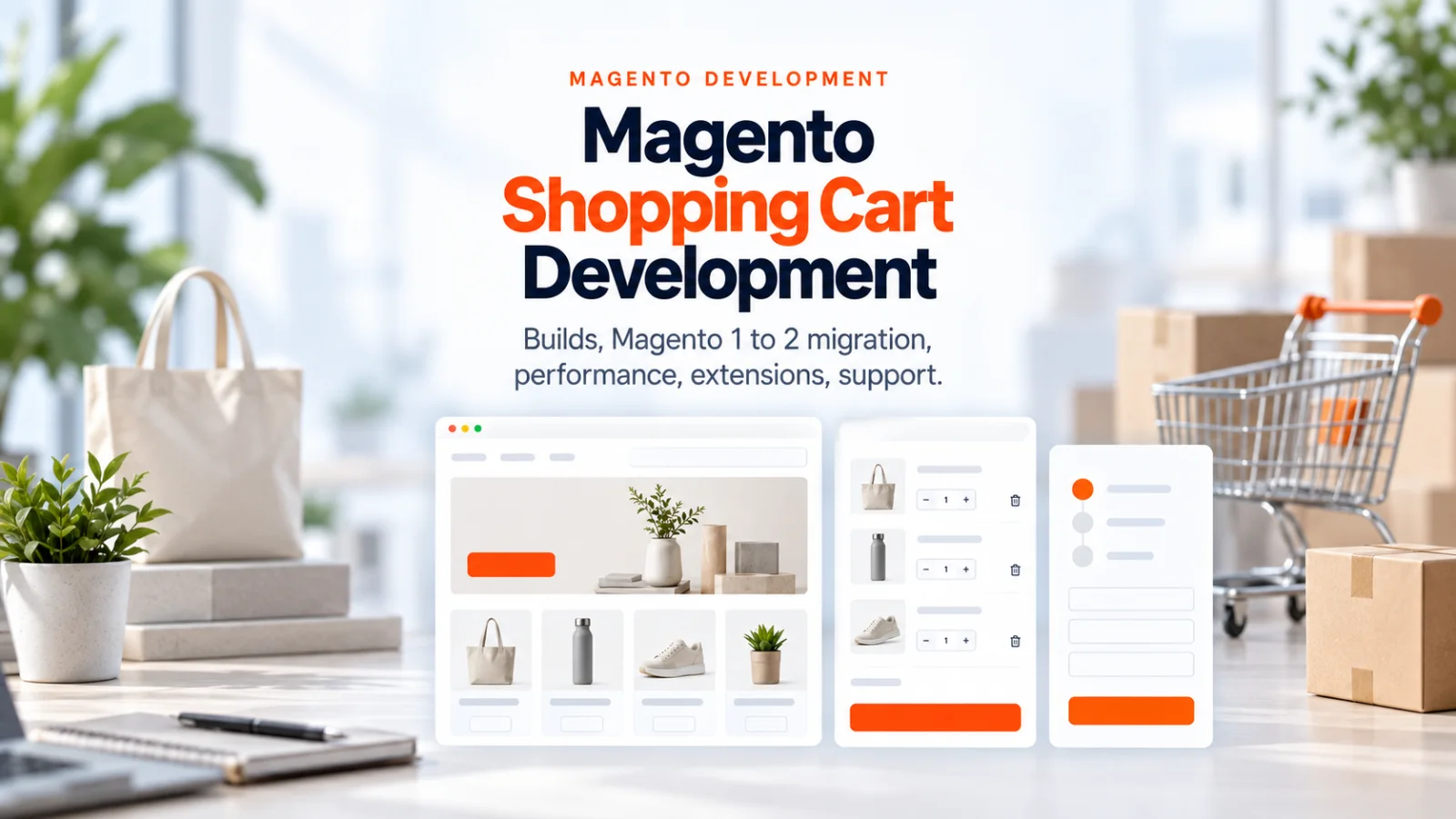
We build, upgrade and maintain Magento and Adobe Commerce, covering version upgrades, extension development, multi store catalogs and ERP integration. Most of this work reaches us as a migration or a rescue.
We build and harden WooCommerce stores on WordPress, with custom product types, performance work and a plugin footprint kept deliberately small. Suits content led ecommerce where editorial and catalog share a stack.
We build BigCommerce storefronts and headless front ends on its APIs, with catalog, pricing and B2B price list configuration. Suits teams that want platform managed infrastructure without giving up API freedom.
We build and support PrestaShop stores with module development, multi store and multi language configuration and performance tuning. Common where a catalog sells across several European markets.
We build and extend nopCommerce stores on ASP.NET, with plugin development, multi store and multi vendor configuration and integration into Microsoft centred back offices. The fit is teams already running .NET who want their ecommerce stack on the same platform.
We maintain, extend and migrate OpenCart stores, covering module development, payment and shipping integrations and version upgrades. Most engagements here are a migration off OpenCart or a stabilisation before one.


See how discovery, migration planning and cutover run to a fixed sequence, so you know what happens and when.
More about our processEcommerce work lands differently depending on who owns it. We shape delivery around the team that will live with the store, so founders get the numbers, merchandisers get control, and the people running operations get a system that holds together.
You are deciding where to put capital, whether that is a replatform, a new channel or a rebuild. You need to know what it costs, how long it takes and what it returns before anyone writes code. We size the work against your margin first.
You own the numbers the store is judged on, conversion, average order value and repeat rate. You need a storefront you can merchandise, test and change without a developer in the loop for every banner, badge or landing page.
You live with the store after launch. You need stock, pricing and orders to agree across every channel, and failures to surface as alerts rather than as missed shipments. We build integrations and monitoring to your requirements.
How you sell changes the system more than what you sell. These are the selling models we build for, and what each one decides about the build.
Retail brands selling straight to shoppers, where conversion rate and average order value decide the month. The build centres on discovery, merchandising and a checkout that holds up under peak traffic.
Buyers who log in to a negotiated price, order against net terms and reorder from history. Price lists, company accounts, quote to order and approval chains belong in the build from the start, not bolted on later.
Manufacturers going direct and owning the customer for the first time. First party data, subscription and loyalty mechanics, and a fulfilment process that was never designed to ship single units.
Brands selling through dealers, resellers and franchise partners who sell on to the public. Partner catalogs, segregated pricing and order routing by territory have to hold without leaking into one another.
Deep catalogs, tiered pricing and minimum order quantities, where one customer may buy a thousand lines in a sitting. Fast bulk order entry, stock visibility and ERP accuracy matter more than storefront polish.
Stores and the website sharing one stock pool, with click and collect, ship from store, and returns to any branch. The hard part is real time inventory accuracy across locations, not the front end.
Selling into several markets with their own currencies, languages, tax rules and duties. Catalog and pricing are structured per market, so adding a country is a configuration rather than a second store.
Several brands, regions or business units on one commerce platform. Shared catalog with separate storefronts, governance over who can change what, and releases that do not take every brand down at once.
These are the features buyers now expect to meet and most storefronts cannot yet serve. We build them onto the platform you already run, so each one ships as part of your store rather than as a product bolted on beside it.
Your store completes a purchase an agent started somewhere else, through ACP, UCP and AP2, with the mandate verified and the order landing in your normal flow.
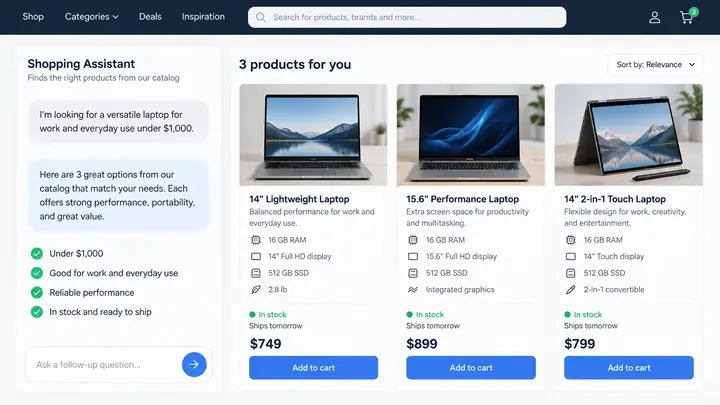
An assistant that answers from your catalog rather than the open web. It narrows a wide question down to three products and hands the shopper to checkout.
Shoppers see the product on themselves or in their room before they commit. Aimed at the categories where fit and scale decide both the order and the return.
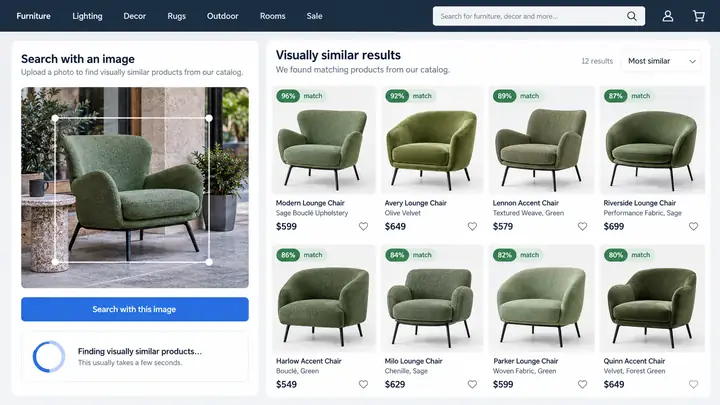
A photo becomes the query. Shoppers find the item they saw without knowing what you call it, which is exactly where keyword search loses them.
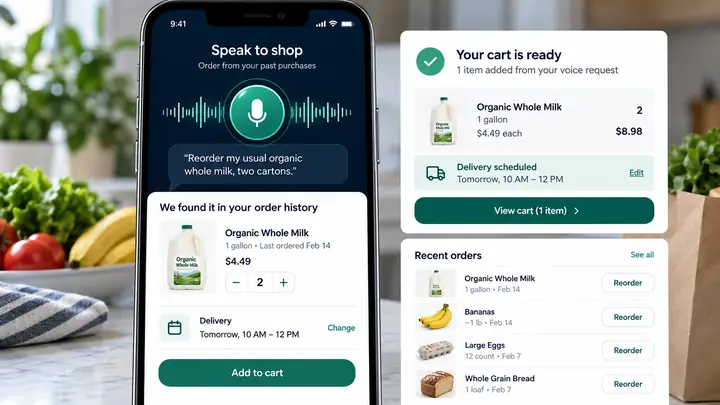
Reorder, track and browse by voice, on your store and through assistants. Suits repeat purchase categories where typing is the friction that costs you the sale.
Buyers build the variant they want and watch it update as they go, with price, lead time and manufacturability checked against your rules at every step.
Video that carries the add to cart. Shoppers buy inside the stream or the clip instead of leaving to search for the product once it has finished.
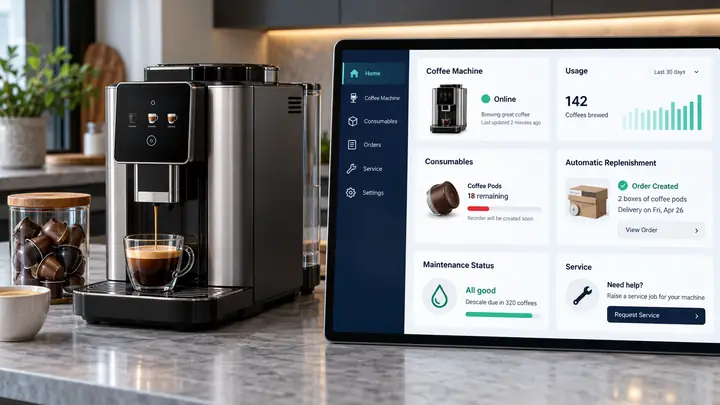
Connected products that reorder consumables, report usage and raise service jobs. Your store becomes the fulfilment layer for hardware you already sell.
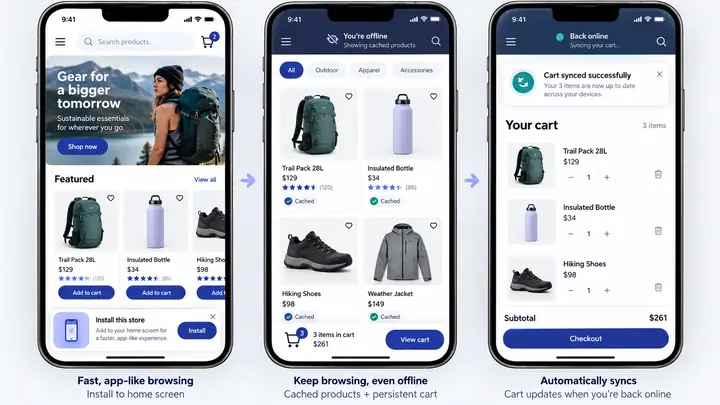
App like speed on the web, installable, and tolerant of a weak connection. Suits markets where mobile data quality is the real limit on your conversion.
A production storefront is more than a theme. It is catalog structure, inventory and order flow, payments and tax, integrations into the systems already running your business, and the operational visibility to keep all of it honest. We design those parts as one system, so your store absorbs new channels and new volume without a rebuild. Senior engineers own each part, and we stay accountable through every release after launch.

Designed as one system from the start, your store absorbs new channels, new markets and new volume without the midlife rebuild that hits storefronts assembled plugin by plugin. Migrations land without losing orders or rankings.
Your store is only as good as what it connects to. We build across the storefront platforms, payment providers, ERP and inventory systems, search engines and sales channels your business already depends on, and we will tell you when the one you run today is the shorter route. Each integration is built for how these systems behave in production, not how the documentation describes them.
The storefront platforms we build, extend and migrate on. Which one fits depends on how you price, how you fulfil and how much of the stack you want to own.


Gateways, wallets and billing engines. We route payments by cost, geography and success rate so a single provider is not quietly losing you revenue.


The systems that already run your business. We connect them so stock, pricing and orders agree across every channel, and failures surface as alerts rather than as missed shipments.


Site search is where high intent shoppers tell you exactly what they want. These are the engines we implement, tune and merchandise against.


The systems your merchandisers and support team live in. We integrate them so customer, order and behaviour data arrives intact rather than half mapped.


Selling beyond your own storefront. We connect your catalog, stock and orders to each channel so listings stay accurate and you never oversell the same unit twice.


Tell us what you sell and how you sell it. You get a one page cost map with platform fit, timeline and a budget range.
The right engagement depends on where your store is today. A brand launching its first serious storefront needs different support than one replatforming off a system it has outgrown, or one running several brands across markets. We have delivered across all three, and we structure the work around your catalog, your channels and the capacity of your own team rather than forcing a standard model.
Five ways we engage. Each one tuned to a different stage of growth, risk tolerance and in house capacity.

We audit what you run today, confirm the platform that fits how you price and fulfil, and scope the build. You get a costed plan and a migration runbook in 2 to 4 weeks.
Senior commerce engineers embedded full time on your stack. They learn your catalog, your integrations and your peak season, so quality compounds release after release.
Drop in specialists for sharp problems like checkout conversion, feed quality or an ERP sync that keeps failing. Days or weeks, a defined deliverable, no retainer.
Best fit where scope shifts as you learn. You see hours and spend week by week and steer the backlog, which suits the optimisation work that follows a launch.
End to end build or migration on a fixed scope. Covers catalog, storefront, integrations, payments, cutover and the redirect map, with milestone checkpoints.
| Factor | What We Assess |
|---|---|
| Catalog Complexity | SKU count, variants and configurable products, attribute depth, how often the catalog changes |
| Data Readiness | Product data quality, media, and the historical orders and customer records you carry over |
| Platform & Architecture | Packaged platform or headless build, and how much of the stack you want to own |
| Integration Depth | ERP, OMS, PIM, WMS, payments, tax and shipping, and how many of them must stay in sync |
| Payments & Compliance | PCI DSS scope, tax jurisdictions, data residency, age or licence restrictions |
| Channels & Markets | Storefronts, currencies and languages, and the marketplaces you list on |
| Internal Capacity | Who merchandises day to day, how fast decisions land, whether content is ready |
| Archetype | Typical Scope | Timeline | Investment Range |
|---|---|---|---|
| Storefront Build | Single storefront, standard integrations, launch ready | 4 to 8 weeks | $1,000 to $8,000 |
| Replatform & Migration | Catalog, customers, orders and SEO equity moved with a rollback at every stage | 6 to 12 weeks | $6,000 to $18,000 |
| Enterprise & Multi Store | Several brands or markets, deep ERP and OMS integration, phased rollout | 3 to 6 months | $18,000 to $25,000+ |
Every engagement starts from $25 per hour. The ranges above are what that works out to across a typical build, and we show you the hours before you commit to them.
Tell us your platform, catalog size and which systems must stay in sync. You get a scoped estimate with timeline and cost.
Request a detailed estimate
Card data passes through your checkout, customer records sit in your admin, staff and apps need scoped access, and an acquirer can ask for evidence at any point. We engineer for those realities from day one. People, process, and platform, accountable end to end.
Card data stays out of your estate, and customer records stay inside the boundary you set.
Only the right people and the right systems can touch orders, pricing and customer data, and you can prove it.
The store you ship in October is the store you can defend through Black Friday.
Full visibility for internal review, for your acquirer, and for a regulator.
The stores we build are engineered to meet these standards. Card data is tokenised so your PCI scope stays small, privacy requests are handled, accessibility is built into the templates, and delivery runs inside our own ISO 27001 aligned program.


Your storefront holds card data, customer records and order history, and your acquirer can ask for evidence at any time. We build so you can answer.
Explore client security & complianceMost commerce problems are not new, and the shapes repeat. The solutions below are the ones we are asked for most often, each with a defined architecture, known integration requirements and an outcome you can measure after launch rather than argue about before it.
Each solution maps to a specific operational problem. If you are weighing one of these up, your use case usually sits in one or more of these categories.
Explore our full solution catalogStorefront builds, replatforms and migrations we have scoped, shipped and supported, with the outcomes they produced.


We are here to answer your questions 24/7

Get all your questions answered.
A single storefront with standard integrations runs $1,000 to $8,000 and takes 4 to 8 weeks. A replatform that moves catalog, customers, orders and SEO equity runs $6,000 to $18,000 over 6 to 12 weeks. Multi brand or multi market builds with deep ERP and OMS work run $18,000 to $25,000 and upward across 3 to 6 months. Every engagement starts from $25 per hour, and we show you the hours before you commit to them.
Catalog complexity is the usual one. Configurable products, deep attribute sets and frequent change cost far more than SKU count suggests. After that it is integration depth, because every system that must stay in sync is another failure path to design for, and data quality, because migrating a catalog nobody has cleaned in six years is a project of its own. Tax, duties and multi currency add scope late if they are not scoped early.
Platform licensing and transaction fees, app and extension subscriptions, hosting where you are not on a SaaS platform, and development time for upgrades, security patches and the backlog you build after launch. Peak season usually needs its own slice. We quote support separately from build so you can see which is which rather than finding it folded into a single number.
Four to eight weeks for a single storefront with standard integrations. Six to twelve weeks for a replatform, because catalog mapping, order history and redirects take longer than the build itself. Three to six months for several brands or markets with deep ERP integration. Discovery adds two to four weeks at the front if the platform decision is still open.
A storefront build starts from a clean catalog and launches one store. A replatform moves an existing business, so the work is dominated by data migration, redirect mapping and cutover planning rather than by the front end. An enterprise rollout runs several brands, regions or business units on one platform, which adds governance, shared catalog design and a phased release plan.
It depends on how you price, how you fulfil and how much of the stack you want to own. Shopify suits speed to market and low operational burden. Adobe Commerce suits complex catalogs, B2B pricing and multi store. WooCommerce suits content led commerce. BigCommerce sits between the two on API freedom. We will also tell you when the platform you already run is the shorter route, because replatforming is often not the answer.
Not if the migration is planned for it. Every URL on the old store gets a mapped redirect, metadata and structured data move with the content, and internal links are rewritten rather than left pointing at dead paths. We benchmark rankings and traffic before cutover so any movement afterwards is measured against a real baseline rather than guessed at.
Customers, addresses, order history and credit notes are migrated and reconciled against source counts before cutover, not after. Passwords usually cannot transfer between platforms, so we plan the reset communication as part of launch. Where history is too large to carry in full, we agree a cutoff and keep the archive queryable rather than quietly dropping it.
Yes, and it is most of what makes a commerce build hard. We integrate NetSuite, SAP, Dynamics 365, Odoo, Cin7, Brightpearl and Linnworks among others, with stock reserved against whichever channel sold it so you do not oversell the same unit twice. Where the ERP is the system of record we integrate through middleware so the storefront can never write to it directly.
Your catalog, customer and order data stays exportable in a documented format. Business logic lives in your own services rather than inside a single app or theme wherever that is practical, and integrations go through an interface we own instead of being wired directly to one provider. On the platform itself some lock in is unavoidable, so we make the cost of leaving explicit before you commit.
You do. Code, configuration, theme, custom apps and documentation are yours, delivered into your repositories and your accounts, not ours. We do not hold your hosting, domains or platform ownership hostage, and the handover includes a runbook so another team could pick it up without us.
Card data is tokenised at the gateway and never reaches your servers, which keeps your PCI scope as small as the platform allows. Customer records, addresses and consent are access controlled by role, encrypted in transit and at rest, with retention and residency documented per market. Admin actions are logged, so who changed a price or an order is answerable after the fact.
Field notes on migrations, platform choices and selling through AI search, from the team that builds them.