# How to Create White Label SEO Reports That Are Relevant in 2027 and Impress Clients
TL;DR
Traditional SEO reports that only show rankings and traffic graphs are losing relevance as AI search grows. Clients want more.
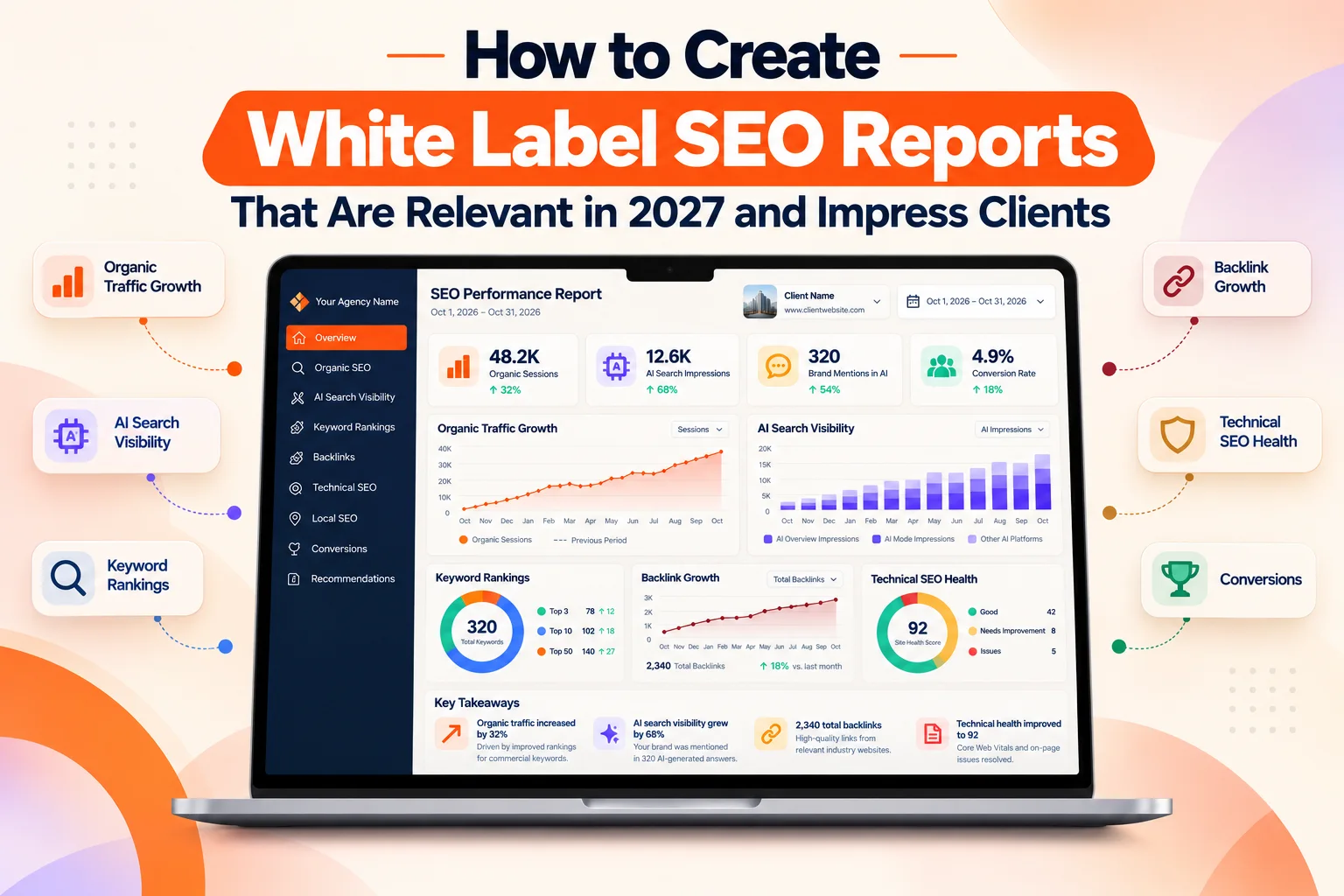
A 2027-ready white label SEO report covers two sections. Traditional SEO metrics (traffic, rankings, backlinks, technical health) plus AI search visibility metrics (generative AI impressions, brand mention tracking, prompt tracking).
The process runs to five steps. Understand what your white label partner delivers, match metrics to client goals, add AI search data from Google Search Console and AI visibility tracking, brand everything under your agency, and automate delivery with a review cadence.
Agencies that add AI search metrics to their reports before clients ask for them will hold retention. Those that wait will lose accounts to agencies that moved first.
Clixlogix handles white label SEO reporting for partner agencies, including AI visibility data, branded dashboards, and automated delivery starting at $249 per account per month.
Your client gets a report every month. Rankings moved up. Traffic looks decent. Backlinks are growing. And then, three months later, they cancel.
We see this all the time. The report looked fine on paper, but it missed the part of the search that is changing fastest. AI search.
Google's AI Mode crossed one billion monthly users in May 2026, as announced at Google I/O 2026. AI Overviews now reach over 2.5 billion users every month. When an AI generated answer sits above the organic results and gives your client's customer a full response before they scroll, a report that only shows "Position 3 for target keyword" is telling half the story.
That is why white label SEO reporting is important right now, and why the format needs a serious update heading into 2027. Agencies still sending the same template from 2023 are going to look behind the curve to clients who are reading about AI search in their LinkedIn feeds every week.
We wrote this guide because we build and deliver white label SEO reports for agencies as part of our white label SEO reseller program, and we have seen what keeps clients engaged versus what gets ignored. Here is the full guide: what a modern report should contain, how to build and brand it, how to automate delivery, and the AI search metrics that will separate good agencies from the rest in 2027.
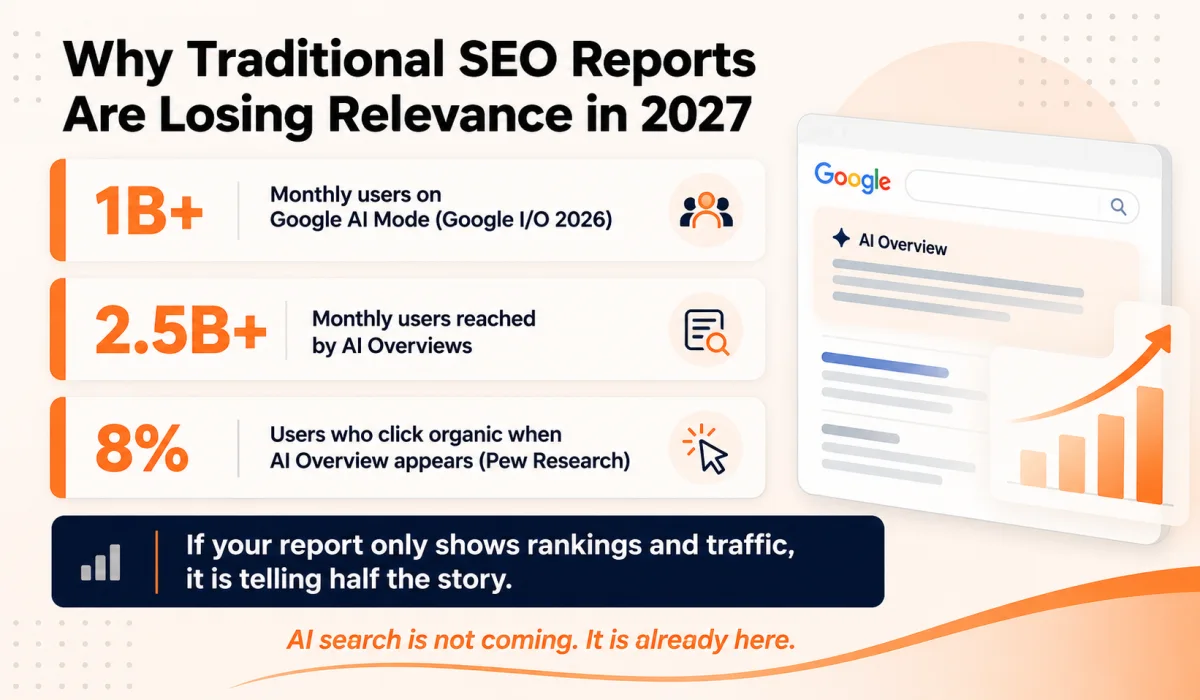
Fig 1 - The numbers behind the shift: AI search reached massive scale in 2026, and SEO reporting needs to catch up.
Why White Label SEO Reporting Needs to Be Updated in the Age of AI Search
White label SEO reports have always mattered. They are how agencies prove ROI to clients without revealing the fulfillment partner behind the work. If you are still weighing whether to outsource SEO through a white label partner or bring it in house, the reporting question applies either way. But the report format needs updating.
What has changed is search itself.
Three things happened in 2026 that made the standard SEO report format outdated overnight:
First, AI answers started eating clicks. When Google shows an AI Overview at the top of the results, the click through rate to organic results falls. Only 8% of users click through to an organic result when an AI Overview appears, compared to 15% when it does not. Your client's page might still rank in the top three, but if an AI answer is serving the user's question above the fold, that ranking is worth less traffic than it used to be.
Second, Google gave us AI specific reporting data. In June 2026, Google Search Console launched a dedicated performance report for generative AI features. This shows how many impressions your pages are getting inside AI generated answers across AI Overviews and AI Mode, bundled as one "Generative AI" data set. You can see pages, countries, and devices. The data exists. If your report does not include it, a client who pokes around their own Search Console will notice.
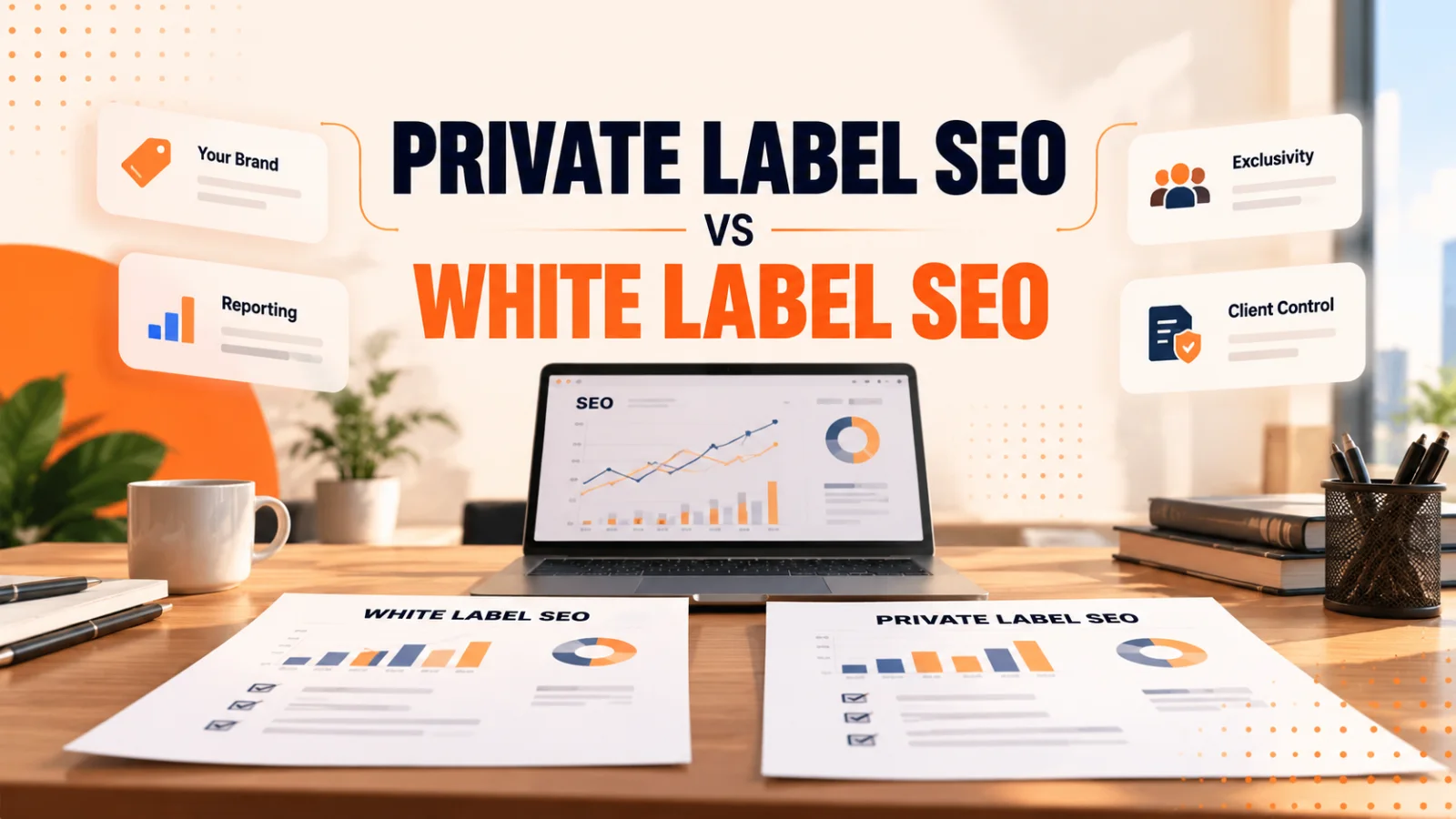
Third, clients started asking questions agencies could not answer. "Are we showing up in ChatGPT results?" "Is our brand mentioned in AI Overviews?" "What happens to our SEO when people stop clicking?" These are real questions we hear from agency partners. If your monthly report cannot address them, you have a trust gap. And if you are still unsure about the difference between private label and white label SEO distinction, the reporting standards apply to both models.
Adding AI search data to a white label report before clients demand it is what holds those accounts. Waiting hands them to whichever agency moved first.
What Every White Label SEO Report Should Include in 2027
A report that works in 2027 covers two sections. The first is the traditional SEO data clients have always expected. The second is AI search visibility, which most agencies are still ignoring.
Both sections go in the same report. You do not send two separate documents. One cohesive branded report that covers the full picture.
Section 1 - Traditional SEO Metrics (Still Required)
These are the fundamentals. Dropping them would be a mistake. But they are the floor that every other metric builds on.
Organic traffic trends - monthly sessions from organic search, broken down by landing page and compared to the previous period. Pull this from GA4 or your analytics platform of choice.
Keyword rankings and movement - show the ones that moved, explain why, and connect them to business outcomes. "We moved from position 8 to position 3 for [service keyword], which added an estimated 340 visits this month" is useful. A raw ranking table alone is less so.
Backlink profile health - new links acquired, links lost, referring domains trend, and domain authority trajectory. Clients who understand SEO will look at this. Clients who do not will skip it, but it needs to be there for credibility. Understanding how internal link structure and its SEO impact affect your site's authority is part of this picture.
Technical SEO health - Core Web Vitals scores, crawl error count, page speed, and indexation status. A simple pass/fail dashboard works better than a detailed technical audit inside a monthly report.
Conversions from organic - leads, calls, purchases, whatever the client tracks as a conversion. This is the number that keeps the retainer alive. Every other metric is context for this one.
Executive summary - a plain English paragraph at the top of the report that tells the client what happened this month, what we did, and what comes next. Most reports bury this at the bottom or skip it entirely. Put it first.
Section 2 - AI Search Visibility Metrics (The 2027 Differentiator)
This is where you separate yourself from every other agency still sending a 2023-era report template.
Generative AI impressions from Google Search Console - Google Search Console now includes a dedicated performance report for generative AI features. This shows how many times your client's pages appeared inside AI generated answers, covering both AI Overviews and AI Mode in one combined data set. You can filter by pages, countries, and devices. This is the closest thing Google has shipped to a "citation share" metric. Track it monthly and show the trend.
One important note on that data. The report shows impressions only. It does not confirm whether your page was visibly cited as a link inside the AI answer, and it does not separate AI Overviews from AI Mode. The data is still valuable for trend tracking, but be honest with clients about what it does and does not tell you.
Brand mention tracking across AI platforms - are AI tools mentioning your client's brand when users ask relevant questions? This means running tracked prompts through ChatGPT, Perplexity, Gemini, and other AI answer engines, and logging whether the brand shows up. We have a detailed guide on how to increase brand mentions for AI search that covers the tactical side. Some specialized platforms can do this at scale. For smaller accounts, a manual monthly check of 15 to 20 prompts works.
Prompt tracking - this is the practice of identifying which specific questions and prompts trigger AI mentions of your client's brand (or competitors). You build a library of prompts relevant to the client's industry, run them regularly, and track how responses change over time. Think of it as the AI era version of keyword tracking, but applied to conversational queries in place of typed searches.
Citation frequency - when the AI does mention a source, how often is your client's website the one being cited? This matters because AI answers often pull from a small set of trusted sources. Getting into that set is the new ranking game.
AI Share of Voice against competitors - of all the AI answers generated for your client's target prompts, what percentage mention your client versus their competitors? This metric captures relative visibility in AI search in a single number.
The pages AI engines cite most - which pages on your client's site are the ones AI tools trust and reference? This tells you where the authority sits and where you need to build more.
Not every client needs every one of these metrics. A local plumber probably does not need AI Share of Voice tracking across five platforms. But a SaaS company or a national brand does. Match the metrics to the client.
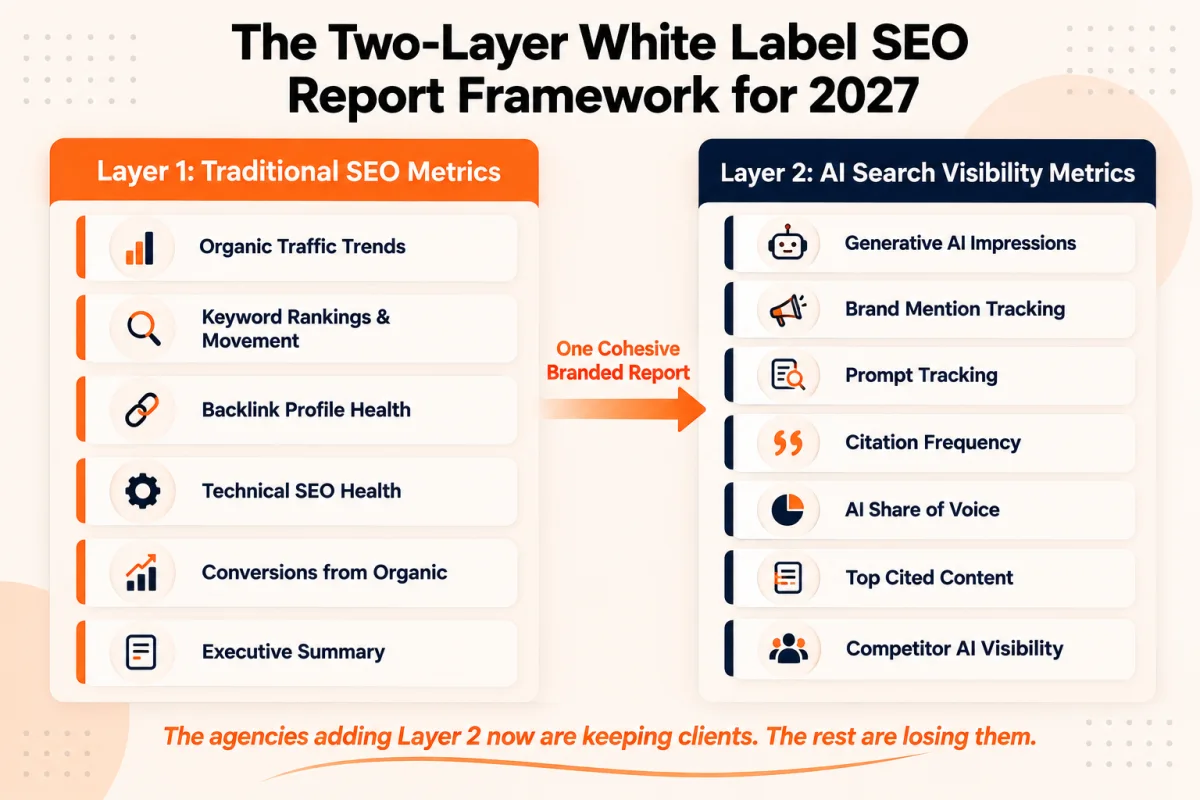
Fig 2 - A 2027-ready white label SEO report covers both traditional SEO metrics and AI search visibility data in one branded document.
How to Create White Label SEO Reports and Automate Them Step by Step
Here is the practical walkthrough. Five steps from zero to a branded, automated report that covers both traditional SEO and AI search visibility.
Step 1 - Understand What Your White Label Partner Delivers in Reporting
In a white label SEO arrangement, the fulfillment partner builds the report and delivers it under the agency's brand. The agency does not pick a standalone reporting tool and assemble the report themselves. That is the whole point of white label.
Ask your fulfillment partner these questions before a single report goes out:
- Does the report carry our agency branding (logo, colors, domain) with zero trace of your company?
- Does it include AI search visibility data, or only traditional SEO metrics?
- Can clients access a live branded dashboard, or is it PDF only?
- Is delivery automated on a schedule, or does someone have to manually trigger each send?
- Can we add custom sections or commentary before the report goes to the client?
If your current white label SEO partner cannot answer yes to most of these, your reporting is already behind. The report is the single most visible proof of work your client receives. It has to look like your agency built it, and it has to show the full picture of what is happening in search today.
For agencies using their own in house tools alongside a partner, the same questions apply. Semrush offers white label reporting on its business tier plans with customizable templates. Google Search Console is free and has the generative AI impression data you need, but it does not support white labeling. Most agencies combine data from multiple sources into one branded output.
Either way, the tool matters far less than the person interpreting the data. A beautifully branded report full of numbers nobody explains is still a bad report.
Step 2 - Define the Metrics That Match Your Client's Goals
The biggest reporting mistake we see agencies make is using one template for every client. A local service business and a national e-commerce brand have completely different definitions of success.
Before building a report, answer three questions:
- What does this client consider a lead or a conversion?
- Which search channels matter most to their customers (organic, local pack, AI answers, all three)?
- What level of detail do they actually read?
A local plumber cares about phone calls from Google, map pack visibility, and review volume. A SaaS company cares about organic pipeline, brand visibility in AI search, and content authority metrics. A multi location franchise cares about location level performance and local citation consistency.
Build the report around what the client buys, and let the tool exports follow that choice.
Step 3 - Add AI Search Visibility to Every Report
This is the step most agencies skip because the data is newer and the tools are still catching up. But the data is there, and the agencies adding it now are the ones keeping clients.
Start with Google Search Console. Open the dedicated generative AI performance report. You will see impressions, the pages that earned them, and the country level data. Pull this into your report as a separate section titled something like "AI Search Visibility" or "How Your Brand Appears in AI Answers."
For brand mentions across AI platforms, you have two approaches:
Manual tracking - build a list of 15 to 20 prompts a potential customer might ask an AI tool in your client's industry. Run them monthly through ChatGPT, Perplexity, and Gemini. Log whether the client's brand appears, whether competitors appear, and what sources the AI cites. Screenshot the results and include them in the report. This takes about an hour per client per month.
Platform based tracking - a growing category of AI visibility tools can automate prompt tracking, brand mention monitoring, and citation analysis across multiple AI engines. These platforms are still maturing, and new ones are launching regularly. When choosing among them, look for prompt library management, multi engine coverage, and exportable citation data. Skill and interpretation still matter more than which specific tool you pick.
Either way, the goal is to show the client something no other agency is showing them: how their brand looks across AI search results. That is a retention advantage.
Step 4 - Brand the Report End to End
We still see agencies sending reports with their fulfillment partner's logo, their tool vendor's watermark, or a generic template that looks like it came from a SaaS platform's default export.
White label means invisible partner. Every element should look like your agency built it:
- Your logo on every page and dashboard
- Your color palette in charts and graphs
- Your agency name in headers, footers, and the sender line
- A custom domain for live dashboards (reports.youragency.com, on a domain you control)
- Zero "Powered by" badges from any party
The client should open that report and see their own agency looking back at them. That perception is worth more than any individual metric inside the report.
Step 5 - Automate Delivery and Build a Review Cadence
Automation handles the data collection and formatting. It does not handle the explanation.
Set up automated report delivery on a schedule that matches the client tier:
- Enterprise or high value accounts - weekly snapshot plus monthly review
- Mid tier accounts - monthly report
- Smaller accounts - monthly report with quarterly strategy review
But here is what separates agencies that retain clients from agencies that churn them: pair the report with a conversation. A short walkthrough call, 15 to 20 minutes long, where you explain what happened, what it means, and what you are doing about it. A client opens an unexplained report once, skims it, and forgets it. Reports that come with a voice saying "here is what this means for your business" get remembered.
The same principle applies to B2B marketing automation across all your channels. Automate the boring parts: data pulls, formatting, scheduling, sending. Keep the human parts human: interpretation, narrative, and the "here is what we are doing next" portion.
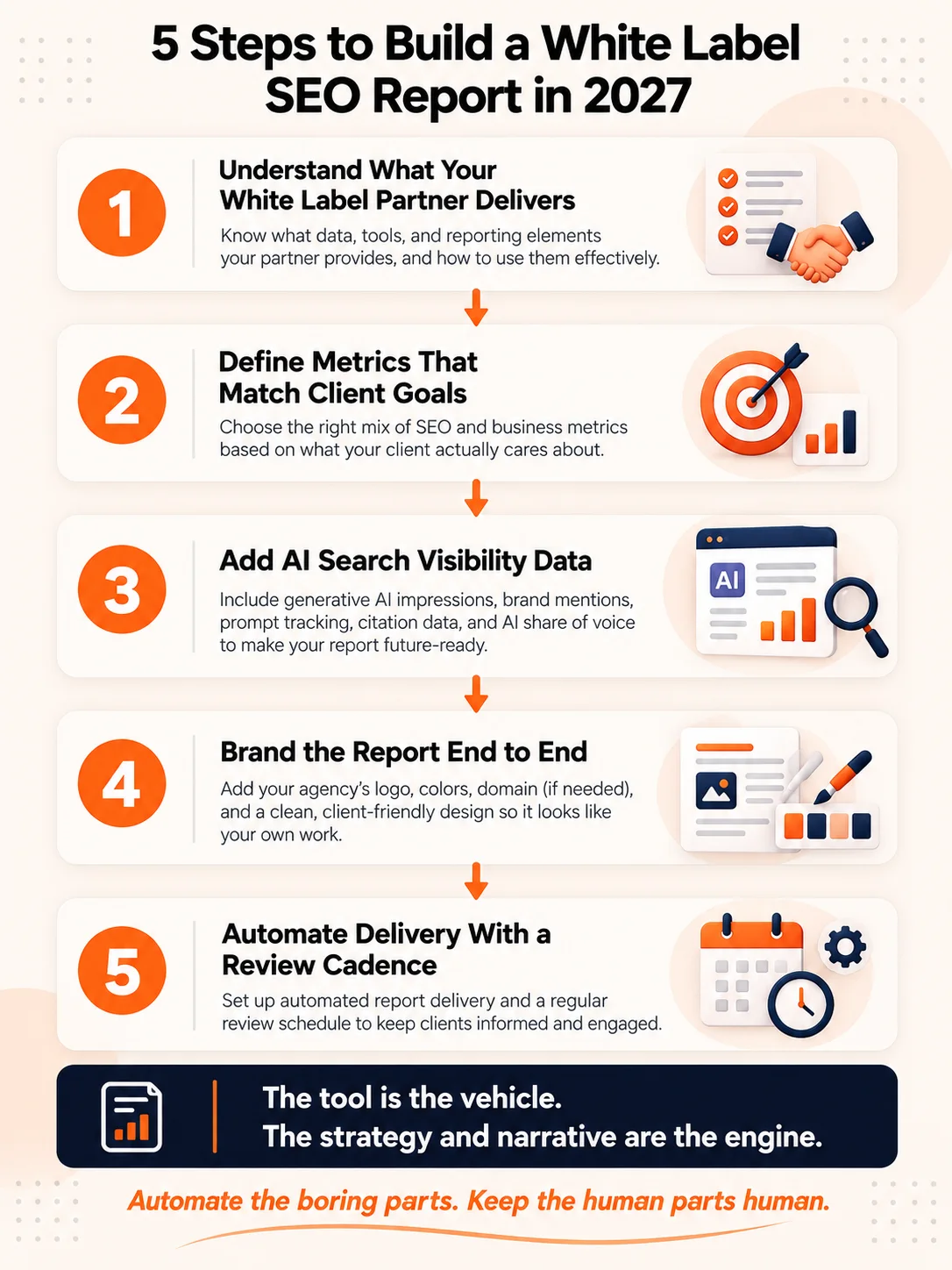
Fig 3 - The five step process for building white label SEO reports that cover both traditional SEO and AI search visibility.
The Metrics That Will Define Client Retention in 2027
Clients do not cancel because rankings dropped. They cancel because they stopped believing the investment was working.
That belief breaks when the agency cannot answer a question the client is already thinking about. And right now, the question every informed business owner is thinking about is some version of "What about AI search?"
If your white label SEO report already has an AI visibility section before the client asks for one, you bought yourself another year of trust. You showed them you are ahead of the curve.
If you wait until the client googles "is SEO still working in 2027" and finds articles talking about AI Overviews, zero click search, and brand mention tracking, and then they look at your monthly report and see nothing about any of it, you have a retention problem that no amount of rank improvements will fix.
An agency that shows the full picture, traditional SEO results alongside AI search visibility, keeps its clients. Half a picture sends them looking for someone who shows more.
We have seen this play out firsthand through our agentic workflow partnerships with agencies. The partners who adopted AI visibility reporting early had measurably stronger renewals. The ones who stuck with rank and traffic reports had higher churn. We built our white label reporting around this exact lesson.
Common Mistakes Agencies Make With White Label SEO Reports
We have reviewed hundreds of agency reports through our white label partnerships. These are the misses that show up again and again in the ones that fail to retain clients:
Reporting every metric the tool can export. More data does not mean a better report. It means a longer PDF that nobody reads past page three. Edit down to the metrics that answer the client's core question, which is whether the investment is producing results.
Using one template for every client. A local dentist and a national SaaS company need different reports. The metrics, the language, and the level of detail should match the client. Your internal workflow preferences come second.
Ignoring AI search metrics entirely. Treating AI visibility as optional or "too new to include" is a mistake that gets more expensive the longer it runs. The data is available now. Clients are hearing about AI search from other sources. If your report does not address it, someone else's will.
Sending the report without a narrative. A table of numbers without context leaves the client confused. Every report needs a short written overview covering what happened, why it happened, and what the agency is doing next.
Leaving fulfillment partner branding in the report. Even accidentally. One "Powered by [tool name]" badge in a footer can undermine the entire white label relationship. Audit every element of every report template before it goes to a client.
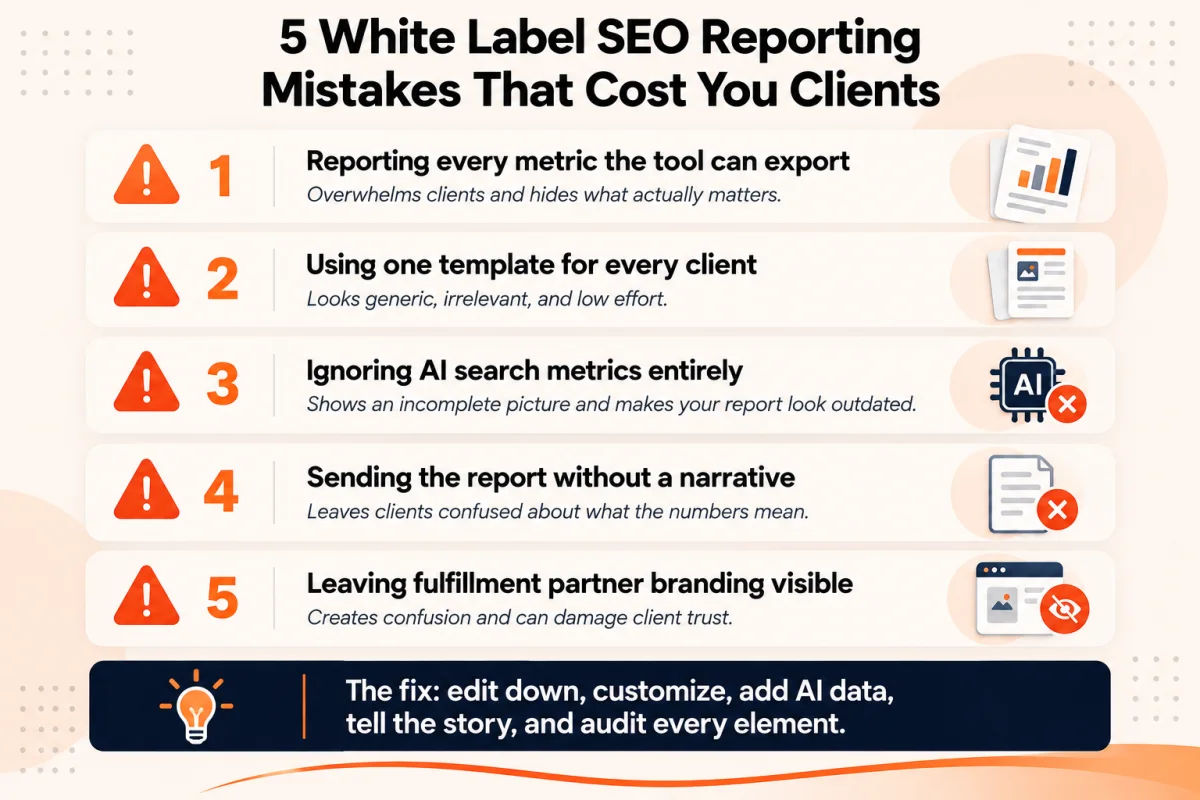
Fig 4 - These five reporting mistakes show up repeatedly in agencies that struggle with client retention.
How Clixlogix Handles White Label SEO Reporting for Partner Agencies
We run white label SEO as a full fulfillment service for agencies, and reporting is one of the parts we hear the most about from new partners who came from another provider.
Here is what the reporting side looks like when you work with us:
Branded dashboard at your domain - your client logs into a live dashboard hosted at your agency's URL. Your logo, your colors, your name on every screen. Clixlogix does not appear anywhere in it.
Two section reporting included - every monthly report covers the traditional SEO metrics (traffic, rankings, backlinks, technical health, conversions) plus AI search visibility (generative AI impressions from Search Console, brand mention tracking, and prompt level tracking across AI platforms).
Clixlogix absorbs the tool costs - Semrush, Ahrefs, and every other license we use for your campaigns stay on our invoice. They do not pass through to yours.
Dedicated account managers under your brand - our team joins client calls under your agency's name. Video backgrounds, email signatures, and introductions all reflect your identity.
Packages start at $249 per account per month. Volume pricing drops the per account cost at 5 accounts and again at 20. No setup fees, no lock in contracts, and 30 day cancellation notice. You can see the full SEO performance guarantee for performance terms.
Free white label audit and report for prospects - we deliver a branded presale audit within 12 hours, under your agency's name, so you can pitch with engineering depth and close at a higher tier. One of our recent case studies shows how we earned 34 AI Overview citations for a medical financing platform using the same AI visibility approach we build into partner reports.
Frequently Asked Questions