TL;DRAI search engines like Google AI Overviews, ChatGPT, and Perplexity pull answers from earned media and creator content across the web. Research across 75,000 brands shows YouTube mentions carry the strongest correlation (0.737) with AI visibility. AI engines cite long form video for 94% of YouTube citations, and view count has almost nothing to do with earning a citation. The brands earning citations in AI search connect their influencer marketing strategy to GEO and SEO infrastructure, extending measurement beyond likes and reach.
Most brands run influencer marketing and SEO as separate line items with separate budgets and separate teams. AI search engines have made that separation expensive.
AI search engines now answer subjective questions by borrowing opinions from wherever real humans have already shared them. Creator reviews, YouTube videos, Reddit threads, Instagram posts. If your brand is missing from those sources, AI is not mentioning you.
We have watched this shift happen across our client accounts over the past year. The brands that connect their influencer marketing strategy to GEO (Generative Engine Optimization) and SEO show up in AI answers. Siloed teams tend to lose visibility they do not even know they had.
This guide breaks down why influencer content marketing now feeds AI search, what the data says, and how to build an influencer marketing strategy that makes your brand citable by AI engines.
Why Social Media Content Now Matters for GEO and AEO
AI answer engines like Google AI Overviews, ChatGPT, and Perplexity cannot form their own opinions. When someone asks “what is the best moisturizer for dry skin” or “which CRM is best for small teams,” the AI has to borrow a point of view from somewhere.
That somewhere is increasingly social media and creator content.
Google itself has made this direction obvious through a series of moves in 2025 and 2026 that all point the same way.
Google Search Console platform properties. On July 7, 2026, Google launched platform properties in Search Console, a new property type that lets you track how your Instagram, TikTok, X, and YouTube content performs in Google Search and Discover. By July 29, the feature reached global availability. Google built an entire measurement system for social content in search for a reason. Social content is now a search surface, according to the official announcement on the Google Search Central Blog.
Short video blocks on SERPs. Google now displays short video carousels directly in search results, pulling vertical clips under 5 minutes from YouTube, TikTok, and Facebook. For informational queries, these video results often appear above or alongside traditional web results.
The proof is already on the SERP. Look at the screenshot below. For the query “how to add Instagram to my search console,” Google’s AI Overview cites YouTube and Instagram posts as its top sources ahead of traditional web pages. The sidebar shows a YouTube video from BKA Content, 2 Instagram posts from @seammedia and @seekingsunday, a website result, and another creator account. The AI Overview itself references Instagram and YouTube sources with citation badges.
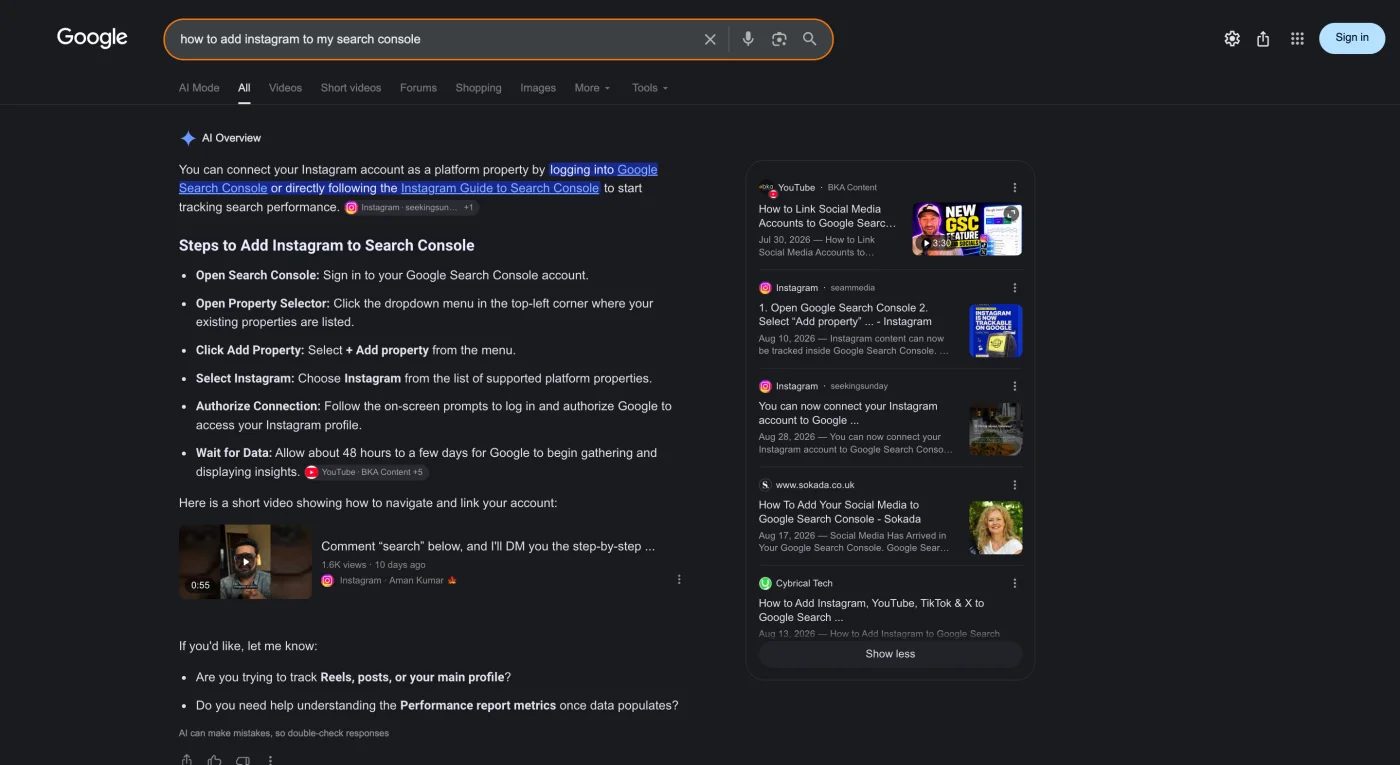
Fig 1 – Google's AI Overview pulls from YouTube and Instagram as primary sources for informational queries
Social links on Business Profiles. Starting in 2025, Google began automatically adding social media links to Google Business Profiles at scale, surfacing brands’ recent posts directly on their profiles.
All of this points the same direction. Social content is now a search surface. As a search surface, it becomes a source that AI engines pull from when they build answers.
For anyone working on generative engine optimization, this changes the conversation. Your GEO strategy now needs to account for what creators and influencers are saying about your brand across social platforms, because AI engines are listening. You can already track AI queries in Google Search Console, and the new social profiles in GSC make this even more actionable.
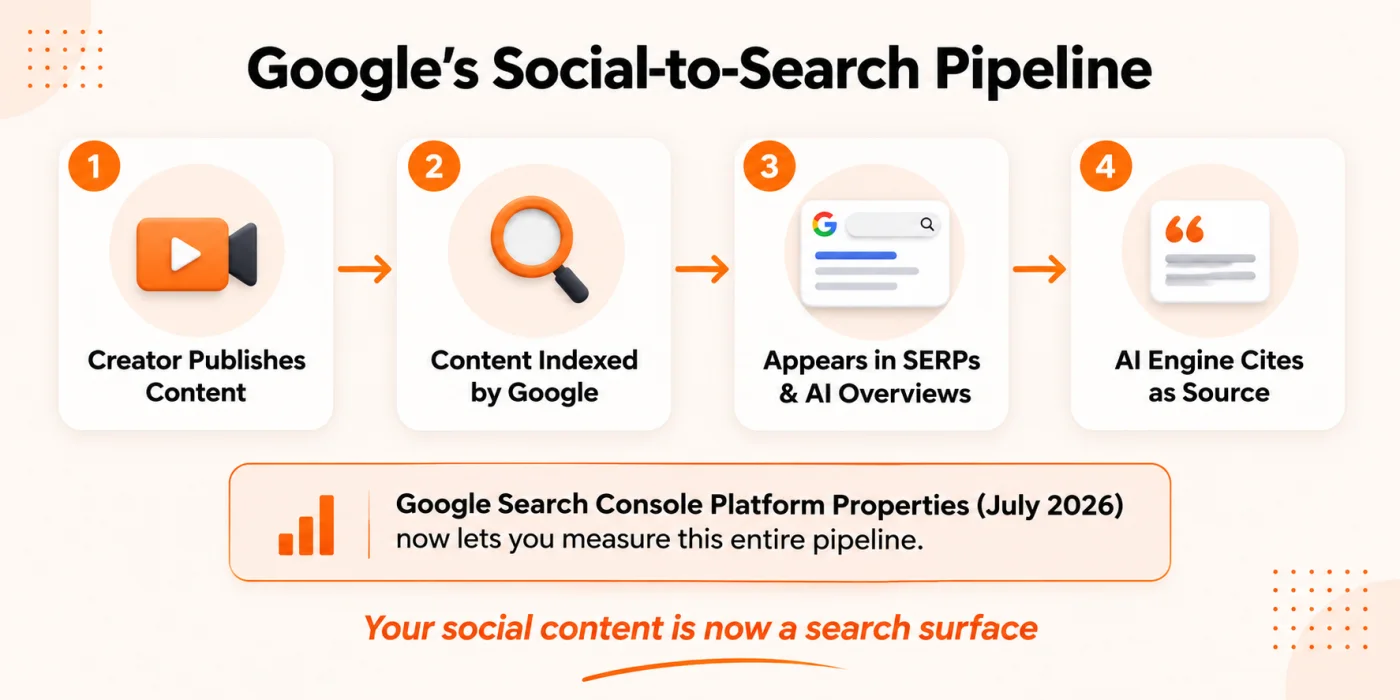
Fig 2 – Google's social to search pipeline, from platform properties to AI citations
The Evidence, What AI Engines Actually Cite
The data on this is now hard to ignore. Multiple independent studies in 2026 have measured where AI engines pull their citations from, and the findings converge.
Earned media dominates AI citations. An analysis of over 25 million AI cited links across ChatGPT, Claude, and Gemini found that earned media accounts for 84% of all AI citations. Paid and advertorial content accounts for just 0.3%. This finding has held across 3 editions of the research from July 2025 through May 2026.
Brand mentions predict AI visibility more than backlinks. Ahrefs studied 75,000 brands and found that branded web mentions across the web carry the strongest correlation (0.664 on the Spearman scale) with AI Overview visibility. Backlinks, the traditional SEO currency, correlated at just 0.218. YouTube mentions showed an even stronger correlation at 0.737. The top 3 correlated factors are all off site signals. Brand web mentions, branded anchor text (0.527), and brand search volume (0.392).
Here is how those numbers compare.
Source. Ahrefs AI Overview Brand Correlation Study, 75,000 brands. Correlation is not causation, and Ahrefs themselves state this caveat in their research.
Third party content earns citations far more often than brand owned content. Brands are 6.5 times more likely to earn AI citations through third party coverage than through their own properties. Data shows the same article, when distributed across third party news sites, raised AI citation rates from 8% to 34%.
YouTube is the second most cited social platform in AI search. YouTube captures 31.8% of all social media citations in AI search, behind Reddit. Perplexity drives 38.7% of YouTube citations and Google AI Overviews drives 36.6%.
Content structure matters more than content popularity. A study found that 94% of YouTube AI citations go to long form video. Shorts account for just 5.7%. The number that should change how you think about influencer content marketing is stark. 40.83% of videos AI engines cite had fewer than 1,000 views at the time of citation. Views, likes, and subscriber count showed near zero correlation with citation frequency.
What does all this mean for your influencer marketing strategy? The signals AI engines care about are structure, authenticity, and third party credibility. Reach, views, and follower count show almost no relationship with AI citation.
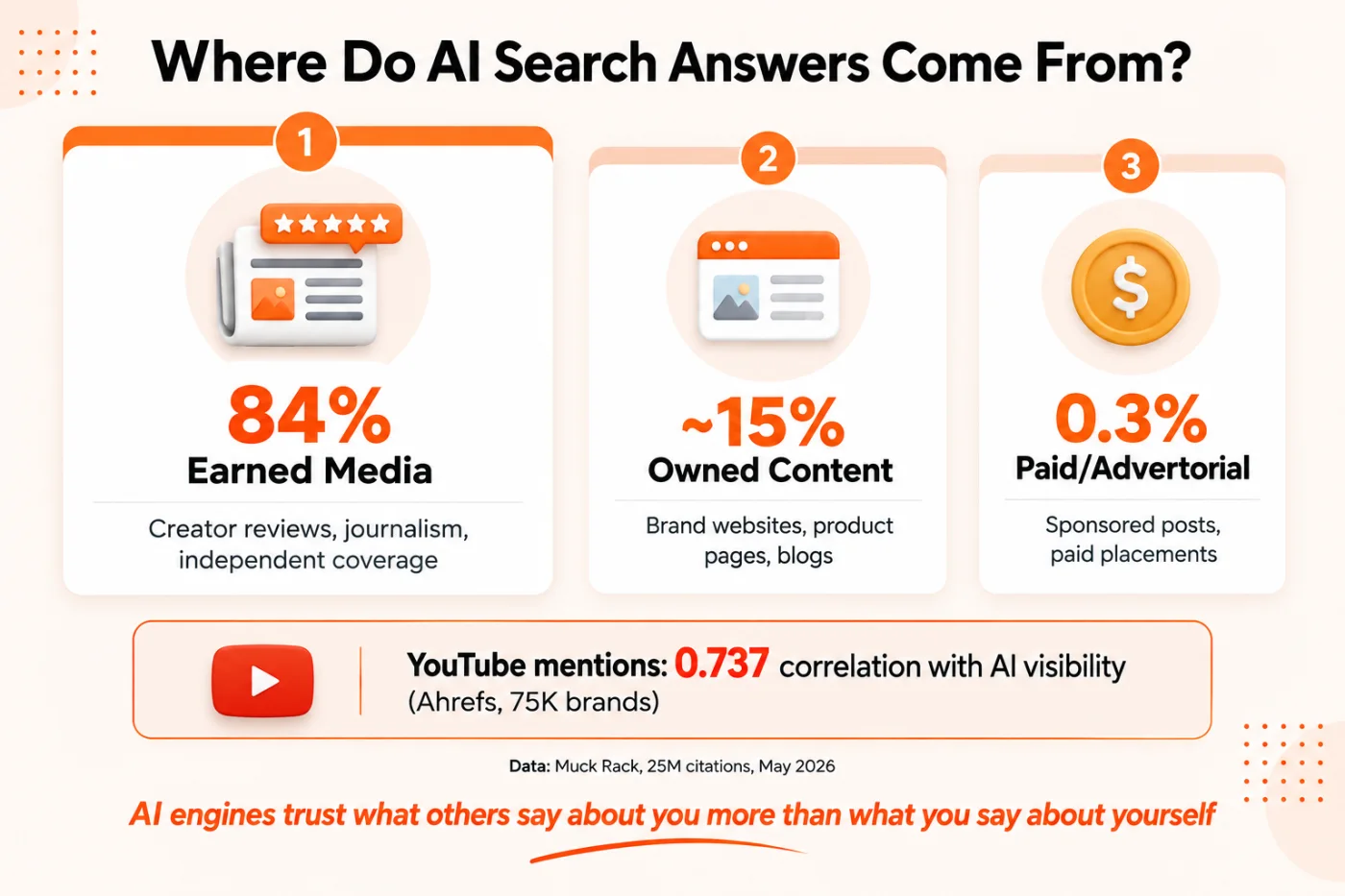
Fig 3 – Where AI answers come from. Earned media dominates at 84% of all citations
Why Influencer Content Outperforms Your Brand’s Own Social Posts in AI Search
Most marketing teams stumble here. You might post consistently on your brand’s YouTube, Instagram, and TikTok. You might earn decent engagement. Your brand’s own social content still trails third party coverage in AI citation frequency.
The reason is straightforward. AI engines see influencer content as user generated content (UGC) and third party validation. A brand describing its own product reads as expected marketing. An independent creator describing the same product reads as evidence.
Think about it from the AI engine’s perspective. When ChatGPT or Google’s AI Overview has to answer “what’s the best project management tool for remote teams,” it needs to borrow a human opinion. A review from an independent creator who actually tested the tool carries more weight than the tool’s own marketing page. The AI is looking for authenticity, and third party content carries that by default.
The data backs this up. Research shows that paid and advertorial content accounts for just 0.3% of AI citations. Even sponsored content that looks authentic is getting filtered out at scale. The 84% earned media figure extends beyond journalism. It includes the genuine, independent reviews that niche creators publish.
A structural advantage also matters. Mid size niche creators tend to produce carefully organized content. Their videos carry clear titles, keyword rich descriptions, timestamps, and a specific focus on answering a single question well. That is exactly the structure AI systems need to extract a citation. A brand’s social team, often optimizing for engagement metrics like comments and shares, typically produces content with a different shape. Shorter, more promotional, focused less on answering questions.
AI engines evaluate whether your video clearly answers a question someone is asking. Subscriber count barely factors into the decision.
If your current approach to SEO and GEO relies only on your brand’s owned content, you are competing for the smallest slice of the AI citation pie.
How to Build an Influencer Marketing Strategy for AI Search Visibility
Now for the practical part. Here is a step by step framework for building an influencer marketing strategy that feeds both your traditional marketing goals and your AI search visibility.
Step 1: Find Niche Creators Who Match Your Buyers’ AI Queries
Start with the actual questions your buyers are asking AI engines.
Run your target product and category terms through ChatGPT, Perplexity, and Google AI Overviews. Note which creators and sources are already earning citations. These are your targets, either to partner with directly or to find similar creators in the same niche.
Look for creators who already produce comparison videos (“X vs Y”), honest product reviews, how to tutorials, and category roundups. These formats are the most citation friendly because they directly answer the kinds of questions people ask AI.
Prioritize mid size niche creators over celebrity influencers. The data supports this across both AI citations and traditional ROI. Micro influencers (10K to 100K followers) generate an average engagement rate of 3.86% compared to 1.21% for mega influencers, and their per post costs are significantly lower.
For ecommerce influencer marketing specifically, the best creators are the ones who review products in the same category your buyers are searching. If you sell kitchen appliances, a creator who reviews kitchen tools for a living will produce more citation worthy content than a lifestyle influencer who mentions your product once.
Step 2: Brief Creators for Independent Reviews
Most brands get this step wrong. They hand creators a script, a set of talking points, and a list of hashtags. That produces promotional content. AI engines do not cite promotional content.
Give creators your product, relevant data or specifications, and the freedom to share their genuine opinion. Ask them to compare it against alternatives. Ask them to call out the weaknesses alongside the strengths.
The formats AI search cites most often are:
- Product comparison videos (“Best [product] for [use case] in 2026”)
- Honest review content where the creator shares what they actually think
- How to tutorials showing the product in real use
- Category roundups where your product appears alongside competitors
Step 3: Make Sure Creator Content Is Crawler Friendly
You can hold the best influencer content in the world. If AI crawlers cannot find it and parse it, they will not cite it. This is the technical piece most influencer marketing teams miss entirely.
For YouTube content:
- Detailed, keyword rich video descriptions that go beyond a link and a discount code
- Timestamps and chapter markers. Data shows 31% of cited videos carried timestamp signals, and 78% of those timestamped videos earned multiple citations across different sections
- Enable auto captions or upload manual transcripts. AI systems extract content from transcripts
- Titles that match real search queries (avoid clickbait)
For Instagram and TikTok content:
- Public profile setting (private accounts stay invisible to crawlers)
- Keyword rich captions that actually describe the content
- Use platform alt text features
On your own site:
- Embed creator content on relevant product or category pages
- Add VideoObject structured data so search engines understand the video content
This matters more than most brands realize, and beyond legal compliance. Content that gets flagged as non compliant or misleading can get suppressed by platforms, reducing its visibility to crawlers and AI systems.
FTC requirements (US). Creators must clearly disclose paid partnerships using #ad, #sponsored, or platform specific disclosure tools. The FTC has been actively enforcing these rules, and non compliance creates risk for both the brand and the creator.
Platform specific rules.
- Instagram uses the branded content tag or paid partnership label
- YouTube requires checking the “includes paid promotion” box in video settings
- TikTok requires enabling the branded content toggle
Data privacy. If your influencer campaigns use affiliate links, discount codes, or landing pages that collect user data, make sure those touchpoints comply with applicable privacy regulations like GDPR and CCPA.
Compliance protects more than your legal position. It keeps your influencer content live, visible, and accessible to the crawlers and AI systems that decide whether to cite it.
Step 5: Build a Shared Measurement System
The silo problem hits hardest at measurement. Most organizations run influencer marketing under the social or brand team, measuring reach, engagement, and cost per acquisition. The SEO team tracks rankings, organic traffic, and now AI citations. Neither team sees the other’s data.
That needs to change. Here is what a shared measurement system looks like.
Track AI citation share. Run your target queries through ChatGPT, Perplexity, and Google AI Overviews on a weekly basis. Record which sources earn citations and whether any of your influencer content appears.
Connect influencer metrics to search metrics. When a creator publishes content about your brand, track whether it shows up in AI citations within 2 to 4 weeks. Map creator content to specific search queries and measure whether your brand’s citation share increases after an influencer campaign.
Report in a single place. The influencer team should see citation data. The SEO team should see which creator content generates search signals. A single dashboard covering a single set of goals.
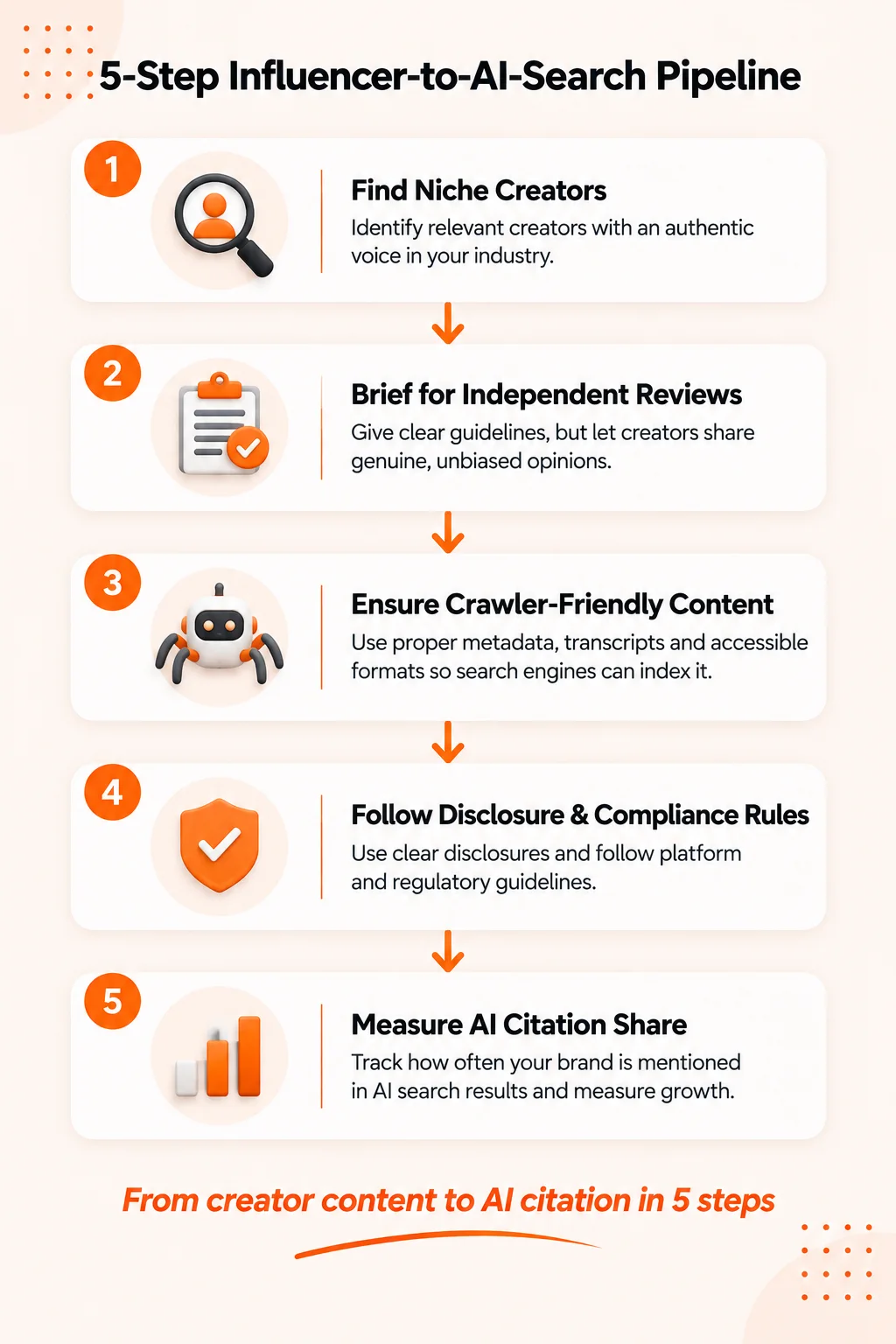
Fig 4 – The 5 step pipeline that connects influencer content to AI search citations
Pro Tips to Approach Influencer Content for AI Search
The framework above applies across industries, and the specific execution changes depending on your business model. Here is how to adapt your influencer marketing strategy for different verticals.
Ecommerce Brands
Product comparison and unboxing videos are the highest cited formats for shopping related queries in AI search. When someone asks ChatGPT “best wireless earbuds under $100,” the AI pulls from third party reviews ahead of brand product pages.
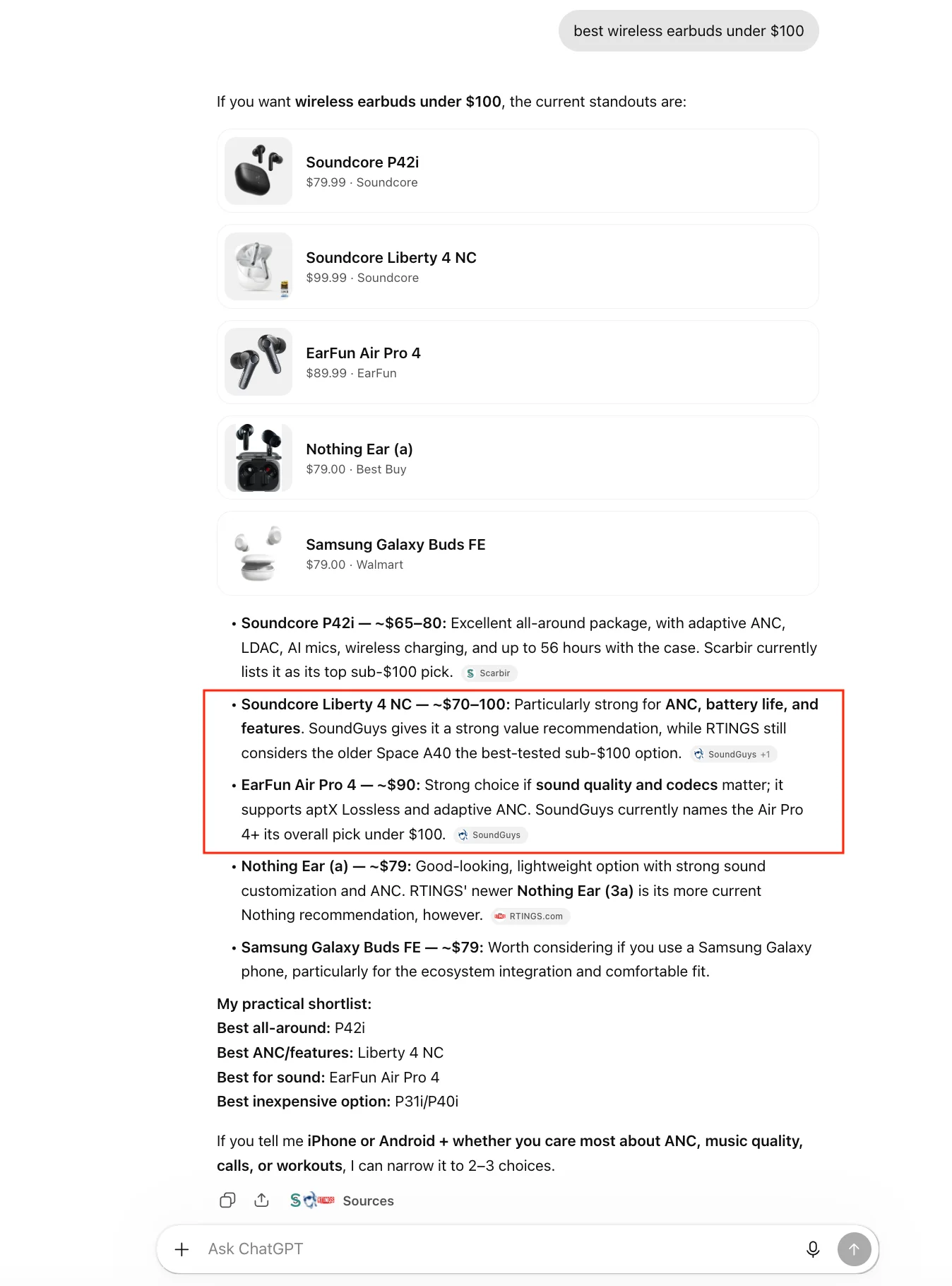
Fig 5 – ChatGPT skips every brand product page and cites third party review sites for a shopping query
Actionable moves for ecommerce influencer marketing.
- Partner with creators who produce comparison and review content in your product category
- Embed creator review videos directly on your product pages with VideoObject structured data
- Connect creator content to your Shopify or WooCommerce product schema so search engines see the relationship
- Track which product queries are triggering AI Overviews and match creator content to those queries
If you are running a Shopify store, check out our guide on how to get Shopify product pages in Google AI reviews and our deep dive into Shopify agentic commerce and AI search.
D2C Brands
D2C influencer marketing carries a built in advantage. You control the entire customer path from creator mention to purchase, which makes attribution cleaner than any other channel.
The content formats that work best for D2C in AI search are “routine” and “how I use” content. Skincare routines, fitness routines, cooking tutorials, morning routines where your product appears in a real context. These are the queries people ask AI engines (“best morning skincare routine for oily skin”), and they are the queries where creator content gets cited.
Pair creator content with product pages optimized for GEO signals. Include specific data points, cite credible sources, use answer first paragraph structure, and add structured data.
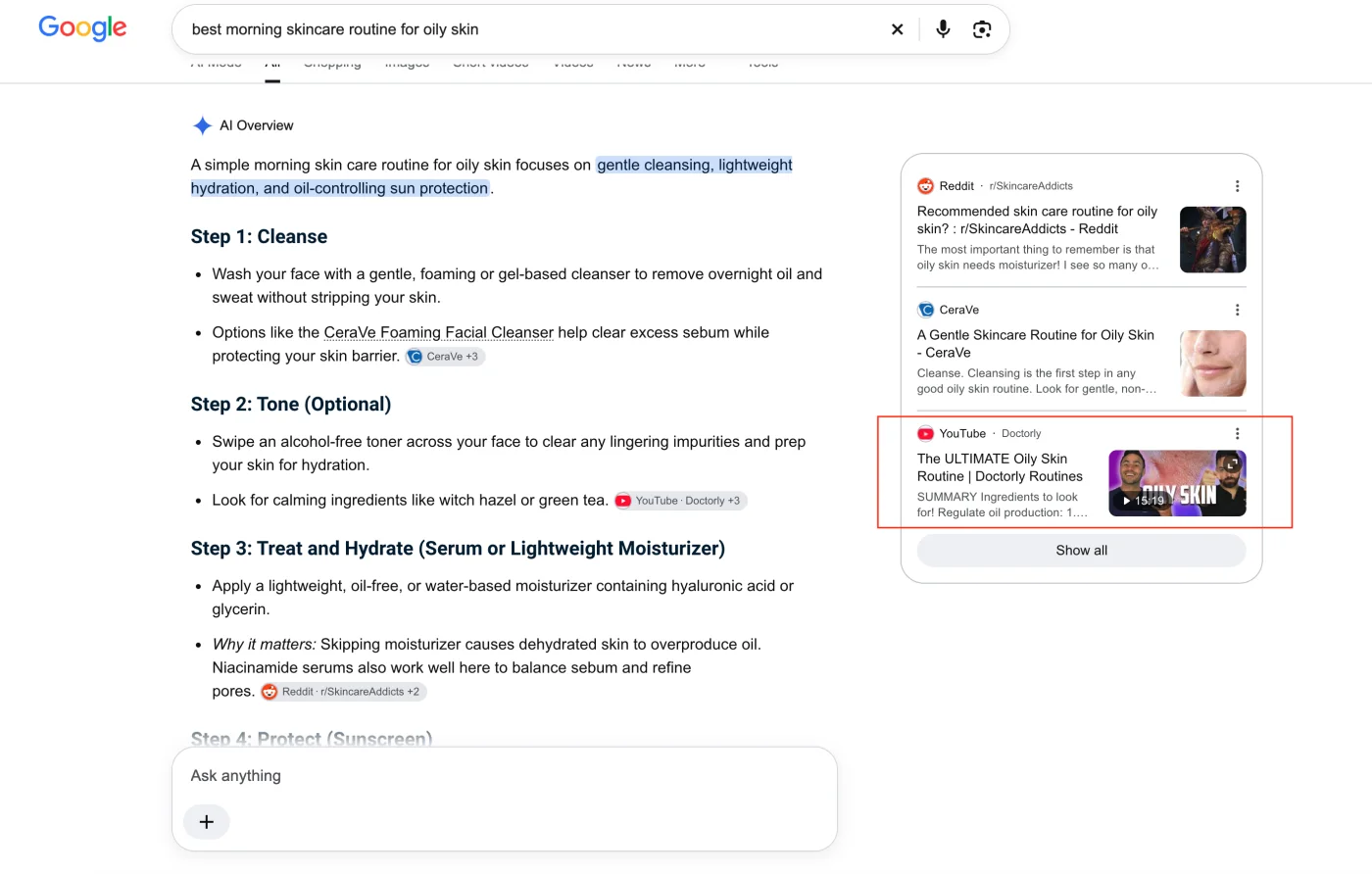
Fig 6 – Google's AI Overview pulls a YouTube creator (Doctorly) and a Reddit community thread as primary sources for a routine query
B2B and SaaS
LinkedIn is the primary platform for B2B influencer content marketing, and YouTube tutorials and demo walkthroughs are the format AI cites most often.
For B2B, the most citation worthy content follows a case study shape. A real user solves a real problem with your product. A SaaS founder walking through their actual workflow is more useful to AI engines than a polished product demo, because it provides the specific, experience based content that AI systems cite.
Target long tail informational queries your sales team hears in qualification calls. Questions like “how to automate invoice approvals for a 50 person team” are the queries AI engines answer, and they are the queries where structured creator content can earn citations.
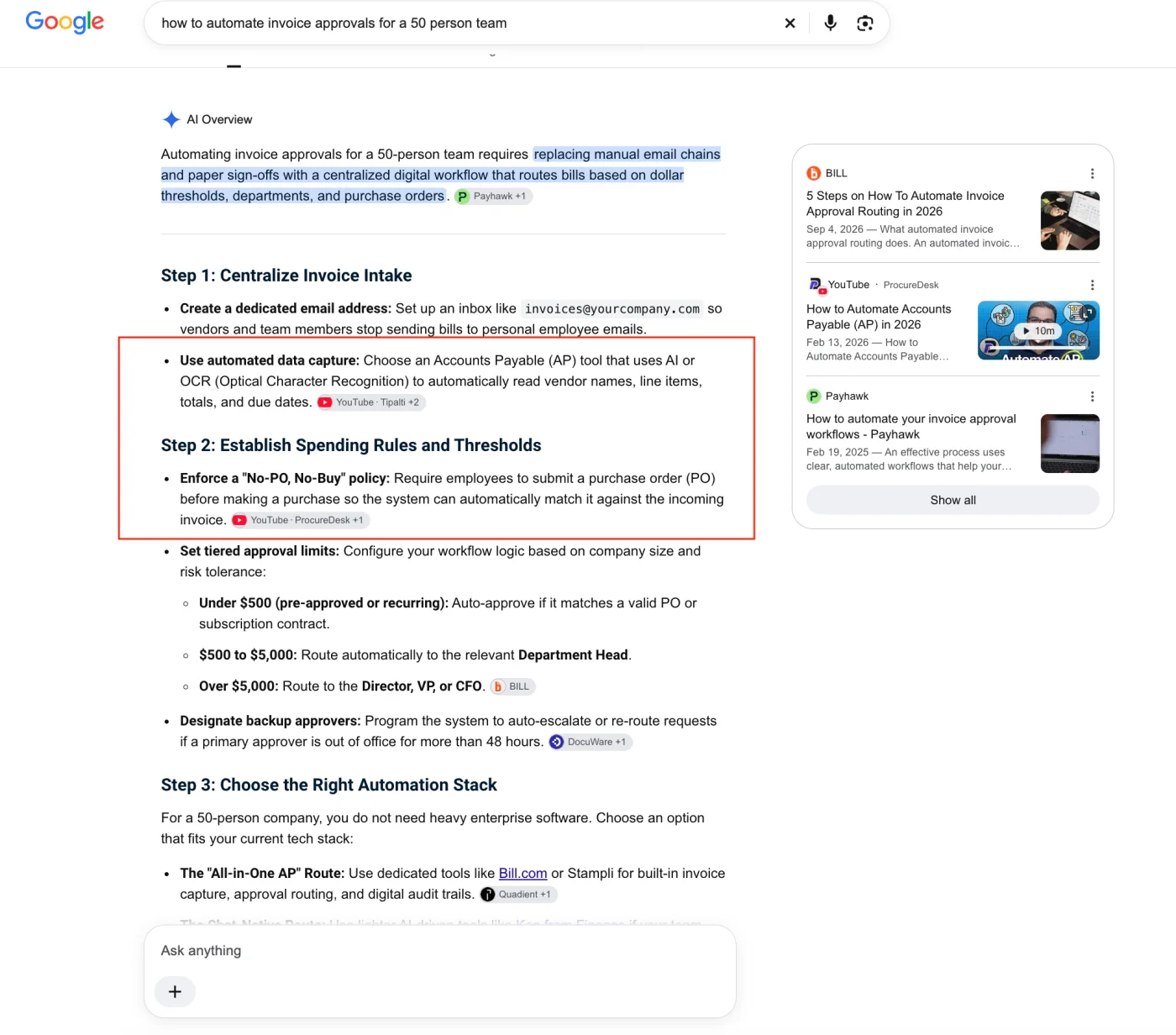
Fig 7 – Google's AI Overview cites YouTube tutorials from ProcureDesk and Tipalti (10 minute long form video) inside a B2B workflow answer, alongside vendor content
Let Your Influencer Strategy Do More for AI Search
Most brands measure influencer marketing success by likes, views, and direct conversions. Those metrics still matter. AI search visibility, the growing portion of value that influencer content creates, sits outside their measurement.
The brands earning citations in AI search connect their influencer marketing strategy to their GEO and SEO work. That means choosing the right creators, briefing them for citation friendly content, making that content crawlable, and measuring whether it actually shows up in AI answers.
That is the work we do at Clixlogix. We build the GEO and SEO infrastructure that turns your influencer content into AI citations. We handle the technical side, the content structure, the measurement, and the connection between your social strategy and your search strategy.
If your influencer content is already out there and AI search engines are not citing it, that is a fixable problem. It is the kind of problem we solve.
Ready to connect your influencer strategy to AI search?
Your influencer content is already out there. The question is whether AI search engines can find it, cite it, and put your brand in front of buyers because of it. We make sure they can. Talk to our GEO and SEO team about connecting your influencer strategy to AI search visibility.
Learn more about our digital marketing services and SEO services.
Talk to Our GEO and SEO Team
FAQs