TL;DR
Zoho CRM users have been building partner operations from Accounts, Contacts, Territories, custom modules, Client Portals, Deluge and spreadsheets for years. In September 2026, Zoho turned that assembly job into a named product.
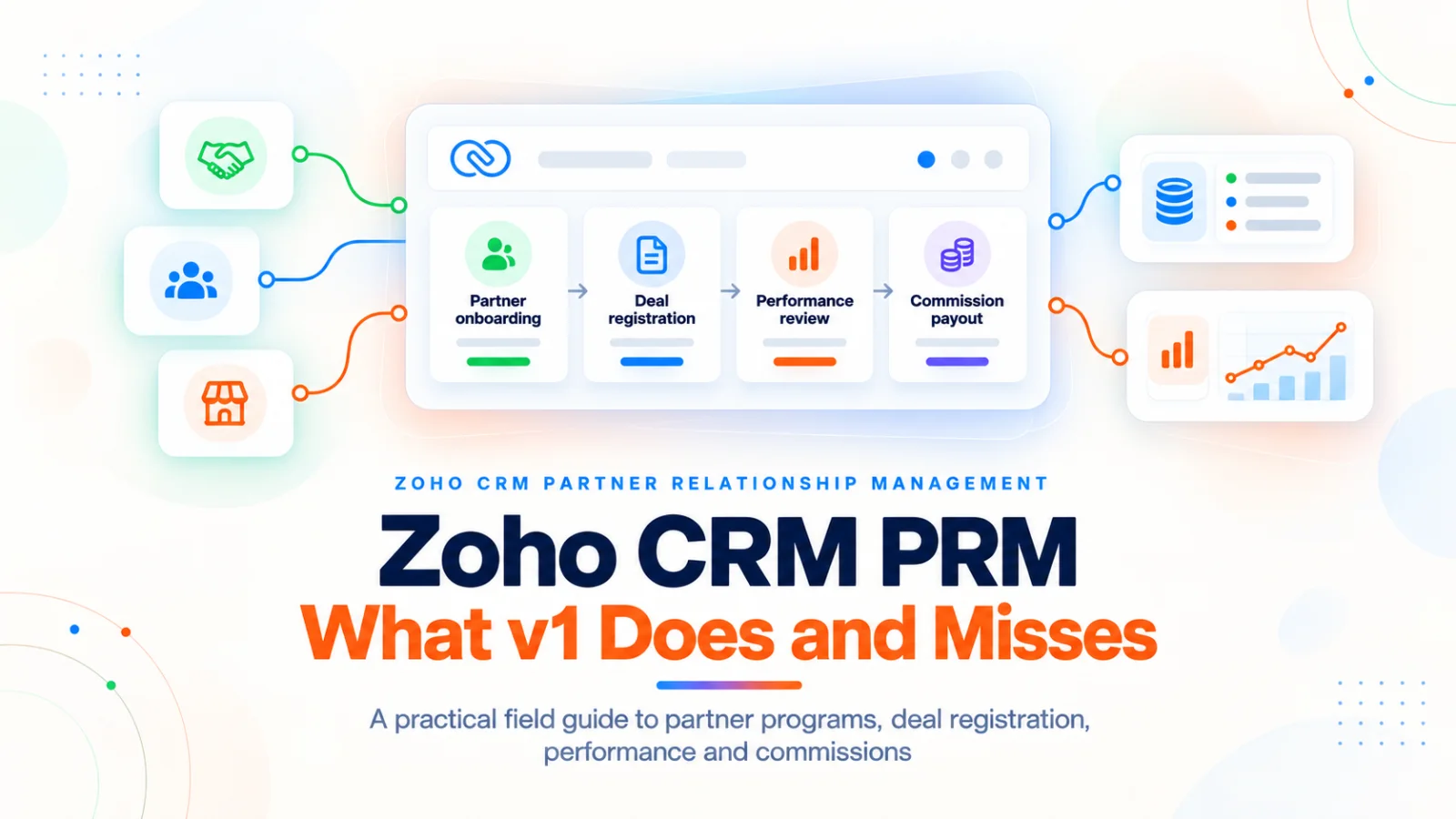
PRM for Zoho CRM is an App Space application for managing partner accounts and contacts, tiered or non tiered partner programs, portal access, deal registration, performance reviews and partner commissions from inside Zoho CRM. It is available to Enterprise, Ultimate, CRM Plus and Zoho One organizations on the new CRM UI, at no extra charge for now.
The v1 covers the commercial middle of the partner lifecycle cleanly. It can onboard an already qualified partner, place it in a program, let its users register deals, resolve channel conflicts, track performance, move the partner between tiers and calculate commissions.
The documented v1 scope covers the commercial middle of the ecosystem. Recruitment, application scoring, contracts, onboarding journeys, training and certification, content distribution, market development funds, co marketing, lead distribution and joint business planning require other Zoho products or CRM customization.
Portal privacy is a primary buying consideration. Zoho has shipped a privacy fix that restricts the CRM Users API for Client Portal users. A community follow up alleges that other indirect exposure paths remain. The public record contains no Zoho confirmation of that claim. Any production rollout should include a deliberate multiple partner access and API security test until the issue receives a documented closure.
How Partner Leaders Actually Run a Partner Program
Every channel leader can explain the partner strategy in a few slides. Running it across a fiscal year is where the work accumulates.
The partner models we see most often fall into a handful of shapes.
1) Referral partners - The partner introduces a qualified opportunity, the vendor owns the sales cycle, and the partner receives a referral fee if the deal closes. The operating burden sits in attribution and covers who introduced the account, whether the account was already active and how long the referral remains protected.
2) Resellers and value added resellers - The partner owns more of the commercial relationship and may package implementation, support or managed services around the product. Deal registration, discount governance, product access and margin control become core operating controls.
3) Distributors - A distributor manages a downstream partner network and may carry inventory, credit exposure and regional pricing. A single partner account and commission percentage rarely captures the commercial structure.
4) Systems integrators and service partners - The partner influences or delivers the implementation. The vendor may retain the licence transaction. Performance must therefore include sourced revenue, influenced revenue, delivery quality, certifications and customer outcomes.
5) Technology and ISV partners - The relationship is based on an integration, joint solution or marketplace motion. Product adoption, shared pipeline and co selling activity become the primary performance measures.
6) Franchisees, agents and brokers - These models resemble channel sales operationally. Their territory, compliance, document and settlement rules introduce distinct governance requirements.
Most mature ecosystems mix several of these. A PRM therefore has to hold together a complete lifecycle around its directory of partner companies.
- Partner recruitment and qualification
- Contracting and onboarding
- Program and tier assignment
- Enablement, content and certification
- Lead sharing and deal registration
- Pipeline collaboration and conflict resolution
- Performance measurement, commissions and payout readiness
- Reviews, tier movement, renewal and offboarding
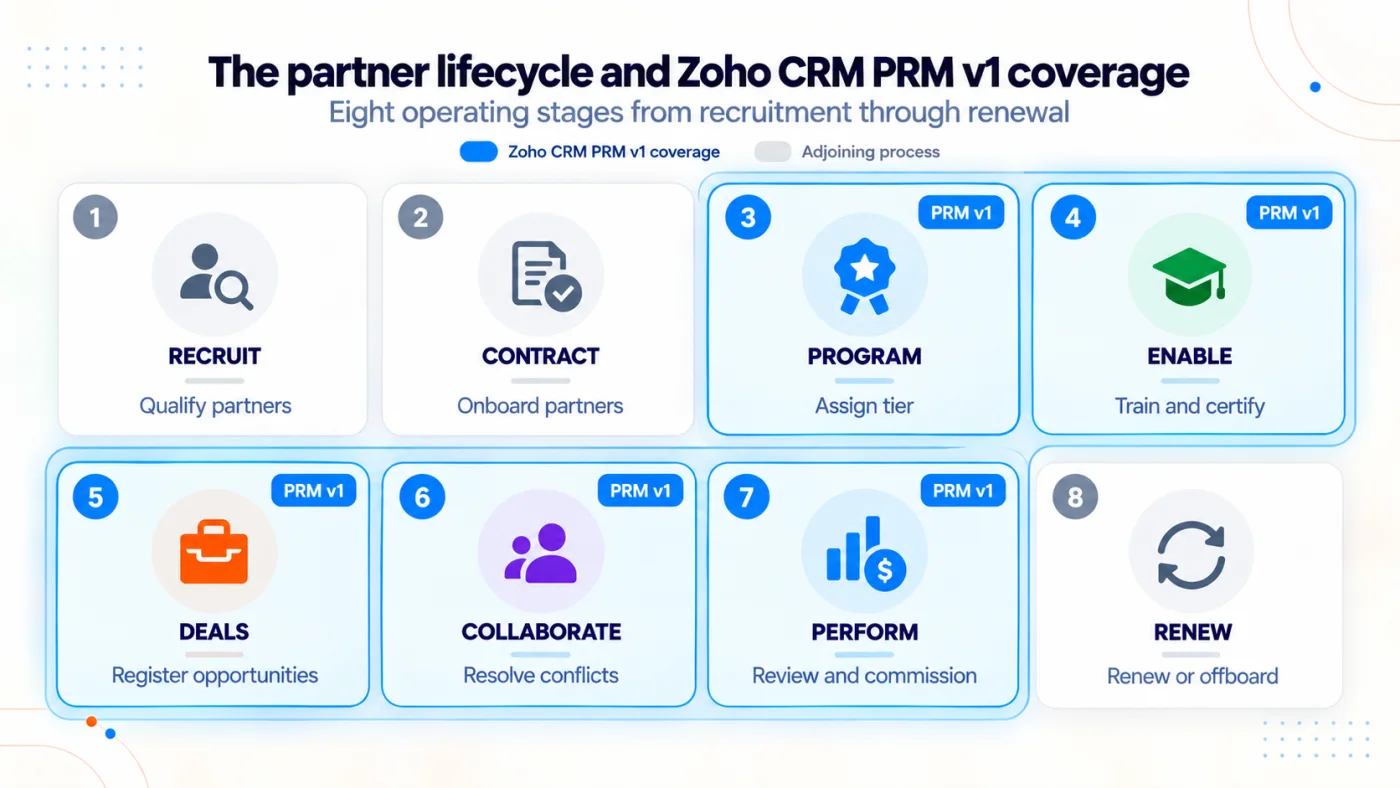
Fig 1 - The partner lifecycle and the part Zoho PRM v1 covers most directly
That is the full arc. Zoho PRM v1 is strongest from stages three through seven. Buyers still need to design recruitment, enablement and renewal around the application.
How Zoho CRM Users Built Partner Relationship Module Before PRM Launched
For most of Zoho CRM’s history, customers assembled partner management through existing CRM components. Customers assembled the operating model from five separate systems.
The basic build started with the standard Accounts and Contacts modules. An Account Type or Partner Status field distinguished partners from customers. Additional fields held partner category, geography, agreement dates, tier and channel manager. Related Contacts represented the people working for the partner.
This worked for a small network because the CRM data model was familiar. It became brittle when the same company could be a customer, reseller and implementation partner at once, or when the business needed a separate history of program membership and tier movement.
Workaround #2 – Territories and sharing rules became partner isolation
Some organizations used Territory Management and CRM sharing rules to imitate a PRM. In our Zoho CRM implementations we saw partner teams configure territories specifically to make the CRM behave like a partner relationship management system. The hard part involved hiding users in one territory from users in another and selectively sharing a single opportunity across regions.
That tension is fundamental. A partner requires controlled collaboration access that excludes another partner’s people, pipeline, pricing and files.
Workaround #3 – Client Portals became the partner workspace
Zoho CRM Portals already allowed organizations to expose selected modules and fields to customers, vendors, franchisees and partners. Administrators could create portal user groups, select a primary module, add related modules and configure view, create, edit and delete permissions. Zoho’s own portal setup guide uses business partners as a standard use case.
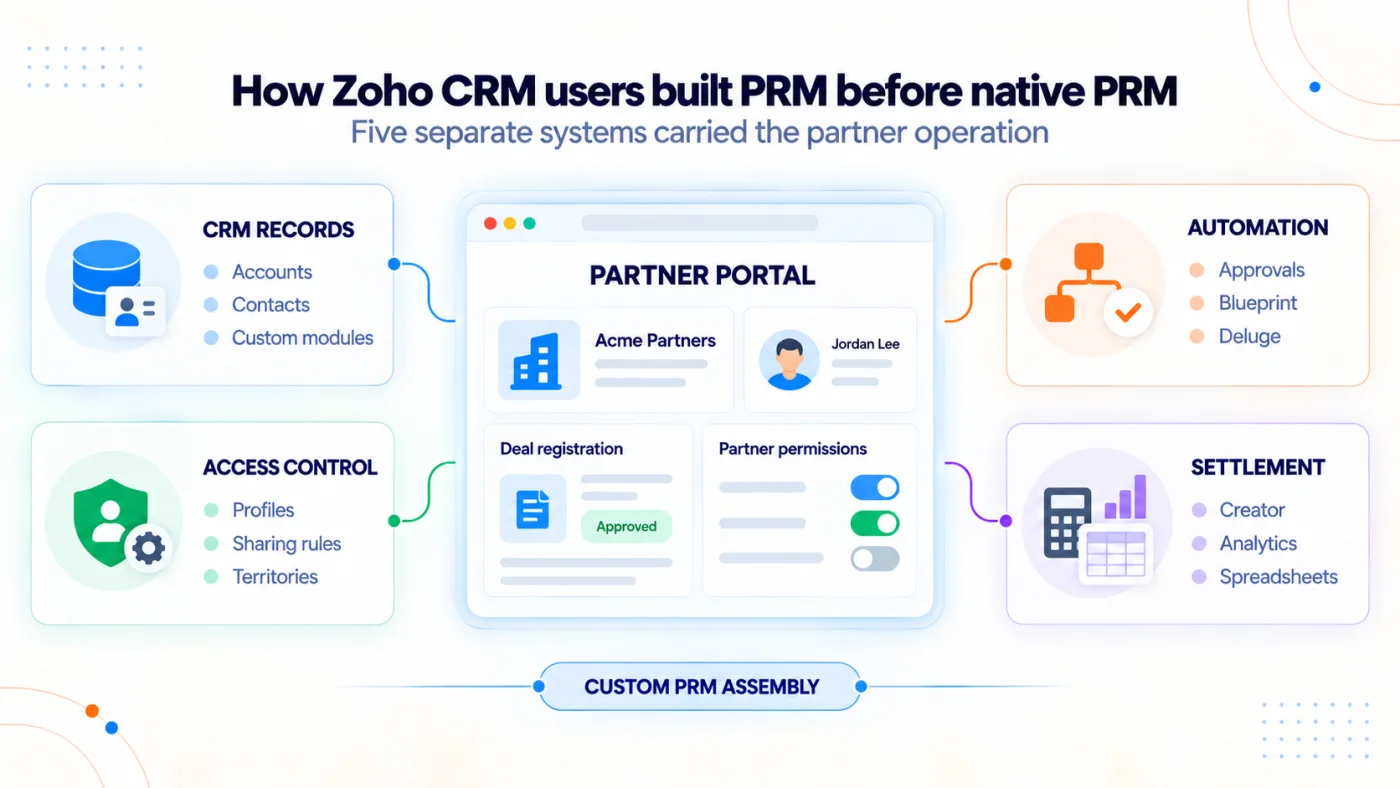
Fig 2 - The assembly job Zoho CRM customers used before native PRM
Portal APIs later made the model programmable. Zoho’s Portal APIs Kaizen shows how organizations could create portals, invite external users and manage separate portal user types for customers, employees and partners.
The portal solved access. Program design, registration conflict detection, tier calculation and commission administration remained custom work.
Workaround #4 – Custom modules became deal registration and program management
The common implementation added Partner Applications, Partner Agreements, Deal Registrations, Certifications, Benefits and Commission Records as custom modules. Approval Processes handled registration review. Functions checked Accounts and Contacts for duplicates. Blueprints controlled onboarding. Widgets improved the partner facing experience.
This could be made powerful. It also meant the implementation team owned the data model, automation, failure handling, test coverage and every future CRM compatibility change.
Workaround #5 – Creator, Analytics and spreadsheets became the settlement system
Commissions usually ended in Zoho Creator, Zoho Analytics or a spreadsheet. A recurring friction we observed with Zoho CRM customers was combining Deals, Contacts, partner ownership, collected amounts and two way settlement logic into a report that partners could actually use.
Zoho’s own historical webhook documentation even used a Creator sales commission application as the example architecture.
The PRM stack before the native app provided capable components across a fragmented architecture.
Table 1 - What each partner job required before native PRM existed
What Zoho CRM PRM Just Shipped
Zoho introduced PRM for Zoho CRM in September 2026 as a dedicated workspace inside App Space. The application connects six operating components.
- Partner Accounts
- Partner Contacts
- Partner Programs
- Partner Portals
- Deal Registration
- Partner Commissions
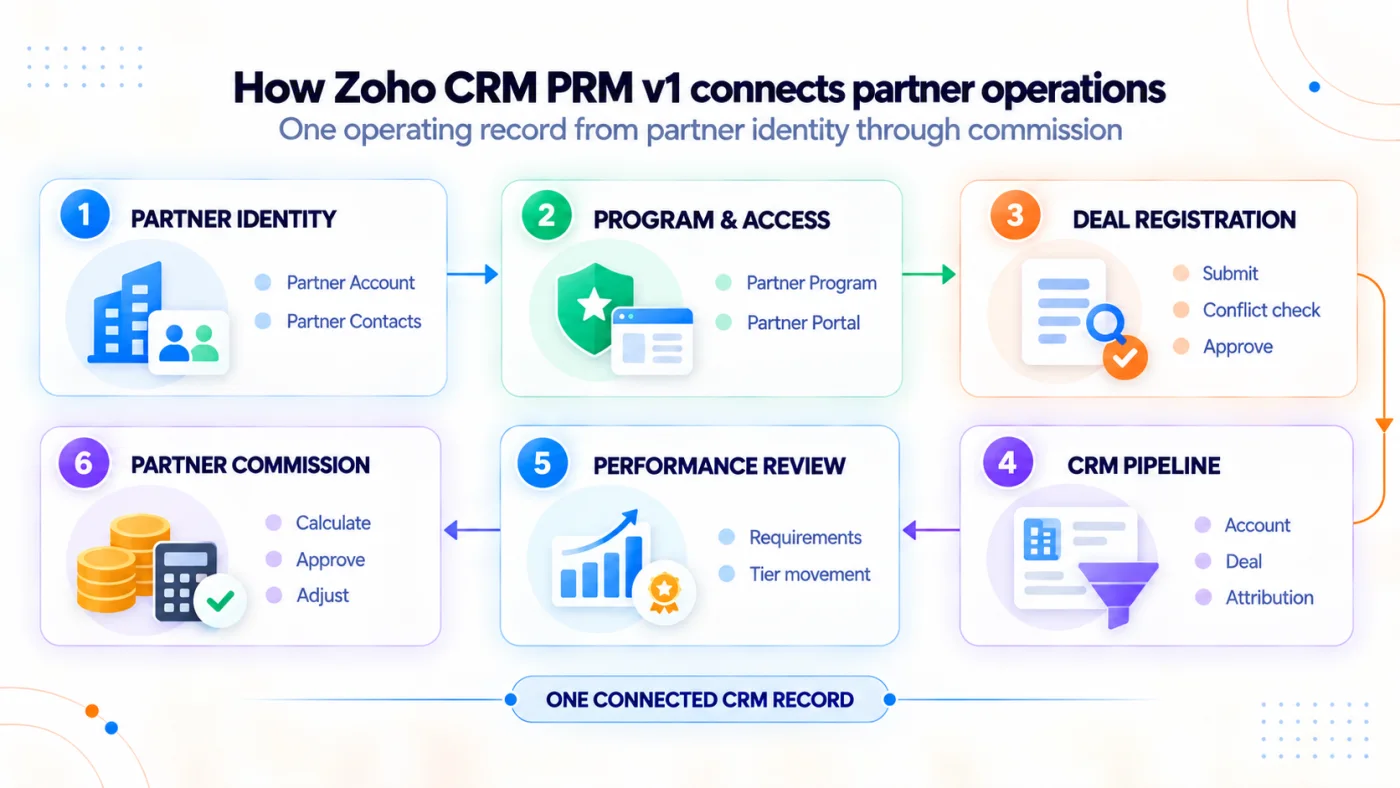
Fig 3 - The connected Zoho PRM v1 operating model
Together, these components turn partner activity into a connected operating record and consolidate six administrative queues.
Performance tracking and tier movement are embedded in the Partner Programs configuration.
The architectural decision matters. Approved partner registrations convert into CRM Accounts and Deals, and partner attribution remains attached. The partner channel stays in CRM’s primary pipeline, which removes a separate reconciliation cycle.
Partner Accounts represent partner organizations. Partner Contacts represent the people inside those organizations who use the portal and participate in programs and deal registration.
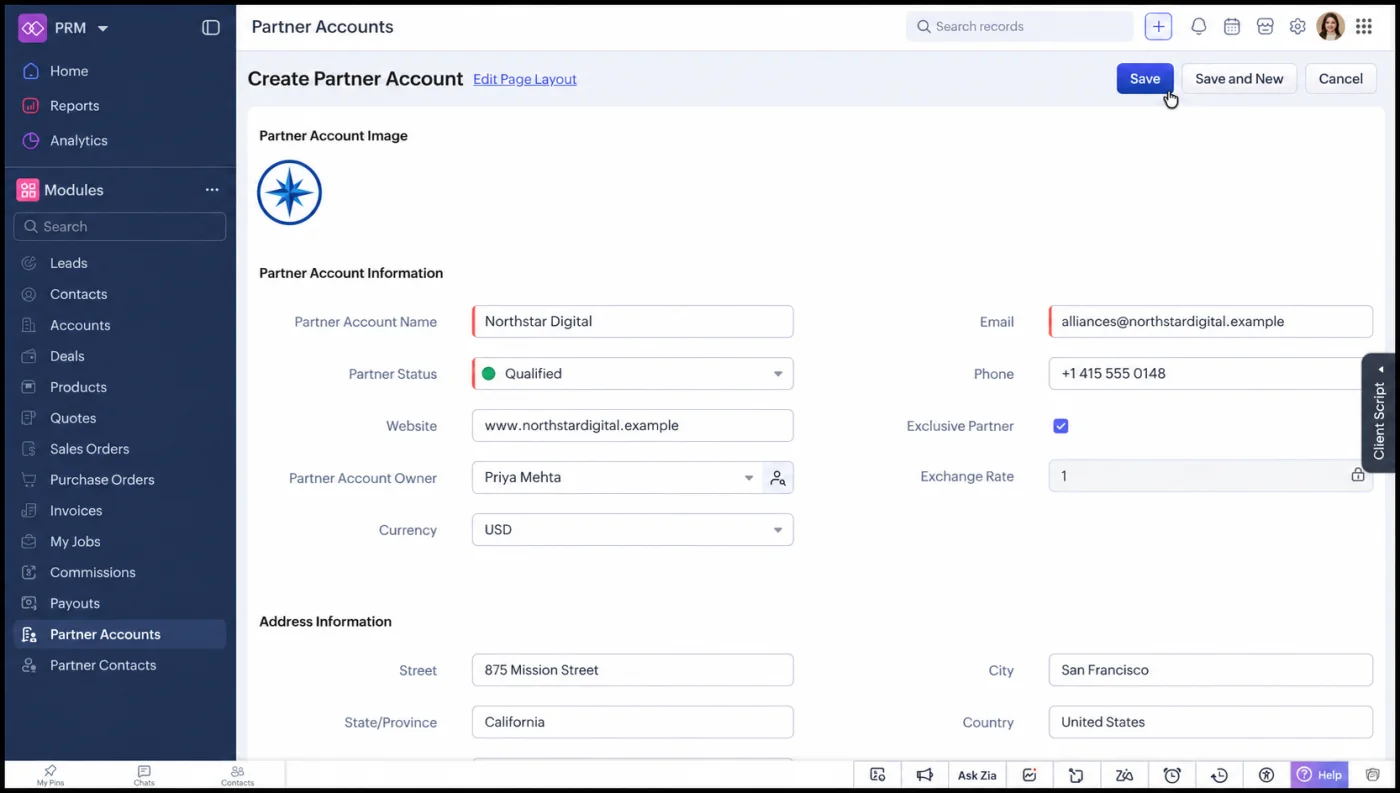
The Create Partner Account form, populated with a fictional Northstar Digital record
The model is intentionally familiar to a CRM administrator. Partner Account behaves like the company level record. Partner Contact sits underneath it. Layouts can be extended with custom fields.
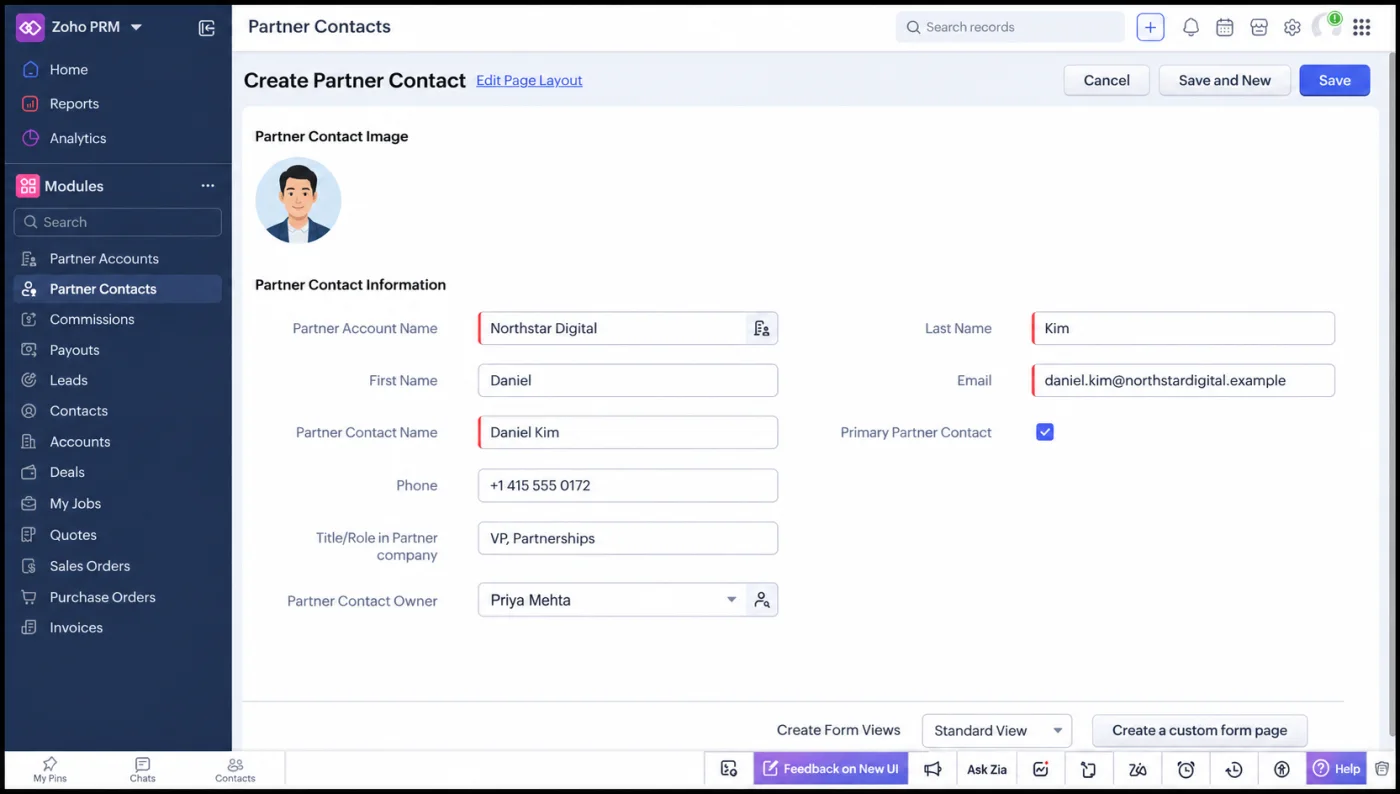
The Create Partner Contact form, carrying the primary contact on that same partner account
The important detail is that Zoho describes PRM as a system for organizations that already have an identified and qualified list of partners. Read that carefully. v1 starts after recruitment. Public partner applications, qualification scores, contract workflows and automated onboarding journeys require an adjoining process.
For a business with 40 known resellers, that is fine. For a SaaS company processing 500 affiliate, agency and technology partner applications each month, a front end recruitment process is still required.
Partner Programs, Requirements and Tier Movement
Partner Programs are the policy framework. A program defines what a partner must achieve, how performance will be evaluated and what the partner receives in return.
Zoho supports two program types.
- Non tiered programs - Every participating partner follows the same requirements and receives the same benefits. Best fit for an early stage referral or agency program where differentiation adds administration and produces little change in partner behaviour.
- Tiered programs - Partners sit in differentiated levels, normally expressed as Bronze, Silver and Gold. Each tier can have its own requirements and benefits, and partners can be promoted or demoted based on a review cycle.
The program configuration model has three connected performance components.
Table 2 - The 3 settings that govern how program performance is measured
Requirements can calculate a count of records, a sum or an average from a selected module. Native calculations therefore cover shapes such as deals registered, closed revenue and average deal value.
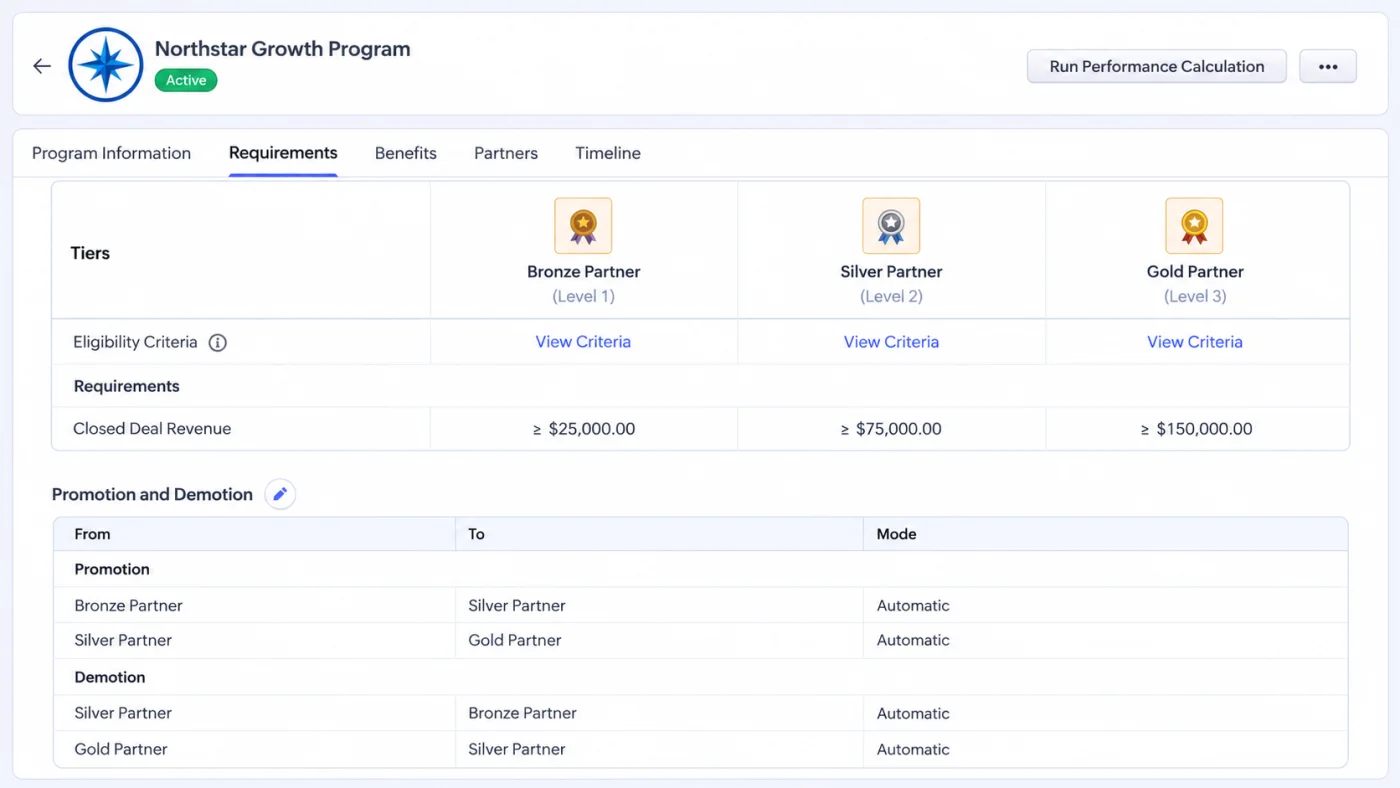
The Requirements tab, with Bronze, Silver and Gold revenue thresholds and automatic tier movement
Benefits can be descriptive or numeric. A tier may promise a dedicated account manager, priority lead access, marketing support, a commission percentage or a credit amount.
Limits worth knowing before program design
Several program boundaries will shape the architecture before the first partner is enrolled.
- A tiered partner program can contain up to three tiers.
- A partner already onboarded into one program cannot be added to another program.
- Requirements need review settings, requirement details and eligibility criteria before they can be enabled.
- Promotion and demotion can be automatic or manual.
- Deactivating a program pauses evaluation and preserves its data.
- Deleting a program permanently removes its configuration, deletes its portal user group and revokes associated portal access.
The rule that limits each partner to one program is the biggest structural constraint. A partner that is simultaneously in a reseller program, a certification program and a regional campaign cannot be modelled as three concurrent memberships using the documented v1 program assignment.
Deal Registration, Where PRM Earns Its Place
Deal registration is the feature most likely to justify PRM on its own.
Historically, channel teams handled opportunities sourced by partners through email, forms and spreadsheets. Two partners could claim the same account, and a direct rep could already own the opportunity. The first dispute often appeared after commercial effort had been spent.
Zoho’s Deal Registration process moves the decision to the start of the sales cycle.
- A partner submits a registration through the portal.
- PRM checks configured modules for potential conflicts.
- A reviewer inspects the registration and any conflicting records.
- The reviewer approves or rejects it.
- An approved registration converts into an Account and Deal.
- Partner ownership and attribution stay attached to the converted records.
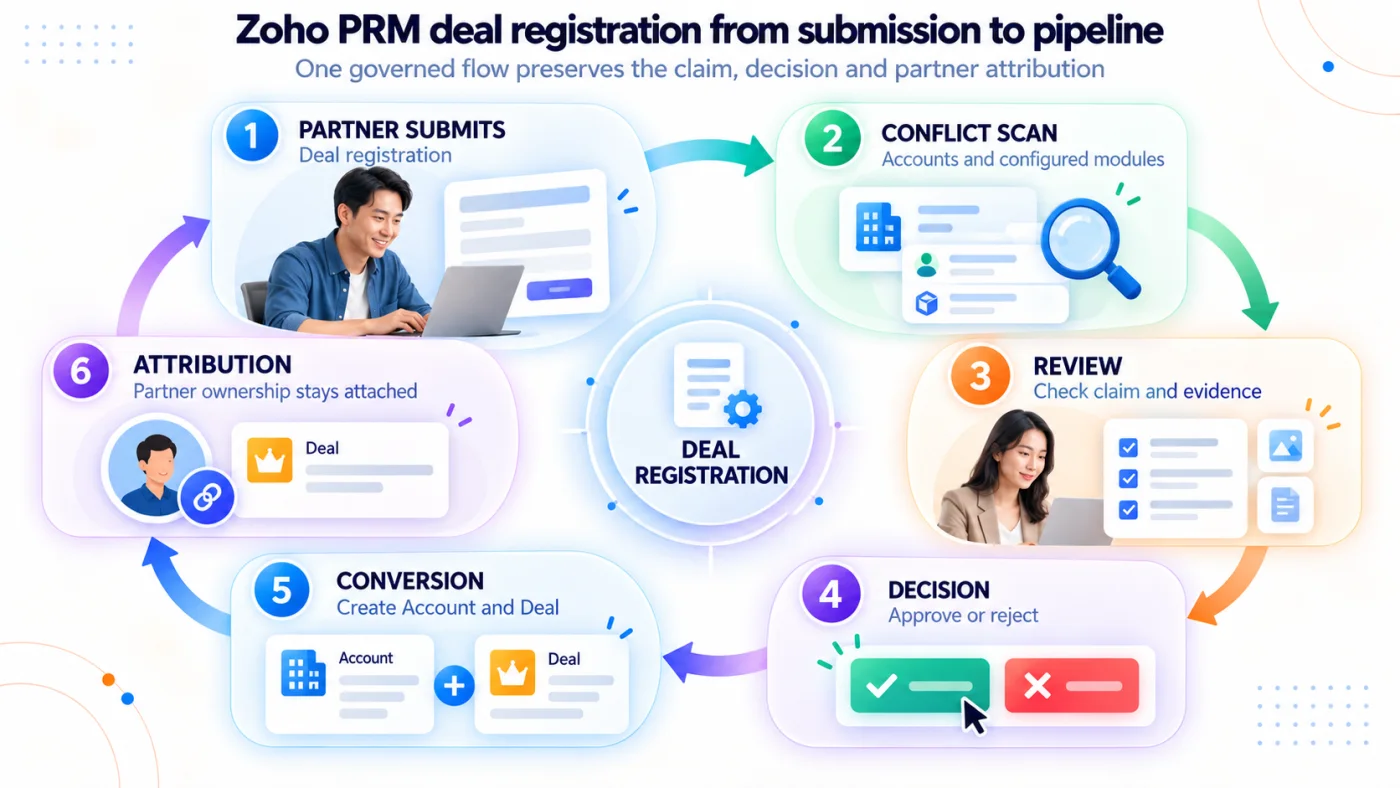
Fig 4 - Zoho PRM deal registration from partner submission to CRM pipeline
The result is a defensible chain of attribution. The original claim, conflict evidence, reviewer decision and converted opportunity remain part of one governed motion.
The configuration flow covers four decisions.
Table 3 - The 4 configuration decisions that define deal registration
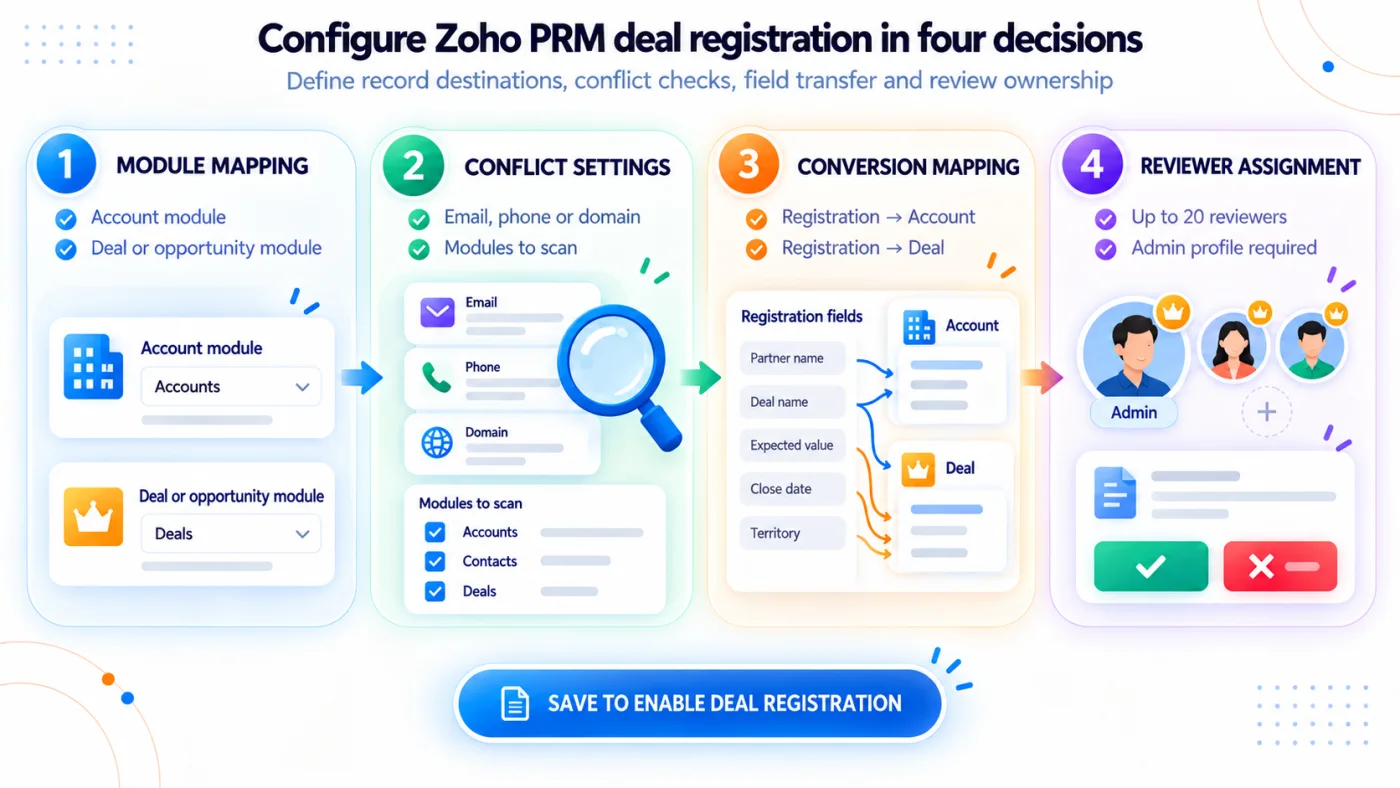
Fig 5 - Zoho PRM deal registration configuration in four decisions
Conflict detection can use email, phone and configured company domains. Additional modules can be added when the identifying data lives outside Accounts. Standard Accounts and Deals can be replaced by custom modules, which is useful for organizations that model opportunities differently.
Two governance limits deserve attention. Zoho permits up to 20 reviewers, and the current documentation says every reviewer must have an Admin profile. That is a blunt permission requirement for larger or regionally distributed channel teams. Field mapping also deserves design discipline because a mapped field cannot simply be remapped to another destination later.
Partner Commissions, Where Contribution Becomes Reward
PRM includes a full commission plan framework with calculations beyond a single percentage field. The mechanics closely resemble Incentives for Zoho CRM. PRM assigns the results to external Partner Accounts, and Incentives assigns them to internal CRM salespeople.
The Partner Commissions configuration guide exposes four primary design choices.
- Transaction or quota attainment plan
- Line item or total amount basis
- Flat or tiered structure
- Flat, differential or differential prorate tier calculation
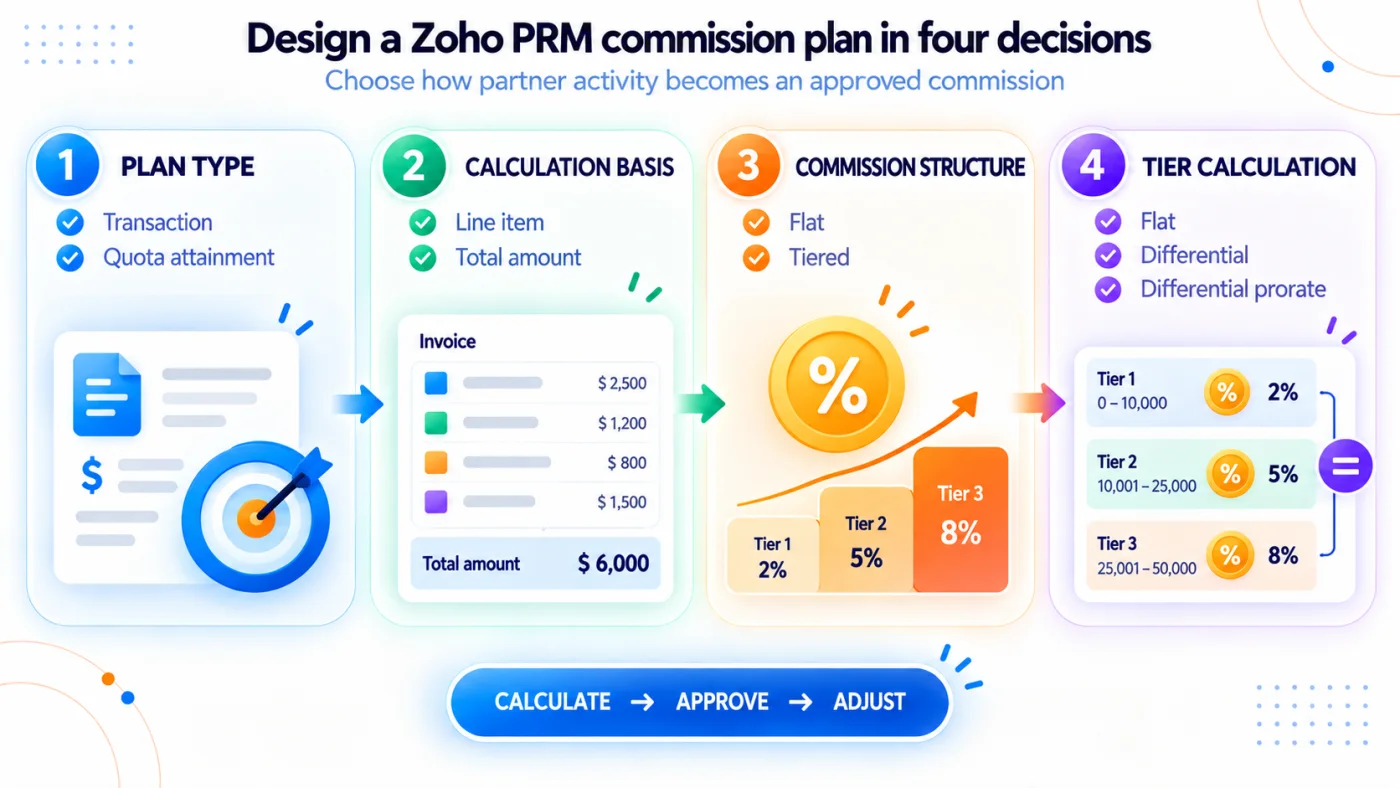
Fig 6 - Four decisions that define a Zoho PRM partner commission plan
Together, those choices determine whether the plan rewards each transaction, cumulative attainment or a progressively larger contribution, and how much explanation the partner will need to verify the result.
Eligible events currently come from CRM Quotes, Sales Orders, Purchase Orders and Invoices. A plan can run on record creation, editing or both events, and can calculate against all records or a filtered record set.
The operational lifecycle is sensible. PRM evaluates the transaction, calculates the commission, routes it for approval and supports later adjustments. Discrepancy handling and clawbacks account for value changes, cancellations, refunds and returns.
Important limits include:
- Up to four commission tiers
- A maximum plan duration of one year
- Flat total amount commission uses percentage as the documented value type
- Clawback criteria use fields from the event module and exclude subform fields
- Commission events originate in CRM records; Zoho Books and Inventory transactions require a data handoff
PRM can calculate and record what should be paid. The final movement of money still needs an operational handoff to Books, payroll, banking or another accounts payable process. Treat “payout” in a PRM workflow as payout administration unless your implementation explicitly connects a disbursement system.
The Portal Privacy Issue Buyers Must Review
PRM’s value depends on giving external users access to CRM data. Portal isolation is therefore a primary architecture requirement.
Zoho published a breaking change announcement for Client Portal access to the Users API. The change is live. When a Client Portal user calls GET /users or GET /users/{user_ID}, Zoho now limits the response to first name, last name, full name, ID and user type. Email address, role, profile, ZUID, status and several internal preference fields are removed.
That closes the direct exposure Zoho documented.
The scope of that fix covers the documented Users API exposure. A reply on the PRM launch discussion alleges two remaining paths. These involve reconstructing internal user information indirectly through other API calls and exposing information belonging to unrelated external portal users. The reply specifically raises email addresses, record data and file uploads.
The public record currently contains no later Zoho response that confirms, reproduces or resolves those claims. They remain an unverified community security report with an open resolution status.
For a production review, test with at least three identities:
- A CRM administrator
- A portal user belonging to Partner A
- A portal user belonging to Partner B
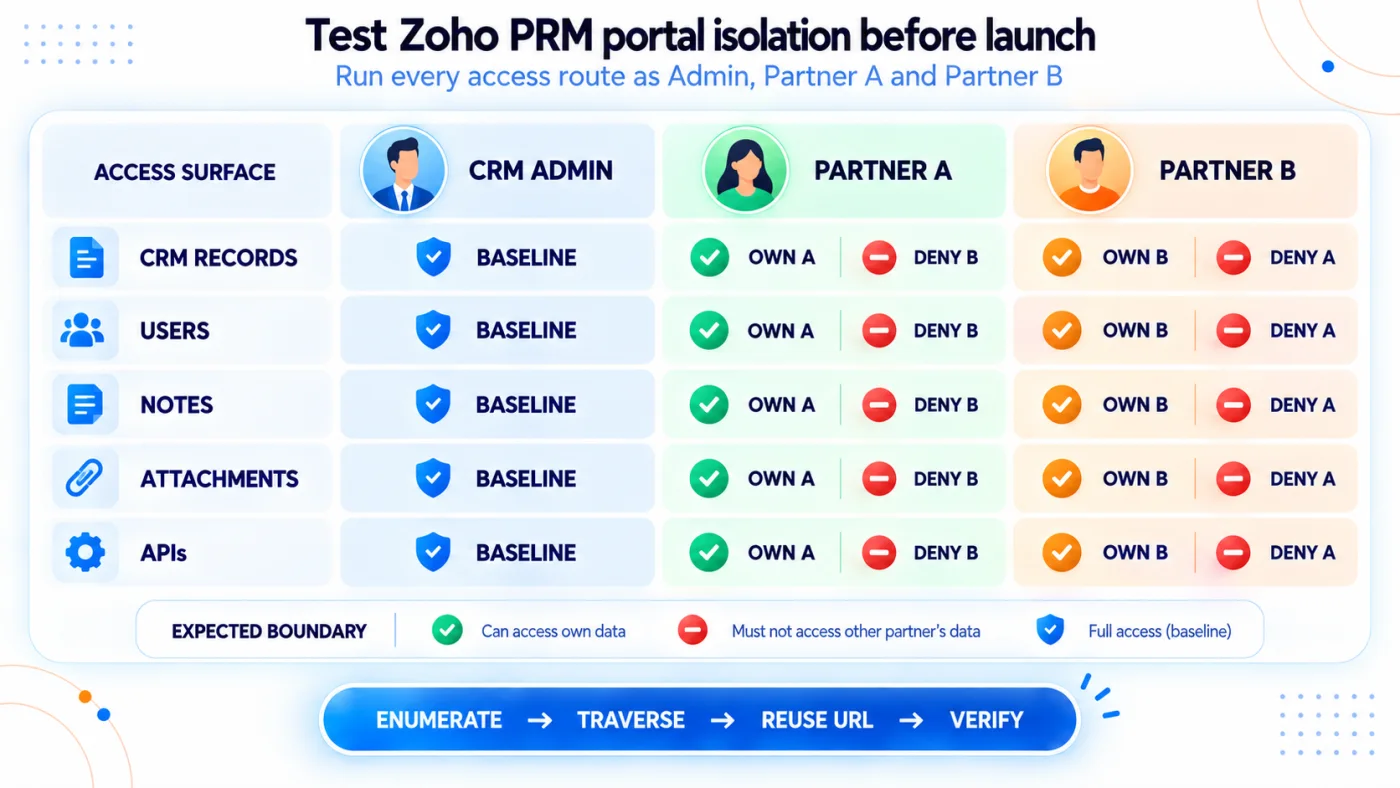
Fig 7 - The minimum isolation test across partners before a production launch
Attempt record enumeration, related record access, API traversal, user lookup, note access, attachment access and file URL reuse across the two partner identities. Repeat the tests against every module and custom function exposed to the portal. Ask Zoho Support for written confirmation covering the specific scenarios involving different partners before placing sensitive customer or contractual data in the portal.
Our recommendation is a measured rollout. Pilot PRM in a sandbox, test isolation like an external application, minimize exposed fields and modules, and hold production activation until the results and Zoho’s response meet the organization’s risk threshold.
Test portal isolation before you launch
If your partner operation currently lives across CRM custom modules, Client Portals, spreadsheets and manual approval emails, our Zoho practice can map the existing workflow against PRM v1, test portal isolation and identify which custom components can be retired safely.
Talk to our Zoho team
What Zoho CRM PRM v1 Does Well, What It Misses
What PRM handles cleanly
PRM v1 is strongest when the partner motion begins with an approved partner and continues through CRM based deal registration, performance review and commission administration. The following capabilities require the least custom work within that operating model.
A single channel pipeline. - Approved partner registrations become CRM records in the primary pipeline.
Structured programs. - Tiered and non tiered models connect measurable requirements, eligibility, review cycles and benefits.
Early conflict detection. - Email, phone and domain matching bring channel conflict review forward, before two parties spend months pursuing the same account.
Performance based tier movement. - Count, sum and average requirements cover the common revenue and activity measures needed for partner reviews.
Commission administration visible to partners. - Plans, approvals, discrepancies and clawbacks replace email and spreadsheet administration with a traceable structure.
Low adoption friction for existing CRM customers. - PRM installs from App Space and uses the CRM data and administration model teams already know.
Together, these capabilities give CRM centered channel teams a workable operating foundation for attribution, partner evaluation and commission governance. Implementation effort can focus on data quality, permissions and adoption because the core transaction flow already has native support.
Where PRM requires extension
Extension work begins when the partner operation reaches beyond the commercial workflow documented for PRM v1. These requirements affect system scope, permissions, integration ownership and the number of Zoho applications involved.
Partner recruitment and application management. - Zoho’s own documentation assumes the organization already knows which partners it wants to add. High volume public recruitment still needs Forms, CRM customization, Creator or another front end system.
Contracting and compliance. - Agreements, expirations, insurance documents, due diligence, sanctions checks and policy acknowledgements require Zoho Sign, WorkDrive, custom modules and workflow.
Guided onboarding. - A complete onboarding journey requires tasks, milestones, reminders and analytics configured around the documented v1 surface.
Training, certification and content enablement. - A mature ecosystem often needs an LMS, certification expiry, content libraries based on roles and playbooks for partners. These require other Zoho applications or integration.
Market development funds and co marketing. - MDF requests, budget allocation, claims, proof of performance and reimbursement require a separate module or application under the current PRM documentation.
Lead distribution and account mapping. - PRM handles deals submitted by partners well. Sending vendor leads to the right partner requires a separate design for acceptance rules, SLAs and recycling.
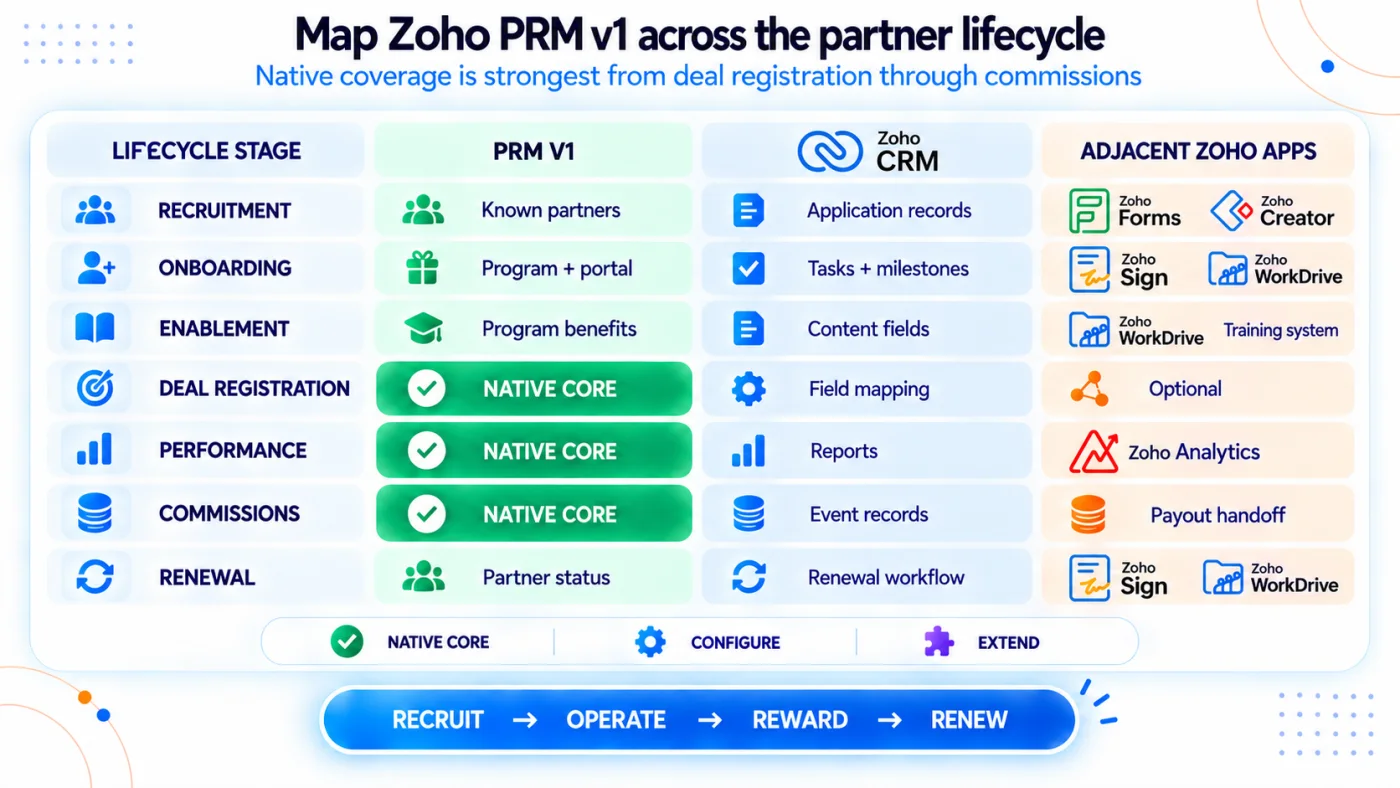
Fig 8 - Native v1 coverage with customization and adjacent Zoho applications
Multiple concurrent programs. - A Partner Account cannot currently be added to another program once it is onboarded to one. Ecosystems with multiple commercial motions will feel this immediately.
Granular reviewer delegation. - Requiring deal registration reviewers to have an Admin profile is difficult to justify in a large enterprise access model.
Commission events native to finance. - Commission triggers come from CRM inventory modules. Businesses recognizing eligibility from Zoho Books payment, credit note, shipment or collected cash will need a synchronization process.
Mobile PRM. - Zoho’s launch announcement says mobile support is coming soon. We found no later public release confirmation specific to the PRM workspace as of October 15, 2026.
Proven portal isolation. - The Users API restriction is a real improvement. The remaining community claims need a public technical closure or a successful security assessment by the buyer.
Taken together, these requirements define the boundary between a focused CRM implementation and a broader partner operations program. Scope them before installation so each dependency has an owner, data source, control process and maintenance budget.
Zoho CRM PRM Availability and Rollout
Table 4 - Edition eligibility, interface requirement and pricing status at launch
The words “for now” matter. Any three year TCO model should include a pricing contingency even when the first year licence cost is zero.
Installation is straightforward. An eligible administrator opens App Space, selects PRM and installs it. Zoho’s installation guide notes that uninstalling permanently removes the PRM app data and requires a fresh installation later. The permanent removal of app data makes uninstall a destructive action.
Zoho CRM PRM Buyer Verdict
Adopt PRM now if your organization looks like this
The strongest early adopters are companies whose operating model already fits the records and controls PRM v1 understands.
- You already use Zoho CRM Enterprise, Ultimate, CRM Plus or Zoho One on the new UI.
- Your partner list is identified and qualification happens elsewhere.
- Each partner belongs to one primary program.
- Bronze, Silver and Gold, or a single non tiered program, cover the required structure.
- Partner contribution can be measured from CRM records using count, sum or average.
- Deal registration and channel conflict prevention are the immediate problems to solve.
- Commission eligibility comes from CRM Quotes, Sales Orders, Purchase Orders or Invoices.
- Your security team can run a sandbox portal isolation assessment before launch.
For this profile, PRM removes custom plumbing from the core channel workflow and preserves the organization’s commercial policy.
Pilot narrowly or wait if any of these apply
A partner operation whose complexity sits outside deal registration and basic tier administration faces an architectural requirement for every missing capability.
- A single partner must participate in several simultaneous programs.
- Partner recruitment, contracting, onboarding and certification must be native in one product.
- You need MDF, co marketing, content syndication or a full partner LMS on day one.
- Deal reviewers cannot reasonably receive CRM Admin profiles.
- Commission eligibility depends on Books payments, credit notes, collected cash or Inventory shipment events.
- Mobile access is mandatory for partner managers or the PRM workspace itself.
- Your risk policy requires public confirmation that the remaining portal security allegations are resolved.
- You need a mature enterprise PRM replacement comparable feature for feature with a dedicated partner ecosystem platform.
In those environments, a contained pilot can validate the native data model. A full migration should wait until the blocking requirement has either shipped or been designed as a sustainable adjacent service.
PRM v1 can retire custom builds for deal registration, tier reviews and partner commission records. Mature enterprise channel stacks should remain in place during fit validation and migration planning.
A Practical 30 Day PRM Pilot
The safest first deployment is one partner program, a small external cohort and one measurable commercial motion.
Week 1 – Architecture and security
The first week establishes the trust boundary. No program logic is worth configuring until the team knows which data each external identity can reach.
- Select one program and five to ten partner organizations.
- Define the Partner Account and Partner Contact data model.
- Minimize modules and fields visible through the portal.
- Create Partner A and Partner B test identities.
- Run the access and API test across different partners before inviting a real partner.
Week one is complete when access is intentionally narrow, tests across partners are documented and invitations rely on verified isolation.
Week 2 – Program and deal registration
With the boundary proven, the second week translates channel policy into measurable requirements and an approval path that operations can run consistently.
- Configure a non tiered program or a maximum of three meaningful tiers.
- Define two or three requirements that can be calculated reliably from CRM data.
- Map deal registration into the correct Account and Deal fields.
- Configure email, phone and domain conflict checks.
- Document reviewer SLAs and rejection reasons.
The output is an agreed route from partner submission to an attributable CRM opportunity, including how ambiguity will be resolved and how quickly partners should expect an answer.
Week 3 – Commissions and operating controls
The third week tests the financial logic at small scale, where calculation errors can still be traced with the live settlement cycle untouched.
- Configure one commission plan with the simplest valid structure.
- Define discrepancy and clawback policy before activation.
- Confirm who approves commission records.
- Build the handoff from approved payout records to finance.
- Reconcile ten test transactions manually.
Manual reconciliation is the exit gate. Automation begins after operations and finance independently reproduce all ten results.
Week 4 – Partner acceptance and the launch decision
The final week moves the pilot from administrator confidence to partner evidence. External users should be able to complete the motion using the standard guidance supplied to every partner.
- Ask pilot partners to register deals and review commission visibility.
- Measure registration completion, conflict rate, approval time and conversion accuracy.
- Repeat the security test after every permission change.
- Record every required customization and decide whether it belongs in CRM, another Zoho product or the PRM roadmap.
Observed partner behaviour, control performance and reconciliation accuracy should determine the launch decision. Checklist completion supplies supporting evidence.
The pilot validates partner attribution, data isolation and financial handoff under unpredictable real user behaviour.
Setting Up Partner Portals and Programs With Clixlogix
Partner programs rarely fit a standard template cleanly. If PRM v1 covers most of your motion but leaves gaps around portal isolation, partners that need membership in multiple programs, Zoho Books commission events, or recruitment and onboarding, our Zoho services team can map the specific build against your partner model and show which pieces PRM owns, which stay custom and which belong in adjoining Zoho products.
Map your partner model against PRM v1
We work with Zoho CRM customers running referral networks, VAR channels, SI partnerships and ISV marketplaces. The common first engagement is a two week fit assessment covering partner data model, portal isolation testing, program and tier design, deal registration configuration and commission plan structure. The output is a written scope that your security team, finance team and channel operations can sign off on before a single external partner receives an invitation.
Talk to the Clixlogix Zoho team