TLDR
- The 2026 JAMA multisite cohort across 5 academic health systems and 8,581 clinicians measured 16 fewer documentation minutes per 8 scheduled hours, 0.49 additional weekly visits per adopter, and $167 per adopting clinician per month in E/M revenue before scribe costs.
- Documentation time, after hours work, and revenue are 3 separate outcomes. A deployment can move one of them and leave the other 2 flat.
- Year one payback turns on 3 operational conditions, all testable before the first provider is onboarded. A production ready EHR integration path. Providers who sign the draft after a scan. An operations team that converts saved documentation time into bookable capacity.
- Clinic groups of 10 to 100 providers hold 3 structural advantages a health system does not, through compensation flexibility, panel elasticity, and short operations loops.
- 6 failure modes surface in weeks 5 through 10, each with a diagnostic cue the operator can watch for. Template drift, specialty vocabulary gaps, consent friction, encounter mismatch, review burden overrun, and billing code suggestion drift.
- Buy, hybrid, or custom build is a readiness decision that 3 questions settle, covering the EHR integration path, the specialty evidence, and the data governance posture.
- A 90 day rollout carries 5 checkpoints with a named metric and a named owner. Capture rate, review time, scan and sign adoption, bookable capacity, and E/M coding mix.
The AI Medical Scribe Clinical and Economic Divergence
Peterson Health Technology Institute published a 2025 market trend report drawing on interviews with health system leaders and AI companies, concluding that ambient AI scribes likely improve clinician burnout and that the financial impact is unclear. The 2026 JAMA multisite cohort study across 5 academic health systems and 8,581 clinicians sharpened the economic read, documenting 16 fewer documentation minutes per 8 scheduled hours, 0.49 additional weekly visits per adopter, and $167 per adopting clinician per month in E/M revenue before scribe costs. The central tension sits here: documentation time, after hours work, and revenue are 3 separate outcomes. All 3 land for groups that pair the technology with disciplined workflow and technical implementation around the selected deployment path. The groups that stay flat typically paid for a product or commissioned a build and skipped the operations work. Most category content papers over that divergence.
The divergence is the only honest frame for the decision in front of a clinic group of 10 to 100 providers across several locations. The groups seeing the strongest financial return in 2026 ran ambient scribing as an operations program, with the technology enabling the capacity change. The groups seeing the weakest return switched on a product or build and expected the economics to appear on their own.
The operator at a 10 to 100 provider group looking for a forecast in the public health system data runs into a reference set that does not fit. A $100,000 to $1,000,000 ambient scribe commitment over 24 months lands against group economics, which turn on compensation structure, panel elasticity, and operations tempo. The sections that follow work through that model.
Intention is for the read to offer 3 things:
- An honest read on what the category delivers in 2026
- A model the operator uses to decide whether a given operation is ready to see the return before the first provider is onboarded
- A short list of what to decide before choosing a vendor platform, a hybrid extension, or a custom build
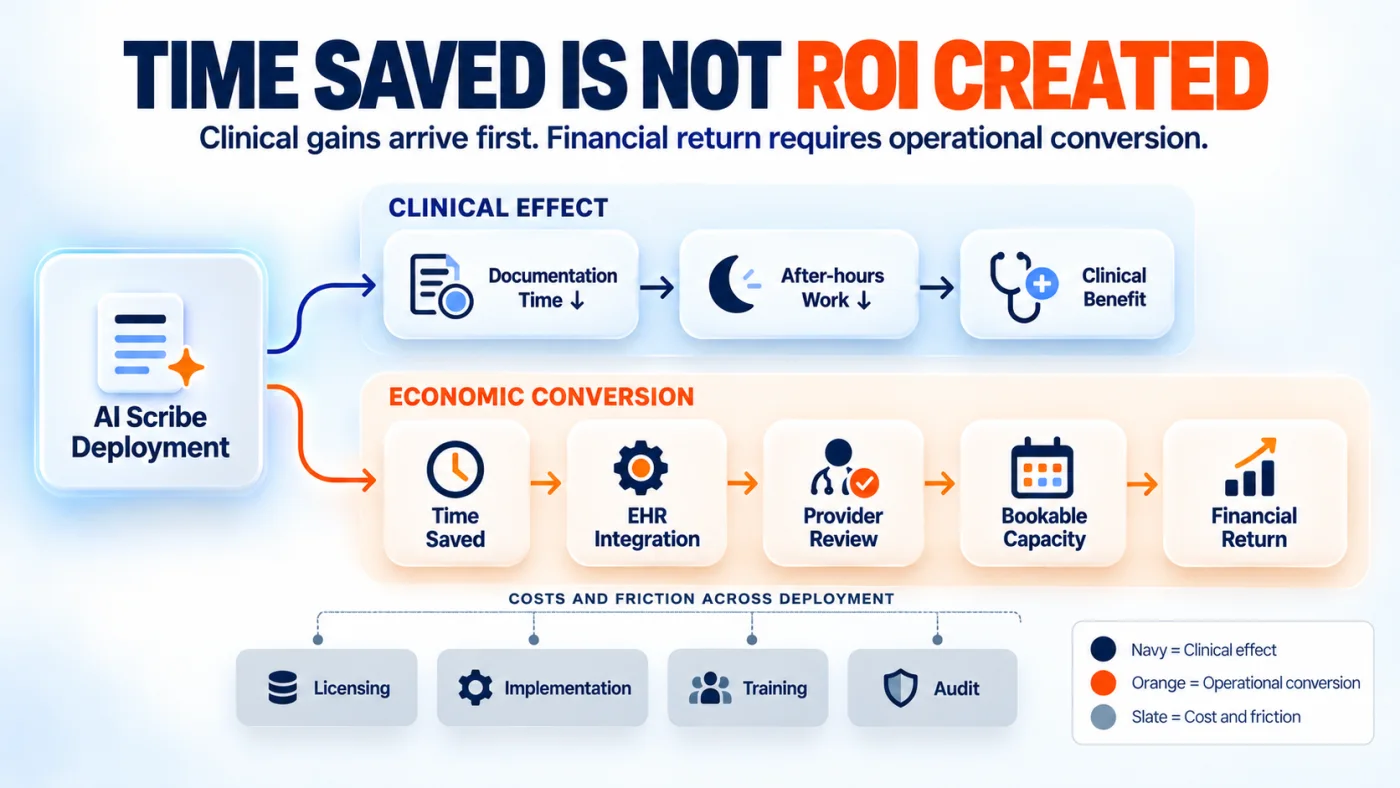
Fig 1 - The AI Medical Scribe Clinical and Economic Divergence
What an AI Medical Scribe Actually Does
An AI medical scribe commonly produces its draft through a flow such as this reference architecture, which happens inside and around a single visit. Commercial vendors package these steps differently. Hybrid and custom implementations may split them across several services, and not every architecture exposes a discrete transcript or uses the same pipeline:
- Audio capture - a microphone records the clinician and patient conversation
- Audio transport - the platform software encrypts and sends the audio to a commercial or organization controlled processing environment
- Speech recognition and diarization - the system transcribes the audio and separates speakers
- Note generation - a generative model or model pipeline configured for clinical documentation produces a structured clinical note from the transcript
- Review and edit - the provider reads, verifies, and corrects the draft
- EHR writeback - the platform integration writes the finished note to the correct encounter
- Clinician authentication - the responsible provider signs the entry; CMS Medicare guidance requires the treating professional to sign the entry for Medicare documentation, and other payer and organizational requirements apply alongside
The microphone records spoken content only. The physical examination, the clinician’s silent reasoning, and imaging reviewed on the screen sit outside that boundary. Findings outside the spoken conversation have to be spoken aloud, imported from the EHR, or added during review. The maturity gaps between the steps, and the way the selected product or technical architecture bridges them, explain most of the production problems operators report in year one.
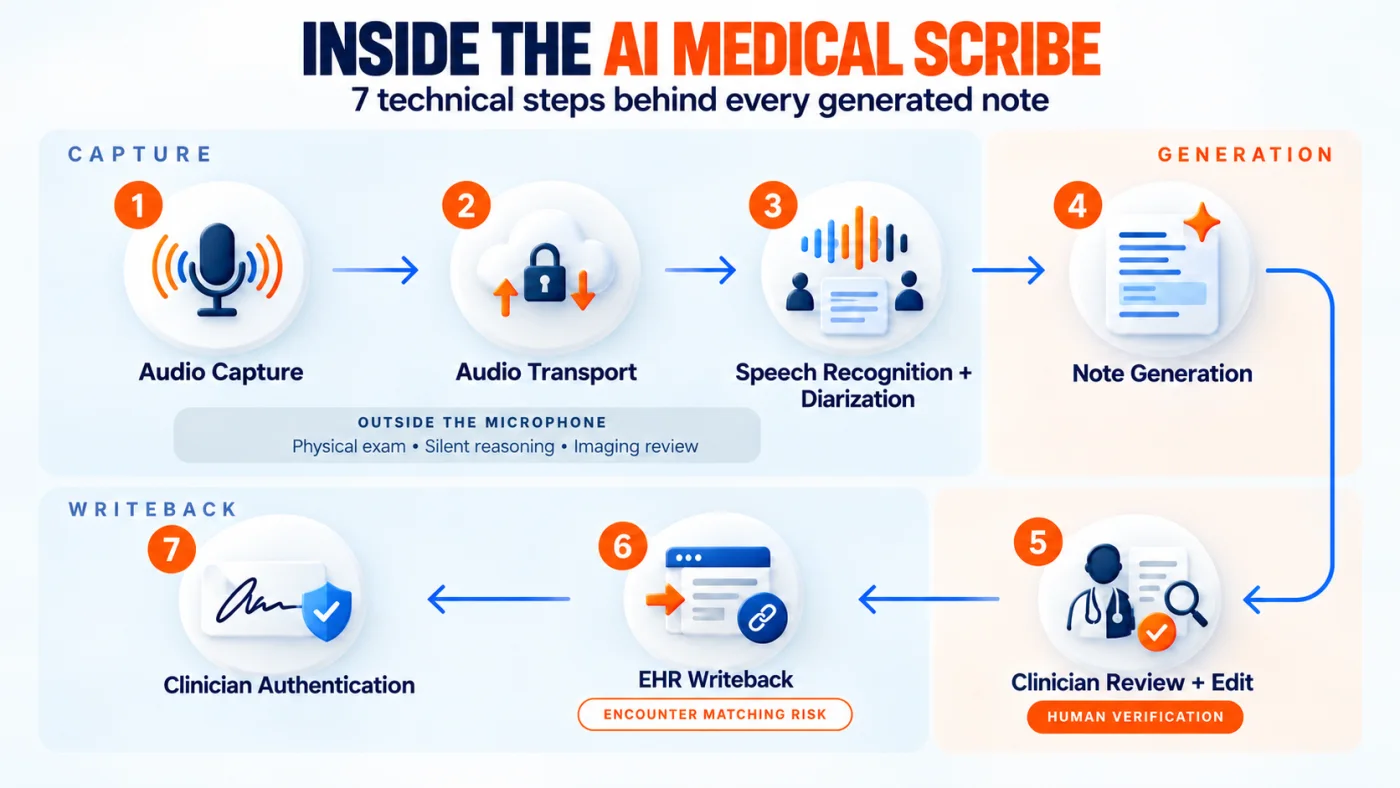
Fig 2 - The 7 Technical Steps of an AI Medical Scribe
Capture stage - starts with a microphone the group places in the exam room, on a badge, on the clinician’s phone, or inside the EHR mobile app. The microphone records the natural conversation between clinician and patient while the clinician holds the normal visit. In a commercial deployment, the vendor’s software usually handles audio transport, encryption, speech recognition, and speaker separation. In a hybrid or custom path, those responsibilities may sit across several services under an accountable technical owner. Processing and storage policies vary by architecture and configuration. Microsoft’s DAX Copilot for Epic FAQ documents session retention of 30 days before deletion within that integration, which does not generalize to every Dragon Copilot deployment. Other products retain less, store no audio by default, or do not keep a replayable recording at all. Consent and disclosure handling runs as a clinical governance workflow on the group side; the AMA recommends patient disclosure, consent, and manual verification by the clinician, and the specific requirements vary by state recording law and organizational policy.
Generation stage - takes the transcript produced by speech recognition and runs it through a generative model or model pipeline configured for clinical documentation that produces the structured note in the group’s chosen format. SOAP is common in primary care and several outpatient specialties. DAP or BIRP covers mental health. Variants cover dental charting, ophthalmology, dermatology, and procedural work. Depending on product and licensed module, the generation stage also drafts a suggested billing code, a patient instruction summary, a referral letter, and prior authorization documentation. Confidence scores on billing suggestions vary by product. The quality of the structured note depends on template fit, specialty vocabulary coverage, and the ability of the product configuration or accountable technical owner to adjust the prompt, model, or template for the group’s documentation standard.
Writeback stage - delivers the finished note into the EHR against the correct encounter and completes the clinician authentication step. Writeback mechanics vary by EHR, product path, and integration design. Some combinations write the note directly into the correct note type with the billing code attached. Other combinations write only the note body and leave the patient instructions, the referral letter, and the billing code as copy and paste. Encounter mismatch, where the note lands on the wrong visit or on a draft the EHR never created, is a high severity failure class that destroys clinician trust quickly, and verifying the exact writeback behavior per EHR version is where legal and operational review should focus the longest before signing.
The terminology that matters - An AI medical scribe is the product category. Ambient capture is one mode within it where the microphone listens to the natural visit. Dictation capture is the other mode within the same category where the clinician speaks to the software after or between visits. Microsoft combined its Nuance DAX ambient capabilities with Dragon Medical One into Dragon Copilot, launched in March 2025, which is the current buyer facing reference. Abridge, DeepScribe, Suki, Nabla, Commure, and others ship in the ambient capture category, which KLAS tracks as Ambient Speech.
Table 1 - The 3 AI Medical Scribe Stages at a Glance
4 AI Scribe Confusions to Settle Before Choosing a Deployment Path
4 confusions sit at the start of most deployment conversations. Clearing them before choosing whether to buy, extend, or build is worth more than any product demo.
Ambient scribing produces a structured clinical note– Transcription returns the words said. Ambient scribing interprets those words against a specialty template and, depending on product and licensed module, drafts medical decision making text and a suggested billing code. The audio is a means to the note. Audio retention varies by vendor and configuration, from zero audio stored by default to 30 day retention windows. Buyers who treat scribing as transcription evaluate the wrong vendors and fail to budget for the review burden the structured note carries.
AI notes remain clinician authenticated drafts - In the 2026 production environment, the clinician reads, verifies, and signs each note the AI drafts. The scribe produces a draft. The clinician produces the signed, billable document. Buyers who assume autonomy spend more time on review than they expected. Review time is an important determinant of whether the time saved shows up on the schedule, alongside utilization intensity, which the JAMA cohort found correlated with roughly double the EHR time reduction among clinicians using scribes in 50 percent or more of visits.
Ambient scribes sit beside the EHR – The EHR remains the system of record for scheduling, orders, results, and clinical workflows. A scribe that writes notes into Epic, Athenahealth, or Elation writes into those EHRs, and every limitation of the host EHR persists through the scribe. A group with a weak EHR API or an unmaintained scribe integration inherits those limitations.
Coding accountability does not transfer - AI generated coding suggestions do not move coding responsibility onto a vendor or development team. The accountable clinician, coder, or revenue cycle team validates the submitted code under the group’s existing workflow. In many groups the clinician selects the E/M level and coding teams audit, validate, or correct it. Groups that treat the scribe as a replacement for coder training and audit see the coding lift fade by month 3. The Clixlogix workflow build pairs the scribe with the training and audit protocol that holds the lift.
What AI Scribe Studies Show
The clinical case for AI medical scribes has moved from vendor claims to published evidence in 2026. The real world studies show a positive direction on documentation time, after hours work, and clinician burnout. The size of each effect depends on the product, the specialty, the utilization intensity, and the implementation discipline around the deployment. 3 findings sit under that statement.
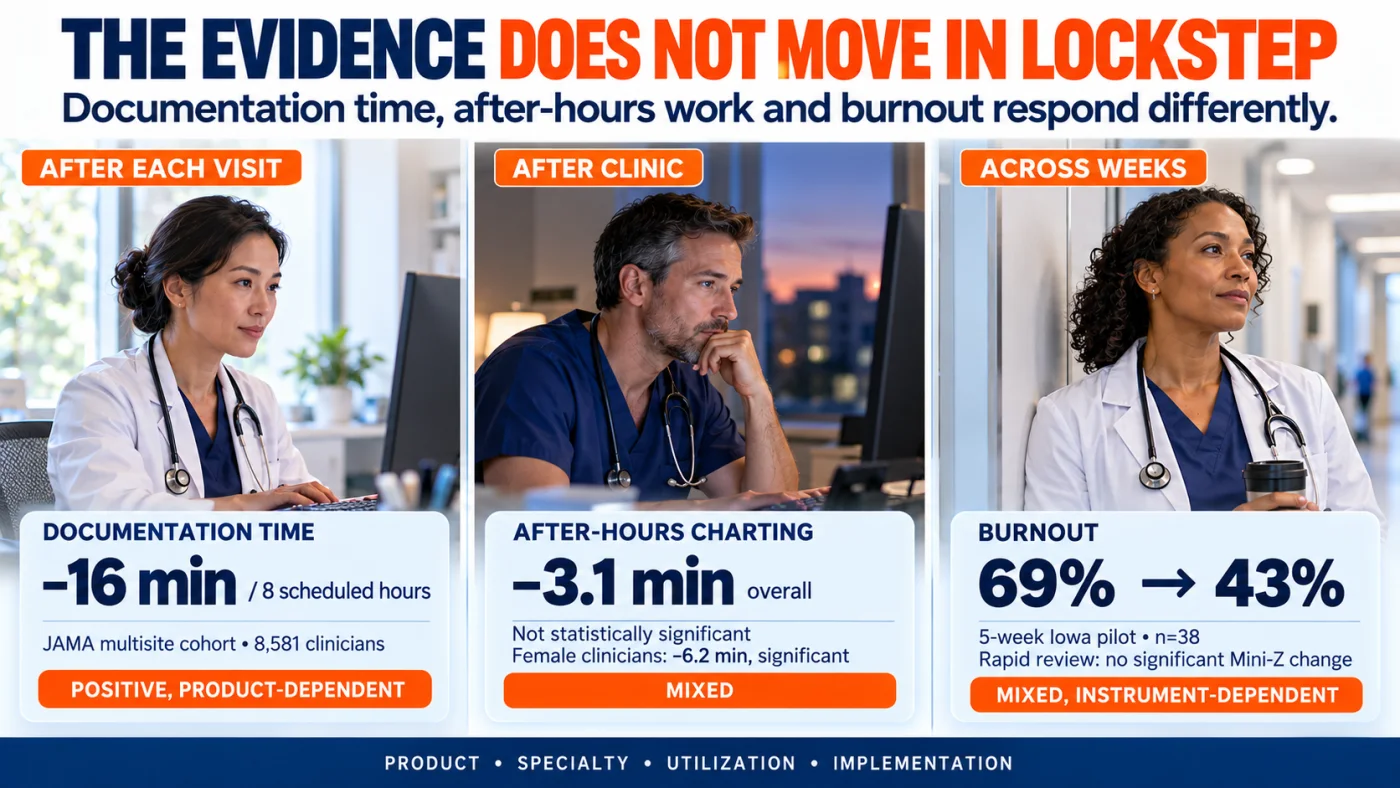
Fig 3 - Independent Evidence on AI Medical Scribe Clinical Outcomes 2024 to 2026
Documentation time falls, with product variation - The 2026 JAMA multisite cohort across 5 academic health systems reported 16 fewer documentation minutes per 8 scheduled hours after AI scribe adoption. The first published randomized trial in NEJM AI across 238 outpatient physicians showed Nabla users saw a 9.5 percent decrease in time in note (P=0.02) while DAX users saw no statistically significant change against the control arm. The JAMA data names primary care as the group with the greatest changes. The practical read for an operator is that time savings are real and vary widely by product.
After hours charting results are mixed - The same study measured 3.1 fewer minutes of after hours documentation across the full sample, a result that did not reach significance. The reduction grew to 6.2 minutes among female clinicians, where it was significant. After hours relief lands for some providers in some settings, and the headline number for the full adopter population does not generalize cleanly.
Burnout evidence is instrument dependent - A 5 week pilot at University of Iowa Health Care of 38 physicians and advanced practice providers reported the Stanford Professional Fulfillment Index median burnout score fell from 4.16 to 3.16 (P=0.005), with burnout prevalence falling from 69 percent to 43 percent. In the same pilot, the work exhaustion subscale and the professional fulfillment subscale did not reach statistical significance. The JMIR AI 2025 rapid review, which found only 6 studies out of 1,450 screened that met inclusion criteria, reported no statistically significant burnout change on the Mini Z composite (33.3 versus 35.9, P=0.26). The honest read is that measured burnout benefits appear in some pilots on some instruments and not in others, and the real world evidence base is still small.
Utilization intensity and editing burden shape the result - The 2026 ambulatory pilot by Harvey et al. analyzed 25,600 notes across 23 specialties over 3 months. High users recovered 13.6 fewer documentation minutes per day, roughly a 21 percent reduction. Pajama time, the EHR work clinicians do at home after hours, fell 3.6 minutes but did not reach statistical significance (P=.19). 83.6 percent of notes required editing of less than one quarter of their content. Reported burnout fell from 59.5 to 50.6 percent, a change that did not reach significance (P=.34). The operator conclusion is that documentation time, pajama time, editing burden, and burnout move at different rates and under different conditions, and collapsing them into one outcome misleads the model.
The clinical direction is positive and still thin. Medical Economics coverage in March 2026 summarized the state as adoption outpacing evidence. Note quality adds another dimension. A controlled simulation of 2 commercial scribes found 31 of 44 generated notes (70 percent) carried at least one identified error, most commonly an omission. A 2026 real world pilot of 356 reviewed notes rated 94.7 percent as free of significant errors, while still finding accidental omissions in 18 percent and 19 of 356 notes (5.3 percent) carrying errors the authors described as potentially serious or imminent risk of harm. The argument has moved to whether the clinical signal translates into financial outcomes, and under what conditions.
Public clinician discussions carry a parallel tension. We have heard clinicians describing their own deployments, reporting varied outcomes. Some saw real time savings. Some saw AI sounding notes that needed cleanup. One valued better documentation and lower fatigue even where time savings did not show up. These are low analytical weight accounts worth reading as operational questions a pilot should answer. Each group needs to decide what counts as time saved for a given clinician. The note quality standard the group will enforce has to be defined before onboarding. The compensation model has to decide how a cleaner note that took the same time to deliver gets treated. During our interaction with clients, they have noted that their residents have raised the concern that trainees who edit polished scribe output may not develop the documentation and synthesis skills the attending expects, which belongs in the training and supervision plan for any group that teaches.
Why AI Scribe Financial Return Has Been Uneven
The 2025 PHTI framing was that financial impact was unclear. The 2026 evidence base is modestly more informative. The study estimated $167 per adopting clinician per month in additional E/M revenue before scribe costs, from a 1.7 percent increase in visit volume. PHTI’s 2026 Administrative AI report cited one multihospital Suki implementation that saw a 5 percent increase in level 5 encounters and a 7 percent increase in level 4 encounters, averaging $1,004 per provider per month in additional revenue; neither figure accounts for licensing, implementation, training, or audit costs. PHTI also warned that provider deployment of AI is increasing billing intensity, which raises payer response and audit questions.
3 structural reasons explain it, and all 3 are relevant to any operator budgeting a scribe deployment.
Salaried physician economics - When a physician works on a salary with a Relative Value Unit target, time saved does not automatically become more encounters. The physician hits their RVU target with less effort. They go home earlier. They answer fewer messages at 10 pm. The group gets a happier physician and a quieter inbox. None of that shows up in revenue. The compensation model has to change, or the panel size has to grow, before the time saved produces income.
Panel expansion lag - Even in groups that pay providers per encounter, panel expansion takes months. The front desk has to call patients off waitlists. Scheduling has to find usable slots. The group has to refresh referral channels. Rooming teams have to prep for more volume. None of this happens on day one, and most of it does not happen without an owner. An observation from Clixlogix implementations is that a group can save 10 to 15 minutes per encounter per provider and still see no additional revenue for 90 days while the operational tail catches up. If the tail never catches up, which is the common case, the saved time becomes slack and revenue stays flat.
Revenue cycle friction - The scribe produces notes that look clean to the clinician. The billing code suggestion may look credible. The documentation that supports the code may not fully meet payer audit standards for the level billed, especially for high complexity visits. Groups that rely on the scribe to lift coding without reviewing the underlying documentation often see a short term lift in coded level followed by a longer term rise in denials, downgrades, or audit findings. The net financial outcome is sometimes neutral, sometimes negative. PHTI called out this risk explicitly in its evaluation framework.
The honest 2026 read is that ambient scribes produce modest, measurable revenue and clinician experience gains without yet proving net financial return once implementation, licensing, and audit costs are included. Operators reading the published health system data as a forecast for a 10 to 100 provider clinic group are using a reference set that does not fit their compensation model, their panel elasticity, or their operational tempo. The economics for groups at that scale diverge, as the next sections lay out.
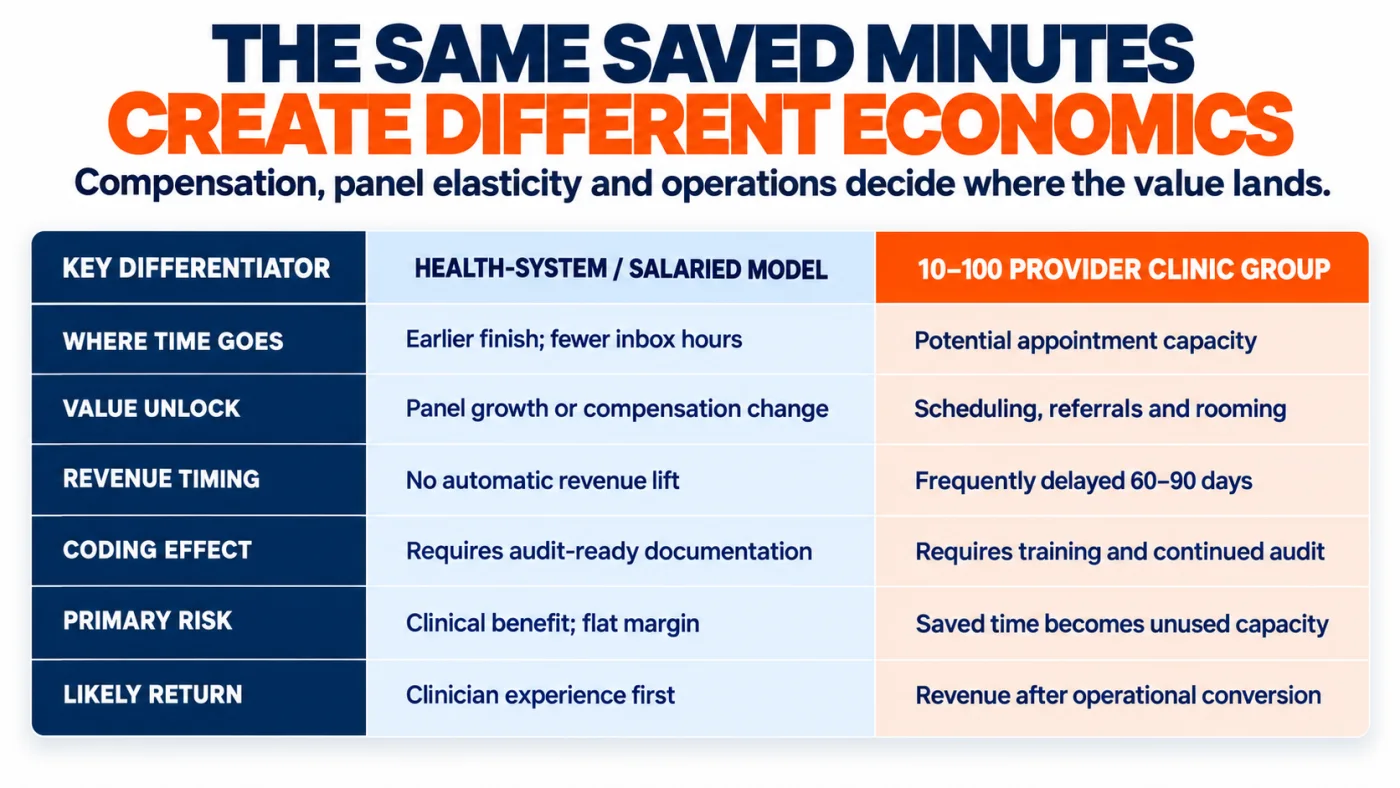
Fig 4 - Where AI Scribe Time Saved Goes by Operator Model
Why AI Scribe Economics Differ for 10 to 100 Provider Clinic Groups
A 10 to 100 provider clinic group across several locations is in a different economic position from a health system. 3 features of the group model at this scale change the ROI math.
Compensation flexibility - Groups at this scale typically pay providers through a mix of base salary plus production bonus, straight fee for service, or capitation. The production component gives operators a lever to convert saved time into revenue, because providers see immediate benefit from doing more encounters. The group can adjust the compensation plan on a rolling basis, which health systems cannot do at their scale.
Panel elasticity - Groups at this scale have waitlists. The front desk knows which patients the schedule can accept, which referral partners sit undersupplied, and which panels the group has closed by choice. Converting saved time into bookable capacity requires operations work, and the demand is already there. A tendency Clixlogix has seen in similar implementations is that groups absorb capacity increases in the 10 to 15 percent range in the first 6 months without any marketing spend.
Health systems rarely have the same latent demand accessible on the same timeline.
Short operations loops - A clinic group of 40 providers across several locations has a small operational leadership that talks weekly. The group can redesign a scribe deployment, retrain on it, and reset its metrics inside a single month, which is faster than the review cycles larger health systems typically run. This difference accumulates over time. The groups that got real value out of ambient scribing in 2026 treated each monthly operating review as a chance to tune the deployment.
The takeaway is that groups at this scale can win, with discipline. The structural conditions are present. Converting those conditions into financial return depends on 3 operational decisions, which the next section lays out.
3 Conditions for AI Scribe Payback in Year One
3 conditions have to be true for a 10 to 100 provider clinic group to see financial return in the first 12 months of deployment. The operator can test each condition before onboarding the first provider. Each one, when missed, produces a specific failure mode the group can identify in month 2 or month 3.
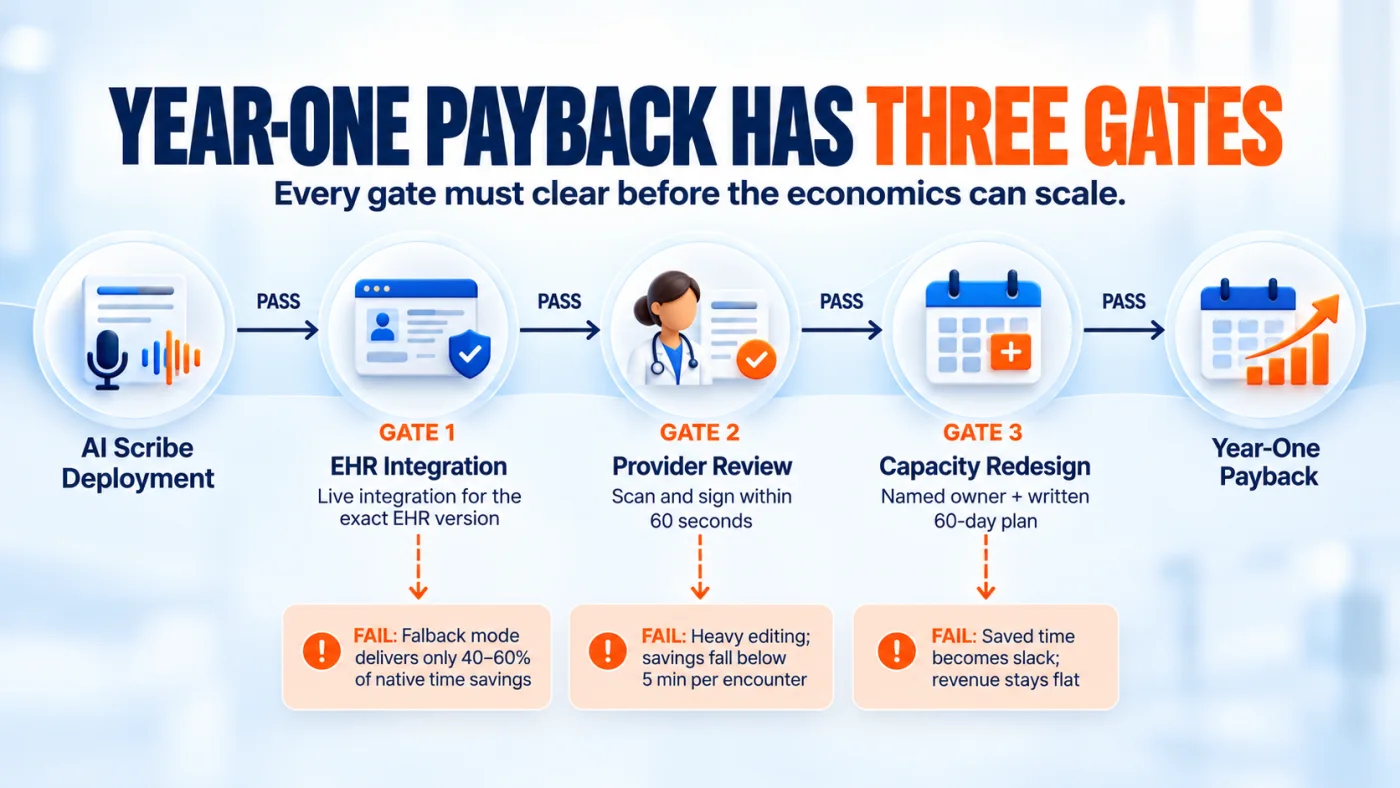
Fig 5 - The 3 AI Medical Scribe Readiness Gates for Year One Payback
Condition 1. The EHR integration path is real.
Test. Can the selected path demonstrate production ready read and write behavior against the group’s exact EHR version, through either a maintained vendor integration or a custom integration architecture the group can support?
For the buy path, one or more ambient scribe vendors publish integrations for each of Epic, Athenahealth, Elation, eClinicalWorks, NextGen, and Oracle Health (Cerner). Supported read, write, and coding workflows vary by product, EHR version, and deployment model. In the mature combinations, the scribe reads the schedule, writes the note into the correct encounter, posts the suggested billing code, and in many cases drafts the patient instructions and the referral letter without the clinician touching the EHR screen.
Workflow fit also varies by setting. The 2026 Journal of Medical Artificial Intelligence emergency department implementation by Pelletier, Wolski, and Rush found ambient scribe use in only 976 of 8,740 eligible encounters, or 11.2 percent, with use concentrated in low acuity visits (ESI 2 visits were 6.8 percent of scribe encounters versus 14.8 percent of standard encounters) and telemedicine. When used, median on shift documentation fell from 230 to 165 seconds and median total EHR time fell from 621 to 519 seconds, roughly 16 percent. The read for an operator is that an ED deployment answers a different workflow question than an outpatient primary care deployment, and the integration configuration that works in a 20 minute follow up may not fit a resuscitation or a prolonged inpatient stay.
For specialty EHRs, dental platforms, mental health platforms, and smaller or international EHRs, a maintained native integration may not exist. Copy and paste or a browser extension can keep a commercial product usable, but the time saved shrinks. A conservative estimate from fallback mode deployments Clixlogix has run is that fallback deployments deliver 40 to 60 percent of the time savings a native integration delivers, measured per encounter. A hybrid path can retain a commercial scribe core and add a custom connector or workflow layer. A custom build can go further, but it has to prove API access, encounter matching, note type mapping, authentication, monitoring, support ownership, and rollback before the first clinical pilot.
Condition 2. Providers accept the review burden.
Test. Will the group’s providers sign the AI draft after a scan for errors, or will they edit every note line by line?
AI notes are drafts until a clinician signs them. The review is the step that decides whether the time saved shows up on the schedule. The error classes a provider should scan for are specific: omission (a diagnosis, medication, or symptom not captured), hallucination (a plan, finding, or history the patient did not say), incorrect temporality (a medication started last year documented as started today, a resolved problem documented as active), negation errors (a ruled out diagnosis documented as present, or a denied symptom documented as reported), speaker confusion (the caregiver’s history attributed to the patient, or the clinician’s teaching attributed to the patient), and unsupported examination findings (physical exam elements generated from the model’s prior instead of from what the clinician said aloud). In groups that treated review as scanning for typos, providers rewrote every note by week 6.
Provider acceptance is as much a cultural question as a technical one. We have observed that groups where providers trust clinical leadership adopt scan and sign review within 3 weeks, while groups where providers already distrust operations decisions take 3 months or never adopt it. Any ROI model that assumes scan and sign review on day one is optimistic.
Utilization is an outcome of the deployment as much as an input to it. The JAMA cohort found that clinicians who used the AI scribe in 50 percent or more of visits had 27.3 fewer documentation minutes per 8 scheduled hours and delivered one additional weekly visit. Only about 32 percent of adopters reached that threshold. If training, culture, and in visit comfort do not get the group to the 50 percent line, the published time and visit numbers will not land in the operation.
Failure mode when the group misses this condition. Providers edit heavily, saved time collapses to under 5 minutes per encounter, after hours charting barely moves, and the ROI argument fails on satisfaction grounds alone. The group may still renew the subscription because providers like the tool. The financial return does not materialize.
Condition 3. Operations redesigns the workflow so saved time becomes bookable capacity.
Test. Does the operations team have a named owner, a written plan, and a 60 day timeline for converting saved documentation time into additional encounters?
This is the condition most groups skip. Documentation minutes do not become revenue on their own. Scheduling has to open the slot. Rooming has to prep the patient. Panel size has to grow where latent demand exists. The group has to refresh referral partners where it has been underaccepting referrals. The front desk has to call off the waitlist. None of this happens without an owner, a plan, and weekly operational review.
The operations redesign has to start before the scribe goes live. Groups that waited to see the time savings before planning the capacity absorption typically lost 3 to 6 months of potential revenue. The deployment that pays back in year one treats the operations redesign as the primary workstream, with the scribe as the enabling technology.
Failure mode when the group misses this condition. Providers finish on time. The schedule looks the same. Nothing changes in the revenue. The group concludes ambient scribing has limited financial ROI, which, in that deployment, is true. The limitation sits in the operational redesign that never happened.
Table 2 - The 3 AI Medical Scribe Readiness Conditions Summarized
What Usually Breaks in Month 2 of an AI Scribe Pilot
The first 30 days of a scribe deployment typically go well. Clinicians use the tool. Early notes look impressive. Weeks 5 through 10 bring the real failure modes to the surface. 6 are common enough to plan for.
3 encounter types stress the system harder than any single failure mode. The 2026 UK general practice survey by Blease et al. of 1,003 GPs, with 141 current users analyzed in detail, found that users reported errors most frequently in multi party consultations (38 percent), complex histories (35 percent), and non English encounters (31 percent). 32 percent of current users reported errors often or always, and 14 percent reported errors with significant to critical implications. This is self reported survey data from clinicians with no independent audit behind it, so the numbers indicate where clinicians feel the technology struggles. The pilot challenge set should include a visit with a patient plus caregiver, an interpreter mediated visit, several problems discussed out of chronological order, a medication started then stopped then restarted, negative findings and ruled out diagnoses, a physical examination performed largely without narration, and sensitive information disclosed after another person leaves the room. These are the encounters where the microphone, the model, and the review workflow all meet at the same time.
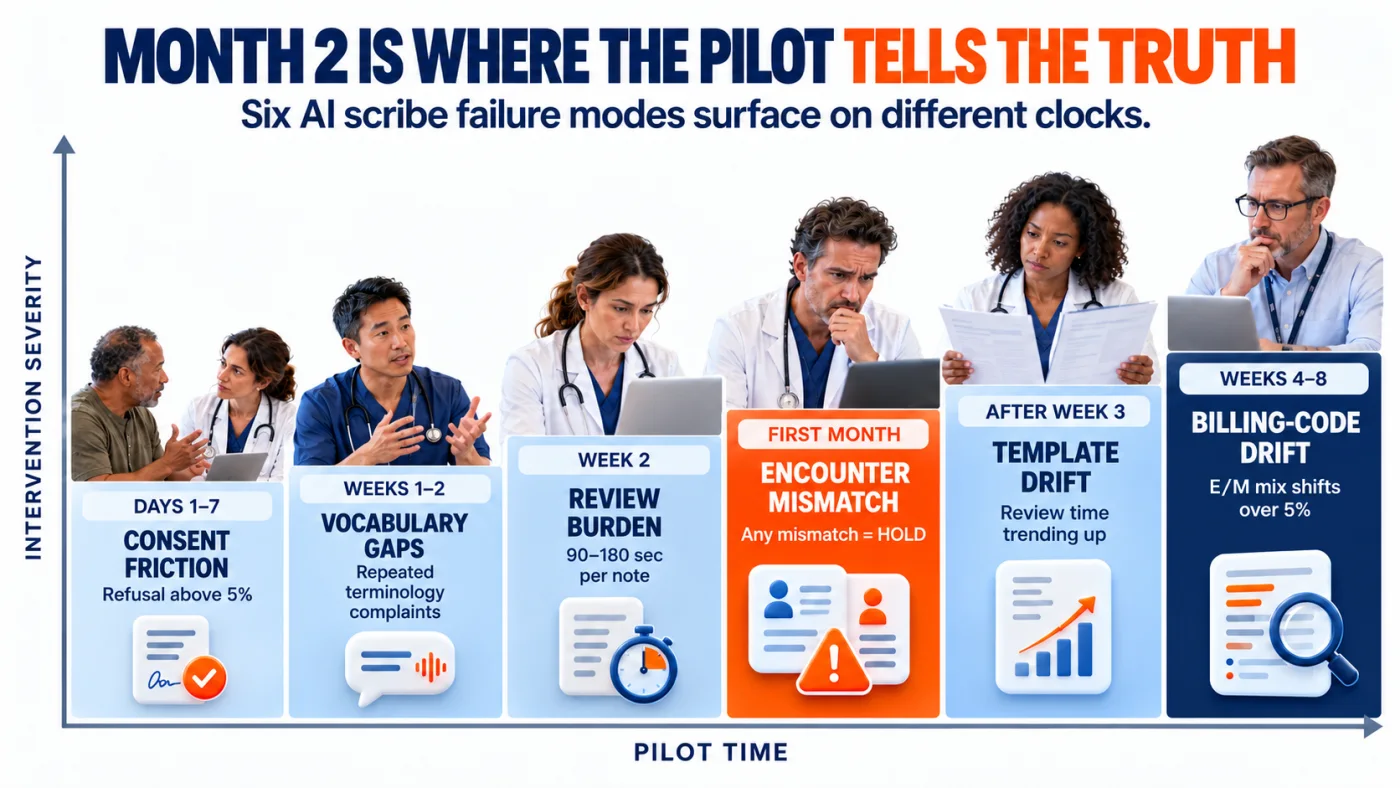
Fig 6 - Known AI Scribe Failure Modes Across a 60 Day Pilot
Template drift
The product or custom note template does not match the group’s documentation standard, specialty by specialty. Review burden climbs as providers rewrite the header, the HPI structure, or the plan section to match house convention. The diagnostic cue is review time per note trending up after week 3. The resolution path is a named template owner on the group side working with vendor engineering or the accountable technical owner to tune the template, and a rolling review in weeks 4, 6, and 8.
Specialty vocabulary gaps
Dental, dermatology, and orthopedics have vocabulary and documentation habits that generic clinical LLMs mishandle on day one, and groups in those specialties see day one accuracy gaps that require product configuration or custom model, prompt, and template work. Early notes in these specialties may miss diagnoses, name procedures incorrectly, or default to primary care phrasing. The diagnostic cue is clinician complaints about specific terminology within the first 2 weeks. In a commercial path, the resolution is a specialty vocabulary batch submitted for vendor configuration. In a hybrid or custom path, the accountable technical owner updates the prompt, vocabulary, model, or template. Both paths use the Clixlogix audit protocol that samples 20 notes per specialty per week in weeks 2 through 6.
Consent friction
Some patients push back on the microphone, and refusal rates vary by panel, specialty, and visit type. The diagnostic cue Clixlogix uses in its pilot playbook is a clinician reported consent refusal rate above 5 percent. The 2025 JAMA Network Open consent study by Lawrence et al. of 121 pilot users (18 clinicians and 103 patients) found that a verbal conversation between patient and clinician before the encounter was the most common consent method. 81.6 percent of patients (84 of 103) consented when given basic information. Consent fell to 55.3 percent (57 of 103) when the explanation added AI features, data storage, and corporate involvement. The authors recommended a 2 step process: a previsit digital notification followed by a short verbal confirmation in the room, with AI use consent kept separate from treatment consent and partial opt ins available for sensitive contexts such as mental health. For the operator this translates into advance notice during scheduling, a confirmation in the room, a documented opt out, a defined fallback documentation workflow for patients who refuse, and separate handling for sensitive, interpreted, and multiparty visits.
Patient attitudes split sharply between those who have experienced a scribe and those who have not. The 2026 Stanford study by Shah et al. of 2,202 patients who had experienced an ambient scribe found that 70.1 percent rated it helpful and 73.6 percent preferred future use. The 2025 Emory outpatient survey by Solis et al. of 8,120 respondents across 6 experience domains (provider communication, provider attention, perceived time spent with the provider, overall interaction, understanding of health information, and quality of the after visit summary) found a significant association only for perceived time spent with the provider, with the other 5 domains showing no detectable difference in the overall sample. The 2026 Canadian survey by Chandrasekaran and Moustakas of 12,153 adults (awareness was low at 28.3 percent) found that 61.8 percent were reluctant to use an AI scribe in the future, with privacy concerns associated with lower odds of favorable attitudes (adjusted OR 0.65). Acceptance after use and attitudes before use are different readings of the same technology, and both belong in the operator’s planning.
Encounter mismatch errors
The scribe writes the note into the EHR against the wrong encounter, against a draft encounter the EHR never created, or into the wrong patient’s chart. This failure mode destroys trust. The diagnostic cue is any mismatch error in the first month. The resolution path is immediate escalation to vendor engineering or the accountable technical owner, a 100 percent audit of writeback for one week after a confirmed mismatch, and a hold on normal operations until the technical root cause is identified and corrected.
Review burden overrun
The scribe captures and generates reliably, and the notes still require 90 to 180 seconds of edit per encounter, a review burden Clixlogix has seen in groups that modeled 30 to 60 seconds. The diagnostic cue is review time per note measured at week 2 and compared against the ROI model. The resolution path is a template tuning cycle, provider training on scan and sign review (see Condition 2), and a model revisit of the ROI case if the gap persists.
A public clinician we consulted earlier in 2025 described the scribe faithfully preserving patient exaggeration, irrelevant narrative, and problems the clinician did not voice, which turned editing into a longer step than dictation. The operator question is whether the review workflow aims at completeness or at the specific error classes in Condition 2, because editing an overinclusive note is a different task from editing a thin one, and the review time budget has to match the task.
Billing code suggestion drift
The underlying product or model is updated and the E/M code mix shifts. Groups that rely on the suggestion see sudden movement in coded levels and sometimes in payer response. The diagnostic cue is a change in E/M mix of more than 5 percent week over week with no clinical explanation. The resolution path is a weekly audit of coded levels against clinician reviewed documentation for the first 3 months, plus a change management requirement for the vendor contract or internal release process.
Monthly feedback loops in weeks 1 through 8, a named template and vocabulary owner, and a monthly accuracy audit on a sampled set catch most of these before they accumulate.
Table 3 - Month 2 AI Scribe Failure Modes, Diagnostic Cues, and Resolutions
The AI Medical Scribe Deployment Path Is a Readiness Decision
Product comparisons encourage operators to evaluate features before establishing whether the practice is ready to deploy at all. That reverses the decision. The readiness assessment should first determine whether the group should buy a commercial platform, extend one through a hybrid architecture, or build a custom system, and whether it is ready to proceed. The answers to 3 questions produce a go, a go with conditions, or a wait.
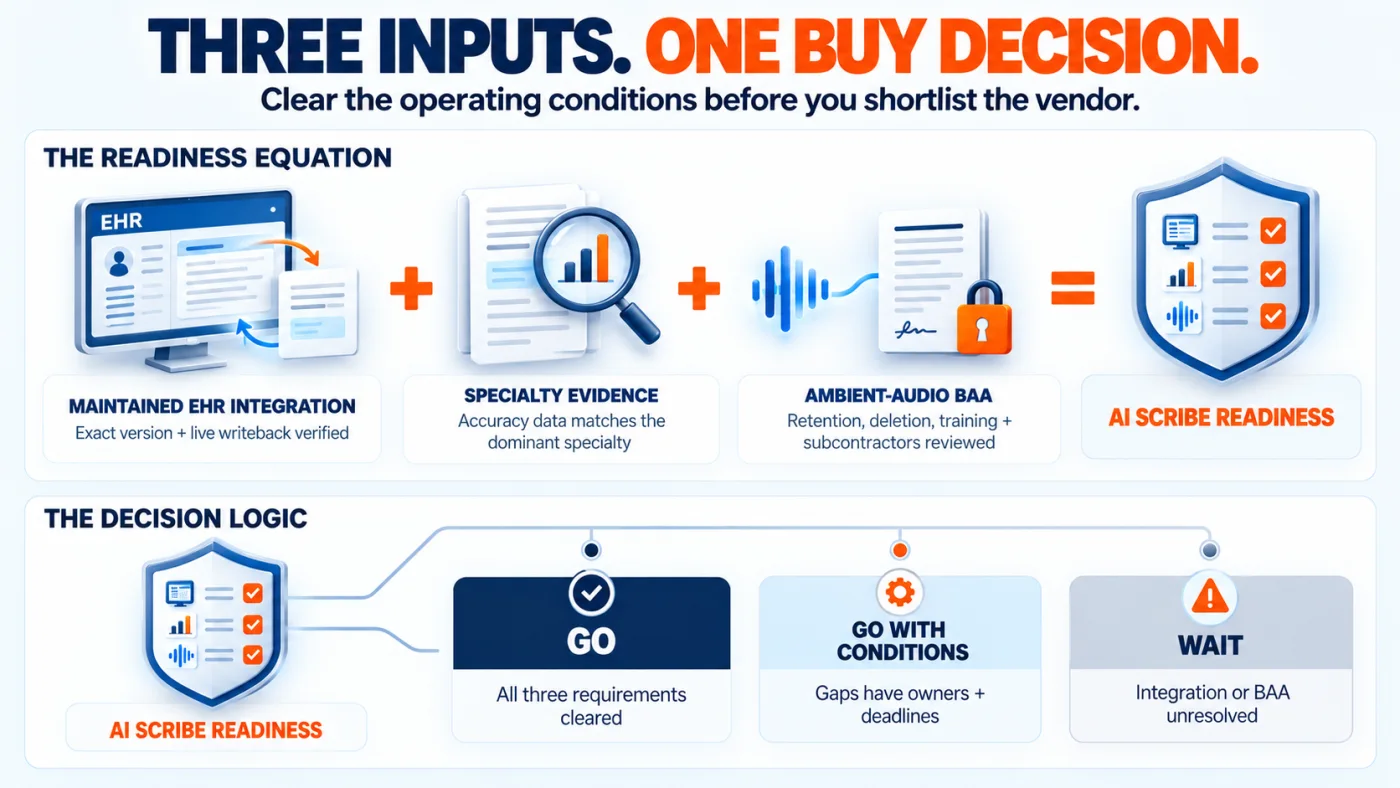
Fig 7 - The 3 AI Scribe Deployment Path Questions
Question 1. Does the group have a production ready EHR integration path?
For a buy path, verify the vendor’s published integration against the exact EHR, version, deployment model, note type, and writeback behavior the group runs. Abridge, DeepScribe, Suki, Microsoft Dragon Copilot and DAX Copilot, Nabla, and Commure each publish integrations with common US EHRs, but integration maturity varies by combination.
For a hybrid or custom path, every proof point listed under Condition 1 has to clear before pilot launch. If no path can demonstrate reliable read and write behavior, the answer is wait.
Question 2. Does the selected path have specialty specific evidence or a validation plan?
Commercial vendors publish most ambient scribe accuracy data for primary care. Specialty data is thinner, and variance between specialties runs wide. A group that bills 80 percent dermatology or 70 percent orthopedics needs evidence specific to that mix, and an undifferentiated accuracy chart does not supply it. KLAS specialty reports can help with the commercial path.
For a hybrid or custom path, the substitute for vendor evidence is a representative evaluation set, defined error classes, specialty acceptance criteria, and a named clinical reviewer before the pilot starts. If neither relevant evidence nor a credible validation plan exists, the group should expect a longer tuning period and budget for it explicitly.
Question 3. Are the BAA, data flows, and risk ownership current for the selected architecture?
HHS guidance under 45 CFR 164.504(e) requires each BAA to describe permitted and required uses of PHI, bar other uses, mandate Privacy Rule compliance for delegated obligations, require Security Rule compliance including subcontractors, and require incident reporting. For a commercial path, legal counsel reviews the vendor’s current BAA and subcontractor chain. For a hybrid or custom path, the review covers every cloud, model, integration, storage, and support provider that creates, receives, maintains, or transmits PHI. HHS cloud computing guidance makes clear that a cloud service provider handling electronic PHI is a business associate even when it cannot view encrypted data.
The current Clixlogix due diligence test runs across permitted uses, data flows, retention windows, deletion workflows, subcontractor lists, model training restrictions, incident reporting mechanics, termination handling, and named risk ownership. Legal counsel should sign off before any pilot audio is captured.
How to choose buy, hybrid, or custom build
Buy is the default for most 10 to 100 provider groups when a commercial product has a maintained EHR integration, credible specialty fit, and acceptable contractual terms. The group buys product maturity and a support path, then concentrates its effort on workflow, adoption, and operational return.
Hybrid is the practical middle path when the commercial core is sound but the group needs a custom EHR connector, specialty workflow, reporting layer, automation, or downstream extension. It preserves a product’s ambient capture and note generation capabilities while putting the differentiating integration or workflow under the group’s control. Platforms such as Microsoft Dragon Copilot expose APIs and extensibility points that can support this pattern, subject to the product, license, and deployment in use.
Custom build is defensible when one or more of 4 conditions hold:
- The group runs a specialty EHR with no maintained integration partner or viable vendor roadmap, and the EHR is strategic to the group.
- The group operates in a language or jurisdiction where the major vendors do not maintain a compliant deployment.
- The group has a documentation workflow strategic to its competitive position that the major vendors cannot deliver economically.
- The parent organization has data residency, retention, sovereignty, or architectural requirements the major vendors cannot meet contractually.
A full custom build also makes the group responsible for clinical evaluation, security, PHI contracts, release management, monitoring, support, and model change controls. The goal is the least custom architecture that clears the group’s clinical, technical, legal, and economic requirements.
The 90 Day AI Scribe Rollout in 5 Checkpoints
The deployment that produces financial return in year one tends to follow a recognizable 90 day shape. 5 checkpoints, each with a named metric and a named owner, decide whether the pilot graduates into production. The short version follows.
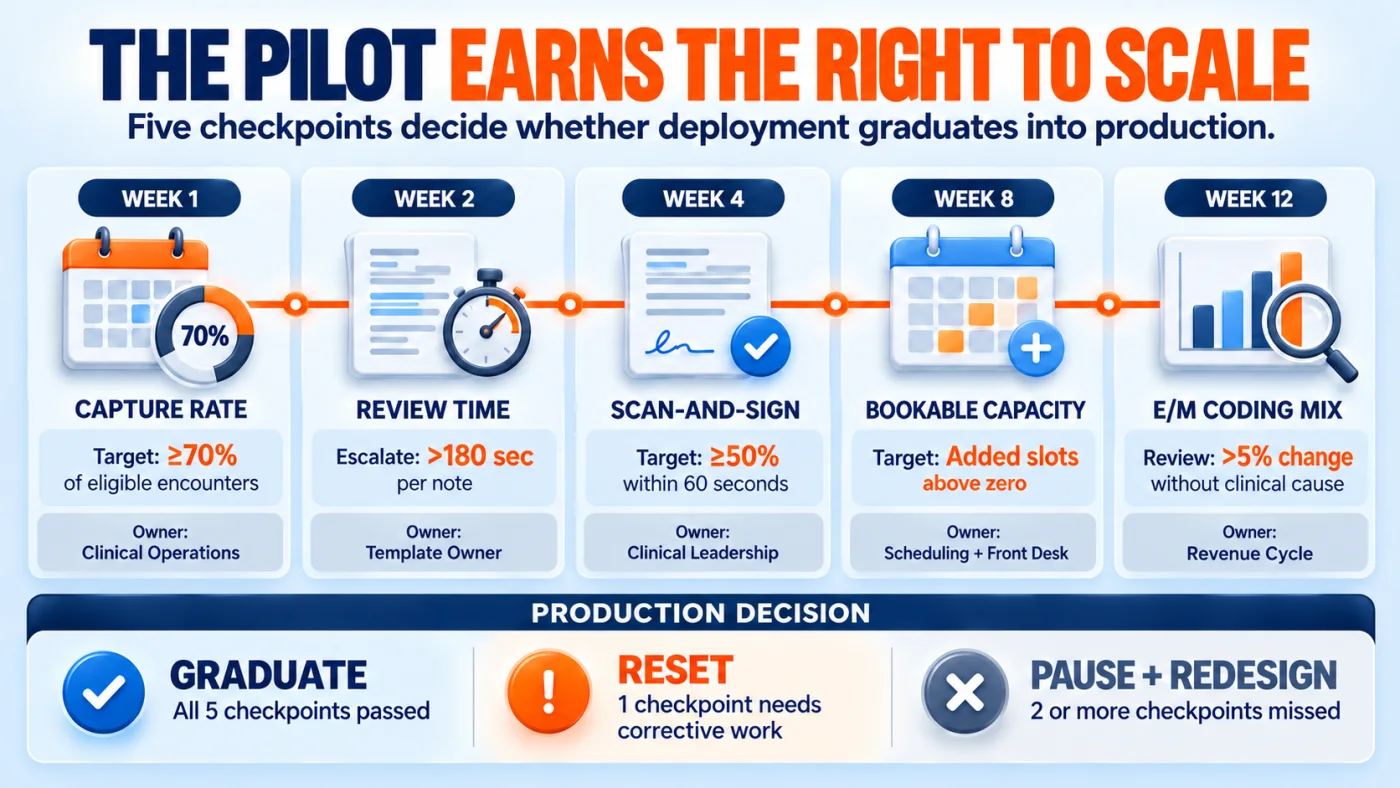
Fig 8 - The 5 Checkpoints Across a 90 Day AI Scribe Rollout
Week 1 capture rate - The named metric is the share of eligible encounters the capture flow actually records. The named owner is the clinical operations lead. A capture rate below 70 percent in week 1, which is a threshold Clixlogix uses in pilot design, means the consent workflow or the microphone setup needs a fix before the group measures anything else.
Week 2 template fit - The named metric is the review time per note, measured per provider. The named owner is the template owner on the group side, working with vendor engineering or the accountable technical owner. Review time above 180 seconds per note by week 2, an escalation threshold from Clixlogix’s pilot playbook, points to the template as the cause. The fix runs through commercial product tuning or a hybrid or custom configuration change. The JMIR Medical Informatics 2026 pilot showed clinician level averages of 1.9 to 69.3 percent of AI generated words changed, which supports measuring review time per provider instead of at the group average.
Week 4 provider review discipline - The named metric is the scan and sign adoption rate, measured as the share of providers signing within 60 seconds of note delivery. The named owner is the clinical leadership. A rate below 50 percent at week 4, a threshold from Clixlogix’s 5 checkpoint discipline, means the review training did not land, and the group should run a reset cycle before week 8.
Week 8 panel capacity - The named metric is additional bookable slots created per provider per week. The named owner is the scheduling and front desk lead, reporting to operations. A number at or near zero, which Clixlogix has seen in groups that skip the operations redesign in Condition 3, means the deployment is tracking the health system ROI curve. Groups seeking more need the operations redesign in place.
Week 12 coding mix - The named metric is E/M code level mix compared against the group’s baseline before deployment, with a weekly denial trend overlay. The named owner is revenue cycle. A control limit Clixlogix sets for revenue cycle oversight is movement in the mix of more than 5 percent in either direction, without a clinical explanation, which flags for review. PHTI’s 2026 report warned that provider deployment of AI is increasing billing intensity, so a lift in coded level without underlying documentation support is a specific signal to watch.
A pilot that passes all 5 checkpoints graduates into production and the next conversation is scale. An observation Clixlogix has drawn from post go live reviews is that a pilot missing 2 or more checkpoints rarely recovers on its own, and the honest move is a pause, a redesign, and a restart, which saves the group from a slow decline through quarters 2 and 3.
Table 4 - The 90 Day AI Scribe Checkpoints at a Glance
Specialty AI Scribe Considerations the Buyer Guides Miss
Ambient scribing works differently by specialty, and the operator readings diverge across verticals. 4 verticals warrant their own treatment.
Primary and longitudinal care - Long patient histories, several problems per visit, medication chronology, and the patient’s own narrative create the specific challenges of omission (something said that the note missed) and relevance (something said that the note included but should not have been there). The template has to carry the problem list, the medication list, the social history, and the plan without flattening them. Primary care also has the deepest published sample behind it, so the operator model for a primary care deployment can lean more on the JAMA cohort and the Harvey ambulatory data than a deployment in a specialty with thin evidence can.
Procedural and musculoskeletal care - The microphone does not observe range of motion, tenderness, or imaging. Physical findings and the assessment that follows have to be verbalized during the examination, entered separately after, or imported from the EHR. Orthopedics, dermatology, and surgical outpatient practice see this gap more sharply than clinics where most of the clinical reasoning sits in the conversation. Product and model accuracy varies by procedure mix, and the operator question is template coverage for the specific procedures the group runs. Deployment path choice is a secondary variable.
A single clinician from San Diego who works with us described spending roughly 2 weeks configuring rules and changing their own habit by speaking the physical examination aloud. The payoff they reported was large. A single account carries limited weight, and the practical question is how much specialty onboarding the group has budgeted for, and whose job it is to run that configuration.
Behavioral health - Privacy, stigma, therapeutic alliance, and selective documentation matter more than maximal transcription completeness. The 2026 Frontiers in Psychiatry simulation study by Bokhari et al. of 8 psychiatrists and 4 standardized patients identified consent, confidentiality, and calibrated trust as implementation conditions. Only 2 of the 8 clinicians reported asking permission to record. The standardized patients wanted the physician to keep control of diagnosis and medication decisions and accepted AI only for documentation. Mentalyc, Blueprint, and a growing specialist set compete here. Operators should not assume primary care deployment data translates.
Multiparty, interpreted, and complex encounters - Speaker attribution, translation, and chronology each need dedicated pilot testing. The UK general practice survey cited earlier found the highest clinician reported error rates in multiparty consultations, non English encounters, and complex histories. Commercial products and custom stacks differ in whether their diarization is strong enough to handle these cleanly, which makes this a direct pilot test regardless of deployment path.
Dental, functional, and integrative medicine - Dental practices document in a mix of structured chart elements, perio charting, and narrative notes, with insurance narrative generation on top, and the scribe vendors built for dentistry (and the specialty templates inside the generalists) are evolving quickly in 2026. Functional and integrative medicine have no specialty specific scribe accuracy evidence published, which Clixlogix treats as a testing hypothesis to validate in week 2 of a pilot. These 3 carry short caveats here until the evidence catches up.
Where Clixlogix Fits in Your AI Scribe Deployment
Clixlogix is an AI and digital transformation partner for healthcare operators. The engagement model has 2 steps: select the deployment path, then deliver it. Depending on readiness, that path may be a commercial platform, a hybrid extension, or a custom build.
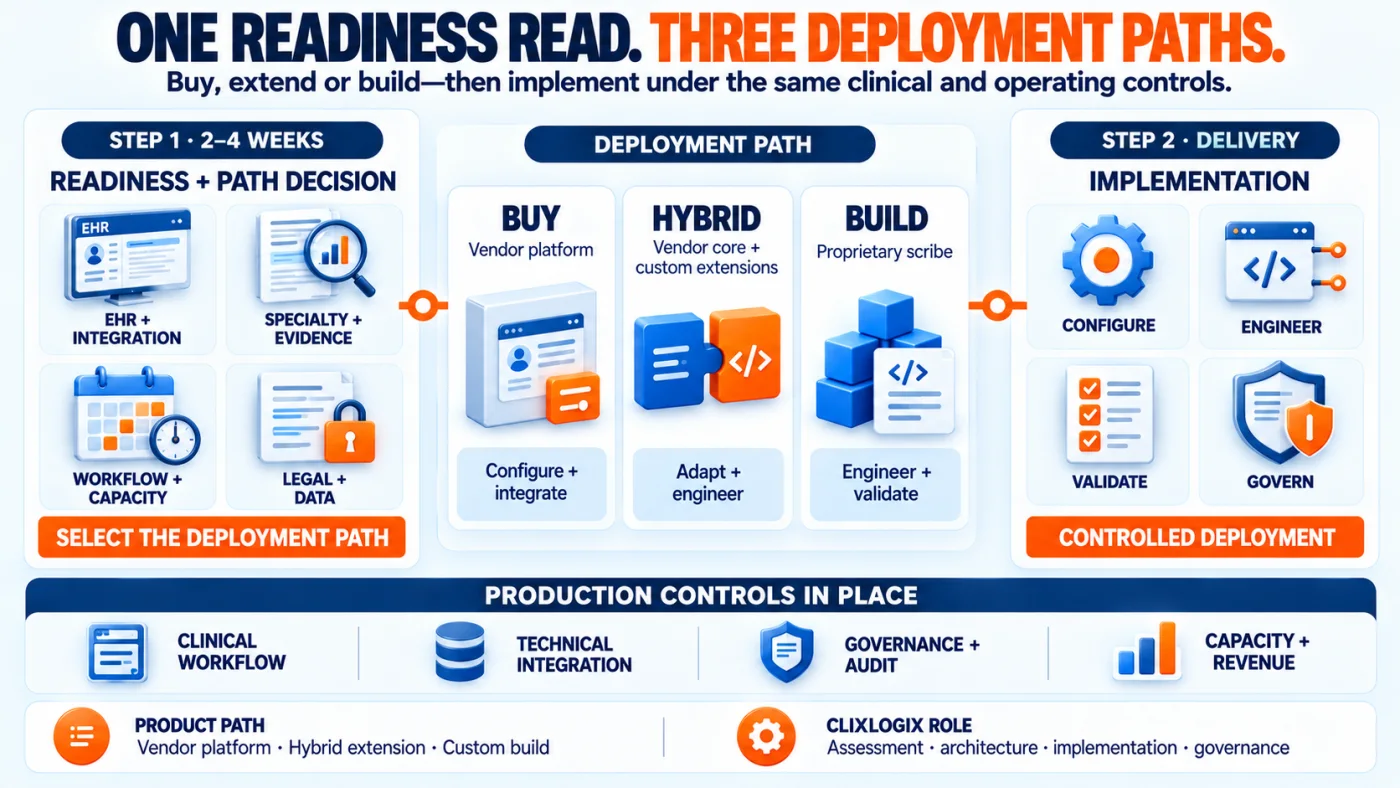
Fig 9 - The 2 Step Clixlogix AI Scribe Engagement Model
Step 1 readiness read - A short structured assessment of the 3 conditions and the 3 deployment path questions set out above, mapped to the group’s EHR, specialty mix, operating model, data flows, and governance posture. The output is a go, a go with conditions, or a wait, plus a recommendation to buy, extend, or build. It includes either vendor shortlist criteria, a hybrid architecture outline, or a custom build brief, along with the operational redesigns and legal reviews required before commitment. Clixlogix readiness reads typically run 2 to 4 weeks and are the cheapest insurance a group can buy against a scribe deployment in the $100,000 to $1,000,000 range that produces no financial return.
Step 2 implementation delivery - This is the stage that converts the selected architecture and the published clinical signal into operator outcomes. On a buy path, Clixlogix handles configuration, integration, workflow redesign, adoption, and rollout around the commercial platform. On a hybrid path, that work extends into custom connectors, specialty workflows, reporting, and automation around the vendor core. On a build path, it covers architecture, product engineering, clinical validation, deployment, and support design. Every path includes consent and disclosure workflows, the 90 day rollout discipline above, note and coding audits, production controls, and ongoing revenue cycle oversight. Scope is sized to the selected path, readiness gaps, and specialty mix.
That work brings together Clixlogix’s healthcare operating context and its AI software development capability. One keeps the deployment grounded in clinical workflows, specialty requirements, and operator economics. The other handles the engineering and implementation needed to make those decisions work inside the group’s actual systems.
Start Your Deployment With a Readiness Read
If you are weighing an ambient scribe deployment at a 10 to 100 provider group, the next move is a readiness read. The conversation runs short. The output is a plain document you can take to a board or an investment committee, with a go, a go with conditions, or a wait, plus the specific operational redesigns and legal reviews needed before a vendor shortlist, a hybrid architecture decision, or a custom build brief.
Request a readiness read for your practice