TL;DR
Most B2B companies buy a marketing automation platform, set up two or three email sequences, and wonder why nothing changes. The platform is about 20% of the equation. The other 80% is strategy. That means how you score leads, what triggers your nurture sequences, how your CRM passes qualified contacts to sales, and whether your account based marketing actually targets buying committees or sprays content at job titles. This playbook walks through each of those pieces and shows you how they connect into one system that produces pipeline.
We have set up marketing automation for B2B companies across SaaS, professional services, manufacturing, and e-commerce. And we can tell you this with confidence. The gap between companies that get results from automation and companies that waste money on it almost never comes down to which software they picked.
It comes down to what they built inside the software.
Most teams that struggle bought a platform, connected it to their website forms, and set up a drip campaign that sends the same five emails to every lead regardless of who they are or what they did. Teams that win built a system. Lead scoring that separates tire kickers from real buyers, nurture sequences that branch based on behavior, CRM integration that hands qualified leads to sales with full context, and account based plays that target the actual decision making group.
That is what this playbook covers. The thinking and architecture behind a b2b marketing automation system that actually produces revenue.
Why Most B2B Marketing Automation Setups Fail Before They Start
We see the same three failure modes repeatedly when companies come to us after their automation “did not work.”
- Tool first thinking – The team spent months evaluating platforms, comparing feature matrices, running demos. They picked one and spent weeks configuring it. But nobody defined what a qualified lead looks like, what score triggers a sales handoff, or what content goes to which persona at which stage. The platform works fine. The strategy behind it does not exist.
- No scoring model – Every lead that fills out a form gets treated the same way. A CEO downloading a pricing guide gets the same email sequence as an intern downloading a blog PDF for a school project. Sales wastes time chasing unqualified contacts. Marketing gets blamed for “bad leads.” Nobody built the filter.
- Disconnected CRM – Marketing automation lives in one system. The CRM lives in another. Data syncs are broken, incomplete, or delayed. When a lead finally gets to sales, half the context is missing. The salesperson has no idea what content the prospect consumed, what pages they visited, or why the system flagged them as “qualified.”
Every one of these problems is a strategy failure. And you need to solve all three before you pick a marketing automation workflow or configure a single campaign.
How Lead Scoring Actually Works in B2B Marketing Automation
Lead scoring is the backbone of any b2b marketing automation system that produces qualified pipeline. Without it, you are treating all leads equally, which means you are treating most leads wrong.
A real scoring model uses two dimensions.
- Fit score (firmographic) – This measures whether the lead matches your ideal customer profile. Company size, industry, job title, geographic location, annual revenue. A VP of Marketing at a 200 person SaaS company gets a higher fit score than a freelance consultant, because historically one converts and the other does not.
- Engagement score (behavioral) – This measures what the lead actually did. Visited the pricing page? That is a strong signal. Downloaded three case studies in a week? Even stronger. Opened one email six months ago and disappeared? That score should be close to zero.
The scoring model needs a decay factor. Engagement scores should drop over time when a lead stops engaging. We have seen companies sitting on leads with high scores that have not opened an email in four months because nobody built score decay into the model.
When a lead crosses your threshold on both dimensions (good fit AND active engagement), that is your MQL to SQL handoff point. That is when sales gets involved. We have documented how this scoring and decay model works inside Zoho CRM with marketing automation to reactivate dormant leads.
Sample B2B Lead Scoring Criteria
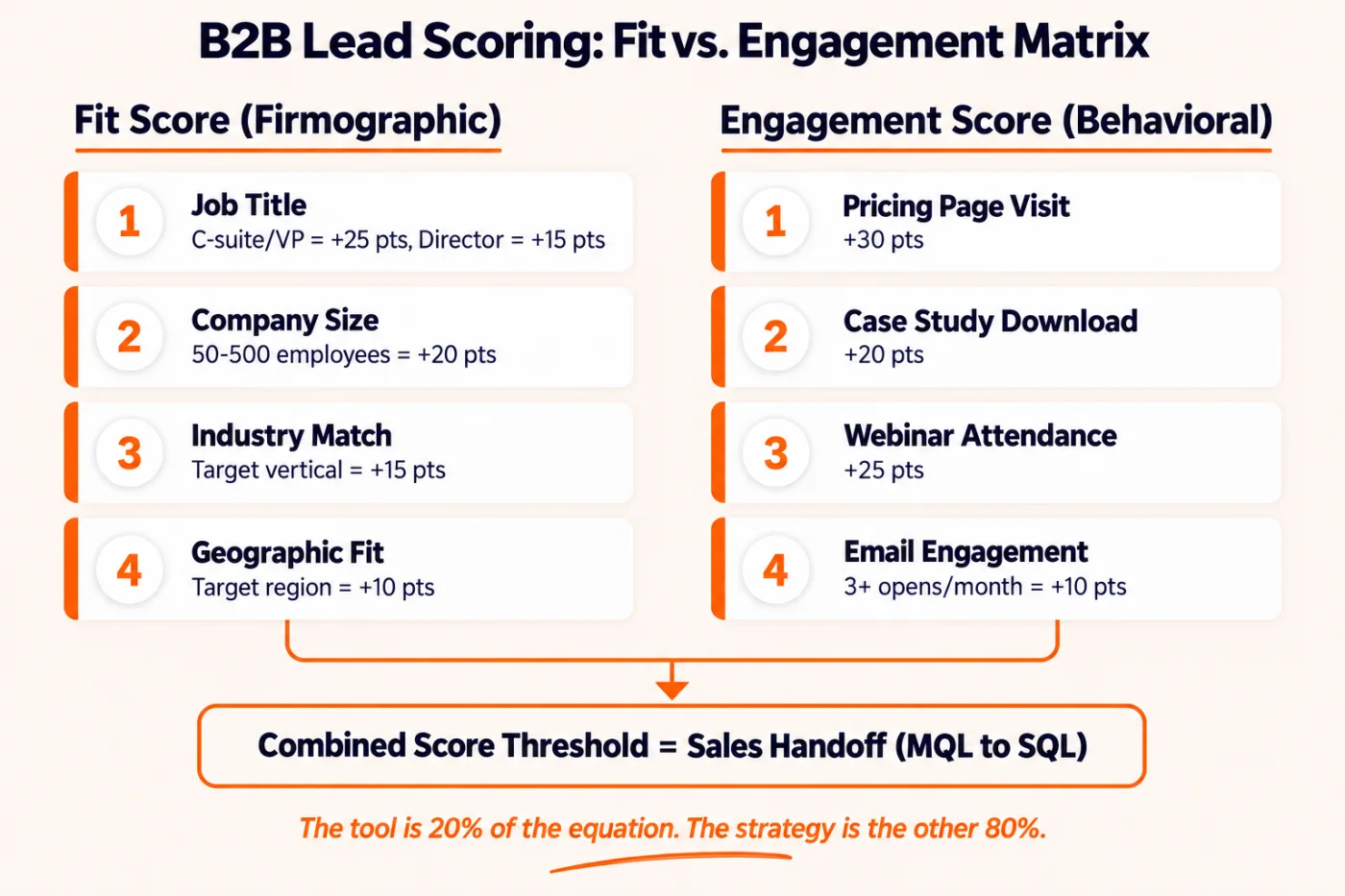
Fig 1 – A lead scoring model needs both fit and engagement data to produce qualified handoffs to sales.
How to Build Nurture Sequences That Move Leads Through the Funnel
Drip campaigns send the same emails on the same schedule to everyone. A marketing automation workflow that actually converts branches based on what the lead does, adapts content to where they are in the buying process, and knows when to bring a human into the conversation.
The Five Workflows Every B2B Company Needs
- Welcome and onboarding sequence. When a new lead enters your system (form fill, content download, webinar registration), they get an immediate sequence that introduces your company, sets expectations, and delivers the thing they asked for. This is your first impression. Most companies get it wrong by going straight to a sales pitch. Give value first.
- Stage based nurture. This is the big one. Leads at the top of the funnel need educational content. Leads in the middle need comparison content and case studies. Leads near the bottom need pricing context, implementation details, and social proof. The sequence watches what a lead does and moves them between tracks as their behavior changes.
- Reengagement for cold leads. Leads that stop engaging should move to a lower frequency track. After 90 days of silence, send a specific reengagement sequence. If they respond, route them back into the active nurture. If they do not respond within another 30 days, sunset them. Stop spending resources on contacts who have moved on.
- Post event follow up. After a webinar, conference, or demo, leads need a fast, relevant follow up sequence that references what the session covered, offers the next step, and scores the engagement for routing.
- Customer expansion. Existing customers are your highest value audience. A cross sell and upsell sequence triggered by product usage data, contract renewal dates, or support ticket trends can produce more revenue per dollar than any top of funnel campaign.
Sequence Design Principles
The difference between sequences that convert and sequences that annoy comes down to three things.
- Trigger on behavior – Sending email three on day seven regardless of what happened with emails one and two is a waste. If the lead clicked the case study link in email two, send them something that builds on that interest. If they opened nothing, sending more of the same will not change the outcome.
- Branch your logic – A CFO researching ROI needs different content than a marketing director comparing features. Even if they downloaded the same ebook. Your nurture needs to identify which persona is engaging and route them into the right content track.
- Insert human touches at the right moments – When a lead crosses a scoring threshold, stop sending automated emails. Trigger a notification to your sales team. Have a real person reach out with a relevant, personal message. Automation gets the lead to that moment. A human closes it.
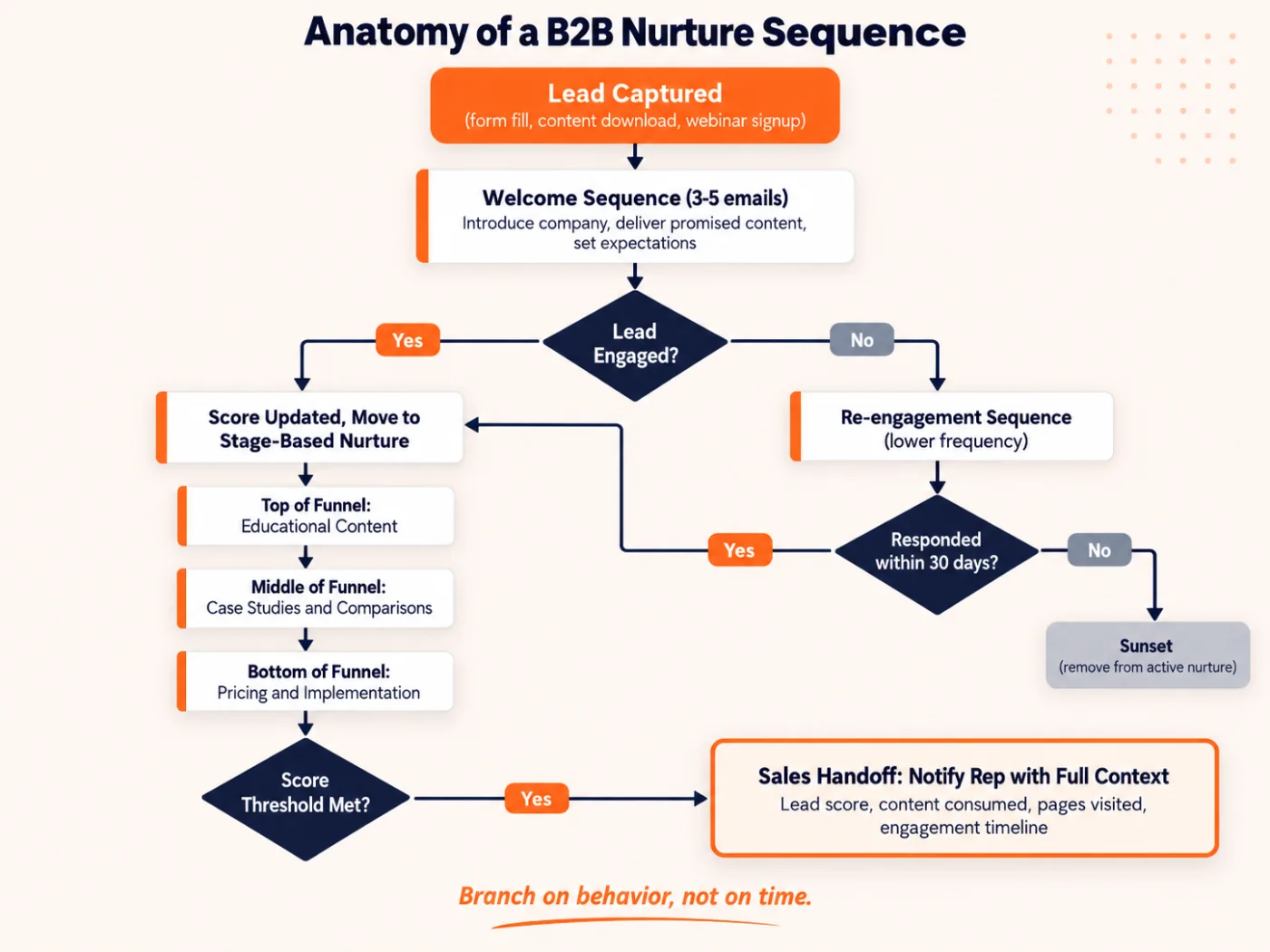
Fig 2 – Effective nurture sequences branch on what the lead does next.
What is Account Based Marketing and How It Connects to Your Automation
Account based marketing sits on top of your automation. Your b2b marketing automation handles the mechanics (scoring, triggering, sequencing), and ABM tells it who to focus on and how to coordinate across the buying committee.
In B2B, you are rarely selling to one person. A typical deal involves six to ten stakeholders, each with different priorities. The CFO cares about ROI. The end user cares about ease of use. IT cares about security and integration. Your automation needs to run parallel tracks for each persona within the same target account, delivering relevant content to each one while maintaining a consistent message across the group.
Here is what that looks like in practice. You build a target account list based on firmographic criteria (industry, size, technology set). You identify the buying committee roles within those accounts. Your automation runs persona specific nurture sequences for each role. And you coordinate outbound across email, LinkedIn, and retargeting so every touchpoint reinforces the same story from different angles.
The companies that get the highest return from ABM are the ones where marketing and sales share a single definition of what “qualified” means, review the same dashboards, and meet weekly to adjust targeting. When those two teams operate in silos, ABM turns into expensive spray and pray with better targeting labels. Our AI marketing automation guide covers how AI is making ABM targeting and personalization faster at scale.
CRM Integration Is Where Most Automation Breaks Down
Your CRM is the central nervous system of your crm marketing automation infrastructure. If the CRM and your automation platform are not deeply connected, you will have data gaps, broken handoffs, and zero visibility into what actually produced revenue.
Here is what needs to sync between your marketing automation and your CRM at minimum. Lead scores (updated in real time, because a nightly batch lands too late to route a hot lead), lifecycle stages (subscriber, lead, MQL, SQL, opportunity, customer), content engagement history (which emails opened, which pages visited, which assets downloaded), and deal attribution (which campaign or sequence sourced or influenced each deal).
The MQL to SQL handoff is where crm marketing automation integration either works or collapses. Marketing and sales need to agree on a single definition. What score, what behavior, what combination triggers the handoff. If marketing defines MQL differently than sales defines “worth my time,” leads fall through the gap.
We commonly fix these integration problems for clients.
- Duplicate records – Created because lead matching rules were not configured properly
- Score fields that do not sync – Sales sees a lead but has no idea why the system flagged it
- Lifecycle stages that get stuck – The workflow trigger was set up in marketing automation but never mapped to the CRM pipeline stage
- Deal attribution that breaks – UTM parameters were not passed through the form submission to the CRM record
If your CRM is Zoho, we have written about how Zoho MCP integration connects CRM operations to AI, which takes this a step further by allowing AI agents to analyze and act on your CRM data directly.
We said earlier that the platform is 20% of the equation. That is true. But it is still 20%, and picking the wrong one creates friction that slows everything else down. Here is how the major B2B marketing automation platforms compare, organized by which type of business they fit best.
The “best” platform depends less on features and more on your existing technology set and how your team operates.
SaaS and technology companies tend to land on HubSpot (for speed and integrated simplicity) or Marketo (for teams that need deep multitouch attribution and complex program logic).
Manufacturing, healthcare, and financial services often choose Marketo or Pardot because they have compliance requirements, multiapproval workflows, and Salesforce as their system of record.
Professional services, agencies, and operations heavy businesses get the most value from Zoho. When your CRM, project management, invoicing, and marketing all run on one suite, the integration friction drops to nearly zero. We have seen this firsthand with our own clients. The operational efficiency of having everything in Zoho is hard to match when you are stitching together three or four separate platforms.
E-commerce companies selling B2B often start with ActiveCampaign (cost effective, strong behavioral triggers) and grow into Zoho or HubSpot as their pipeline complexity increases.
Enterprise multibrand organizations usually need Marketo. The configurability overhead is worth it when you are running distinct automation programs for multiple product lines and regions.
How to Measure Whether Your B2B Marketing Automation Is Actually Working
The metrics that matter for B2B marketing automation are the ones that connect to pipeline and revenue. Email open rates and click rates are fine for diagnosing sequence performance, but they should never be your primary success measure.
Here is what we track for our clients.
- MQL to SQL conversion rate – What percentage of marketing qualified leads become sales qualified? If this number is low, your scoring model needs adjustment.
- Lead velocity – How fast are leads moving through stages? Faster velocity (without sacrificing quality) means your nurture sequences are working.
- Pipeline attribution – Which campaigns, sequences, and content pieces sourced or influenced deals that closed? This is where you prove ROI.
- Sequence dropoff rates – Where in each nurture sequence do leads stop engaging? That is where the content or timing needs work.
- Time to sales handoff – How long from first touch to MQL? From MQL to SQL? Shortening these windows is one of the clearest signs your automation system is improving.
We review these monthly with clients and adjust scoring models, sequence content, and handoff criteria based on what the data shows. If you want a team that operates this way, our AI powered digital marketing services are built around this exact process.
Ready to Build a System That Produces Pipeline?
We design and implement B2B marketing automation strategies from lead scoring to CRM integration to ABM targeting.
Let Us Build Your Marketing Automation Strategy
Frequently Asked Questions