TLDR
Yes, you can start a prediction market platform in the US in 2026. The path you pick decides everything from capital commitment to how fast you reach retail traders.
Three realistic paths carry current operators. A CFTC regulated venue takes 18 to 24 months end to end and opens direct US retail from day one. A licensed partnership or white label arrangement ships in 4 to 8 weeks when available. A decentralized onchain exchange with geofencing reaches a working MVP in 2 to 4 months and defers US retail unless combined with a regulated acquisition. Walk the gating question and four filters in Decide your model to pick yours.
Three signals make 2026 the launch window. Retail attention is at a 24 month peak after the 2024 election cycle. US regulatory posture has shifted from closed to a clearer but still evolving rulemaking process. The onchain stack has reached operating maturity. The deeper question is architectural. Three decisions, settlement, resolution, and identity, define everything downstream. Get them right and the rest of the build is implementation detail. Get them wrong and you rebuild from scratch inside the first year.
Build timelines often surprise operators. A disciplined MVP ships in 2 to 4 months. A full regulated enterprise venue takes 8 to 18 months of engineering plus 6 to 24 months of regulatory process, depending on whether you register from scratch or acquire a regulated stack. See the full timeline breakdown. What stretches these numbers in practice is regulatory ambiguity resolved too late, undercapitalized liquidity, and oracle disputes handled poorly. Read all five failure modes before you commit capital.
Where to start based on your role:
A founder or operator has 3 realistic paths to building a prediction market business in 2026. Each path carries different capital, timeline, regulatory posture, and US accessibility (immediate for the first two paths, deferred for the third unless combined with a regulated acquisition).
The first path is to register with the US Commodity Futures Trading Commission (CFTC) as a designated contract market, which is the licensed exchange status that lets your platform list event contracts for US retail traders. A production US retail venue needs more than DCM designation alone. The full stack requires an approved clearing path through an affiliated or third party Derivatives Clearing Organization and an access model (direct participants or Futures Commission Merchant intermediation). The founder either applies for the licenses from scratch or acquires companies that already hold them. Kalshi built this way. Registration from scratch takes 18 to 24 months end to end. The formal CFTC review period after a complete application is 180 days. Your payoff is direct US retail access and institutional credibility.
The second path is a licensed partnership or white label arrangement. The operator licenses or partners with a running regulated or decentralized exchange and launches under a brand with vertical focus and customer acquisition. For US event contracts specifically, true white label offerings are limited (Kalshi and Polymarket do not offer platform white label access); practical structures include regulated distribution partnerships, FCM intermediation, embedded trading, or introducing arrangements with a DCM. Launch takes 4 to 8 weeks when a partnership is available. The payoff is speed. The constraint is less control over product design and economics.
The third path is a decentralized onchain exchange with geofencing. The operator runs an offchain central limit order book with user signed orders and onchain settlement, serves non US retail directly, and handles US jurisdiction through strict front end geofencing. Polymarket ran this way until 2025, when its parent acquired QCX LLC (now Polymarket US, a CFTC Designated Contract Market) and QC Clearing LLC (now Polymarket Clearing, a CFTC Derivatives Clearing Organization). Polymarket now operates a regulated US stack alongside a separately governed international onchain product. The payoff is global reach without an 18 month regulatory onramp.
Why now is the window for prediction market launch
Market timing is a question you ask every quarter. In 2026 three signals shifted from 2023, and each one lowers a specific risk you have been pricing into the build decision. Walk through them in order and see which ones change your calculus.
Signal 1 – Retail Attention
Public interest in prediction markets broke out during the 2024 US election cycle and climbed to new highs through 2026. Google Trends on Kalshi and Polymarket shows both terms at near zero through 2023, both spiking together at the November 2024 election with Polymarket leading that moment, and Kalshi passing Polymarket to hit the maximum reading in 2026.
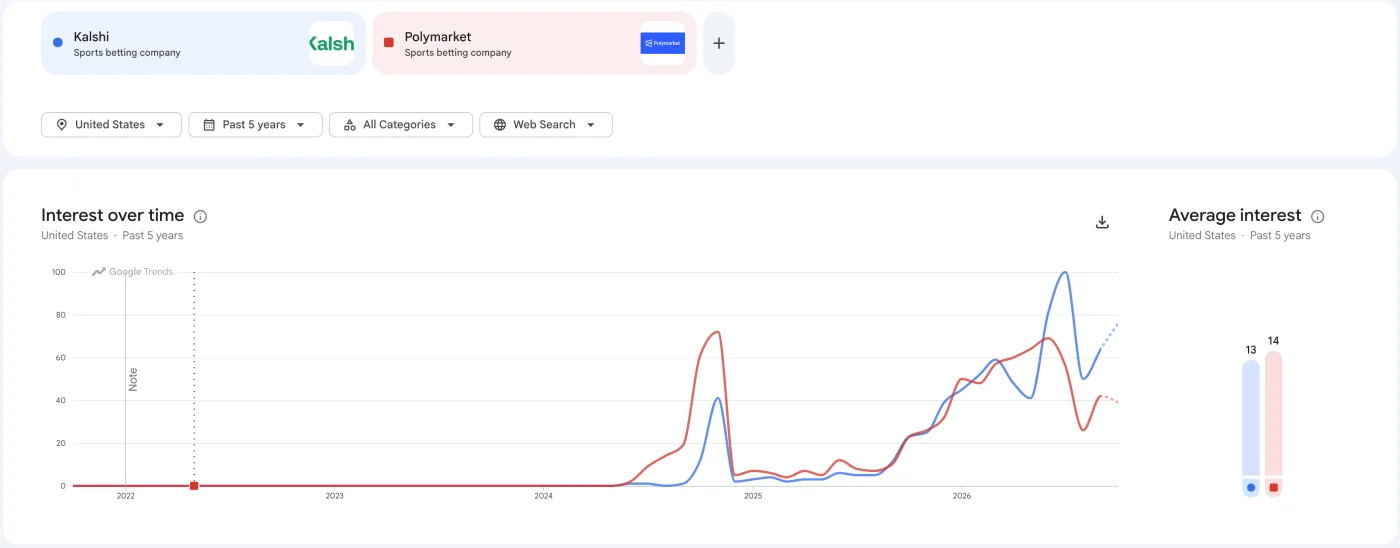
Fig 1 - Kalshi vs Polymarket on Google Trends, 2022 to 2026 Data source Google Trends, search terms Kalshi and Polymarket, United States, Web Search, 2022-01-01 to 2026-10-17, exported October 2026.
The regulated path is winning US attention. This is an operator inference from the chart. The chart shows correlation only: Kalshi’s head start on regulatory legitimacy is correlated with the 2026 attention lead over Polymarket, but Google Trends alone cannot prove regulatory clarity caused that lead. If you are weighing a regulated path against a decentralized geofenced path, the correlation suggests US retail attention is tracking regulatory clarity more closely than product openness.
The 5 year average interest reads 13 for Kalshi and 14 for Polymarket, nearly tied, because the early years were zero for both. The trajectory is what matters here. The curve has only been climbing for 24 months and is still accelerating.
Signal 2 – US Regulatory Opening
The retail access ceiling moved in your favor. Kalshi carried event contracts across political, economic, and sports markets through the 2024 and 2025 cycles. Polymarket returned to US retail through its 2025 acquisition of QCX LLC and QC Clearing LLC. Both routes exist, both evolve in real time.
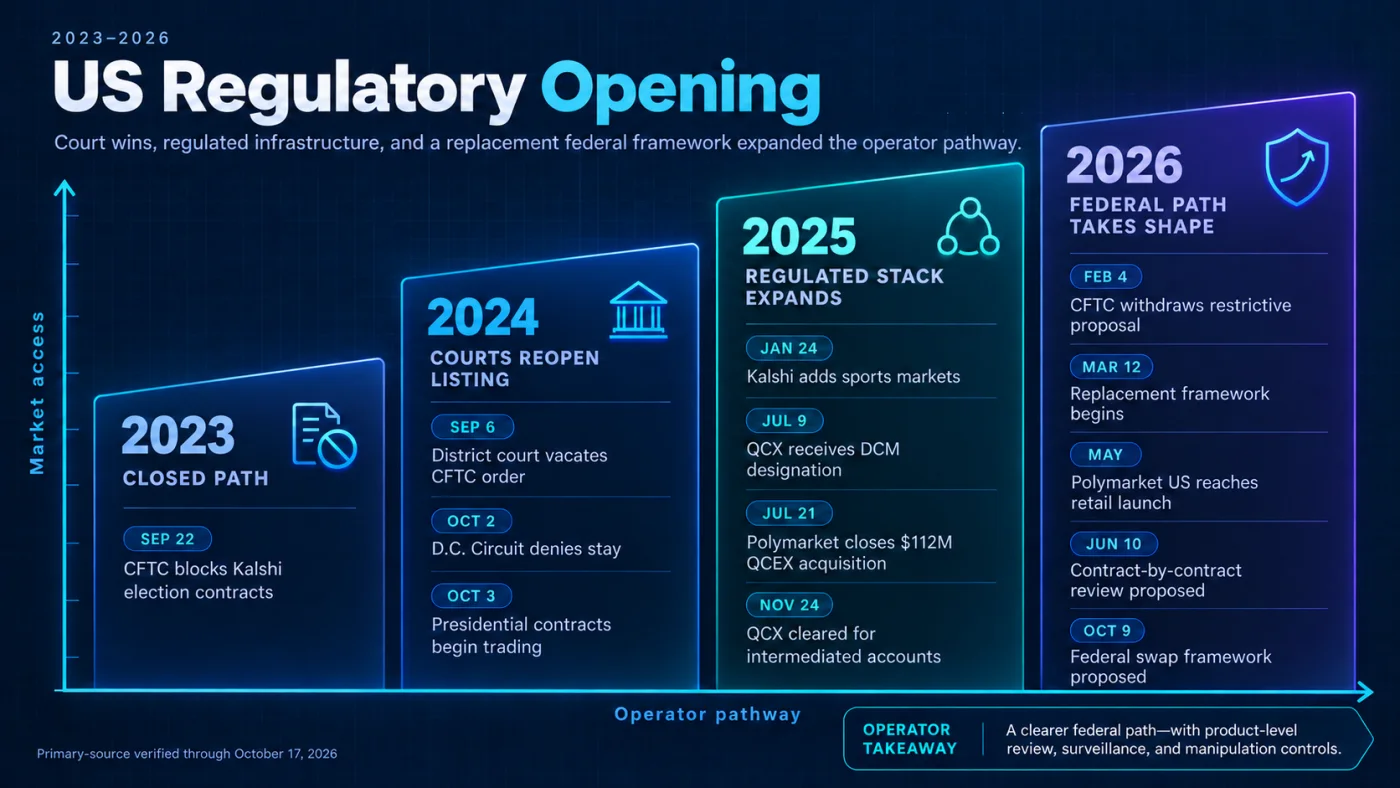
Fig 2 - US Regulatory Opening Timeline, 2023 to 2026
Three years from closed to open is fast for US financial regulation. The CFTC blocked election contracts in September 2023 and now proposes a replacement framework in 2026. Compare this to options or futures regulatory build out, which took decades. Your window to establish a defensible position in a regulated prediction market platform is now, while the rules are still forming and incumbents are still few.
The 2026 CFTC rulemaking process signals a clearer but still evolving federal path. The February 2026 withdrawal of the 2024 restrictive proposal, the March Advance Notice of Proposed Rulemaking (comments due April 30 2026), and the June Notice of Proposed Rulemaking that proposes a 90-day contract-by-contract review process together indicate the regulator is building infrastructure for the category. These actions are proposals open to public comment. None is an adopted rule yet. The direction of travel is favorable, but the final framework may differ from what is currently proposed.
Signal 3 – Infrastructure Maturity
An onchain prediction market relies on four core infrastructure components. Smart contracts that create markets, an oracle that decides outcomes, chains that run the trading, and dollar custody that holds balances.
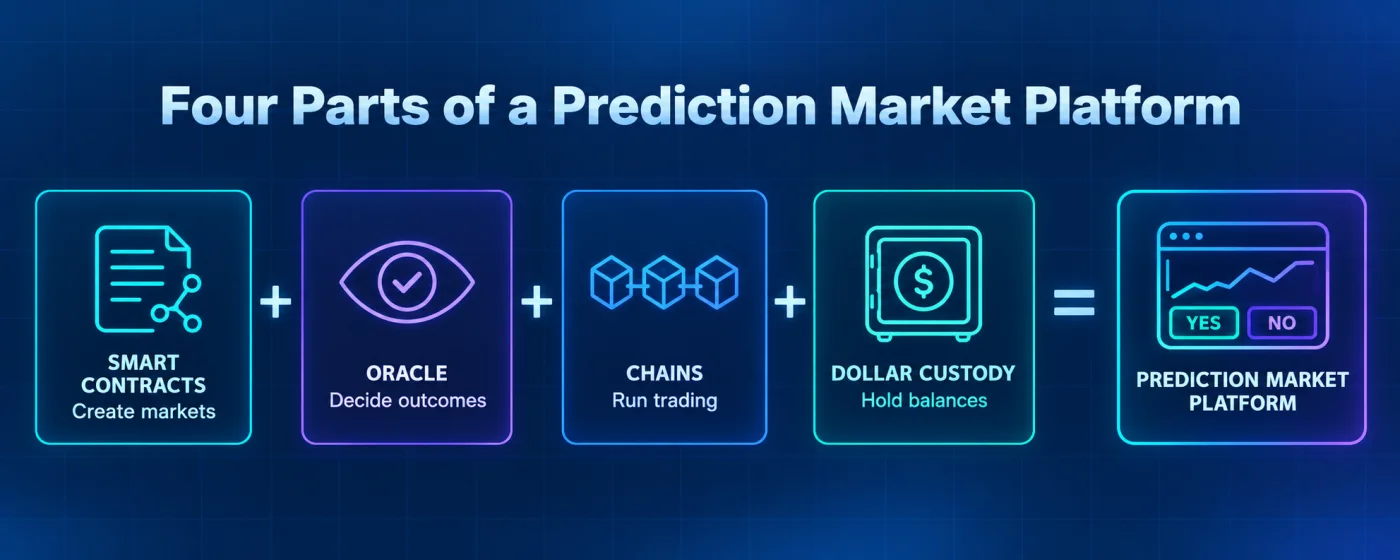
Fig 3 - The Four Parts of a Prediction Market Platform
All four are production grade in 2026. The Conditional Tokens Framework creates and settles the yes or no contracts. UMA‘s Optimistic Oracle resolves outcomes through a public process where anyone can challenge the proposed answer, with hundreds of millions of dollars already settled through it. Polygon, Base, and Arbitrum give you the trading speed and transaction fees a retail audience will accept. Regulated US dollar custody is available through licensed providers off the shelf. These components existed before 2024. What changed through 2026 is their operating maturity: higher volume deployments, better integration tooling, stronger custody options, and more public evidence of how the stack behaves under load.
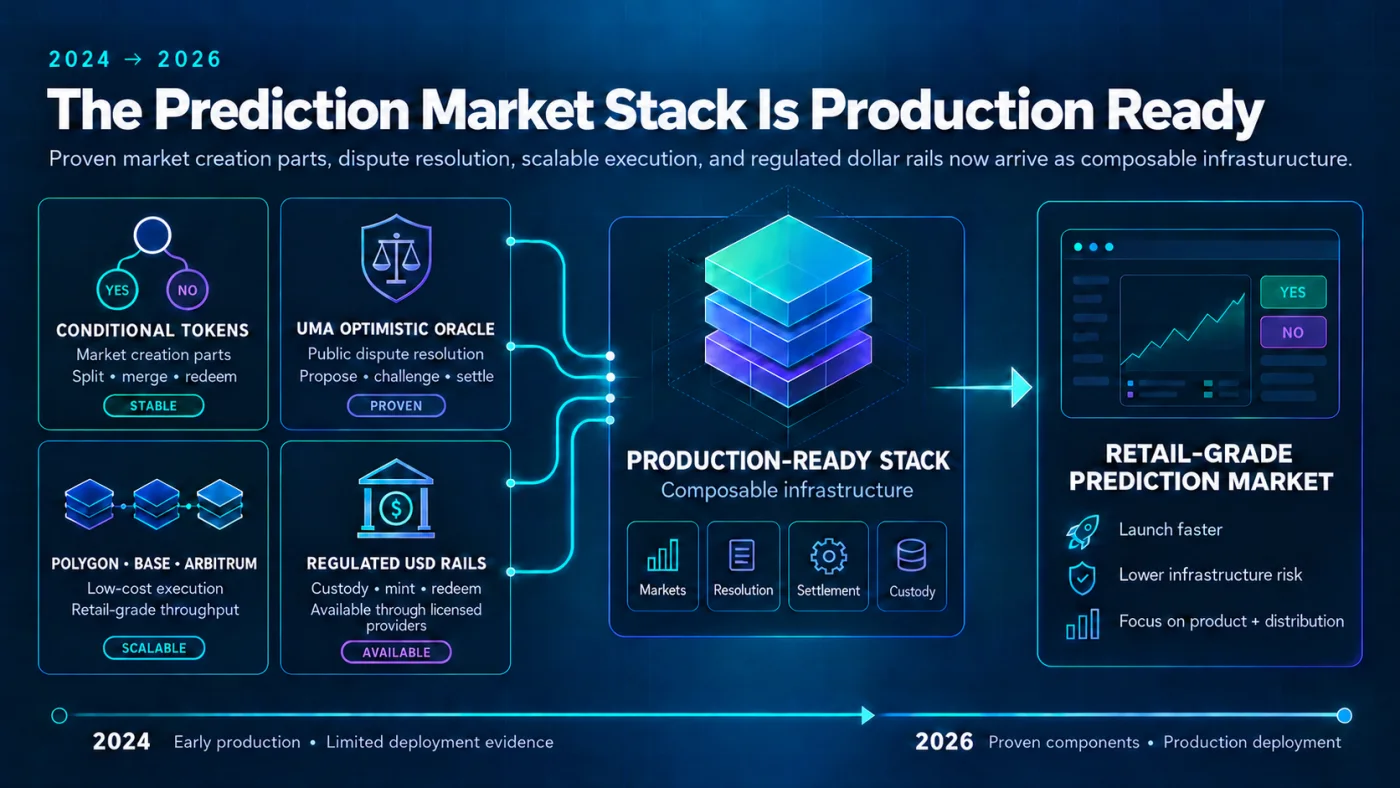
Fig 4 - The Prediction Market Stack Is Production Ready, 2024 to 2026
Composable infrastructure moves the differentiator from engineering to product. With the core onchain components (contract settlement, dispute resolution, chain execution, dollar custody) now off the shelf, operators compete on market selection, UX, liquidity bootstrapping, distribution, and operational discipline. Infrastructure quality is a baseline across serious operators.
A new entrant with a sharper vertical focus or a better customer acquisition engine can outperform a technically deeper incumbent because the technical floor is level. Early entrants get operator reads, late entrants get proven playbooks.
The core onchain stack has moved from early production to operating maturity in the last 24 months, which means the first wave of 2026 operators is still finding what breaks at scale with higher volume. Launching now means you learn from your own operational mistakes without peer precedent. Waiting 12 months means you launch into a map someone else drew, with less learning cost and less differentiation room. The call depends on whether your edge is operational speed or product thesis.
The sections that follow serve founders evaluating a prediction market venture, operators weighing a white label entry, and technical cofounders running architectural due diligence.
Model selection comes first because it determines everything downstream. Architecture, regulation, market design, liquidity, technology selection, build path, and launch scope follow. Closing sections cover failure modes, frequently asked questions, and where to go from here.
Decide your model before anything else
Model selection is the first and most important decision in a prediction market build. It locks regulatory posture, team shape, capital requirement, launch timeline, and ongoing operating cost. Reverse this decision later and the cost multiplies.
A gating question followed by four filter questions picks your model. Walk them in order.
Question 0. Is this a public real money venue or an internal forecasting tool?
Public real money venue continues to Question 1 below.
Internal forecasting tool points to an internal corporate or research market. Such markets generally fall outside exchange licensing when no consideration, payout, or public access exists; confirm the specific design with counsel. The remaining questions do not apply.
Question 1. Do you want US retail users on day one?
Yes points to a regulated event exchange or a US compliant white label. The CFTC path or a licensed partner is the only way to serve US retail from day one under an approved regulatory structure.
No opens the decentralized onchain path or an international white label. You serve non US retail directly and build US access later through acquisition of a company holding the required CFTC designations.
Question 2. Do you have 18 to 24 months of runway before meaningful revenue?
Yes keeps the regulated event exchange path open. CFTC registration from scratch takes 18 to 24 months end to end, and US revenue begins only after designation (non US pilots or internal simulated testing can run earlier).
No pushes you toward white label (4 to 8 week launch) or decentralized onchain (2 to 4 month MVP). Both have revenue potential inside the first year.
Question 3. Do you want to own the resolution logic?
Yes points to custom build on either regulated or decentralized paths. Your team designs the markets, writes the resolution rules, handles disputes, and owns the trust that comes with that work.
No points to white label. The underlying exchange handles resolution. You focus on acquisition, vertical focus, and brand.
Question 4. Is your edge product design or distribution?
Product edge (unique markets, better UX, novel resolution mechanics) favors a custom build on either path. Your product is the differentiator, so you need control over every design decision.
Distribution edge (owned audience, vertical expertise, go to market speed) favors white label. Someone else runs the infrastructure, your team pours energy into reaching users and converting them.
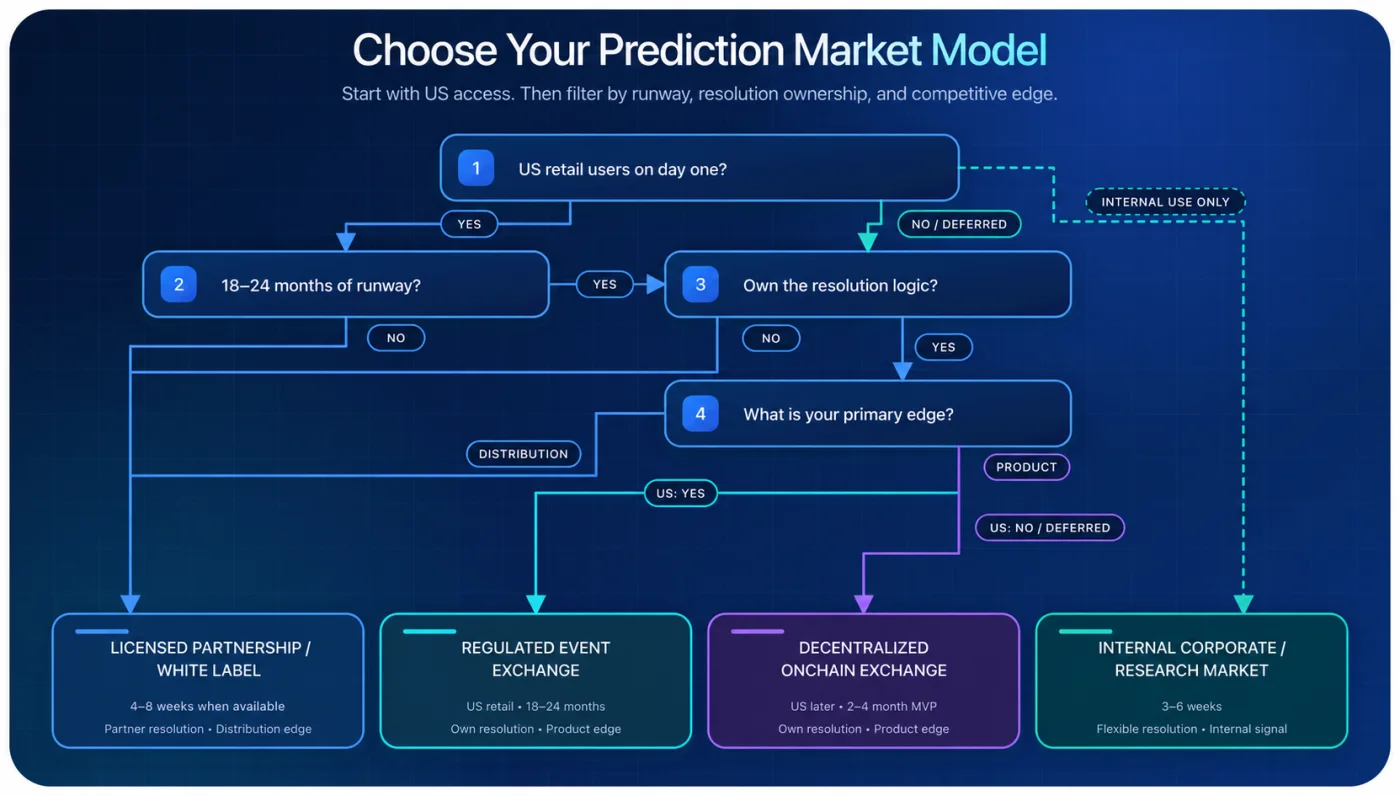
Fig 5 - The Model Selection Decision Tree
Which combination lands where
Four answers filter to one of four model paths.
Table 1 - Model Selection Matrix
Operators who delay this decision past the first weeks of the build typically waste engineering time on architecture that works for one path and breaks on another. Pick before the first line of code gets written.
Three architectural decisions that define everything else
Three decisions define a prediction market platform regardless of which model you pick. Settlement, resolution, and identity. Each has 2 to 3 options, each option carries real implications for regulatory posture, user experience, and operating cost. Everything downwards the decision tree (technology selection, team shape, launch sequence, cost model) follows from these three choices.
Getting these right means the rest of the build is implementation detail. Get them wrong and you rebuild from scratch inside the first year.
Three options.
- USD held by a regulated custodian in segregated member accounts (Kalshi runs this way under CFTC rules). The exchange controls deposits, withdrawals, and settlement. Users see USD balances and move money through traditional bank rails. Counterparty risk sits with the exchange and its custodian.
- Stablecoin held in user controlled smart wallets onchain. Polymarket settles positions on
Polygon using pUSD (backed by USDC) across its newer Protocol V2 system and legacy Conditional Tokens Framework markets. Users control their own funds through a wallet contract. Counterparty risk sits with the stablecoin issuer and the smart contract code. - The hybrid path pairs a regulated stablecoin or wrapped USD held at a licensed custodian with onchain settlement. This path is emerging in 2026 and combines regulatory clarity of fiat with the composability of onchain.
The choice drives withdrawal latency (varies with chain finality, compliance checks, banking rails, and the withdrawal method), regulatory exposure, and the full set of compliance work your team will do.
Decision 2, Resolution – Who decides outcomes and how disputes work?
Two primary options with a hybrid.
- Internal exchange operations under regulatory oversight (Kalshi resolves markets through exchange staff following documented procedures, under CFTC oversight and the exchange’s documented rulebook). Trust sits with the exchange’s track record and its regulator.
- Oracle resolution with a public dispute mechanism (Polymarket uses
UMA‘s Optimistic Oracle, where proposers post bonds for an answer and anyone can challenge; disputes resolve through a bonded token holder vote). Trust sits with the oracle’s economic security and its historical dispute record. - The hybrid approach uses an oracle for the common case and an operations committee for edge cases. This path reduces operational cost and reserves judgment for ambiguous markets.
The choice drives dispute cost per market, time to resolution on contested outcomes, and the user trust narrative you tell.
Decision 3, Identity – Who is allowed to trade?
Two options with jurisdictional variants.
- The first option is full KYC at account creation. Users verify identity, address, and in some jurisdictions source of funds. This option is required for US retail trading on a CFTC regulated venue. It adds friction to signup, satisfies compliance requirements, and enables fiat on and off ramps.
- The second option is wallet address with geofencing. Users connect a smart wallet and the front end blocks visitors from restricted jurisdictions. Signup friction is minimal. Compliance work shifts to geofencing accuracy, VPN detection, and transaction monitoring at the smart contract or front end level.
The hybrid path runs KYC for US retail through a separately registered regulated venue and wallet only access for international users through a parallel onchain product. Polymarket operates a regulated US exchange and clearing stack (Polymarket US, Polymarket Clearing) alongside a separately governed international onchain product. The two share a brand but operate as distinct products with their own ledgers and regulatory perimeters.
The choice drives signup conversion rate, compliance operating cost, and the retail versus institutional mix of your user base.
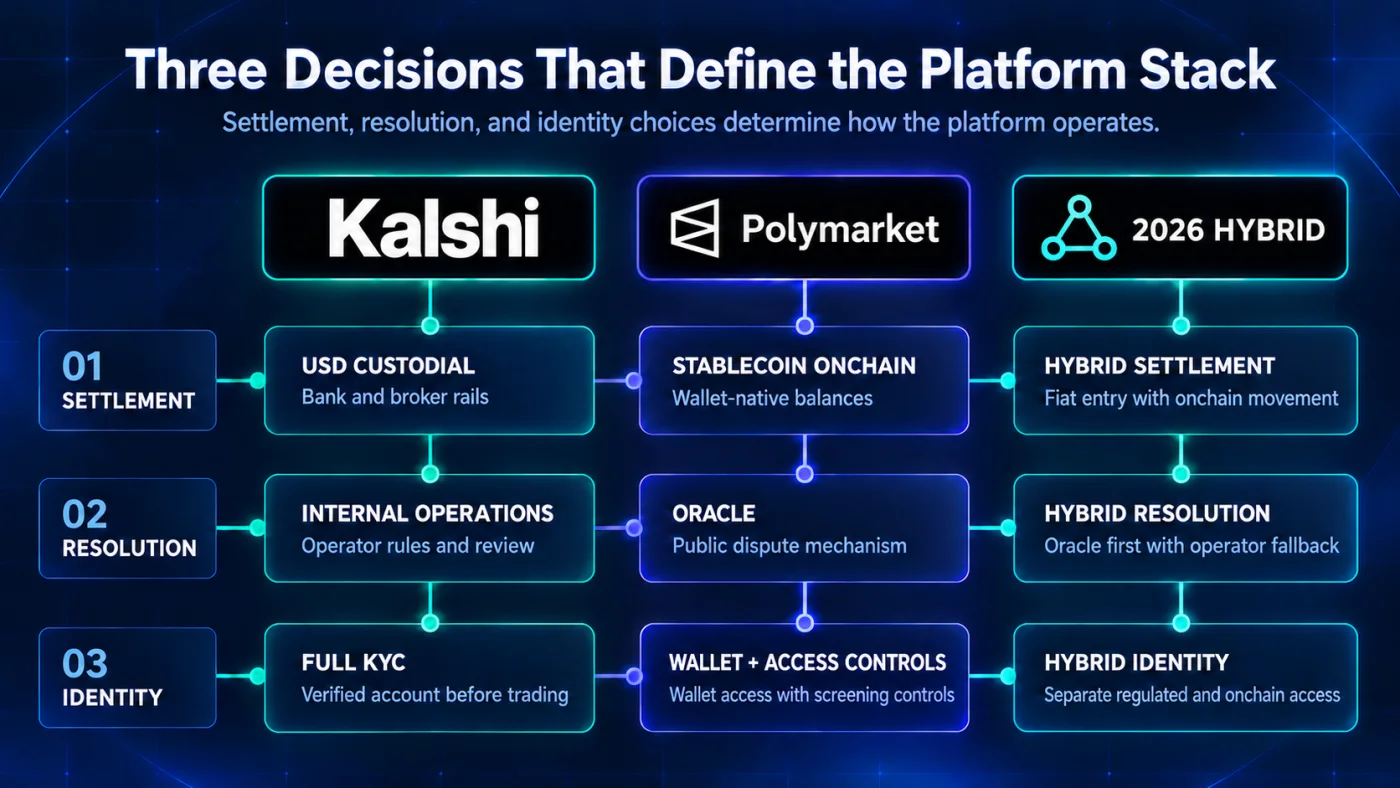
Fig 6 - How Kalshi, Polymarket and a 2026 Hybrid Resolve the Three Decisions
One thread across all three decisions
Each decision has a regulated option (US compliant, higher friction, higher ongoing cost) and a decentralized option (lower friction, higher composability, lower US regulatory certainty). The hybrid options splitting the difference are a visible pattern among 2026 operators. Pick deliberately for all three, document the choice, and build the technology selection to match. Changing any one of these after launch is expensive.
Design the markets and the resolution rules
Market design decides whether users trust your platform. A market with ambiguous wording or unverifiable resolution criteria generates disputes, drains operator time, and destroys the trust narrative in a single contested outcome. Market design matters more than most operators plan for.
Word the market question for one unambiguous outcome
A resolvable market has a precise question, a specific date or event trigger, a named source of truth, and a predefined handling for edge cases. ‘Will the Lakers win the 2027 NBA Finals?’ is resolvable. ‘Will the Lakers have a good season?’ is not. The verb, the subject, the time boundary, and the source all need to be fixed before the market lists.
Pick resolution sources that satisfy three tests
A good resolution source is authoritative in its domain, publicly accessible, and timely to the market close. Government data (BLS, BEA, Census Bureau, and Federal Reserve releases) satisfies all three for economic markets. Exchange prints (NYSE close, CME settlement) meet all three for financial markets. News agency reports (Reuters, Associated Press for named events) satisfy authority and accessibility and add a timing delay for the agency’s publication cycle. Oracle attestations (UMA‘s Optimistic Oracle output) meet all three for onchain markets with the dispute mechanism as the backstop.
Four edge cases destroy trust in a venue
- Ambiguous wording – Users read the market question two different ways and both camps feel cheated when the resolution lands.
- Source retraction – The named source changes or withdraws its reading after the market resolves. Rare and reputationally fatal
- Late reporting – The named source does not publish by the market close date. Operators either extend the close or resolve on the best available data.
- Data provider disagreement – Two reputable sources report different numbers. Operators either name a single source upfront or document the tiebreaker rule.
Document the handling for each in your market creation playbook before launch.
Disputes work differently on the two paths
Regulated venues like Kalshi resolve disputes through exchange operations under CFTC rules, subject to the exchange’s rulebook and CFTC oversight. Timeline is weeks to months. Operator time per dispute is high.
Onchain venues like Polymarket resolve disputes through the oracle’s bonded dispute mechanism (UMA proposers post bonds, challengers raise disputes, token holder vote decides). Per Polymarket’s resolution documentation, undisputed resolution completes in about 2 hours after proposal. Disputed resolution takes 4 to 6 days total (24 to 48 hour debate period plus UMA voting). Economic cost per dispute is high for both sides.
Good and bad market wording
Table 2 - Resolvable and Ambiguous Market Wording
Regulatory posture is the gating decision
Regulatory posture is the one decision that locks every other decision in the build. It picks your users, your capital timeline, your technology selection, and your competitive set. Pick wrong and the venue is unsellable to the audience it was built for. The right posture flows from one question. Who do you want to trade on your platform in the first 12 months?
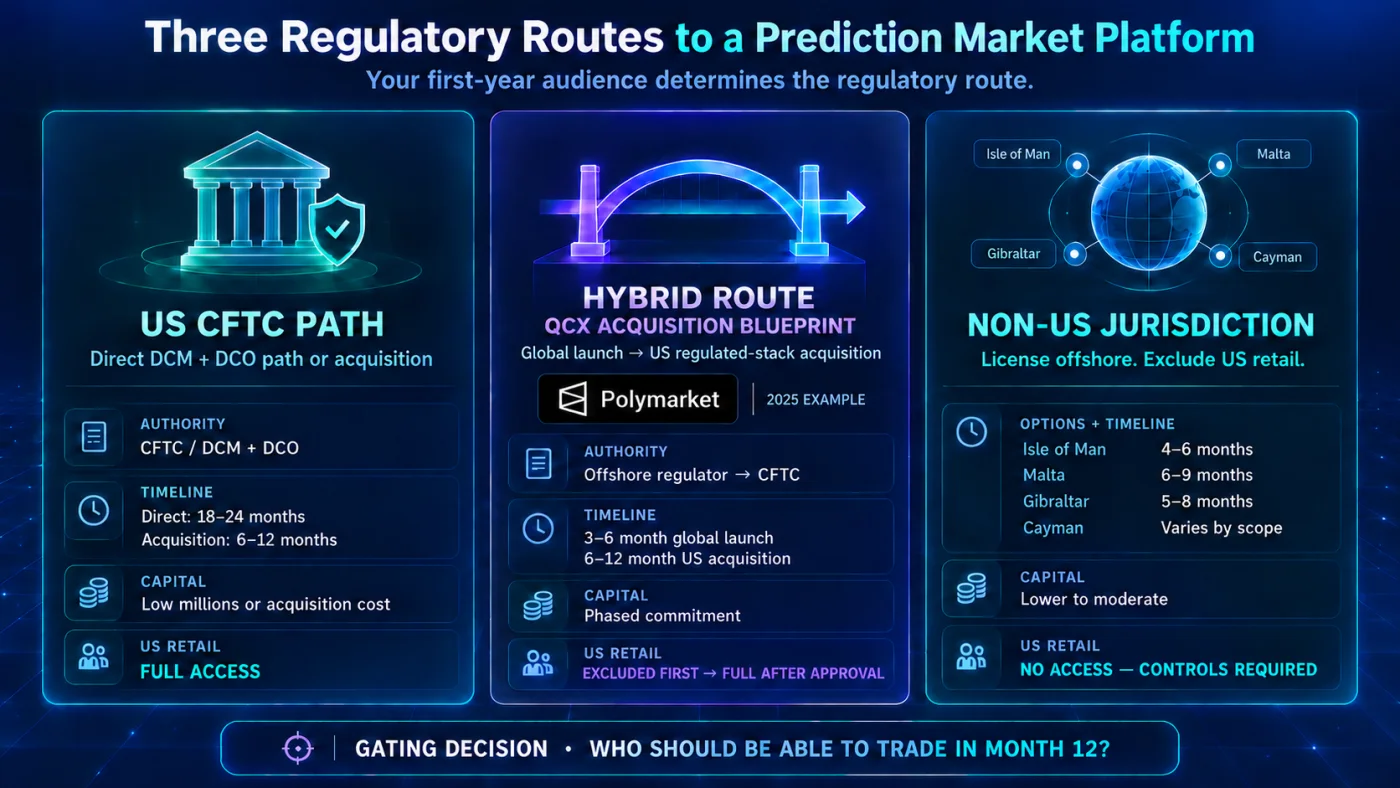
Fig 7 - Three Regulatory Routes to a Prediction Market Platform
The US CFTC path
The US path requires registration with the CFTC as a designated contract market, together with an approved Derivatives Clearing Organization path (affiliated or third party) and an access model (direct or FCM intermediated). From scratch, registration takes 18 to 24 months end to end (the formal CFTC review period after a complete application is 180 days) and carries legal, compliance, surveillance, and infrastructure costs in the low millions before launch. The alternative is acquisition of a company that already holds the required designations. Acquisition compresses the timeline to 6 to 12 months, with the acquisition price substituting for part of the registration spend; integration, compliance, and any amended designation work still carry their own costs. Polymarket’s 2025 acquisition of QCX LLC (now Polymarket US) and QC Clearing LLC (now Polymarket Clearing) is the recent example. Acquisition does not guarantee regulatory approval for the buyer’s intended trading model. An amended designation order from the regulator often follows additional review.
Non US jurisdictions
Four jurisdictions operators commonly evaluate for non US prediction market builds. The screening matrix below is a starting point. Each has caveats that depend on the specific product and user base, and all four require counsel review for a particular venue design.
Table 3 - Non US Jurisdiction Screening Matrix
The matrix is not a substitute for legal review. Prediction markets classified as gambling in one jurisdiction may be classified as derivatives or financial products in another, with different authorization requirements. Each row’s covered scope indicates the licensing framework’s primary focus; venues extending beyond that scope need additional authorization.
The hybrid route (QCX acquisition blueprint)
The hybrid route pairs an offshore launch with the eventual acquisition of a US regulated stack. The 2025 Polymarket playbook ran this way, when its parent acquired QCX LLC (now Polymarket US, DCM designated July 9 2025) and QC Clearing LLC (now Polymarket Clearing). Launch in permitted non US jurisdictions with wallet native access and geofence US retail, build volume and brand, then acquire the regulated entities when regulatory clarity firms up. Capital commitment is phased, and the operator tests product fit before committing to the full US regulatory posture. The risk is that the acquisition market tightens, the acquired entity’s amended designation order limits the buyer’s intended trading model, or the regulatory window shifts between launch and acquisition.
Gaming versus derivatives classification
The classification question is multi dimensional. If your markets are classified as derivatives contracts (event futures), the CFTC may claim jurisdiction in the US. If they are classified as gambling (wagering on uncertain outcomes), state gaming commissions and the Wire Act come into scope. Payments, AML, sanctions, and virtual asset frameworks can apply in parallel depending on how user funds move. The classification turns on market structure, resolution mechanism, economic function, and how the platform architecture interacts with each regulatory regime. Document the classification argument in writing before the first market lists, and update it when the product or jurisdiction scope changes.
Three questions a lawyer will ask in the first call
- Which jurisdictions do your users live in on day one, and what is the plan for day 365?
- Who owns the resolution logic and how are disputes handled?
- Where does user money sit and under whose custody license?
The answers pick your regulatory posture more cleanly than any marketing framework.
Liquidity design
Liquidity makes a prediction market platform or breaks it. A deep order book attracts smart money and multiplies attention. A thin market scares off traders in minutes and the venue dies quietly. Three decisions (matching architecture, fee structure, market maker programs) and one tactic (bootstrapping) separate the venues that build liquidity from the ones that never cross the threshold.
Matching architecture
The matching engine decides how orders meet and how prices form. Three architectures carry the current market.
Table 4 - Matching Architecture Trade Space
The order book wins where liquidity is already there. The AMM wins where it is not. Polymarket’s current architecture is CLOB with signed orders and onchain settlement on Polygon. The hybrid label does not apply to it. The hybrid pattern remains a defensible launch model for operators who want AMM pricing early and transition to the order book as volume compounds.
Fee structure
Prediction market platforms earn through a mix of fee lines. The specific mix varies by venue and market category.
- Maker rebates pay liquidity providers to post resting orders.
- Taker fees charge the aggressors who hit those orders.
- Resolution fees take a slice from winning positions at market close. Operators tune the three together.
Fee design varies widely. Polymarket, for example, applies category specific taker fee coefficients through a probability sensitive formula (fee = C × feeRate × p × (1 − p)); effective fees vary with both category and contract price. Resolution fees are an optional venue model. Some venues charge none. Fee design is a strategic lever shaped by venue type, user segment, and liquidity strategy.
Market maker programs
Invited makers are a common first move to turn thin markets into tradeable ones. The venue contracts with a set of professional firms (as a Clixlogix heuristic, a handful to a dozen for a launch), posts a performance tier (top makers get rebate uplifts, lower makers get standard rates), and runs a kill switch on firms that run too wide. Open market maker access with incentive emissions attracts volume but also attracts gaming. Kalshi and Polymarket both run invited programs. Clone platforms that skip this step rarely cross the liquidity threshold.
Bootstrapping thin markets
A new market with no liquidity is a market nobody trades. Bootstrap liquidity through contracted external makers, transparent incentive programs, and tightly governed venue capital where permitted. Set launch requirements for maximum spread, minimum displayed depth, and quote uptime. Invited makers commit to tight spreads in return for rebate uplifts, documented in a market maker agreement. Incentive emissions can reward traders in a protocol token for taking size, carrying regulatory and economic risks that need their own review. Reusing a proven market topic can reduce demand uncertainty, but it does not transfer liquidity from another venue.
Technology selection across the build
Technology selection across a prediction market build means six decisions, each with 2 to 3 defensible options and one path that becomes a mistake inside the first year. Make them in sequence. Each decision bounds the ones that follow.
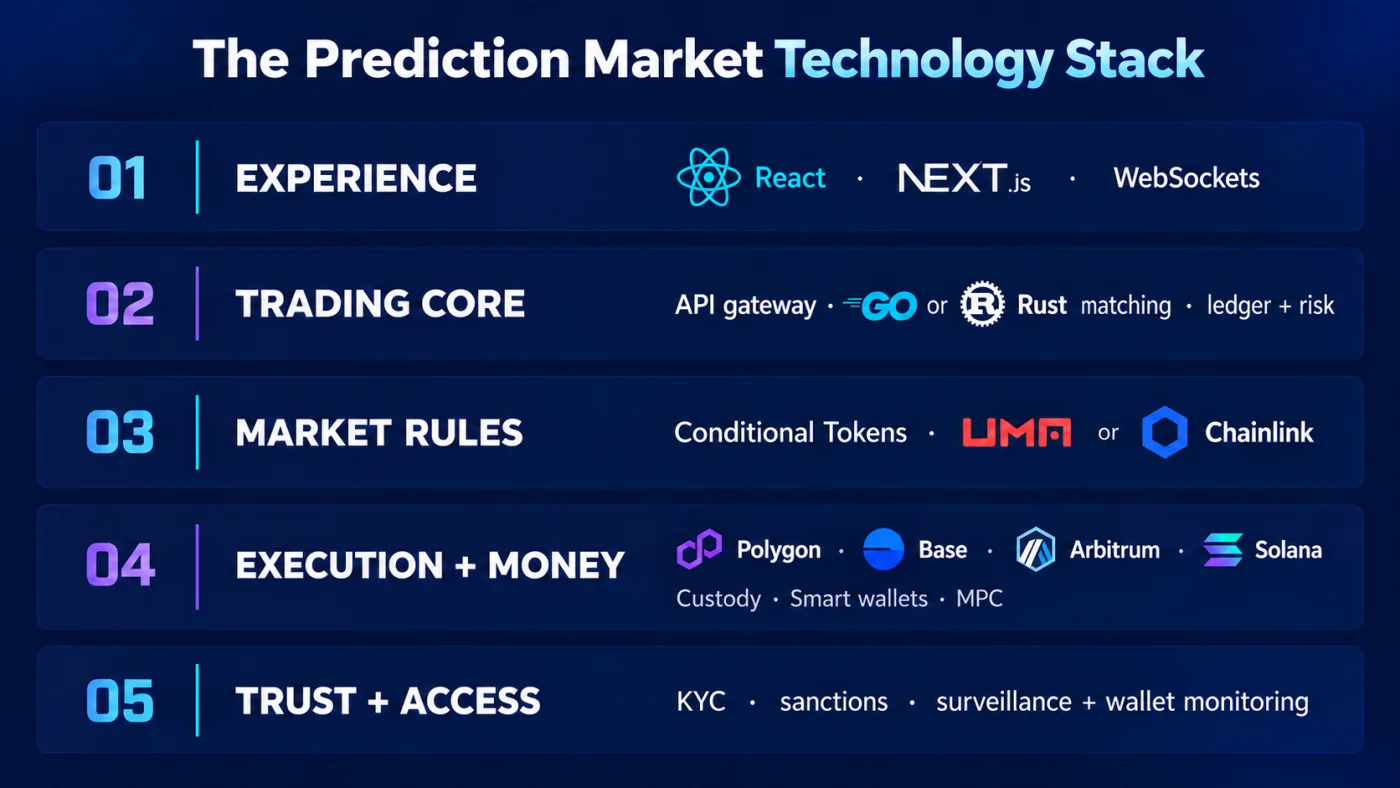
Fig 8 - The Prediction Market Technology Stack
Matching engine
The matching engine is the throughput bottleneck of the venue. Three language families appear in production trading infrastructure. Go compiles fast and offers mature concurrency, with a performance envelope that fits most matching engines. Rust offers strong memory safety and tight performance control, at the cost of slower hiring and longer ramp. Node.js works for an MVP but is less commonly chosen for high throughput matching engines at production scale. Choose by criteria that matter for your venue: expected peak order rate, hiring pool depth in your location, failure recovery requirements, and your technical cofounder’s shipping history. A novel language on a matching engine is where venues go to die.
Smart contracts and chain selection
Smart contracts handle market creation, settlement, and conditional payouts. Four chains carry current prediction market activity, each with trade offs on cost, throughput, finality definitions, and tooling. Polygon has the deepest existing liquidity through Polymarket and low transaction fees. Base offers Coinbase’s distribution and strong fiat on ramps. Arbitrum carries institutional reputation with strong finality guarantees for high value markets (finality definition varies by chain architecture; evaluate against your venue’s settlement risk tolerance). Solana offers high throughput but requires a native implementation; the EVM based Conditional Tokens Framework does not run on Solana without a different design. For EVM chains, the Conditional Tokens Framework is production tested across hundreds of millions in settled volume. Polymarket now runs both legacy CTF markets and Protocol V2 positions with pUSD as the collateral token, per its positions documentation. A custom contract architecture is only defensible if you need market types the framework does not support.
Oracle selection
Oracle selection decides resolution speed, dispute mechanics, and economic security. UMA Optimistic Oracle is the production choice for onchain venues with bonded dispute resolution. Chainlink is better for structured data feeds (prices, indices, sports scores) but less suited to subjective resolution. Internal exchange resolution works for regulated venues where the operator takes resolution responsibility under regulatory oversight. The hybrid pattern uses an oracle for the common case and operator judgment for ambiguous markets.
Frontend and realtime data
Frontend is commonly React or Next.js for venues that need a trading UI with realtime updates. The real decision is realtime data delivery. WebSockets for live price updates, with Server Sent Events as a fallback. A dedicated realtime infrastructure provider (Pusher, Ably, or self hosted on Redis Streams) is often cheaper than building the delivery layer in house. Market depth, trade stream, and position updates should arrive fast enough that the UI feels responsive under normal trading conditions; sub-second latency budgets are a reasonable starting target, tightened as volume concentrates.
Treasury and custody
Treasury selection depends on the settlement decision from Section 3. Regulated USD custody runs through licensed custodians (BitGo, Anchorage) for fiat venues. Wallet and key management infrastructure (Fireblocks and other MPC providers) sits beneath regulated custody or supports MPC architectures. Smart wallet contracts (ERC 4337 account abstraction) are a common EVM option for onchain venues. Custody costs are typically quoted in basis points annually on assets under custody; specific rates vary by provider, jurisdiction, and service scope, so treat any single number as illustrative. The reputation cost of a custody failure is total.
KYC and compliance infrastructure
Identity and compliance infrastructure breaks into two groups. Identity verification and KYC vendors handle document scan, liveness, device fingerprinting, and sanctions screening (FinCEN BSA requirements); common examples include Persona, Veriff, Jumio, and Onfido (now part of Entrust), with pricing varying by volume, geography, and service scope. Blockchain analytics and transaction monitoring vendors like Chainalysis and Elliptic provide wallet screening and ongoing transaction monitoring for onchain venues. Build the identity and analytics layers as vendor abstractions. Vendor markets evolve; expect to swap or add providers as the venue scales.
Build versus white label versus clone
The build path decision picks timeline, team shape, and capital intensity. All three matter. All three constrain each other. Three paths carry current prediction market builds, each with a specific operator profile that fits.
Table 5 - Three Build Paths Comparison
Full custom build
A full custom build is the right path when product edge or novel market types justify the capital. 4 to 8 months to engineering readiness with a team of 8 to 15 (matching engine engineer, smart contract engineer, two backend, two frontend, one devops, one security, product, operations, and legal). Live market launch adds the regulatory and liquidity bootstrap stages on top. Capital commitment is low millions through launch. The payoff is total control over product, markets, resolution, and economics. Kalshi and Polymarket both own custom builds. Pick this path when distribution is already secured and the venue is a long term asset.
White label with modifications
A licensed partnership or white label arrangement is the right path when distribution is the edge and the venue is secondary. The operator licenses or partners with a running regulated or decentralized exchange, customizes branding, markets, and compliance posture, and launches in 4 to 8 weeks with a team of 3 to 6. Capital commitment is moderate (license fees, modification work, operations setup). The constraint is less control over product design and underlying economics. Payment flows, matching engine, and settlement are the partner’s. For US event contracts specifically, true white label offerings are limited; practical partnership structures include regulated distribution, FCM intermediation, embedded trading, or introducing arrangements with a DCM. Offshore protocol white labels are more established for international deployments.
Clone script approach
A clone script buys existing code (a Polymarket fork, a prediction market template) and deploys it with branding changes. 2 to 4 weeks to deploy a working prototype with a team of 2 to 4. Capital commitment is low (code purchase plus deployment). The problem is that clone scripts solve the surface layer of the build (UI, basic matching, token deployment) and leave the harder layers (liquidity, compliance, resolution, dispute handling, custody, operations) to the operator. A Clixlogix heuristic: clone deployments that reach a live retail launch without rebuilding the harder layers are the exception.
When each path makes sense
Full custom build makes sense when the product thesis is novel enough that no white label supports the markets or UX you need, and when capital and timeline allow. White label makes sense when the operator has distribution, vertical focus, or audience the market lacks and wants to launch inside two months. Clone scripts make sense only for a demo, a vertical experiment with throwaway capital, or an internal corporate market where none of the hard problems matter. Clone scripts do not make sense for a venture bet.
The honest answer on timeline is a range, because the three paths (full custom, licensed partnership or white label, clone) and three archetypes (MVP, mid size, enterprise) ship on different clocks. The following are Clixlogix planning timelines based on disciplined 2026 scopes. Treat them as orientation. A disciplined build ships inside these ranges; a build that lets scope creep usually lands beyond them.
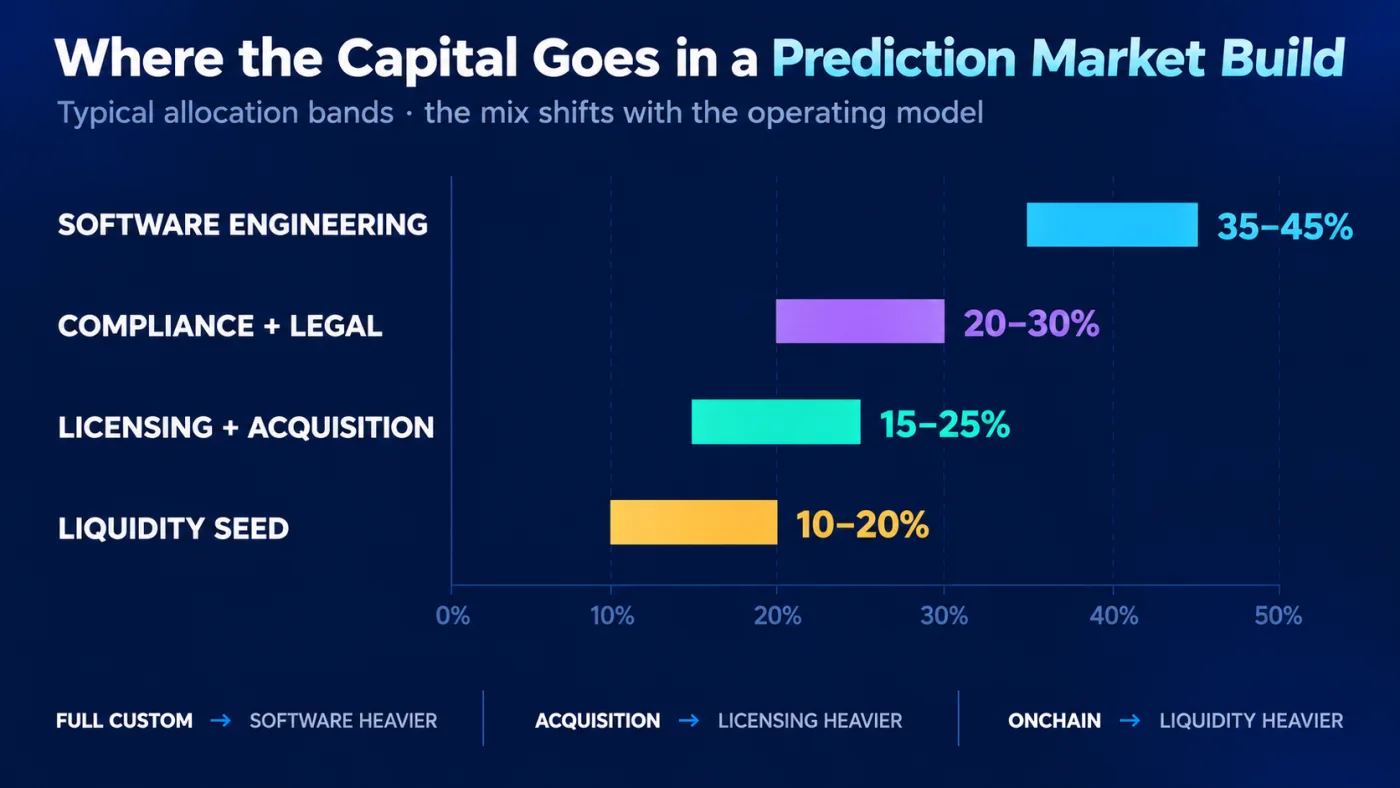
Fig 9 - Budget Share Split Across Four Categories
Timeline ranges below cover engineering and operating build. Regulatory process timelines (CFTC registration, acquisition closing) are called out separately where they apply.
How the budget splits across categories
Four categories carry the budget. Digital engineering (frontend, matching engine, smart contracts, infrastructure) runs 35 to 45 percent on a full custom build and 15 to 25 percent on a white label. Compliance and legal (regulatory counsel, KYC infrastructure, surveillance, audits) runs 20 to 30 percent and higher for US regulated paths. Licensing and acquisition (DCM acquisition, white label fees, third party protocol licenses) runs 15 to 25 percent on acquisition paths, potentially low on an unregulated custom protocol, and substantial on a regulated custom venue. Liquidity seed (operator posted capital on both sides of markets, incentive emissions, invited maker rebates) runs 10 to 20 percent and more on onchain paths where liquidity is purely economic. The share shifts with the path. The categories do not change.
Build archetypes and timelines
Three planning archetypes cover the scopes evaluated in this guide. Timeline ranges below assume AI assisted engineering and a disciplined scope. Treat them as Clixlogix planning estimates. Enterprise timelines cover engineering build; CFTC registration from scratch adds 18 to 24 months on top of engineering (an acquisition path compresses the regulatory portion to 6 to 12 months).
Table 6 - Build Archetypes for Prediction Market Platforms
What a serious MVP includes
An MVP that reaches a launchable state needs these components. Matching engine (order book or AMM). Market creation and resolution flow. User accounts with KYC or wallet connect. Deposit and withdrawal rails. Trading UI with realtime data. Admin dashboard for operators. Dispute and support handling. Compliance monitoring. Observability and alerting. The MVP that ships missing any three of these is not an MVP. It is a prototype that will be rebuilt before launch.
Team shape at 90 and 180 days
At 90 days the team is matching engine engineer, smart contract engineer, frontend engineer, product and operations lead, and part time regulatory counsel. At 180 days the team adds backend engineer, devops engineer, security engineer, full time compliance ops, and customer support. The 90 day team ships the MVP. The 180 day team runs the launched venue. Hiring the 180 day team at day 1 wastes capital. Hiring the 90 day team at day 180 breaks the venue.
What stretches the timeline
Three failure patterns extend most prediction market timelines. Scope creep on market types (adding sports to a financial venue adds 2 to 4 months). Regulatory restart (filing wrong, getting rejected, restarting takes 6 to 9 months of recovered process time). Liquidity underfunding (launching with 10 percent of what the market needs and watching volume evaporate adds months to the launch ramp while the operator restages seed capital). Plan for 20 percent timeline buffer above the archetype range to absorb scope and regulatory review.
Operational discipline a venue needs before launch
Prediction market platforms live or die on operational discipline. The architectural and technology choices in Sections 3 through 7 produce a buildable system. The operational practices below turn that system into a venue traders trust. Three disciplines matter most: the market lifecycle, the authoritative ledger, and the security and launch gates.
The operational market lifecycle
Every market moves through ten stages from idea to post launch review. Market idea originates from product, data signals, or user request. Legal and product review confirms classification (gambling, derivative, information), checks jurisdictional eligibility, and clears the market for the venue’s licensing posture. Contract specification fixes the market question, resolution source, trigger date, edge case handling, and settlement rules. Product submission covers self-certification under CFTC Regulation 40.2 or voluntary prior approval under Regulation 40.3 for US regulated venues; CFTC Letter 26-22 provides additional filing guidance for event contract series and discourages overly broad template certifications. For non US or decentralized venues this stage covers internal governance approvals. Launch lists the market with seeded liquidity, invited makers, and surveillance active. Surveillance monitors trade patterns, insider trading signals, and user behavior continuously. Halt and correction procedure governs how the venue pauses trading when something breaks (data source failure, market manipulation, incorrect contract specification). Resolution executes the predetermined logic against the authoritative source. Payout settles winning positions to user balances. Post market review captures what worked, what broke, and what the resolution operations learned for future market design. Document each stage with named owners, SLAs, and escalation paths. A venue that cannot name who owns the halt decision will not halt in time when it matters.
The authoritative ledger and reconciliation model
Every venue needs one source of truth for orders, trades, cash, collateral, and positions. The question is where that source lives and how it reconciles with everything else.
For regulated venues, the authoritative ledger is typically an offchain exchange grade database with WAL logging, replication, and point in time recovery. The custody record for user funds lives at the licensed custodian; reconciliation against the venue’s balance ledger runs continuously or intraday during active trading, with end of day confirmations. Trading records reconcile to the clearing organization’s reporting cycle. External reconciliation points are the custodian and the DCO.
For onchain venues, two ledgers coexist: the chain state (which holds the authoritative token balances and position records) and the offchain matching infrastructure (order book, user accounts, metadata). The reconciliation question is which actions the offchain system can take on its own authority and which must settle onchain before being considered final. Polymarket’s model: signed orders carry user authorization, matching happens offchain, settlement happens onchain. The chain is the authority on balances; the offchain system is the authority on order flow.
The reconciliation discipline runs continuously during active trading, with intraday checkpoints and end of day confirmations. Pick which system owns each data element, document the reconciliation procedure, and run drill exercises that validate the recovery path when either side goes down.
Security and launch gates
Before a market lists for the first user, apply every gate relevant to the selected architecture. Smart contract audit by an independent firm for venues with onchain components, with high severity findings remediated before launch and lower severity findings remediated or documented as risk accepted. Key management structure for admin keys, withdrawal keys, and oracle authority (hardware security modules, multisig thresholds, time delays on sensitive actions). Withdrawal controls including per user limits, aggregate limits, cooling off periods, and emergency pause authority. Trading halt mechanics tested in staging and documented for operators. Disaster recovery plan with RTO and RPO targets, tested at least quarterly. Incident response runbook with named on call, severity classification, and communication templates. Load testing scoped to forecasted peak concurrent users and peak order flow, with explicit multipliers for seasonal and event driven spikes. Surveillance validation confirming the monitoring tooling catches test patterns (wash trading, spoofing, front running). Resolution drill executing a full market from close through payout, including the dispute path, on staging environment.
A venue that skips any of these gates is launching on borrowed time. The gates are not optional. The order separates engineering ready from launch ready.
Five ways prediction market builds fail
Prediction market builds fail in five patterns that recur across operators. The pattern you want to understand is the one that most looks like the shortcut you are tempted to take.
1. Regulatory ambiguity resolved too late
Operators build for months before confirming which regulator claims their venue. The classification question (gaming or derivatives) gets deferred because the lawyer bill is high. The venue launches, a regulator responds, and the build pauses for a lengthy restructuring with significant legal spend (as a Clixlogix planning heuristic, assume several months and seven figure costs). Confirm the classification in writing before the first market lists.
2. Thin liquidity that never bootstraps
The venue launches undercapitalized for liquidity. Spreads are wide, fills are slow, retail bounces, and the operator is out of runway before organic liquidity arrives. Volume stays stuck well below what the fee model requires. Define launch thresholds for spread, displayed depth, quote uptime, and concentration, and contract external makers to meet them from day one. Sizing seed capital against those thresholds is more defensible than against a flow target.
3. Oracle disputes that destroy trust
One contested resolution with a public dispute mechanism, handled poorly, damages the venue’s trust narrative for an extended period. Users leave, makers pull quotes, and acquisition cost per user rises substantially. The failure usually traces to ambiguous market wording or a source that was wrong under the surface. Over invest in market wording review and resolution source due diligence before each market lists.
4. Market design errors
Resolution criteria that read clearly to the operator and ambiguously to the trader generate dispute volume. Edge cases that look rare in a planning meeting hit in the first month. Reputation turns negative after a small number of contested markets accumulate. Run every market question past three independent reviewers and document handling for the four edge cases from Section 4 before go live.
5. Operational trust failures
Withdrawal delays, communication gaps on contested outcomes, and support response times above 48 hours destroy user trust faster than any technical failure. If resolution carries operational friction, the user does not return. Treat operations and support as product. Response time SLAs apply at the operator level.
These five failures compound. A venue hit by two is likely to be hit by three. Build countermeasures before launch.
Reviewing a prediction market build plan before you commit capital?
A Clixlogix architect will walk through your architecture decisions, technology selection, archetype fit, and the five failure modes against your specific plan in a structured 45 minute call.
Clixlogix supports prediction market operators on build architecture, technology selection, and engineering delivery. Regulatory and licensing work sits with your own counsel.
Request a build architecture review