TL;DR
- Google reports that AI writes 75% of its new code, with engineers approving every merge. Anthropic reports that Claude writes 80% of its production code. AI code generation has gone mainstream.
- GitHub Copilot reached 50 million users, and 1 in 3 pull requests on the platform now involves an AI agent.
- The speed gains on boilerplate, testing, and documentation are real and widely confirmed in the field.
- The trust gap tells the real story. 84% of developers use AI coding tools, 29% trust the output, and 3% say they highly trust it.
- Security vulnerabilities in code produced by AI continue to climb. Georgia Tech tracked a 6x monthly increase in CVEs tied to AI code through early 2026.
- The businesses getting value from AI code generation are the ones that pick which tasks AI handles and which stay with experienced engineers.
Here is the number that tells you everything about where AI code generation stands right now.
84% of developers use AI coding tools. Only 29% trust the output. And 3% say they highly trust it. That data comes from the Stack Overflow Developer Survey, which polled nearly 50,000 developers across 177 countries.
Everybody uses these tools. Almost nobody trusts them. That is the whole story of AI code generation in 2026.
The adoption numbers run high. Google announced at Cloud Next in April 2026 that AI writes 75% of all new code at the company and engineers approve every merge, up from 25% 18 months earlier. Anthropic published internal research showing Claude authored 80% of the code merged into Anthropic’s production codebase, and engineers ship 8x more code per day than in 2024. Microsoft reported that GitHub Copilot reached 50 million users, with 1 in 3 pull requests on GitHub now involving an AI agent.
The adoption story is settled. AI code generation won. The question that matters now is whether all that generated code helps businesses ship better software or only ship more files.
We build software for clients using AI tools every day. We have watched these numbers play out on real projects. This is what we have learned about where it works, where it creates problems nobody warned you about, and what it means if you are planning a development project right now.
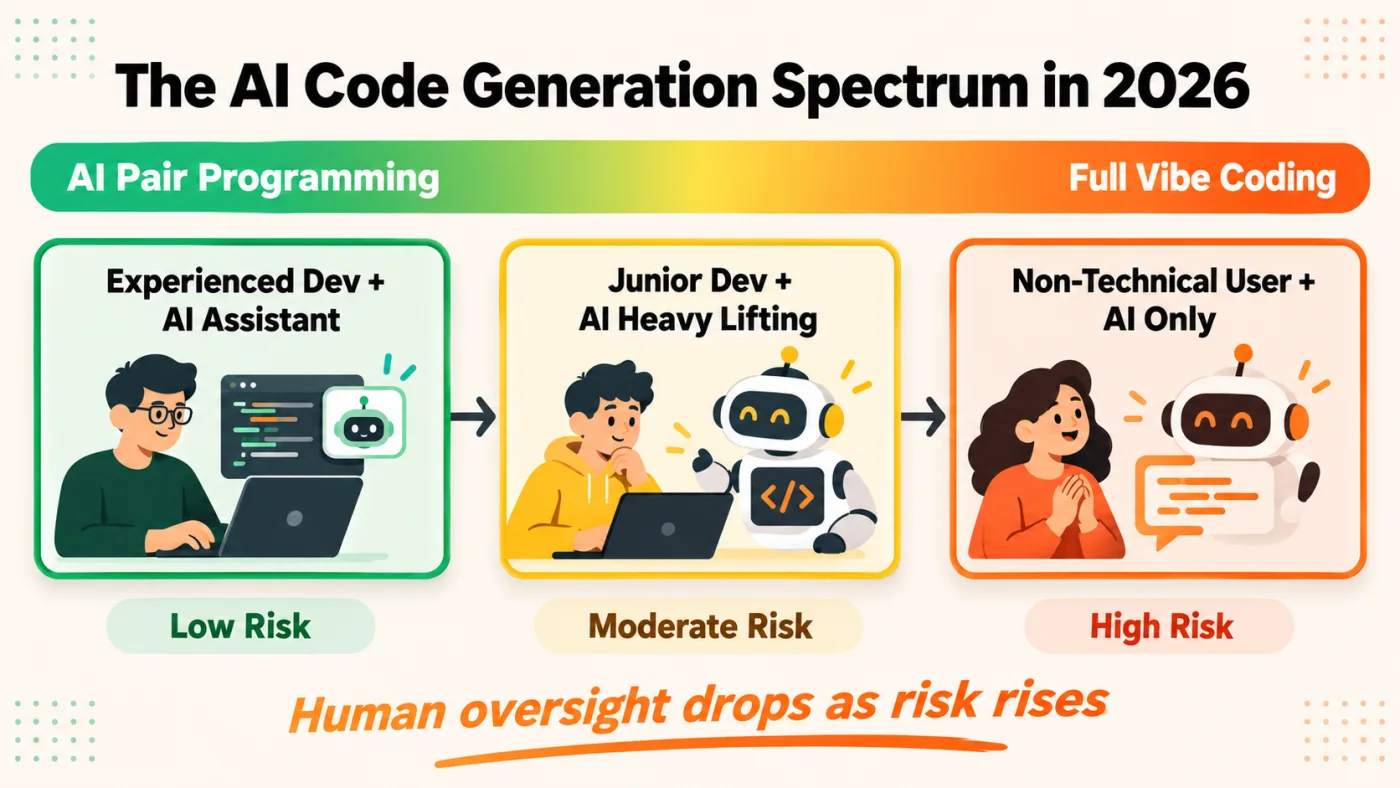
Fig 1 – AI code generation in 2026 ranges from experienced developers using AI as a writing partner to users without technical background relying entirely on AI
What Is AI Code Generation and How Does It Work
The concept is simple. You tell an AI tool what you need, and it writes working code. You can give it plain language instructions, feed it existing code for context, or let it autocomplete while you type. What comes out is functional code you can review, modify, and deploy.
What matters more than the definition is the range of how people use these tools.
On one end, you have AI assisted coding. Experienced developers use AI as a fast writing partner. The human makes every design decision, reviews every line, and owns the architecture. AI types faster. This works well when the human stays in control.
On the other end, you have vibe coding, where people with little technical background build entire applications using AI to handle the heavy lifting. The user describes what they want. The AI builds it. Nobody in the room fully understands the code. That is where projects go sideways.
This article is about the professional use case. Experienced development teams using AI to move faster. That is the situation most of our clients are navigating, and it is where the serious data lives.
The scale tells you how far things have moved. Google generates 75% of its new code with AI. Anthropic’s engineers ship 8x more code per day than 2 years ago. GitHub processes 1.4 billion commits per month, and 1 in 3 pull requests now involves an AI agent. A year ago these numbers would have been startling. Today they are the baseline.
Where AI Code Generation Delivers Real Speed
We are going to be straightforward about what works before we get into what does not. AI coding tools earn their place on 4 specific types of work.
Boilerplate and Scaffolding Code
This is the clear winner. AI scaffolds new projects, writes CRUD operations, generates config files, and spins up the standard scaffolding every developer has written dozens of times. It does all of this fast and well enough to ship with minor edits.
Google shared a specific example at Cloud Next. AI agents completed a complex code migration 6x faster alongside engineers, compared to engineers working alone a year earlier. Migrations are heavy on repetition and regular structure. That is exactly the territory where AI earns its keep.
When we start a new client project, the scaffolding phase is where AI saves the most visible time. The foundation goes up fast. What happens after the foundation is where things get more interesting.
Test Writing and Code Restructuring
This one caught us off guard. We expected AI to be decent at generating tests. It turned out to be one of the strongest use cases we have seen in practice.
Unit tests follow a rigid structure. You have a function, you check its outputs against known inputs, and the shape of each test barely changes. AI writes these quickly and gets them right most of the time.
Anthropic’s internal data backs this up. After adopting Claude Code across their engineering organization, they saw a 67% increase in merged pull requests per engineer per day. The biggest gains came on structured, repeatable work like testing and restructuring.
Nobody loves writing documentation. AI handles it without fuss.
AI writes docstrings, drafts inline comments, and explains legacy code in plain language. It does all of this well enough. The reason it works so well is the risk profile. A slightly wrong comment from AI does not break anything, fail a payment, or open a security hole. Someone reads it, corrects the wording, and moves on.
Low risk, consistent output. Documentation is the most underrated AI use case in professional development.
Prototyping and Concept Validation
Teams use AI to test ideas before committing real engineering time. A working prototype runs in hours.
The code will be rough. Shortcuts appear everywhere, edge cases get ignored, and no senior engineer would approve what sits inside it. For a prototype that is fine. You are validating a concept. The deliverable goes to internal review.
Where this goes wrong is when the prototype becomes the product. We have cleaned up enough of those projects to know the shape well. The team falls in love with how fast it came together, they ship it, and 3 months later it starts breaking in ways nobody can trace.
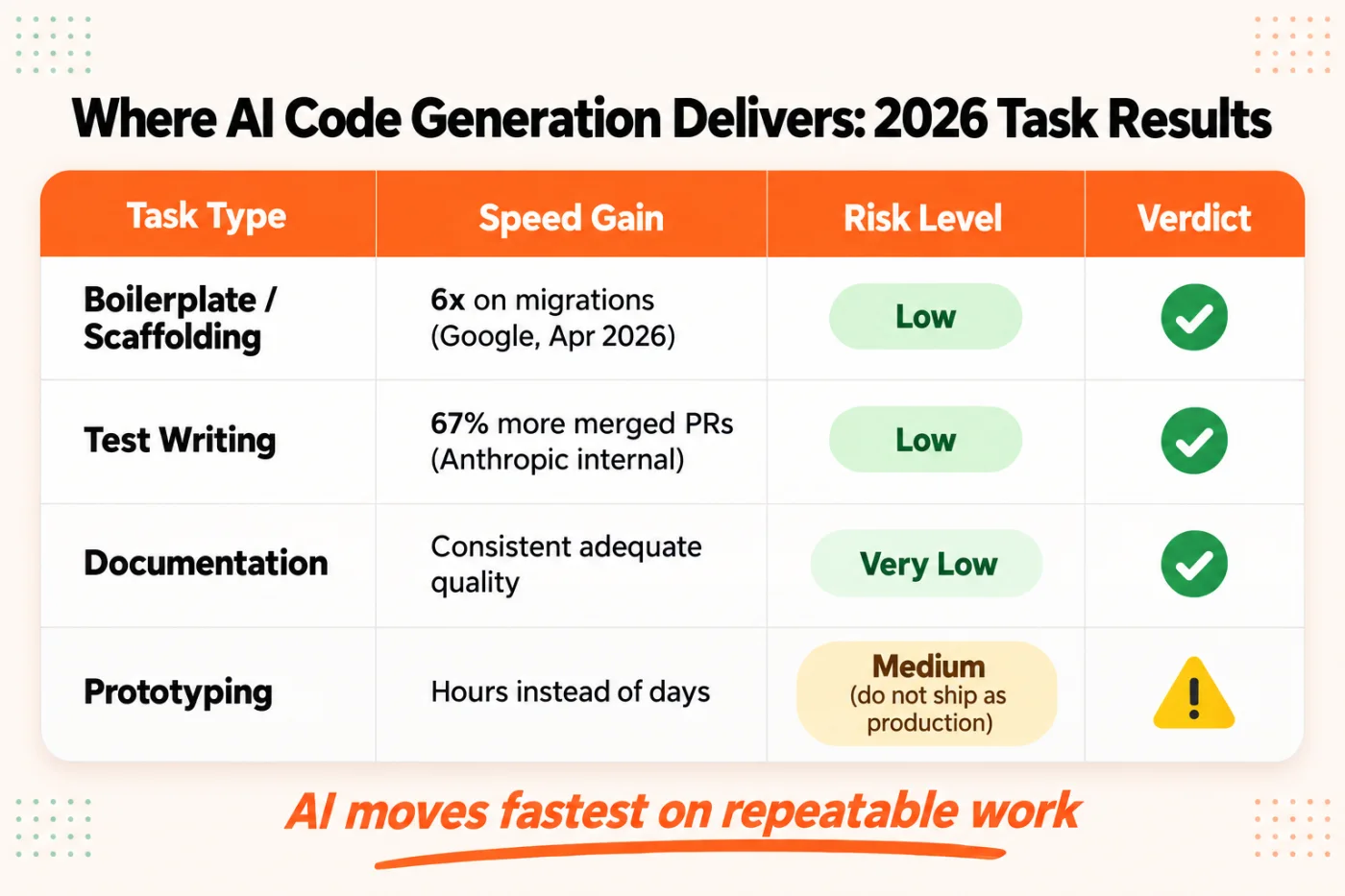
Fig 2 – AI code generation delivers consistent speed on boilerplate and testing. The gains drop off sharply for architecture and security work
Where AI Code Generation Fails and Why It Matters
The marketing around AI coding tools talks about speed, and the speed is real on the tasks we covered above. Speed is the easy metric. Here is where the harder numbers tell a different story.
The Trust Gap Keeps Widening
This is the most important data point in AI code generation right now, and it comes straight from the developers doing the work.
The Stack Overflow Developer Survey, with nearly 50,000 respondents across 177 countries, found that developer trust in AI output accuracy dropped to 29%, down from 40% the year before. 3% say they highly trust what AI produces. And 46% actively distrust it.
That trust number is moving the wrong direction. As AI tools get smarter and more capable, the people using them daily trust them less. Experienced developers, those with 6 or more years in the field, post the lowest trust scores of any group.
66% of developers deal with “almost right” code from AI every day. And 45% say debugging AI code now takes longer than writing the equivalent by hand would have. AI is fast at producing code. It is also fast at producing work that somebody else has to fix.
Security Vulnerabilities Keep Climbing
On the security side, the data is worse.
Researchers at Georgia Tech tracked 74 CVEs formally linked to code produced by AI through March 2026. The monthly count jumped from 6 in January to 35 in March. They estimate the actual number is 5 to 10 times higher because most AI tools leave no fingerprints in the code they produce.
We wrote about what happens when teams accumulate cognitive debt from AI code earlier this year, and the security data makes that problem much worse. The maintenance burden grows beyond maintaining code you did not write. You end up hunting for vulnerabilities you did not create in code you do not fully understand.
We have also published a full audit checklist for reviewing AI code before it ships. If your team uses AI coding tools without running these checks, you likely have a security exposure you have not measured yet.
Architecture and System Design Still Need Humans
Here is why massive adoption has not translated into proportional output gains.
In practice, coding is a small fraction of what developers actually do all day. The rest is planning, architecture, code review, coordination, debugging, and meetings. AI speeds up the typing. It leaves everything else untouched.
AI does not know your system. It cannot see that your payment service needs a message queue to inventory where you call a direct API today. It cannot catch the circular dependency in your data model that will collapse under load. It writes code one line at a time without any understanding of the system it is building inside.
We see this on every project. AI produces implementation code fast. The decisions about what to implement, how components connect, where data lives, and how the system scales under real traffic remain human decisions. They were human decisions a year ago and they will be a year from now.
The Review Bottleneck Nobody Planned For
More code produced by AI means more pull requests sitting in the review queue. And the queue is getting worse.
GitHub now processes 1.4 billion commits per month, and more than 500 million pull requests merged in the past year. That is an enormous volume of AI code flowing into review queues that were already full.
Even at Anthropic, reviewers rejected 46% of the maintenance pull requests Claude opened. The other 54% required both automated and human review before merging. AI generates code fast. Reviewing it properly takes as long as it always did.
This is the problem engineering leaders are now building structured review workflows to solve. Skipping review is not the answer. Matching review capacity to generation capacity is.
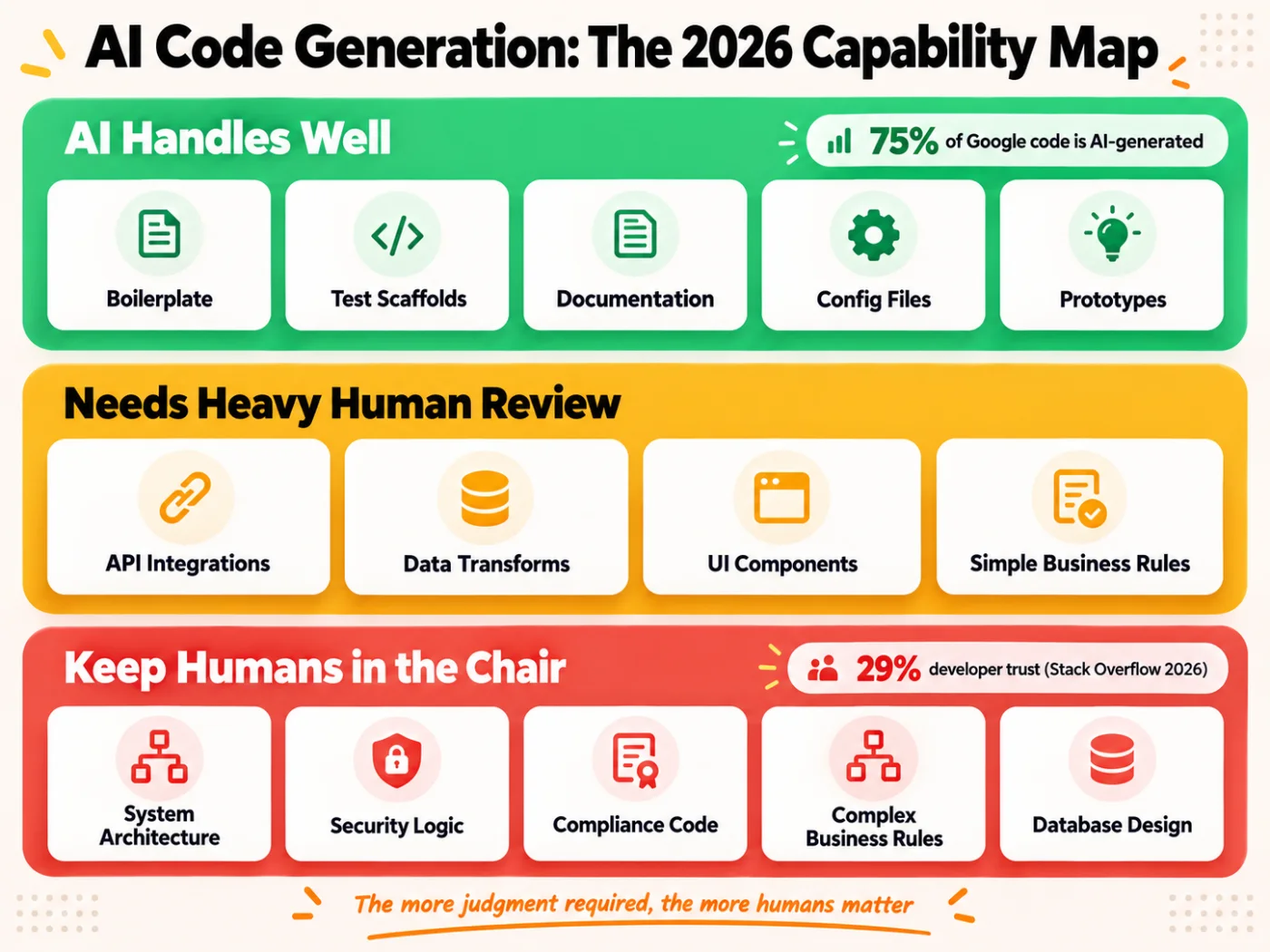
Fig 3 – The 2026 capability map shows which development tasks AI handles well and which still need experienced human engineers
The 2026 Trust Paradox at 84% Adoption and 29% Trust
We are giving this its own section because it is the defining story of AI code generation this year.
The Stack Overflow Developer Survey laid the numbers bare. AI coding tool adoption hit 84%. Trust in AI output accuracy fell to 29%, down from 40% the year before. The share of developers who actively distrust AI output, 46%, is now higher than the share who trust it.
These two lines are moving in opposite directions. That almost never happens with technology adoption. Normally, the more people use a tool, the more they trust it. With AI code generation, the opposite is happening. The people who use these tools the most trust them the least.
The most experienced developers, those with 6 or more years of work behind them, post the lowest “highly trust” rate of any group at 2.6% and the highest “highly distrust” rate at 20.7%. The people best equipped to evaluate AI output are the ones most skeptical of it.
The perception gap matters for business decisions. Anthropic’s own internal data showed engineers reporting a 50% productivity boost from using Claude in 59% of their daily work. Those are real perceived gains. Perceived and measured are different things. 45% of surveyed developers say debugging AI code now takes longer than writing the equivalent would have. Instant code generation feels fast. The time spent fixing what it produced is invisible to the person who generated it.
The AI pair programmer relationship works when someone measures the total cycle, from generation through review and remediation.
Why producing more code does not mean producing more value is the lesson this data is teaching the entire industry at once.
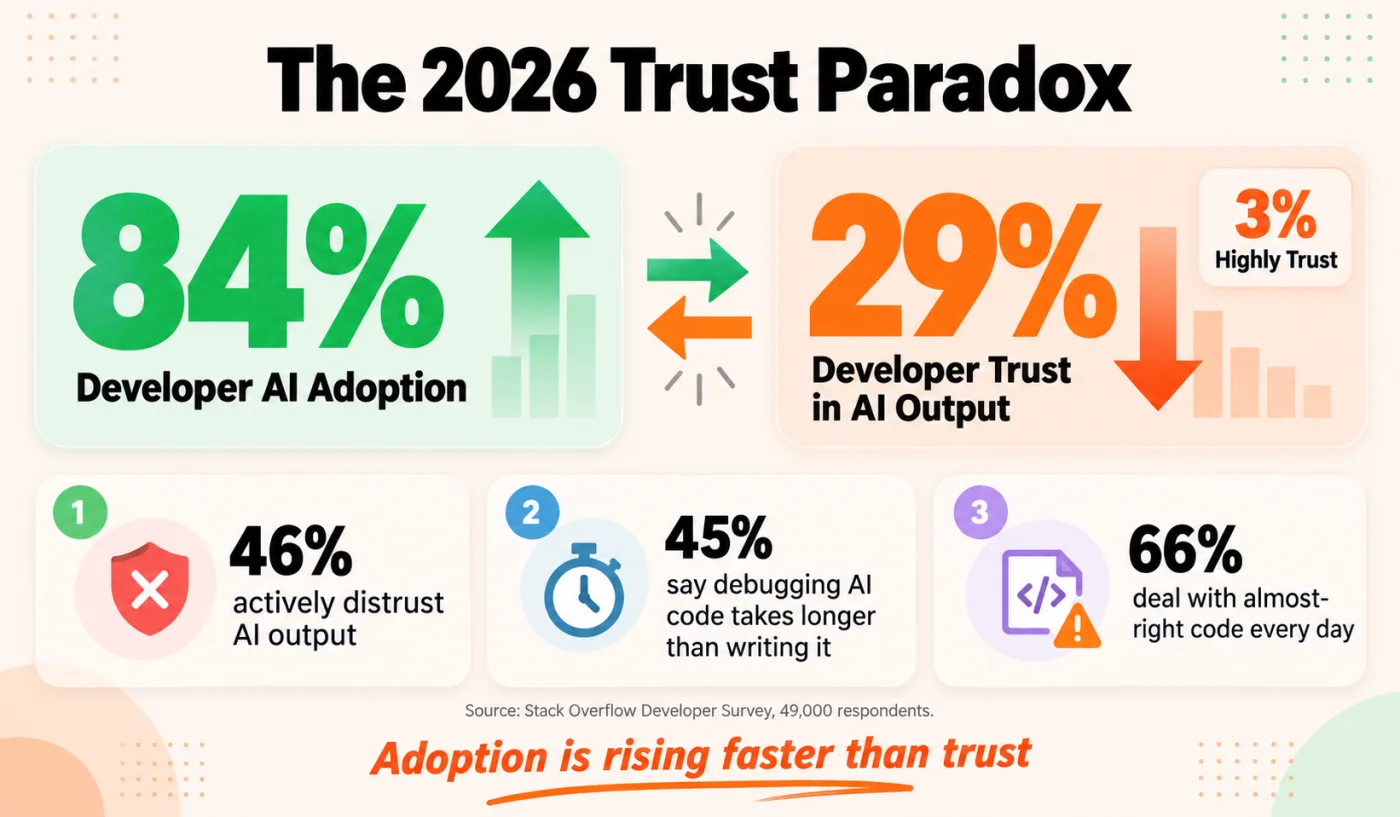
Fig 4 – The 2026 trust paradox. AI coding tool adoption hit 84% while developer trust fell to 29% and only 3% highly trust the output
We build software using AI for speed where it counts and put senior engineers where AI falls short.
That balance is how we ship fast without shipping broken.
Talk to our development team
How Smart Teams Use AI Code Generation in 2026
We use AI coding tools in our own workflow. We also enforce guardrails that most teams skip. Here is what works based on a year of building software this way.
Think of AI as a fast but unsupervised junior developer. It writes code quickly. It cannot judge whether that code solves the right problem. A reviewer who understands the system reads everything it produces.
Keep architecture decisions with senior engineers. AI fills in implementation after humans make the structural choices. It does not decide how services communicate, how data flows, or where boundaries sit.
Run security scanning on every pull request produced by AI. Even at Anthropic, 45% of merged AI pull requests needed human fixes afterward. Automated scanning catches common weaknesses. Manual review catches the architectural risks automated tools miss.
Rework rates matter more than generation speed. If AI code gets rewritten within 2 weeks of shipping, the speed gain was an illusion. Stack Overflow’s finding that 45% of developers say debugging AI code takes longer than writing it should be a warning to every team measuring only output volume.
Invest in what AI cannot do. Coding is a fraction of a developer’s day. The biggest productivity lever is faster planning, clearer specifications, smoother review cycles, and fewer coordination bottlenecks.
We have written about a structured method for cleaning up codebases built with AI when guardrails were missing from the start. Every time, prevention costs a fraction of what remediation costs.
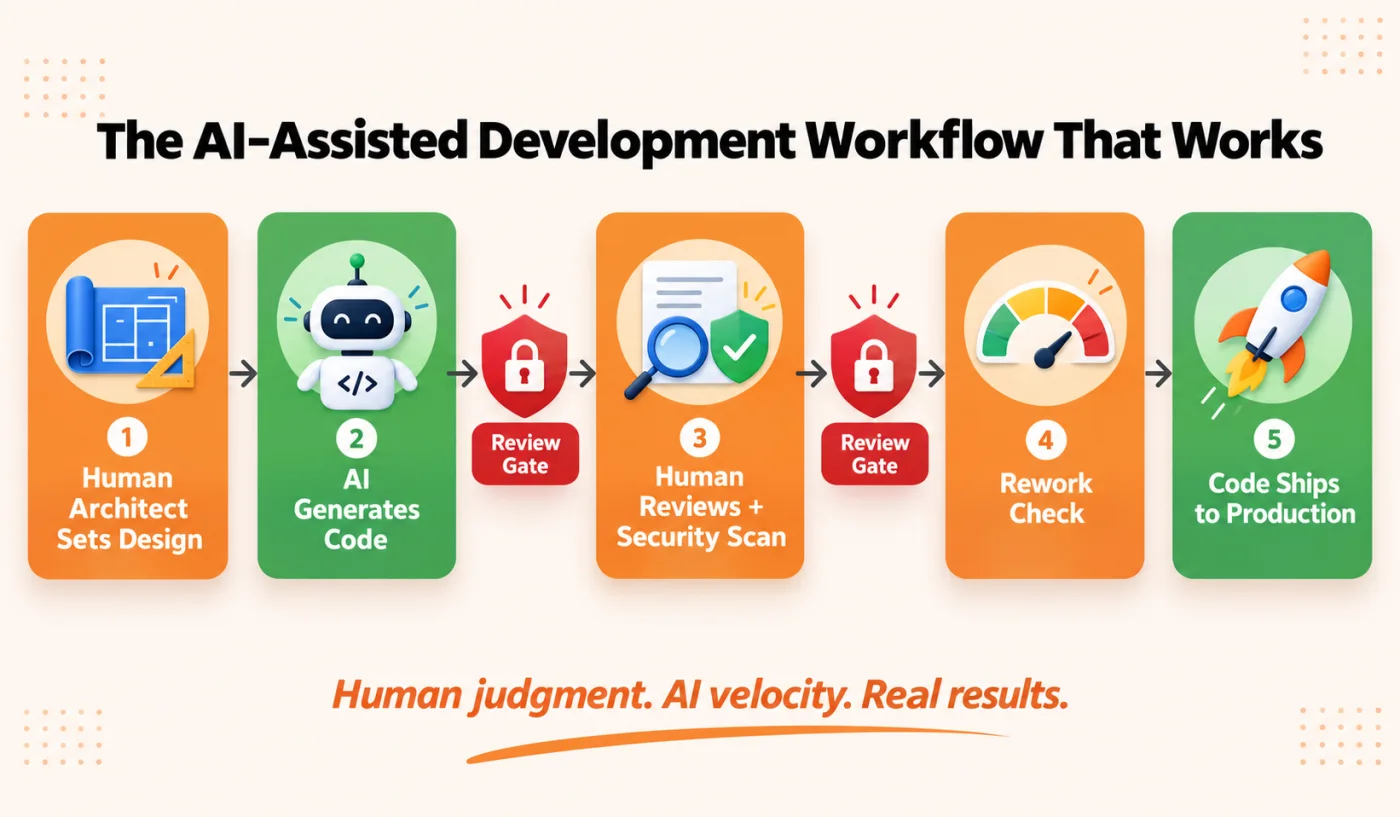
Fig 5 – An effective development workflow with AI places human review gates between code generation and production deployment
What This Means for Your Next Development Project
Here is the practical framework.
Building a new product? Use AI to prototype and validate fast. Then bring in experienced engineers to build the production version with proper architecture, security, and testing. The prototype gives you speed. The production build gives you a product that survives real users.
Modernizing existing systems? This is where AI delivers steady value. The work includes migrations, test coverage expansion, and documentation of legacy code. These tasks lean on repetition and need little design judgment. Google’s 6x migration speedup is a real example of this done right.
Have compliance or security requirements? Code produced by AI needs the same review process as code written by humans. In most cases, it needs more. Georgia Tech tracked a 6x increase in CVEs tied to AI code in 3 months. Do not assume code that compiles and passes basic tests meets your regulatory standards.
Already shipped an app built with AI that is breaking? That happens more often than the industry admits. We have a service for development that uses AI with proper engineering oversight and a separate track for teams that need to clean up and stabilize existing codebases built with AI.
AI code generation is a tool. A good one in the right spots. It does not replace the judgment to know when code is correct and when code only compiles.
The businesses winning in 2026 generate the right code and review all of it. Volume alone has stopped being the win condition.
Clixlogix builds software with AI tools every day and cleans up projects that shipped fast and started breaking. Both engagements open the same way, with a read of what the code actually does before anyone changes it.
A cleanup assessment covers 4 dimensions.
- Access, what was left exposed and needs locking down
- Code, the vulnerabilities sitting inside the codebase
- Runtime, how the app behaves once it is live
- Compliance, what auditors and enterprise buyers will ask for
You get the findings ordered by what will break first, a scope for the fix, and an estimate. Teams planning a new build start from the development side of the same conversation.
Get a cleanup assessment
Frequently Asked Questions