WhatsApp DM Us 🇮🇳 +91-(120)-4137067 🇺🇸 +1-(315) 215-3533
Clixlogix
About
About
Why Clixlogix
Why fast-growing brands trust Clixlogix for digital success.
How We Work
Focused but flexible, explore our agile & collaborative approach.
Culture & Diversity
We bring diverse people together to drive growth-oriented culture.
Client Security
See how we ensure your intellectual property safety to protect you.
Our Team
Make some noise for our talented team powering your digital journey!
Partnership
Looking for a true end-to-end partner to drive growth?
Mission, Vision & Values
The fuel! What keeps us going?
Reviews & Testimonials
Clients love us. We stay humble. See what they have to say?
Know More About Us
Case Studies
Services
Services
All Services
One partner for all things AI & digital.
Digital Engineering
Custom web, mobile, cloud. Precision at AI assisted velocity.
Digital Marketing
AI assisted acquisition that earns its budget.
AI & ML
Agents, models, and RAG built for growth and production load.
QA & Testing
AI Assisted testing & defect catching before you ship.
Enterprise Software
Faster close, cleaner data, lower ops cost.
Creative & Design
Higher conversion, stronger recall, less friction.
Emerging Technologies
Blockchain, IoT, AR, and edge systems your roadmap can absorb.
Consulting Service
Defensible roadmaps, lower risk, sharper ROI math.
More About Services
Solutions
Solutions
Agritech
Intelligent farm management built for real acreage.
Fintech
Payments, lending, and wallets that clear an audit.
Video Calling
Scalable, crisp video calling built for real load.
Grocery Delivery
Lightning fast grocery delivery that scales cleanly.
E-Learning
Teaching and assessment with AI in the loop.
Telehealth
Secure patient care with AI for predictive outcomes.
Fitness Tracking
Goal tracking and coaching that keeps clients active.
EV Charging
Charging networks with reliability and predictive AI.
IoT & Automation
Connected automation with near zero defects on site.
View All Solutions
Industries
Industries
Agriculture
Smart farming and supply chain tech built for scale.
Automotive & Mobility
Connected vehicle and mobility software that scales.
Energy
Grid, asset, and consumption software for providers.
Finance
Secure, compliant fintech for regulated markets.
Healthcare
HIPAA ready software for providers and health tech.
Manufacturing
Industry 4.0 systems linking shop floor to decisions.
Real Estate
Property management and PropTech built for scale.
Retail
Omnichannel commerce and inventory for modern retail.
Travel & Leisure
Booking and guest experience for travel brands.
View All Industries
Careers
Blogs
Contact Us
  • View all About › Why ClixlogixHow We WorkCulture & DiversityClient SecurityOur TeamPartnershipMission, Vision & ValuesReviews & Testimonials
  • Case Studies ›
  • View all Services › Digital EngineeringDigital MarketingAI & MLQA & TestingEnterprise SoftwareCreative & DesignEmerging TechnologiesConsulting Service
  • View all Solutions › AgritechFintechVideo CallingGrocery DeliveryE-LearningTelehealthFitness TrackingEV ChargingIoT & Automation
  • View all Industries › AgricultureAutomotive & MobilityEnergyFinanceHealthcareManufacturingReal EstateRetailTravel & Leisure
  • Careers ›
  • Blogs ›
  • Contact Us ›
Contact Us →
WhatsApp Us Call Us
Clixlogix
  • About
    • Why Clixlogix
    • How We Work
    • Culture & Diversity
    • Client Security
    • Our Team
    • Partnership
    • Mission, Vision & Values
    • Reviews & Testimonials
  • Case Studies
  • Services
    • Digital Engineering
    • Digital Marketing
    • AI & ML
    • QA & Testing
    • Enterprise Software
    • Creative & Design
    • Emerging Technologies
    • Consulting Service
  • Solutions
    • Agritech
    • Fintech
    • Video Calling
    • Grocery Delivery
    • E-Learning
    • Telehealth
    • Fitness Tracking
    • EV Charging
    • IoT & Automation
  • Industries
    • Agriculture
    • Automotive & Mobility
    • Energy
    • Finance
    • Healthcare
    • Manufacturing
    • Real Estate
    • Retail
    • Travel & Leisure
  • Careers
  • Blogs
  • Contact Us
We are available 24/ 7. Call Now.

+1-315-215-3533

info@clixlogix.com

Contact information

c-84, sector 65, Noida

Vibe Coded GEO Ready WordPress Training Website in 6 Weeks

Clixlogix built a GEO ready WordPress training website for an Irish compliance provider in six weeks, with its SEO and AEO foundations set before release.

GEO and AEO rebuild for an Irish workplace compliance training provider
Home / Case Studies / Vibe Coded GEO Ready WordPress Training Website in 6 Weeks

Vibe Coded GEO Ready WordPress Training Website in 6 Weeks

Industry
Education & eLearning
Geography
Republic of Ireland
Cooperation Period
Six weeks of active production

We really appreciate the support, responsiveness, and the quality of work you've delivered throughout the process, it hasn't gone unnoticed. We're really happy with how everything has come together.

Finance Department Lead, Workplace Compliance Training Provider, Ireland

Executive outcome

In six weeks of active production, Clixlogix moved an Irish workplace compliance training provider from a Squarespace brochure site to a WordPress, Elementor and WooCommerce training website with its SEO and GEO foundations installed before release. The engagement opened with an audit that recorded 63 ranking keywords and no visibility in AI generated answers. The site went live on 6 July 2026. Across the available post launch period through the first week of September 2026, the Client appeared in AI generated answers for 26 of 34 tested compliance training queries, AI assisted traffic grew from zero, organic sessions recovered 34 per cent from the earlier low and Lighthouse Performance moved from 20 to 88.

About the client

The Client's work spans six connected service areas, covering workplace and compliance training, fire safety and emergency response training, private ambulance and patient transfer services, event medical cover, in-house emergency response teams and fire risk and health and safety consultancy.

Within training, four pillars carry the Irish workplace compliance catalogue: First Aid Response (PHECC accredited), fire safety and fire marshal certification, QQI accredited manual handling and the QQI Level 5 Healthcare Support major award.

The business is based in Leixlip and serves all 26 counties of the Republic of Ireland from one operating base, with Dublin, Cork, Galway and Limerick as the four priority onsite markets.

What makes the Client different from many providers listed on the QQI directory is how they deliver. Every instructor on the roster is an active frontline responder. First aid trainers are working paramedics. Fire safety instructors hold current brigade certifications. The person teaching a learner to use a fire extinguisher may well have used one on an actual fire the week before. That matters in a market where several competitors run their courses from recorded video modules and multiple choice assessments.

Over the previous eleven years the Client had certified more than 50,000 learners across corporate, public sector, healthcare, industrial and events accounts. Growth had come principally through offline channels, repeat corporate contracts and word of mouth, and the website had received limited design and content investment as the business expanded. Onsite fire training was the main search priority. The ambulance, event medical and consultancy divisions carried significant commercial weight and little digital visibility.

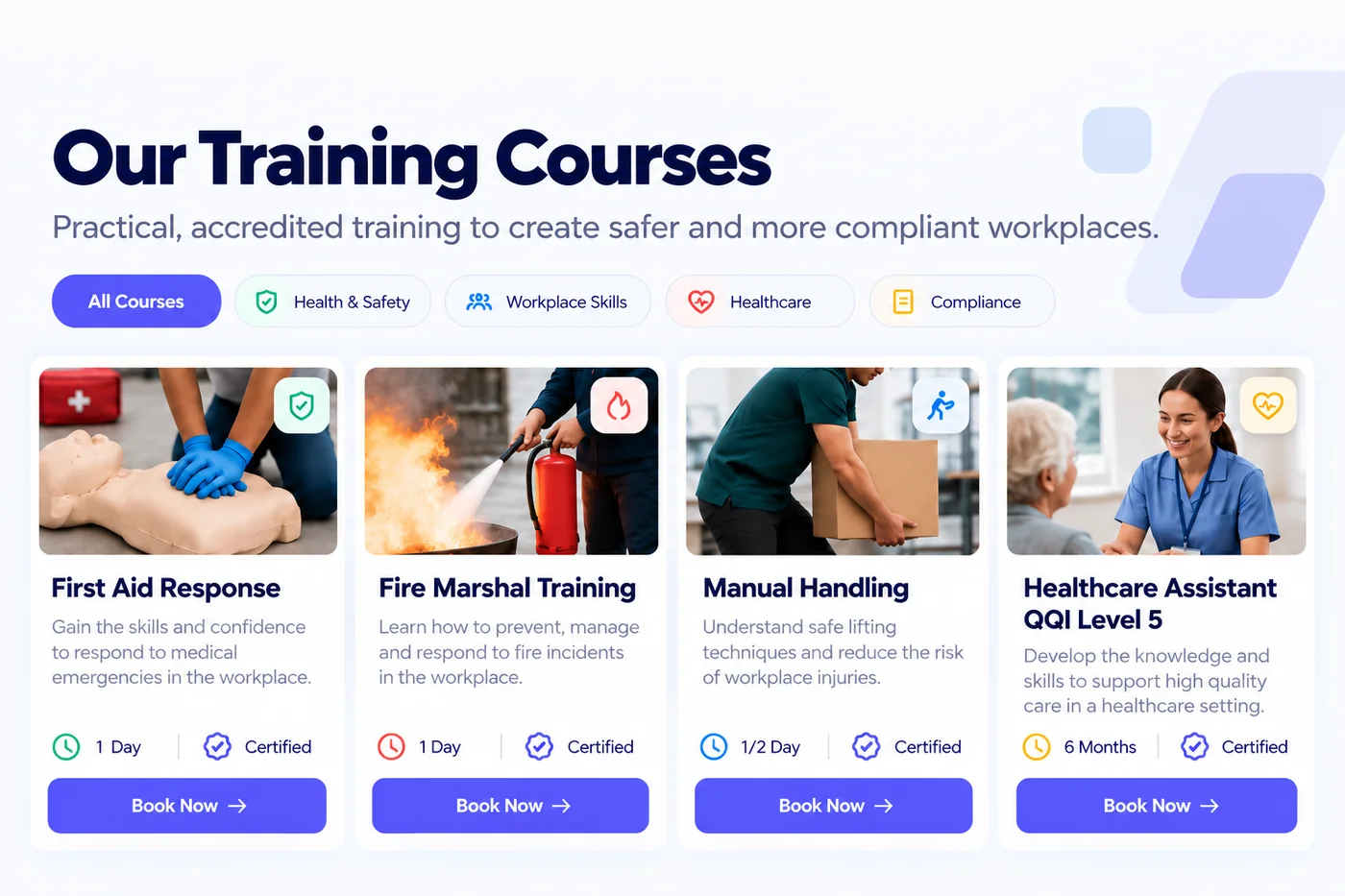
Course catalogue covering the four pillars of Irish workplace compliance

Fig 1 - The Client's course catalogue covered the four pillars of Irish workplace compliance, but almost none of it reached AI generated answers at the start of the engagement.

Audit findings and project challenge

When an HR manager at a Dublin hospital needs to recertify forty staff members in manual handling, they used to search Google, scan the first page of results and pick a provider. In the current pattern they open ChatGPT or see a Google AI Overview panel and ask something like best QQI manual handling training provider Dublin or fire safety training onsite Ireland. The AI returns three or four names, a short comparison and a recommendation. A provider absent from that answer is absent from the decision.

The Squarespace site reflected an earlier generation of brochure web design, with limited visual hierarchy and inconsistent presentation across the catalogue. The audit tested it across keyword visibility, course information depth, structured data, technical SEO and visibility in AI generated answers.

The site ranked for 63 keywords, most of them branded. Commercial queries such as fire warden training Dublin, fire safety course Ireland and first aid training Kildare returned limited or no results from the Client.

Course pages carried between 150 and 250 words of body copy and did not communicate price, duration, accreditation, delivery format, modules, requirements, certification validity or booking steps in a consistent form. Schema was absent from course and service pages, page titles were generic, several pages shared duplicate meta descriptions and internal links were weak. The site had no dedicated location content for its priority cities, and the Google Business Profile and local directory records contained naming, address and phone inconsistencies.

A sampled test across ChatGPT, Google AI Overviews, Perplexity and Gemini returned no visibility across 34 compliance training queries.

The audit also recorded a positioning gap. Competitor course pages worked as complete products carrying price, dates, requirements, accreditation, location and direct booking. The Client's own pages read as brief catalogue descriptions.

A content and metadata refresh could address several individual findings. The deeper problems of catalogue scale, course data consistency, commerce and publishing control fell outside what Squarespace would allow the Client to maintain at pace.

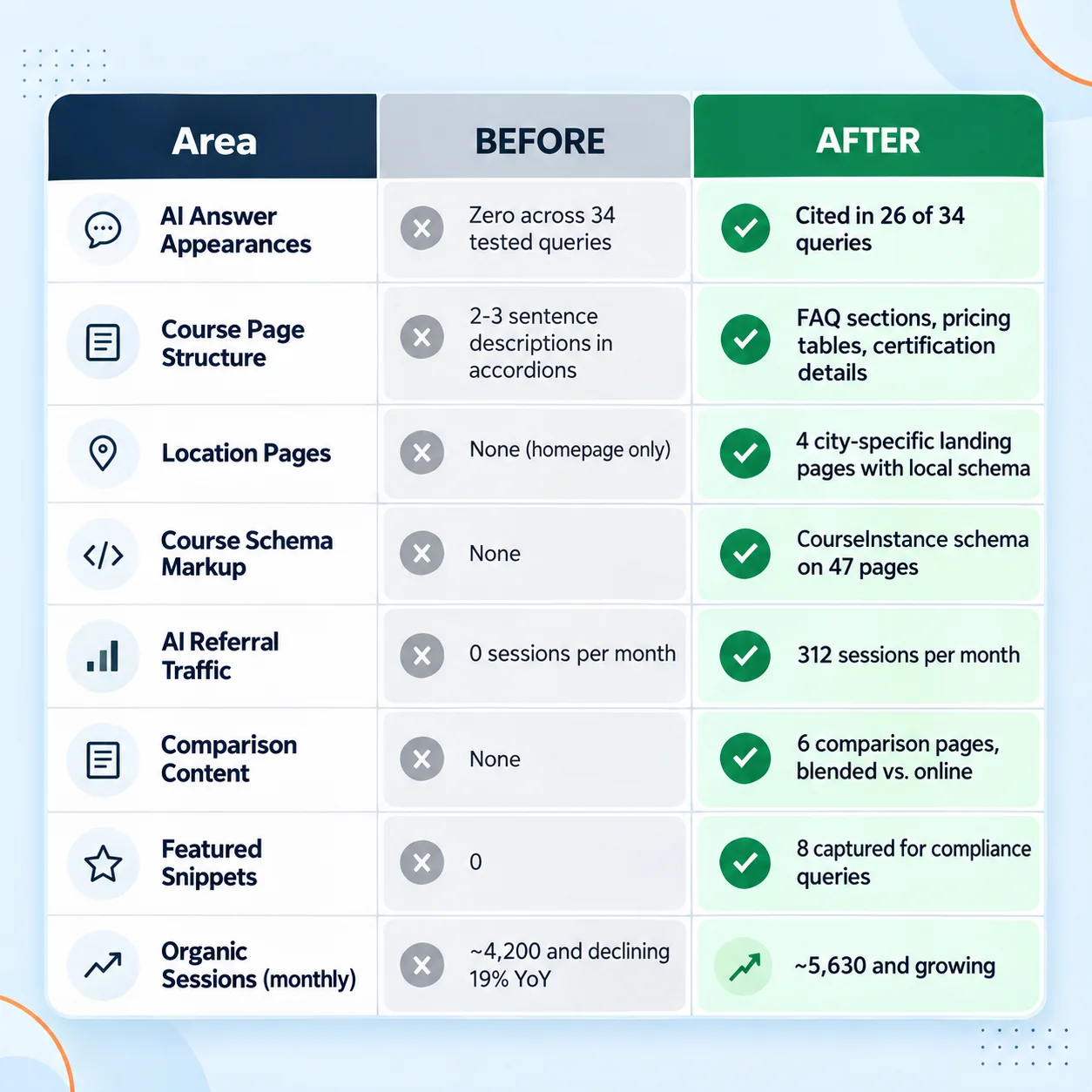
AI visibility before and after, from zero to 26 compliance training queries

Fig 2 - From invisible to cited across 26 compliance training queries across the available post launch period.

Why the existing Squarespace implementation was replaced

The decision was specific to this implementation and to the planned operating model. Squarespace can carry a brochure training site. The Client needed something different.

The planned catalogue covered 141 online courses, 30 offline courses, category hubs, service pages, comparison pages and city service pages. Each course needed a repeatable record covering title, category, delivery format, duration, price, accreditation, certification validity, modules, eligibility, group size and separate booking, trial and login links. The Client needed to manage those fields itself without a developer in the loop.

The existing Squarespace implementation did not provide a consistent structured field model for course records. Bulk CSV mapping and large catalogue imports were difficult to run. Reusable templates were less flexible than the plan required. Schema generation needed stronger development control. The purchasing journey called for WooCommerce, checkout configuration, customer accounts and external course access links. Redirect management, metadata control and technical SEO needed a more open implementation.

Isolated fixes could lift individual pages. They would leave the catalogue, course data, commerce and publishing operations fragmented.

WordPress with Elementor and WooCommerce supported the operating model as a whole, through reusable templates, structured course fields, bulk imports, checkout and account journeys, and direct control over schema, metadata, internal links, redirects, analytics and performance. New courses would inherit the approved GEO and SEO structure through the template system. The decisive argument was maintainability. The rebuild converted recurring SEO and GEO requirements into reusable parts of the publishing system.

Site wide before and after comparison

Each row compares the same axis before and after. Search and AI measurements use the same baseline queries at audit and at the post launch retest.

AxisBefore (Squarespace)After (WordPress with Elementor and WooCommerce)
Course page depth150 to 250 words with inconsistent data47 principal course pages on a structured template with 20 fields
Structured dataNo schema on course or service pagesCourse with nested CourseInstance, FAQ and Organization schema in production
Location contentNo dedicated city coverage pagesFour city service pages representing onsite coverage, no implied physical branches
Decision stage contentNo comparison or format decision pagesSix comparison pages addressing training format decisions
CheckoutHandled through workaroundsWooCommerce catalogue, payment gateway integration, customer accounts and external access links
Catalogue managementManual edits page by page for every catalogue changeCourse records entered once and reused across pages, cards, pricing and schema
PerformanceLighthouse Performance 20Lighthouse Performance 88
Priority course page rankingsPositions 8 to 15 at audit for 14 priority course pages14 priority course pages lifted into the top five
Branded versus non branded profile63 ranked keywords, mostly brandedShift towards non branded commercial queries, see Post launch results
Featured snippets08
AI visibility (same 34 queries)0 of 34 queries returned the Client26 of 34 queries returned the Client in AI generated answers
Direct AI referral sessions per month0Owner confirmed measurement, reported separately from Overview activity
Google AI Overview impressions and clicks0Tracked in Google Search Console on queries where Overviews render

Table 1. The same axes measured at audit and after launch

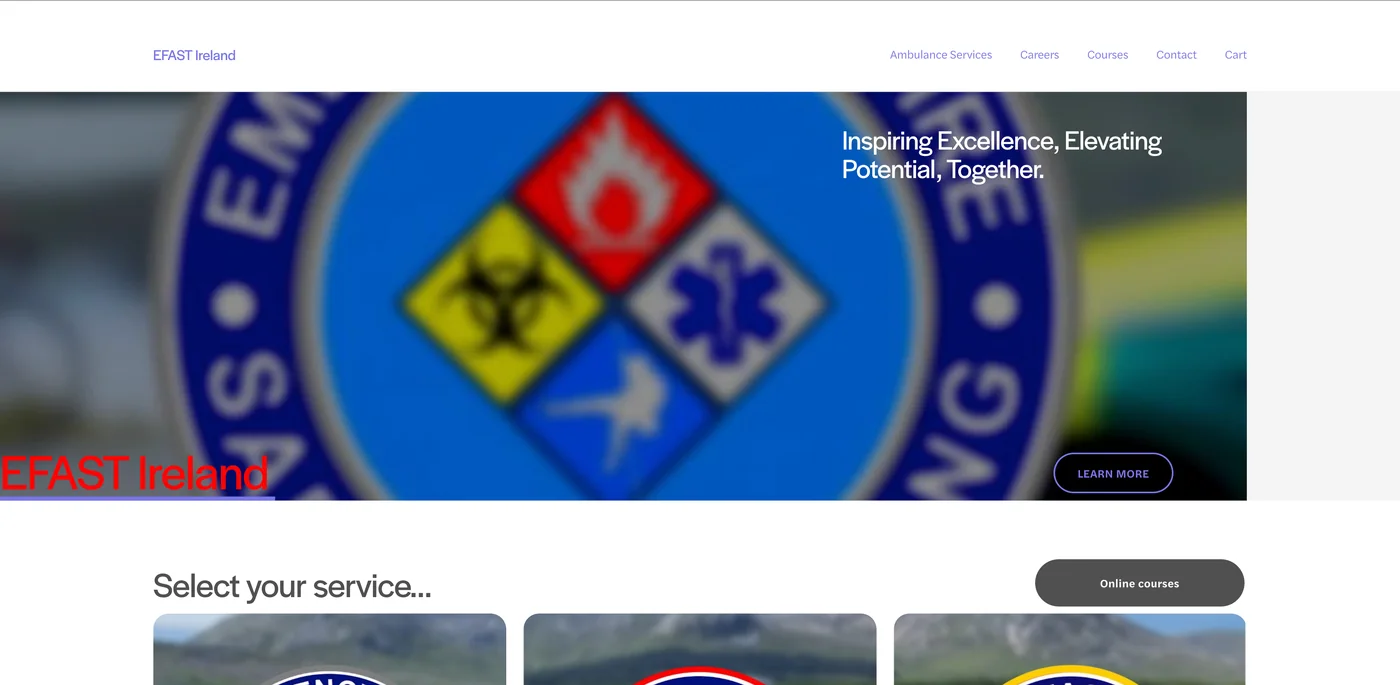
The previous Squarespace homepage before the rebuild
Fig 3 - Before. A brochure layout carrying limited course and service detail.
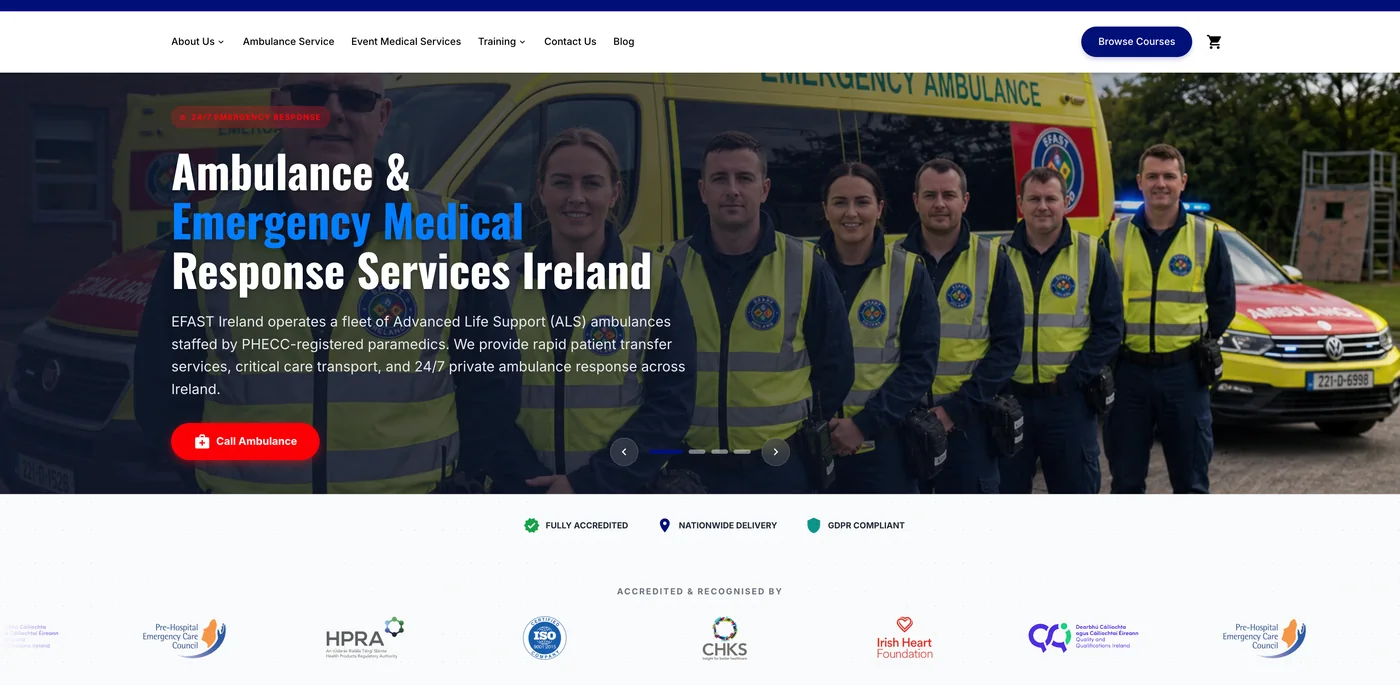
The rebuilt WordPress homepage after the six week active build
Fig 4 - After. A service structure with clear catalogue entry points.

Engagement model and team responsibilities

Three fixed cost phases structured the engagement.

  • Phase #1 - Research, information architecture, page mapping, mockup approval, theme setup, WooCommerce configuration, essential pages and staging.
  • Phase #2 - Navigation and categories, responsive layouts, performance work, metadata, permalinks, security, backups, quality assurance and client sign off.
  • Phase #3 - Catalogue optimisation across 141 online and 30 offline course pages, CSV field mapping and bulk upload, image optimisation, internal linking, schema, redirect mapping, analytics, Google Business Profile work and live deployment coordination.

Each phase closed on client sign off.

Core roles on the engagement

RoleResponsibility
Project managerZoho Projects workspace via MCP, task ownership, approvals and status updates triggered by deployments
Marketing and SEO lead (development owner)Audit, keyword strategy, GEO brief, prompt engineering and review of Antigravity generated templates, WooCommerce and course fields
SEO analystLive SEMrush research piped into Antigravity through MCP during production
DesignerGoogle Stitch mockups, Google Veo banner imagery and Adobe Photoshop finishing
Technical leadCode review, schema validity, security, migration safety and merge gate over Antigravity output
DevOpsStaging, GitHub CI pipeline, deployment automation and backups
Content writerCourse, service and comparison content written inside Antigravity with live SEMrush context
Quality assuranceFunctional, responsive, checkout, schema and performance testing of agent output

Table 2. Who owned what across the engagement

The content writer and quality assurance specialists joined once the keyword map, templates and first course pages were available. One technical lead held the review gate across the engagement.

Architecture decisions

Four architectural decisions shaped the build. Each was recorded, discussed in technical review and approved by the Client before implementation.

The course record as the source of truth

Course facts were entered once against a structured record and reused across course pages, catalogue cards, pricing displays, accreditation sections, booking flows and schema. The record carried roughly 20 fields covering title, category, delivery format, duration, price, accreditation, certification validity, modules, eligibility, requirements, group size, trial link, purchase link, login link, learning materials, popularity, featured image, metadata and schema values.

Catalogue scope and principal page scope kept distinct

The broader catalogue covered 141 online and 30 offline course pages. Forty seven principal course pages received the complete structured template with nested Course and CourseInstance schema. The distinction concentrated GEO investment on commercially priority courses while the wider catalogue retained consistent coverage.

City pages representing service coverage

Four city pages described onsite availability in the priority markets, covering Dublin, Cork, Galway and Limerick. Each page covered course availability, typical industries served, scheduling and travel. None claimed physical branches. Service schema with areaServed identifying the city recorded the service area and course list, avoiding the implied physical presence of LocalBusiness.

Comparison content for decision stage queries

Six comparison pages addressed decisions corporate buyers face when selecting training. Each page followed the same template with a direct answer paragraph, a comparison table and a regulatory context section referencing Health and Safety Authority guidance and QQI assessment requirements.

Week one setup

Week one converted the signed scope into an executable production plan. The Statement of Work and payment approval were already complete.

The project manager stood up the Zoho Projects workspace with the three phases as the delivery structure. Tasks carried owners, due dates, dependencies, approval points and acceptance criteria. MCP connected Zoho Projects to the production environment so Antigravity could reference scope and update ticket status after deployment.

The SEO team opened the baseline inside SEMrush. Branded and commercial keyword visibility, competitor pages, search intent, course content gaps and the AI answer baseline were recorded as the audit evidence. The marketing and SEO team translated the research into the proposed information architecture. Every planned page carried a purpose, a search intent, a keyword group, a URL and a content requirement. The Client confirmed which business areas needed the greatest visibility.

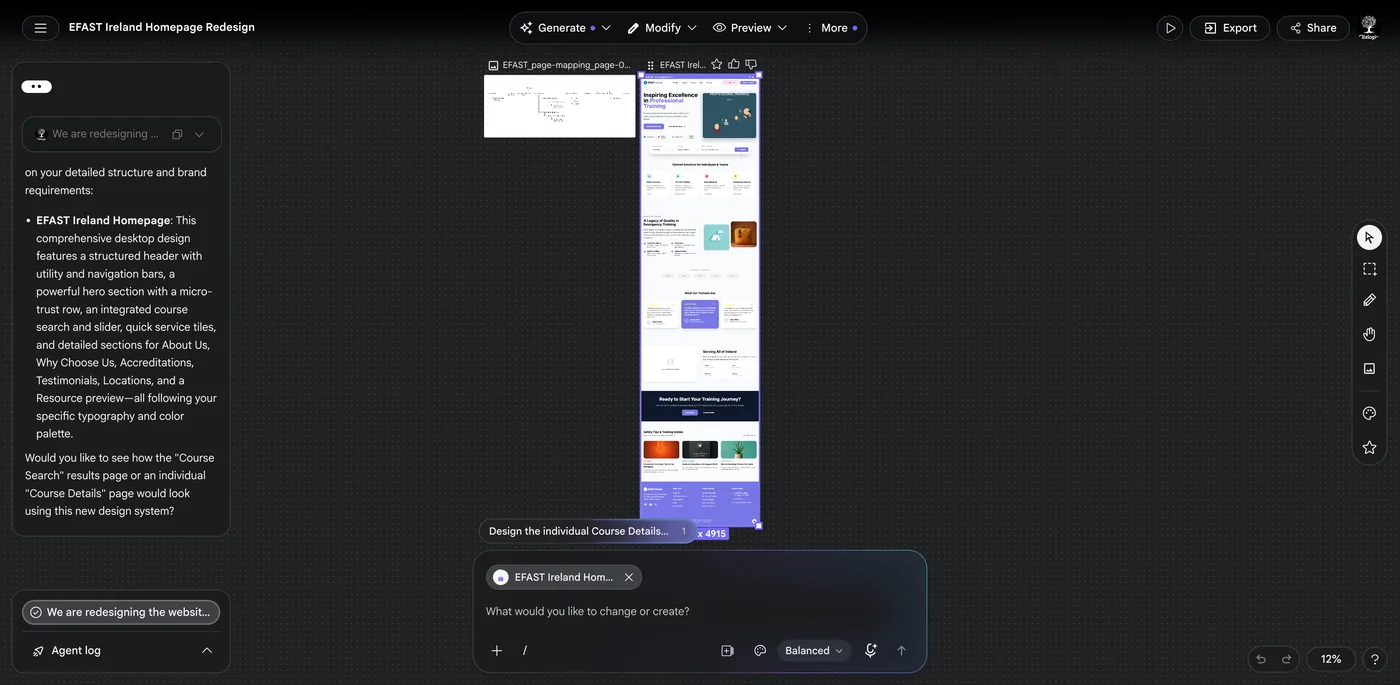
The designer and the marketing and SEO lead worked together in Google Stitch to generate a visual direction from the approved information architecture.

Google Stitch workspace during sitemap and homepage design

Fig 5 - The Google Stitch workspace during sitemap and homepage design, with the agent chat visible.

The first direction overweighted training. Client feedback brought ambulance services, event medical cover, emergency response and consultancy into stronger positions. The Client approved the revised mockup before production began.

Once the mockup was approved, MCP moved the code and design context into Google Antigravity. The dedicated workspace for the engagement contained project rules covering the information architecture, WordPress development standards, SEO requirements, schema implementation, content facts and the review process. Week one closed when the information architecture, course model, keyword map, mockup, Zoho Projects backlog and Antigravity workspace were all in place.

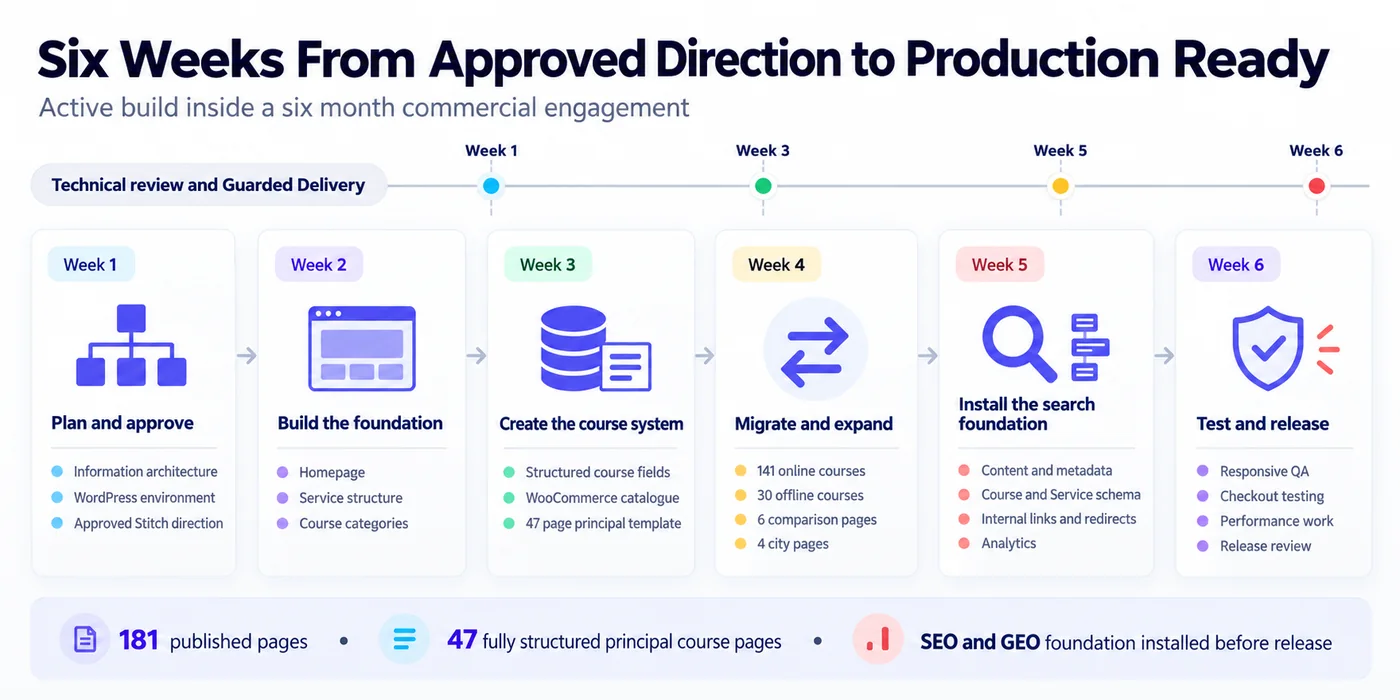
Six week delivery timeline

WeekDelivery focus
1Information architecture, WordPress environment and approved Stitch direction
2Homepage, six service division structure and course category hubs
3Structured course fields, WooCommerce catalogue and the 47 page principal course template
4Migration of 141 online and 30 offline course pages, six comparison pages and four city service pages
5Content, Course, CourseInstance and Service schema, metadata, internal links, redirects and analytics across the catalogue
6Responsive QA, checkout testing, performance work and release review across all 181 published pages

Table 3. The six week active build

Six week production timeline with technical review checkpoints

Fig 6 - The six week active build moved from approved direction to production readiness with technical review checkpoints throughout delivery.

Discovery, approvals, phase handovers, missing inputs, hosting coordination and deployment extended the calendar engagement to six months.

How the connected agentic workflow operated

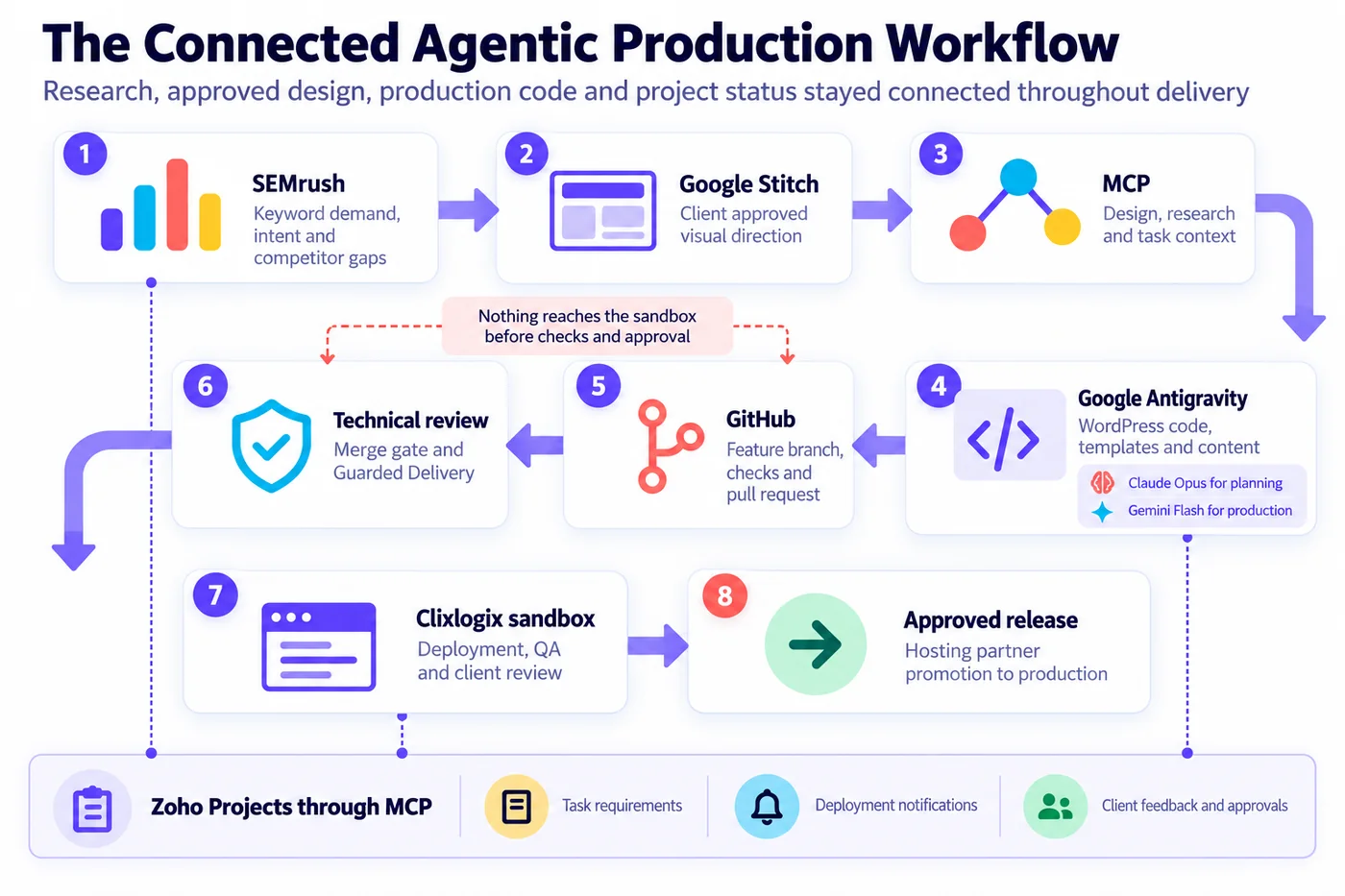
The build is a Vibe Coding Development engagement. The team closest to the research shipped the production site using AI tools built into their workflow. SEMrush, Google Stitch, MCP and Google Antigravity ran as one connected process.

Connected agentic workflow from SEMrush research to approved release

Fig 7 - Research, approved design, production code, technical review and project status remained connected from planning through release.

SEMrush informed the pages as they were written

SEMrush was connected to the production environment through MCP. Keyword demand, competitor pages, search intent and content opportunities remained available while pages were being built and content written. Research informed titles, URLs, headings, metadata and internal links in production rather than inside a separate planning document.

Antigravity ran the production environment

The team worked in a dedicated Antigravity workspace built for this engagement, carrying its own instructions, rules and connected services. The WordPress codebase lived in the team's local development environment and in GitHub. Antigravity read and wrote the same PHP, templates, styles, scripts and configuration files that would become the running website. Database and structural changes shipped as atomic migrations, independently applied and reversible.

Four MCP connections carried production context

The Antigravity workspace connected to four systems through MCP. Zoho Projects supplied task requirements, phase gates, acceptance criteria and delivery status. SEMrush supplied keyword demand, competitor pages, search intent and content opportunities. Google Stitch supplied the approved visual direction, which Antigravity read before translating it into the WordPress implementation. GitHub managed the codebase, change history, review visibility and recovery path for every approved change.

The model split for different work

The team selected the model according to task complexity. Claude Opus handled planning, architecture and decisions that crossed design, development, content and SEO. Gemini Flash handled repetitive production work such as applying established templates, preparing structured page content and completing defined implementation tasks. A typical task began with Claude Opus preparing the approach, continued with Gemini Flash executing production work at speed and closed with team review before deployment.

Human review controlled release

Antigravity accelerated planning, coding and content production. The Clixlogix team reviewed implementation plans, code changes, page output, SEO elements and browser results. Production deployment happened only after the relevant checks and approvals were complete.

What we built across the four tracks

A common first move for GEO is to add FAQ schema to existing pages. That move does not reach the underlying problem when the existing pages are structurally uncitable, as the Client's were, and when every change requires hand editing a brochure CMS. Four tracks of implementation ran in parallel on the new WordPress foundation.

Course page restructuring for passage level citability

Every one of the 47 principal course pages needed to answer the questions HR managers actually type into ChatGPT when they are sourcing training for their teams.

Six HR compliance managers were interviewed at three of the Client's existing corporate accounts, two hospital groups and one construction firm, to establish what they actually searched for. The questions were consistent across the sample.

  • Is this course QQI or PHECC accredited?
  • How long does the course take?
  • Can you deliver it at our site?
  • What is the price per person for a group booking?
  • How does this compare to doing it online?
  • How often do staff need to recertify?

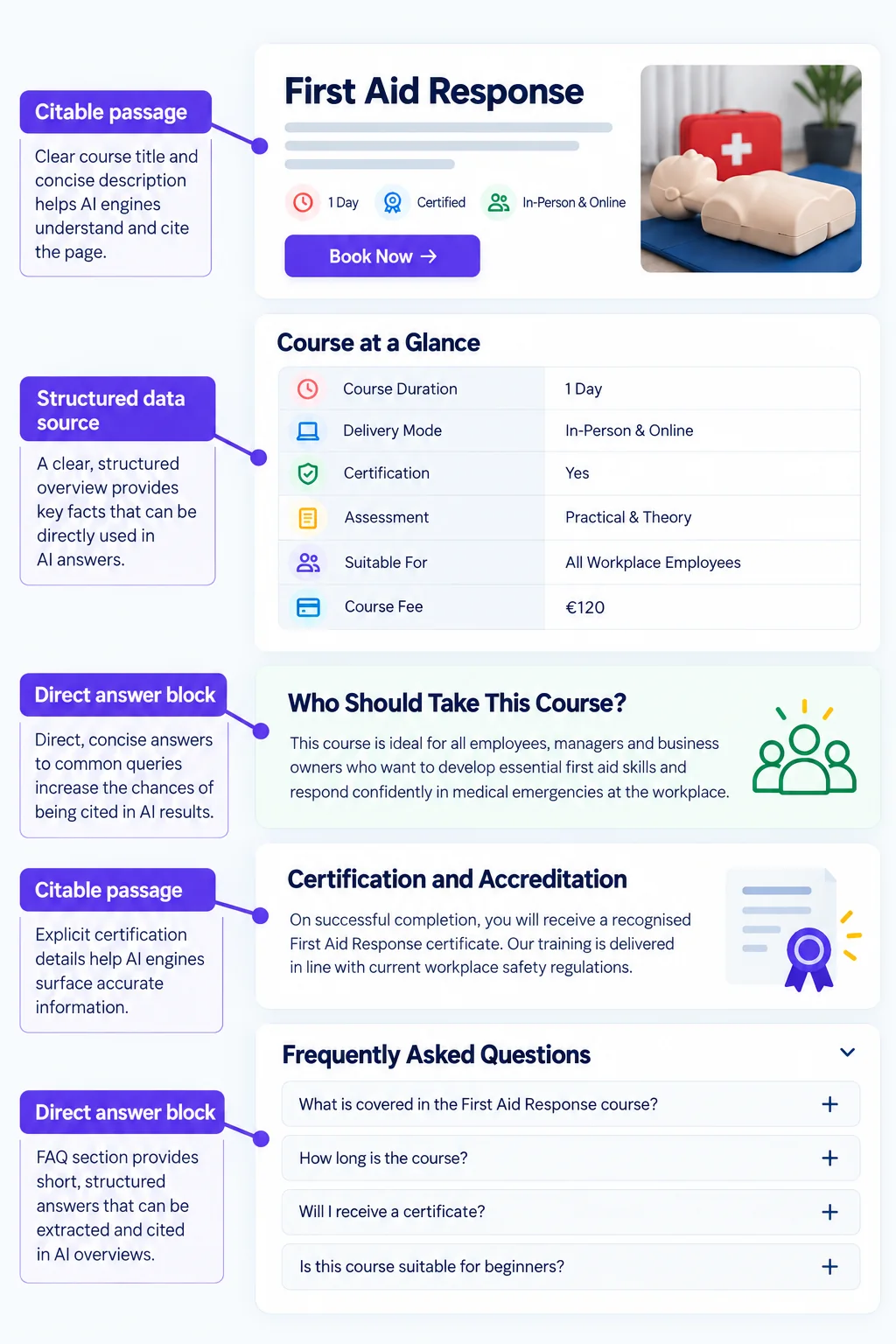
Every course page was rebuilt around these six questions. Each page now carries a structured Course at a Glance table, a Who Should Take This Course direct answer paragraph, a Certification and Accreditation section explaining which awarding body signs the certificate and what it qualifies the holder to do, and an FAQ section with five to eight question answer pairs drawn from the HR manager interviews.

The writing rule was simple. Every paragraph had to be extractable as a standalone answer. No paragraph needed its predecessor to make sense. That is what passage level citability means in practice. It is about whether an AI can pull a three sentence block from the page and present it as a complete answer without losing meaning.

Restructured course page layout built for passage level citability

Fig 8 - Every section of the restructured course page was built to be independently extractable by language models.

Location pages for onsite training across four cities

The Client trained learners in Dublin, Cork, Galway and Limerick but the previous website carried only a single Areas We Cover paragraph on the About page. When HR managers asked ChatGPT for options on a search such as fire safety training Cork, the Client was not cited. The site held no Cork URL, no Cork schema and no Cork content for the AI to reference.

Dedicated landing pages were built for each city. Each page covered the industries that most commonly book onsite training in that city, construction and hospitality dominating in Cork, healthcare in Galway, hospitality and tech campuses in Dublin and manufacturing in Limerick. Each page also described typical group sizes, travel logistics for the training team and a booking enquiry form specific to that city.

Each location page carried Service schema with the city as areaServed, the service area radius, accepted certifications and the courses available for onsite delivery there. The Service type suited the lack of physical branches better than LocalBusiness would have. One useful detail was a Recent Onsite Clients section listing the industries, not company names, of recent group bookings. A line reading hospital group, 34 staff, Manual Handling and Fire Safety works harder for both humans and AI than a general claim of nationwide coverage.

Course schema and structured data implementation

Each of the 47 principal course pages carries a Course entity as the principal object, with one or more CourseInstance children for the delivery occurrences. The Course entity holds the course name and description, provider name and URL, educational credential awarded including certification body (QQI, PHECC, Irish Heart Foundation or other sector specific awarding body with their official URLs), total time required in ISO 8601 format and language of instruction. Each nested CourseInstance holds the delivery specifics: courseMode (onsite, online or blended), scheduled or on request start and end dates, location for onsite instances, course workload for that instance, maximum attendee capacity and the offer with price and currency (EUR). Recertification interval is published as visible page content rather than a direct Course property, since schema.org does not define a dedicated field for it and emitting it as an unsupported property risks confusing crawlers.

Schema Has Limits

Structured data describes what the vocabulary has agreed to describe, and no more. schema.org defines hasCourseInstance for delivery occurrences and educationalCredentialAwarded for the qualification, and it defines no property at all for a recertification interval. Publishing that interval as visible page content, rather than inventing an unsupported property, keeps the markup valid and still answers the question buyers ask.

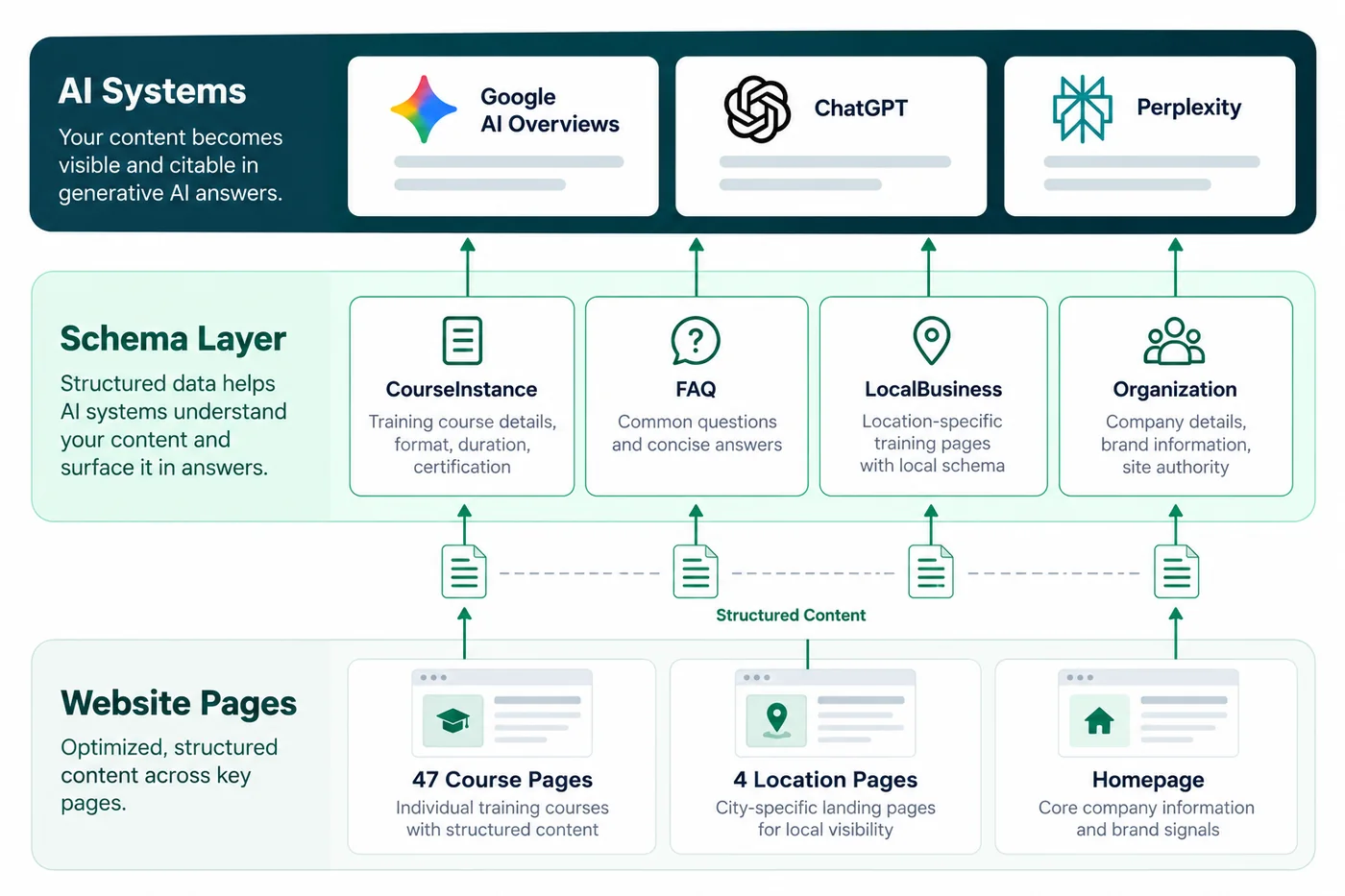
FAQ schema was generated from the FAQ sections on each page. FAQ schema provides a structured representation of the visible questions and answers already on the page. Google deprecated the FAQ rich result for most sites in 2023, so the schema is not expected to drive a rich snippet here. The four city pages carry Service schema with areaServed identifying the city and the service area radius, with no implied physical branch. The homepage carries Organization schema. All schema families emit from the same structured records, keeping the data layer consistent across the catalogue.

Course, CourseInstance, FAQ, Service and Organization schema architecture

Fig 9 - Nested Course and CourseInstance entities, FAQ, Service and Organization schema gave AI systems machine readable evidence of courses, locations and accreditations.

Comparison content for decision stage queries

When someone asks ChatGPT whether to do fire safety training online or in person in Ireland, the AI needs comparison content to generate a useful answer. A site that only talks about its own courses gives the AI nothing to work with for the comparison frame. It will cite whoever has published content that directly compares the two options.

Six comparison pages were built on a shared template, each addressing a real decision HR compliance managers face.

  1. Blended Fire Safety Training versus Online Only, what Irish employers need to know
  2. Onsite Manual Handling Training versus sending staff to a training centre
  3. QQI Level 5 Healthcare Support, classroom versus online versus blended delivery
  4. First Aid Response (FAR) Refresher, PHECC requirements for onsite versus online
  5. Compliance Training for Nursing Homes, why the HSA expects practical assessment
  6. Fire Marshal Certification in Ireland, comparing your options

The Legal Trigger

Workplace compliance training is bought against a statutory duty, not a preference. Buyers in Ireland are meeting an obligation under the Safety, Health and Welfare at Work Act 2005. That is why comparison content earns its place. The buyer is not choosing whether to train, they are choosing a delivery format that will satisfy the obligation, and appearing in the AI generated answer at that point is the booking.

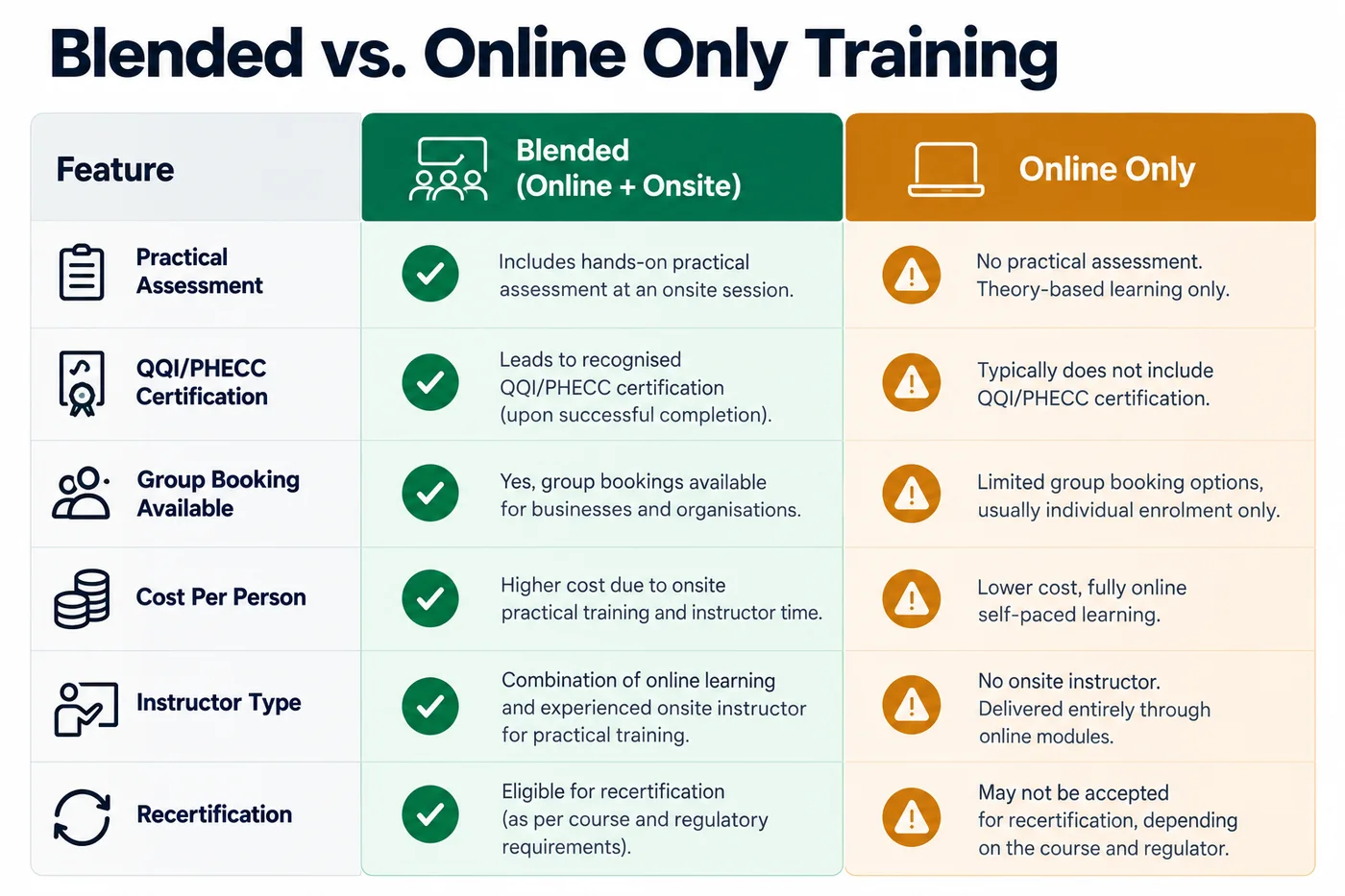
Each page followed the same structure. A direct answer paragraph at the top states the conclusion, that the Client's blended model is the better choice for employers who need verified practical competency. A comparison table carries columns for delivery format, practical assessment included, certification body requirements, cost per person range and recertification compatibility. A detailed section explains the regulatory context, referencing Health and Safety Authority guidance and QQI assessment requirements that explicitly mention practical skill demonstration.

Comparison of blended training against online only delivery

Fig 10 - Comparison content gave AI systems the structured data needed to cite blended training as the stronger option for workplace compliance.

Boundaries and page harness

The harness around the agent output worked through three parts. The marketing and SEO lead defined the questions every page needed to answer. The technical lead translated those into WordPress structure, field validation and deployment checks.

Written convention

The project workspace held an AGENTS.md file at the repository root, loaded into the agent's system prompt on every session through its trigger: always_on setting. The file encoded the approved information architecture, WordPress development standards, SEO requirements, schema implementation, the HR manager interview themes and the forbidden list.

Modular rules sat under .agents/rules/ with scoped triggers. Rules affecting the course template and the schema emission function used glob triggers to activate automatically when those files were being edited. Task templates sat under .agents/skills/ as separate .md files, one per task type, each carrying its save location, approval gates and rework loop.

New rules landed as additions to the files rather than as side conversations.

WordPress template and field structure

A single Elementor template rendered all 47 principal course pages. Six named section parts sat in fixed order.

  • Course at a Glance table (duration, certification body, recertification interval, group pricing band, delivery formats)
  • Who Should Take This Course (direct answer paragraph)
  • Certification and Accreditation (awarding body, qualification scope)
  • Course Modules (ordered list)
  • FAQ (five to eight question answer pairs)
  • Enquiry and booking (price band or quotation route, access links)

Antigravity could edit section content. It could not add or remove section parts.

Advanced Custom Fields (ACF) held the structured record behind each page. Required fields were marked required, field types locked the data shape (number for duration, select for category, repeater for modules) and conditional logic blocked publication of partially populated records.

A single schema emission function in the theme generated Course, CourseInstance, FAQ, Service and Organization JSON-LD from the ACF values. Antigravity had read access to the function and could reference its outputs. It could not modify the function.

Automated validation

Three checks ran automatically against every change.

  • Backend field validation - On post save, a WordPress hook verified that every required ACF field was populated, that every value matched its type and that the schema emission function returned valid JSON-LD. A save failed with a blocking admin notice if any check failed.
  • Frontend template validation - A headless Chrome smoke test ran against every course page before deploy. It confirmed the six section parts were present in the fixed order, that no section was empty, that the Course at a Glance table carried all five fields and that FAQ held between five and eight question answer pairs.
  • Deployment harness - A GitHub Actions pipeline ran on every push. PHP lint, WordPress Coding Standards (WPCS), migration dry run against a copy of the sandbox database, structured data validation across all 47 principal course pages and a Lighthouse Performance check against a baseline. A failure blocked promotion to the sandbox.

What the harness enforced

Antigravity could generate content for each section, draw on live SEMrush research for keyword alignment and refine phrasing against the HR manager interview themes. It could not re-order sections, introduce new section types, bypass the FAQ minimum, alter the schema emission function or submit a change that failed any automated check.

Each new course followed a shape the research had already sketched and the technical lead had already marked up. The agent produced the content inside the harness. The harness produced the consistency.

Technical lead review gate

Clixlogix applies its Guarded Delivery method across vibe coded builds. On this engagement the technical lead held the merge gate.

When the technical lead became involved

The technical lead reviewed implementation plans before work began on any task affecting architecture, shared templates, WooCommerce, structured data or the database. Completed changes were reviewed before deployment to the sandbox. A broader review preceded each phase release. Routine content entry did not require code review unless it changed a shared component or produced an automated validation failure.

What the technical lead checked

Review covered PHP quality, WordPress conventions, template behaviour, migration safety, rollback readiness, database integrity, security, responsive behaviour, browser compatibility, performance and regression risk. Specific checks included WooCommerce behaviour, enquiry and checkout journeys, course templates, structured data validity, metadata output, internal linking and the correct rendering of course information across page types.

One page, end to end

Event medical cover is one of the Client's six service areas, supplying PHECC registered paramedics, ambulances and event safety management at public events. It is the clearest illustration of the whole workflow, because it went from a single card on the homepage to a dedicated page inside one cycle. The sequence below follows that one page from the January audit through to the post launch sample.

Before

Event Medical Services appeared as one of three service cards on the Squarespace homepage. The homepage carried roughly 70 words of meaningful body copy. The Event Medical Services card carried about 25 words on planning, logistics and medical coverage. The page did not describe available medical personnel, ambulance capability, geographical coverage, accreditations, event types, compliance standards or the enquiry process. The January audit recorded the Client at page 4, position 34 for the term event medical services.

The research input

The approved SEMrush keyword map identified event medical services as one of the strongest opportunities available to the site. The term carried an estimated 5,000 monthly searches and low competition. Competitor review found that stronger providers were winning visibility with full service pages describing personnel, coverage, accreditations, planning requirements, frequently asked questions and quotation routes. The research led Clixlogix to give Event Medical Services its own dedicated page.

The structured record

Client inputs supplied information the old homepage could not present, including PHECC Governance Framework accreditation up to Advanced Paramedic level, ISO 9001 certification, CHKS standards, HPRA licensing for the administration of controlled medications and service coverage spanning all 26 counties of the Republic of Ireland.

The new page explains that the Client provides PHECC registered Emergency Medical Technicians, Paramedics and Advanced Paramedics. It covers event medical cover, private event support, ambulance hire, event safety management and nationwide delivery. Pricing remained quotation based because the required personnel and equipment depend on event size and risk. The page explains the service clearly enough for a potential buyer to understand what they are requesting.

After

A search sample taken in the first week of September 2026 placed the new page at position 3 for the term event medical services, the same term used at the January audit baseline and the second distinct provider domain in the results. Within weeks of deployment, UTM referral data showed visits from ChatGPT. This was the first observed evidence that the new structured content was being discovered through an AI platform. Enquiries also increased during the same early post launch period.

The defensible result is that the page achieved prominent organic visibility, began receiving measurable ChatGPT referral traffic and contributed to an upward movement in enquiries after launch. The available tracking does not provide a reliable page specific booking total, so no exact figure is attached to this page.

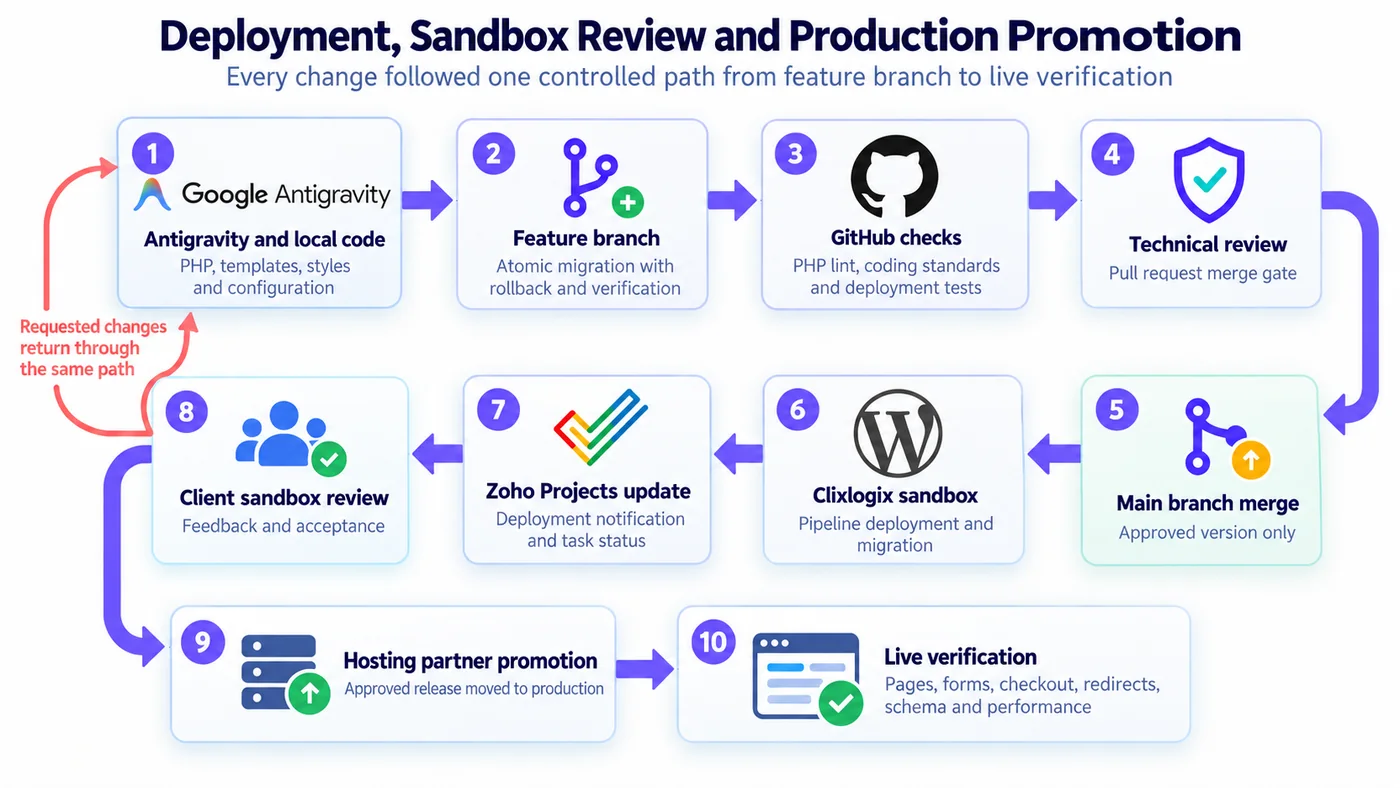
Deployment, sandbox review and production promotion

Changes followed one documented path from development to production, with the technical lead merge gate placed between the feature branch and the main branch. Antigravity wrote approved PHP, templates, styles and configuration into the local codebase on a feature branch for the change. The feature branch was pushed to GitHub with pipeline checks running on the branch itself. Database and structural changes were prepared as atomic reversible migrations with a forward step, rollback plan, historical data fixtures and verification query.

The technical lead reviewed the change on the feature branch through a pull request before approving the merge to the main branch. Only after the merge did the pipeline deploy the approved version to the WordPress installation on the Clixlogix hosted sandbox. Any required migration was applied. Automated notifications and Zoho Projects task updates fired on deployment.

Client review happened inside the sandbox. Email conversations with the Client were connected to the Zoho Projects feed so feedback and approval decisions stayed attached to the work being reviewed. Requested changes went back through Antigravity, technical review and the same GitHub pipeline.

The Client's hosting partner handled the final promotion to the live WordPress environment at launch. Clixlogix supplied the approved release and confirmed the sandbox version had passed review and client acceptance. After promotion, Clixlogix ran live checks on page rendering, links, forms, WooCommerce behaviour, structured data, metadata, redirects and performance.


Deployment path from feature branch through sandbox review to production promotion

Fig 11 - Every approved change moved through branch checks, technical review, sandbox deployment, client acceptance, hosting partner promotion and live verification.

Where the engagement struggled

AreaWhat surfacedHow it was handled
Business representationFirst Stitch direction gave training too much prominenceDesign revised to strengthen ambulance services, event medical cover, emergency response and consultancy
Course taxonomyCatalogue contained overlapping categoriesSEMrush research and client approval defined the final hierarchy
Missing inputsSeven online courses lacked final pricing or access links at launchSeven course pages launched with nonessential pricing or access information temporarily omitted. The missing fields were added as the Client supplied the final inputs. All seven pages remained within the confirmed 181 page total
Nationwide positioningThe Client serves all 26 counties from one baseCity pages described onsite availability without claiming physical branches
External learning systemsSome course access remained outside WordPressConfigurable purchase, trial and login links connected the journeys
FormsSMTP configuration affected notification deliveryStored entries and email delivery were reviewed separately

Table 4. What surfaced during delivery and how it was handled

Results

The audit opened in January 2026. The rebuilt site went live on 6 July 2026 after six weeks of active production inside a six month commercial engagement. The results below cover the available post launch period through the first week of September 2026, approximately two months. Every search and AI figure is an owner confirmed measurement taken by the Client's team.

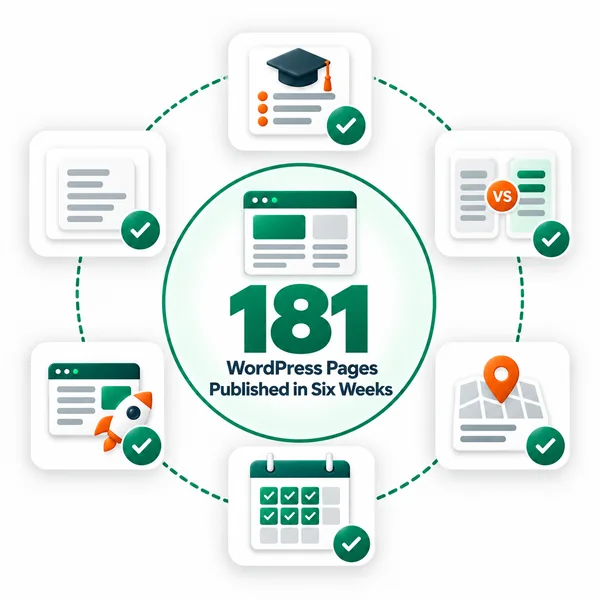
181 pages published in six weeks

181 pages published in six weeks

141 online courses, 30 offline courses, six comparison pages and four city pages at release.
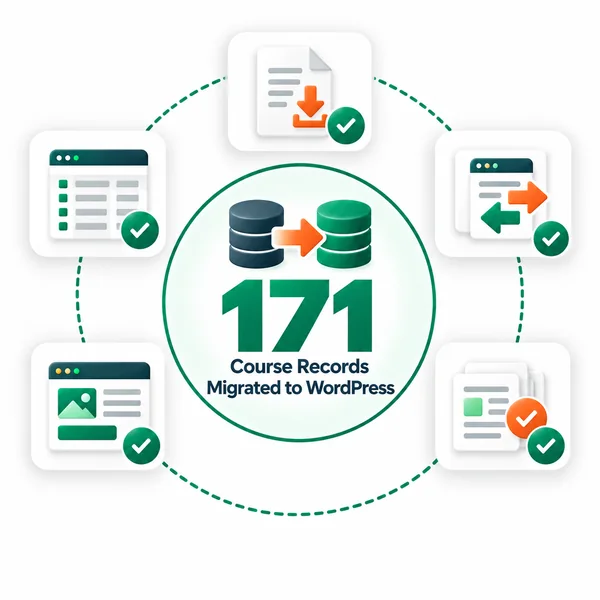
171 course records migrated

171 course records migrated

Course records moved out of Squarespace into structured records separated from presentation.
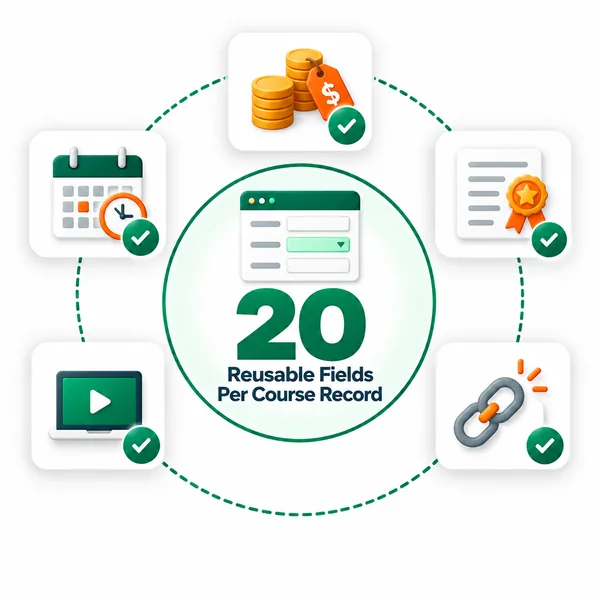
20 reusable fields per course

20 reusable fields per course

One record feeds page content, catalogue cards, pricing displays and the structured data.
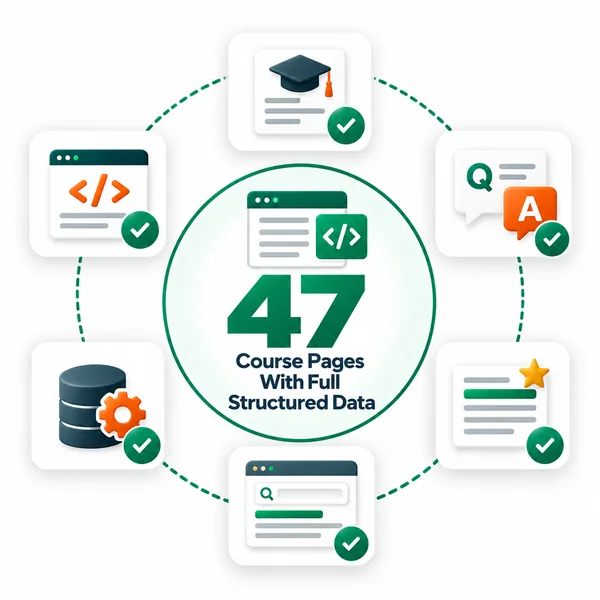
47 course pages with full schema

47 course pages with full schema

Every principal course page carries Course, nested CourseInstance and FAQ structured data.
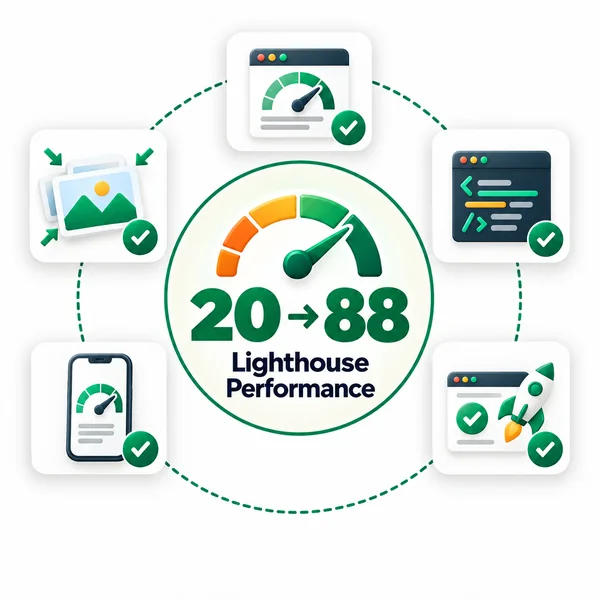
Lighthouse Performance 20 to 88

Lighthouse Performance 20 to 88

Image work, shared templates and pipeline checks raised the score from 20 to 88.
WooCommerce journeys went live

WooCommerce journeys went live

Catalogue, payment gateways, checkout, customer accounts and external course access links.
Cited in 26 of 34 AI answer queries

Cited in 26 of 34 AI answer queries

The 34 audit queries were retested after launch and 26 returned the Client in AI answers.
AI assisted traffic grew from zero

AI assisted traffic grew from zero

A composite of GA4 AI referrals and Search Console activity reached 312 a month.
34 per cent organic session recovery

34 per cent organic session recovery

Monthly organic sessions recovered from roughly 4,200 and falling to 5,630 after launch.
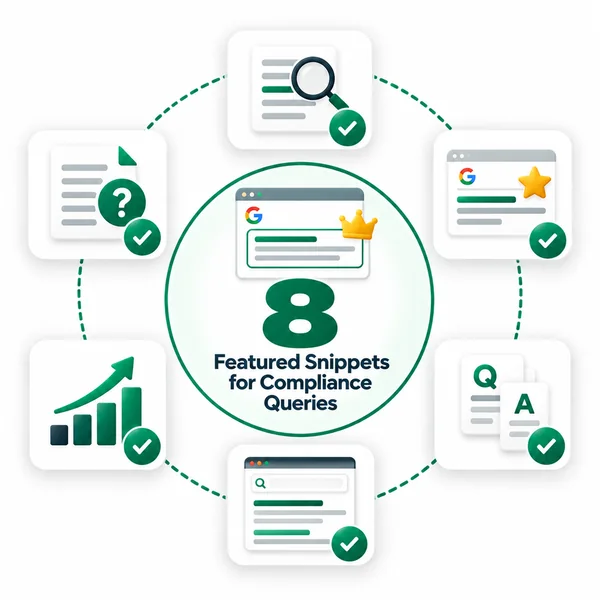
8 featured snippets for compliance

8 featured snippets for compliance

Eight Irish compliance training queries now return the Client content in position zero.
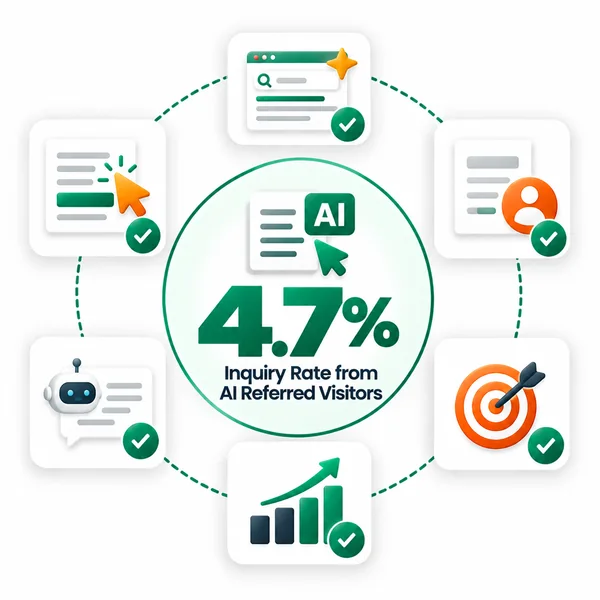
4.7 per cent enquiry rate from AI

4.7 per cent enquiry rate from AI

Direct AI referral sessions enquire at 4.7 per cent against a 2.1 per cent organic baseline.

What the client can do now

The Client manages course prices, durations, accreditations, modules, access links, learning materials, certifications, metadata, images and course prominence directly from WordPress. New courses follow the structured template without a developer in the loop. Future comparison and service pages use the approved formats. SEO and GEO requirements live inside the publishing system rather than needing separate corrections after each publication cycle.

Technologies and Tools

AreaTechnology
Legacy platformSquarespace (replaced in the rebuild)
Website platformWordPress with a custom theme, Elementor, WooCommerce, PayPal and Stripe
Agentic environmentGoogle Antigravity, with MCP into Zoho Projects, SEMrush, Google Stitch and GitHub
AI modelsClaude Opus for planning and architecture, Gemini Flash for repetitive production work
ResearchSEMrush, piped into production live through MCP
Design inputsGoogle Stitch mockups, Google Veo banner imagery, finished in Adobe Photoshop
Delivery and source controlGitHub with a continuous integration pipeline, Zoho Projects for delivery state and phase gates
Structured dataCourse, nested CourseInstance, FAQ, Service and Organization JSON-LD from one shared record
MeasurementGoogle Analytics 4, Google Search Console, Bing Webmaster Tools and Google Business Profile
Delivery governanceGuarded Delivery with a technical lead merge gate

Table 5. Technologies and tools across the engagement

Services Delivered
Vibe Coding Development, WordPress Development, WooCommerce Development, Technical SEO, Local SEO, Web Design, Generative Engine Optimisation, Answer Engine Optimisation, Content Strategy
Team Composition
Project Manager, Marketing and SEO Lead, SEO Analyst, Designer, Technical Lead, DevOps Engineer, Content Writer, QA Engineer

Have a question for our team or need help with your project?

Our team can share client references, scope your project, and answer any question about your delivery.

File should not exceed more than 20MB
🔒 SECURE SSL ENCRYPTION

Related Case Studies

More engagements where our delivery teams shipped similar outcomes for clients across industries. Read on for context on the patterns we reused, the trade offs we navigated, and the metrics that landed in production.

Guarded Delivery around a vibe coded product

Taking a Vibe Coded US GLP-1 Prototype to Production

Mobile App Development Digital Engineering Devops Consulting Service Healthcare & Life Sciences
Zoho CRM and multimodal AI stack for a New York independent home insurance agency

Zoho CRM Workflow and Multimodal AI Stack for a New York Independent Home Insurance Agency

Digital Engineering Zoho Generative AI & ML Consulting Service Enterprise Software
View All Vibe Coding Development Case Studies
Company
  • About Us
  • Our Team
  • How We Work
  • Culture & Diversity
  • Mission, Vision & Values
  • Security & Compliance
Explore
  • Case Studies
  • Solutions
  • Reviews
  • Partner With Us
  • Careers
  • Contact Us
  • Blogs
  • Latest Zoho Updates
Services
  • AI Software Development
  • AI Eval Framework
  • Vibe Coding Development
  • Vibe Coding Cleanup
  • ERP Services
  • CRM Services
  • Zoho Services
  • Zoho Consulting
  • Low Code Development
  • SEO Services
  • SEO Reseller
  • SEO Guarantee
  • Marketing Automation
  • AI Video Production
  • All Services
Industries
  • Healthcare
  • Banking & FinTech
  • Retail
  • Manufacturing
  • Energy & Utilities
  • Automotive
  • Real Estate
  • Agriculture
  • Beauty & Wellness
  • Sports & Fitness
  • All Industries
Follow Us
  • 12,272 Likes
  • 2,831 Followers
  • 4.2 Rated on Google
  • 22,526 Followers
  • 4.5 Rated on Clutch
© 2026 Clixlogix Technologies Pvt. Ltd. All rights reserved. DMCA Protected GSTIN : 09AAECC5421E1ZZ CIN : U74140UP2011PTC129448
Privacy PolicyTerms of ServiceSitemapRefund PolicyDelivery PolicyDisclaimer