• Chat 24*7
  • +1-(315) 215-3533
  • +61-(02)-8091-3919
  • +91-(120)-4137067
Clixlogix
  • About
    • Company
    • Our Team
    • How We Work
    • Partner With Clixlogix
    • Security & Compliance
    • Mission Vision & Values
    • Culture and Diversity
  • Services
    • All
    • Mobile App
    • ERP Services
    • Web Development
    • Low Code Development
    • Design
    • SEO
    • Pay per click
    • Social Media
  • Solutions
  • Success Stories
  • Industries
  • We’re Hiring
  • Blog
  • Contact
Get In Touch
Clixlogix
  • About
    • Company
    • Our Team
    • How We Work
    • Partner With Clixlogix
    • Security & Compliance
    • Mission Vision & Values
    • Culture and Diversity
  • Services
    • All
    • Mobile App
    • ERP Services
    • Web Development
    • Low Code Development
    • Design
    • SEO
    • Pay per click
    • Social Media
  • Solutions
  • Success Stories
  • Industries
  • We’re Hiring
  • Blog
  • Contact
Clixlogix
  • About
    • Company
    • Our Team
    • How We Work
    • Partner With Clixlogix
    • Security & Compliance
    • Mission Vision & Values
    • Culture and Diversity
  • Services
    • All
    • Mobile App
    • ERP Services
    • Web Development
    • Low Code Development
    • Design
    • SEO
    • Pay per click
    • Social Media
  • Solutions
  • Success Stories
  • Industries
  • We’re Hiring
  • Blog
  • Contact
We are available 24/ 7. Call Now.

(888) 456-2790

(121) 255-53333

example@domain.com

Contact information

Theodore Lowe, Ap #867-859 Sit Rd, Azusa New York

Shape Images
678B0D95-E70A-488C-838E-D8B39AC6841D Created with sketchtool.
ADC9F4D5-98B7-40AD-BDDC-B46E1B0BBB14 Created with sketchtool.
  • Home /
  • Blog /
  • How to Get Shopify Product Pages in Google AI Overviews
#E-commerce

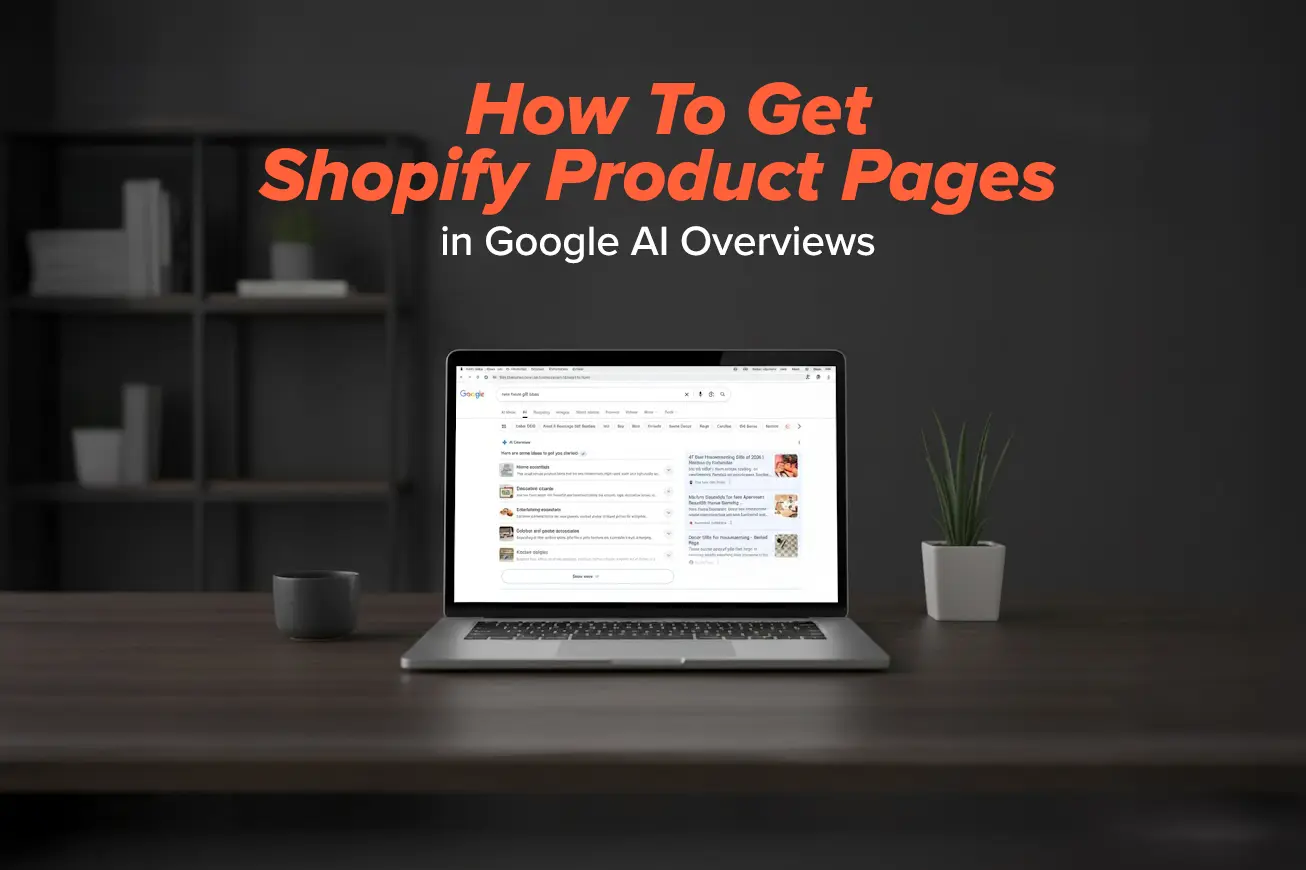
How to Get Shopify Product Pages in Google AI Overviews

by Abdullah Habib
10 min read

Store owners in Shopify have noticed something unsettling. Traffic patterns are changing. Pages that used to rank well are getting fewer clicks, even though rankings don’t show any significant change. So what’s causing this change? The reason is sitting right at the top of Google’s results: AI Overviews.

The most common question among sellers on Shopify is: “Will my product pages still show up?”. Or worse: “Is Google taking traffic away from stores like mine?” These concerns are real, and they are showing up in analytics dashboards everywhere. Shopify store owners are scared about losing business due to lack of visibility, or at least not enough visibility in places that matter.

But AI Overviews are not just a threat. For Shopify store owners that understand how AI overviews work, they can be a strong source of new visibility. Google’s AI is not picking pages at random. It pulls from pages that answer questions clearly, give useful product details, and show signs of trust.
Let us take you through what Google AI Overviews are, how they can benefit Shopify sellers, how Google selects sources, and what practical steps help your pages stay visible on AI search engines and engage. If you are trying to figure out how to get Shopify product pages in Google AI Overviews, this guide will give you a clear path forward.

What Are Google AI Overviews?

Google AI Overviews are information summaries, or answers to your search query, created entirely by AI. They feature at the top of some search results. Instead of listing only blue links, Google extracts relevant data from multiple trusted pages and summarizes all that into a decent size answer that gives you a snapshot along with links to the sources.

For example, if someone searches “best running shoes for flat feet,” Google may show an AI-written response that lists features, buying tips, and product types. Links to the sources appear below that answer.

These summaries are built from content Google already trusts based on several parameters. That is why Shopify product pages that have clear information in an easy-to-read format have a chance to be included.

How AI Overviews Impact Ecommerce

For any kind of e-commerce store, AI Overviews affect how buyers scan results. To begin with, organic listings are pushed lower on the search results page, and instead of links alone, people are getting actual answers. This means that being featured inside an AI Overview often brings more attention than ranking first the old way.

Stores with helpful product pages that share information in bullets, clean structure, and strong content can get extra exposure. Light pages, or pages with very less information, on the other hand, often get overlooked by AI engines.

Why Shopify Store Owners Care

Getting their content, and the accompanying link, included in the AI Overviews could mean more clicks and a much stronger buyer trust. For searches like “affordable cotton shirts” or “best shoes for daily walking,” Shopify product pages can get placed in the AI answer. However, they need to meet clear standards.

How Google Selects Sources for AI Overviews

Let’s get one fact clear. Google’s AI does not guess or randomly select sources of information for its AI overviews. In practice, pages that already earn strong visibility (and are easy to parse) are more likely to be used as supporting links..

First, relevance matters most. The content on the page must closely match the search question. A product page titled clearly and written for a specific buyer need performs better than a vague catalog listing.

Second, depth of content matters. Pages with real product details, materials, sizing help, pros and cons, and useful tips or FAQs give Google more material to work with.

Third, structured data helps Google read and understand your page. Schema markup tells Google what is a product, what is a review, and what is an offer.

Fourth, build trust with third-party reviews and comments. Customer reviews, return policies, author notes, and business details show that the page is genuine and reliable.

Fifth, intent matching is critical. Google favors pages that answer what the shopper actually wants to know.

Here’s an example. Two Shopify stores sell exactly the same kind of backpack. One page has a short paragraph copied from the supplier. The other explains weight, use cases, comfort, compares it to similar bags, and answers common questions. The second page is far more likely to be pulled into AI Overviews.

How to Improve my SEO on Shopify

To get included in AI overviews, Shopify pages need to meet certain basic standards. Here goes:

  • Clear and accurate product descriptions come first. Google avoids pages that feel empty or unclear.
  • Schema markup is essential. Product, Offers, and Reviews schema help AI systems read your page faster and with fewer mistakes.
  • Images must be sharp, relevant, and properly labeled. Blurry or missing images reduce trust.
  • Well-planned FAQ sections that answer buyer questions in detail and directly. These sections often match how people phrase AI-triggered searches.
  • Unique content is essential. Pages that only repeat supplier text usually fail.
  • Page speed and mobile friendliness also matter. Slow or cluttered pages are skipped.

Traditional SEO vs AI Overview Requirements

Traditional SEO AI Overview Focus
Keywords Clear answers
Backlinks Trust signals
Rankings Usefulness
Short descriptions Deep product details

How to boost AI search discovery for Shopify products

Improve Product Descriptions

Shopify store owners must build product pages that read like a helpful store associate, not a basic product listing or a catalog entry. They should include features, buyer benefits, materials, size guides, and care instructions. Additional features like comparison charts with similar products help shoppers choose, and are favored by AI engines.

This also supports how to improve my SEO on Shopify, since Google rewards pages that solve buyer doubts.

Add On-Page FAQs Based on Real Queries

Use Search Console to find questions people already ask. Add simple Q&A blocks under your product description. Write in plain language and answer the question directly, just like in a face-to-face conversation with a real shopper.

Implement Complete Product Schema

Use Product, SKU, Offers, AggregateRating, Review, and BreadcrumbList schema. Many Shopify themes support this, but it often needs checking.

Optimize Meta Titles and H1s for Intent

Phrases like “best,” “affordable,” or “for beginners” match common AI-triggered searches. Use them naturally in titles and headers.

Add Unique Insights

Google prefers pages with original input. Fit tips, usage advice, short demo videos, or care notes add value that copied text cannot.

Add Merchant Center / rich product info

not mandatory for AI Overviews, but for ecommerce visibility overall, consistent product data (price, availability, shipping/returns) is a major trust signal.

Content Strategies to Rank in AI Overviews

Topic Clustering Around Product Niches

Support product pages with blog posts, buying guides, and comparisons. This helps Google connect your store to a specific topic.

Write for Conversational Queries

Many AI Overviews come from long questions. Answer them clearly within your content.

This approach boosts AI search & discovery Shopify efforts by matching how people search today.

Use High-Quality, Multi-Angle Images

Images help Google understand products better. Show multiple angles, close-ups, and real use cases.

Build Internal Linking

Link from blogs and category pages to your products. This shows relevance and importance.

Encourage More Reviews

Reviews explain fit, quality, and durability in real words. AI systems use this data heavily.

Technical SEO and Performance Best Practices

  • Fast pages matter more than ever. Web vitals such as loading speed and layout stability affect eligibility.
  • Compress images and use lazy loading to reduce load time.
    Keep URLs short and readable.
  • Watch out for heavy Shopify themes. Too many apps slow pages down and hurt visibility.
  • Mobile experience matters most. Many AI Overview searches happen on phones, so test your pages carefully.

Common Mistakes That Hurt AI Overview Visibility

Many stores hurt their chances without realizing it. An apparel store lost AI Overview placement after switching to a visually heavy theme loaded with scripts. Page speed dropped, and impressions followed. Here’s what to avoid:

  • Sparse product details and page content fail quickly.
  • Simply copy-pasting supplier text almost never works.
  • Missing schema markup confuses Google.
  • No reviews means low trust.
  • Slow mobile pages push AI systems away.
  • Keyword stuffing looks forced and hurts clarity.
  • Skipping FAQs leaves questions unanswered.
  • Poor internal links hide important pages.

How to Track Whether You’re Appearing in AI Overviews

Google Search Console does record clicks, impressions, and position for links shown inside AI Overviews, but it’s mixed into your normal Search performance data. That means you’ll see the impact in query/page trends (impressions up, CTR shifts, longer-tail growth), but you typically can’t filter the report to “AI Overview only…yet.

  • You can still check manually by searching your main queries.
  • Look for growth in impressions for longer queries in Search Console.
  • Watch click changes in analytics during AI rollout periods.
  • Some third-party tools are starting to show AI Overview data, but most signals are indirect for now.

An Action Plan for Shopify Stores

Week 1: Rewrite product descriptions and add FAQs

Week 2: Add full schema and optimize images

Week 3: Improve internal links and publish support content

Week 4: Review performance and adjust based on data

Create high quality and useful content, structured data, relevance, and trust with users. AI Overviews will keep changing, but these basics stay steady.

Clixlogix has worked closely with several Shopify stores facing AI-driven search changes, helping them adapt without chasing trends.

Read: How Ecommerce Marketing Automation Can Make Your Holiday Sales Smoother

Wrapping Up

Google AI Overviews are not a replacement for SEO. They reward the same thing Google has always wanted, i.e. helpful content that answers real user questions.

That’s why, Shopify stores with clear product descriptions, honest reviews, and a well-defined user-friendly structure stand the best chance. If your product pages explain things better than anyone else, Google’s AI is far more likely to feature them.

That is a foolproof answer to how to get Shopify product pages in Google AI Overviews. Build pages that buyers trust and understand.


Written By

Sr. Digital Marketing Manager

Abdullah Habib is a digital marketing specialist with expertise in SEO, content marketing, social media, digital advertising, and data analysis. He excels in creating strategic, data-driven campaigns that boost organic traffic, enhance brand visibility, and drive growth for clients.

Don't forget to share this post!

Related Blog

Related Articles

Building an N8N-powered AI Receptionist That Works...

IntroductionMissed calls are a recurring issue for many service businesses. In restaurants, it means lost reservations. In law firms, it means missed clients. In healthcare,...

AI in Auto Insurance Agencies: 10 Practical...

Auto insurance agencies handle a steady flow of work. Emails arrive throughout the day. Calls are returned. Documents are reviewed and filed. Renewals move in...

Cost Optimization Guide for n8n AI Workflows...

If you work long enough with n8n and AI, you eventually get that phone call, the one where a client sounds both confused and slightly...

Integrate Zoho CRM with ChatGPT (OpenAI), Architecture...

A systems driven deep dive for business and technical leaders building AI into Zoho. The Integration Everyone Thinks Is Simple, Until They Try It If...

View All
About
  • Company
  • Our Team
  • How We Work
  • Partner With Clixlogix
  • Security & Compliance
  • Mission Vision & Values
  • Culture and Diversity
  • Success Stories
  • Industries
  • Solutions
  • We’re Hiring
  • Contact
Services
  • Mobile App Development
  • Web Development
  • Low Code Development
  • We Design
  • SEO
  • Online Advertising
  • Social Media Management
  • More
Solutions
  • Automotive & Mobility
  • Information Technology & SaaS
  • Healthcare & Life Sciences
  • Telecommunications
  • Media, Entertainment & Sports
  • Consumer Services
  • And More…
Resources
  • Blog
  • Privacy Policy
  • Terms Of Services
  • Sitemap
  • FAQ
  • Refund Policy
  • Delivery Policy
  • Disclaimer
Follow Us
  • 12,272 Likes
  • 2,831 Followers
  • 4.1 Rated on Google
  • 22,526 Followers
  •   4.1 Rated on Clutch

Copyright © 2025. Made with by ClixLogix.