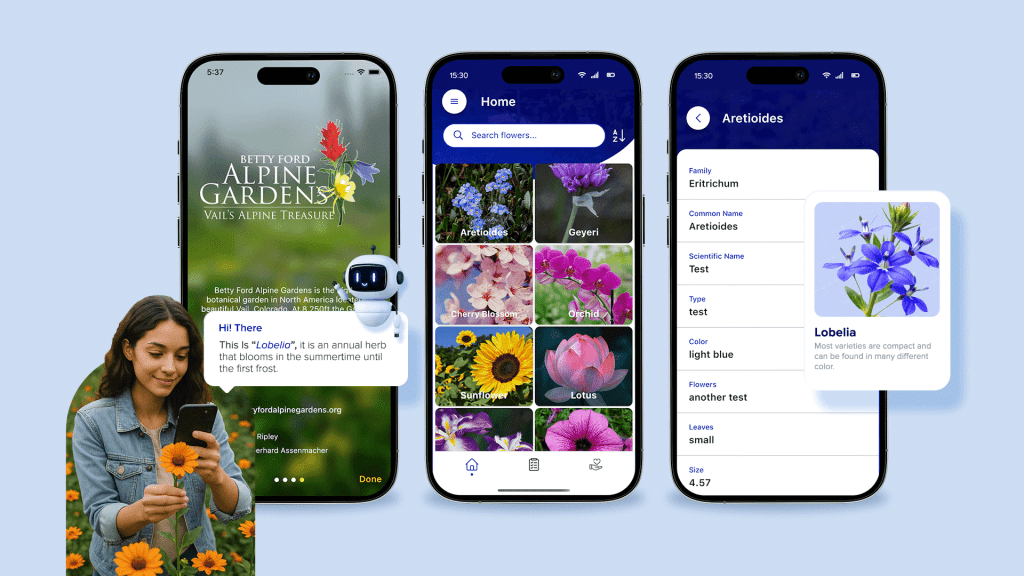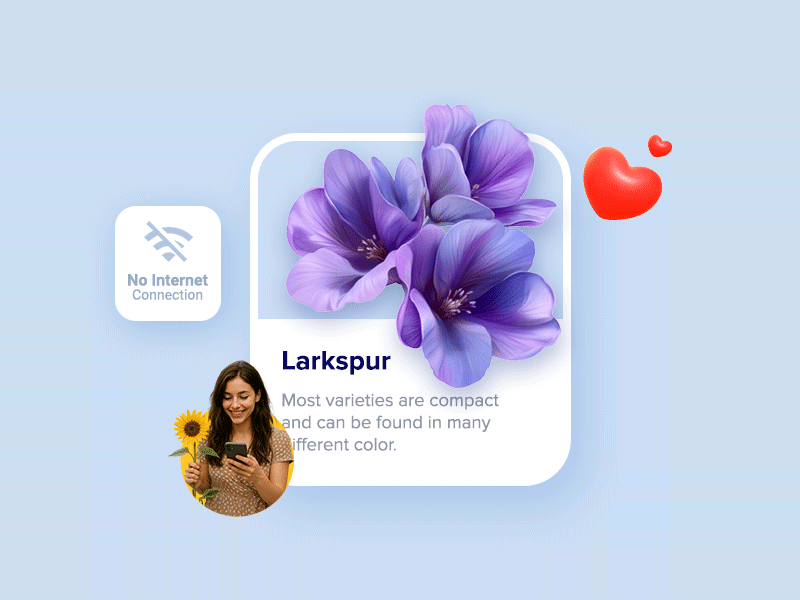
Visitors at Betty Ford Alpine Gardens in Colorado were walking through the winding trails surrounded by rare alpine plants. And they were left with questions like: “What was that stunning flower I just saw?” or “What is that unique plant called?” That’s why their field photographer approached us to create an app that would identify different plants easily. We built a clever, AI-powered mobile guide that could identify plants instantly, even without the internet.
About the Client
Betty Ford Alpine Gardens is a world-famous botanical institution nestled in the high altitudes of Colorado. With thousands of annual visitors, the garden wanted to raise the bar for education and engagement by bringing vivid plant photography and fascinating alpine flora facts straight to guests’ mobile screens.
Business Challenge
Alpine Gardens needed an app that made offline access effortless but didn’t skimp on media quality. We had to support hundreds of high-res plant images without turning the app into a storage hog. Remote mountain trails meant no Wi-Fi or 5G. Our offline-first approach meant blazing-fast search and filtering, whether visitors were in the city or miles out on a trail. Every pixel mattered. The app had to reflect the garden’s prestigious brand and look visually stunning. High-res plant photos are gorgeous but bulky. How do you fit hundreds of them without clogging devices? And thinking ahead, we built for future growth, ready for features like AR-based plant ID and audio tours.
Solution
Our team at Clixlogix went all in, crafting a native app for iOS and Android packed with smart offline capabilities and a beautifully immersive UI. The app was designed to feel as natural as the gardens themselves.
Core Features
Visitors could pre-download expertly curated plant profiles
Images and descriptions were stored locally using SQLite, so exploring was always instant.
We built an automated pipeline to compress images without losing detail
File sizes were shaved by 60%, plus adaptive loading made every photo look sharp no matter the device.
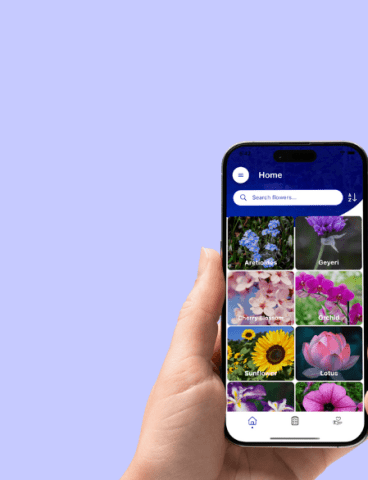
Users could hunt for plants by botanical name, keyword, or category tag, with quick seasonal browsing and plant type filters making discovery a breeze.
We focused intensely on design: everything from the typography to the color palette and layout matched the Alpine Gardens brand
Easy navigation made single-handed use on trails seamless.
The app’s modular core meant adding future features
AR overlays, audio guides, CMS integration could now be done quickly and cleanly.
Results
Users loved it. Plant profiles and gorgeous images were always available, even in zero-connectivity zones.
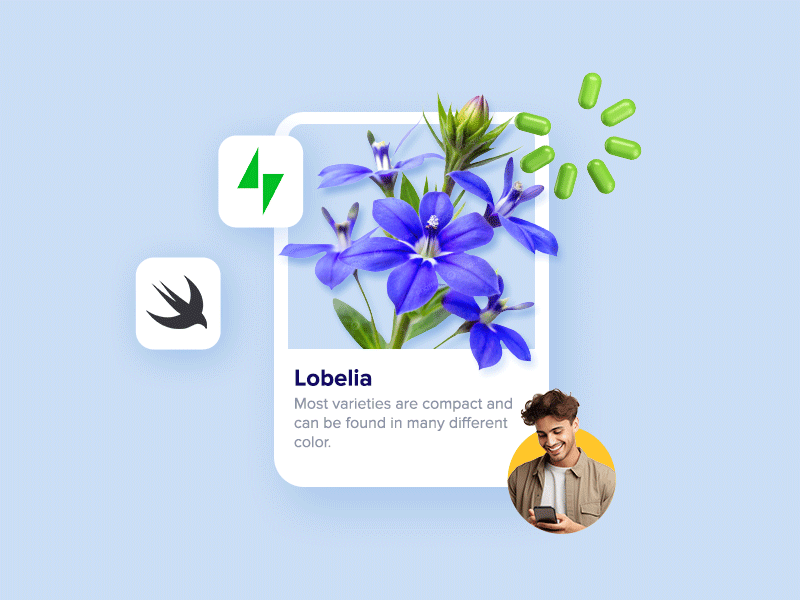
After the upgrade to SwiftUI and Jetpack Compose, image loading times dropped by 45%, making everything feel snappier than ever.
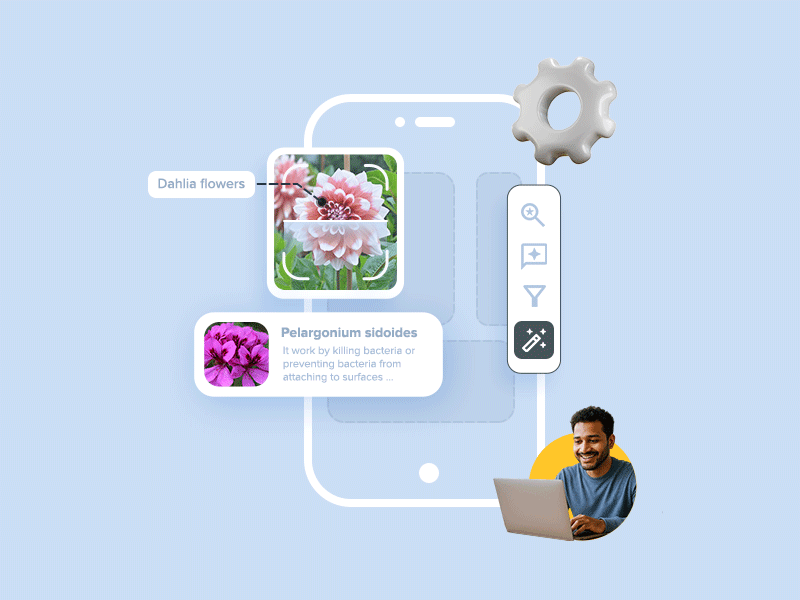
The architecture made adding new features straightforward, so the app can evolve without being rebuilt from scratch.
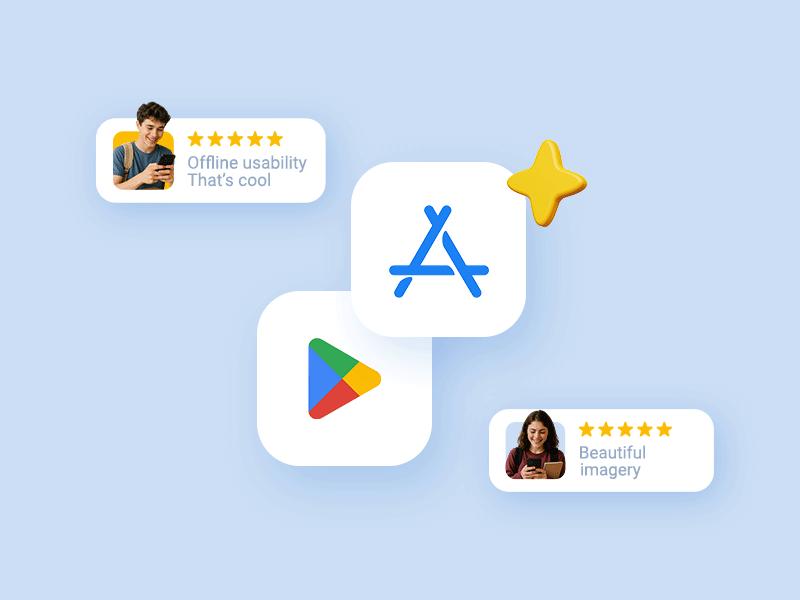
The best proof? Consistently rave reviews in the App Store and Google Play. Users called out the offline usability and beautiful imagery as top reasons for their five-star ratings.
Tech Stack
Frontend (Native Mobile): iOS: Swift + SwiftUI (upgraded from legacy Objective-C); Android: Kotlin + Jetpack Compose
Backend: Node.js, Express.js
Database: PostgreSQL, SQLite (on-device)
Cloud: AWS S3 for media hosting, CloudFront CDN for initial content delivery
Offline Storage: SQLite with background sync service
Search Engine: SQLite FTS (Full Text Search) for offline queries