Google’s biggest Maps overhaul in over a decade just changed how local businesses get discovered. Here is what local SEO professionals and business owners need to act on right now.
TL;DR: Google launched Ask Maps and Immersive Navigation on March 12, 2026. Ask Maps replaces keyword based local discovery with conversational, AI powered recommendations. Immersive Navigation adds arrival level guidance that depends on the richness of your Google Business Profile. Both changes raise the bar on GBP completeness, review quality, and attribute accuracy.
Key Takeaways
1. Ask Maps uses Gemini to answer complex, personalized location queries. Thin GBP profiles are functionally invisible to it.
2. GBP attributes are now discovery inputs, not optional fields. Hours, amenities, accessibility, and service options feed AI generated answers directly.
3. Review specificity matters more than review volume. A review describing seating, wait time, and atmosphere is more useful to Ask Maps than five generic five star ratings.
4. Immersive Navigation surfaces parking and entrance details at the point of arrival. Businesses with accurate, photo rich profiles benefit most.
5. Booking integrations capture intent at the moment of AI powered discovery, before users visit your website.
We have been watching Google evolve Maps for years. Feature additions come and go. This one is different.
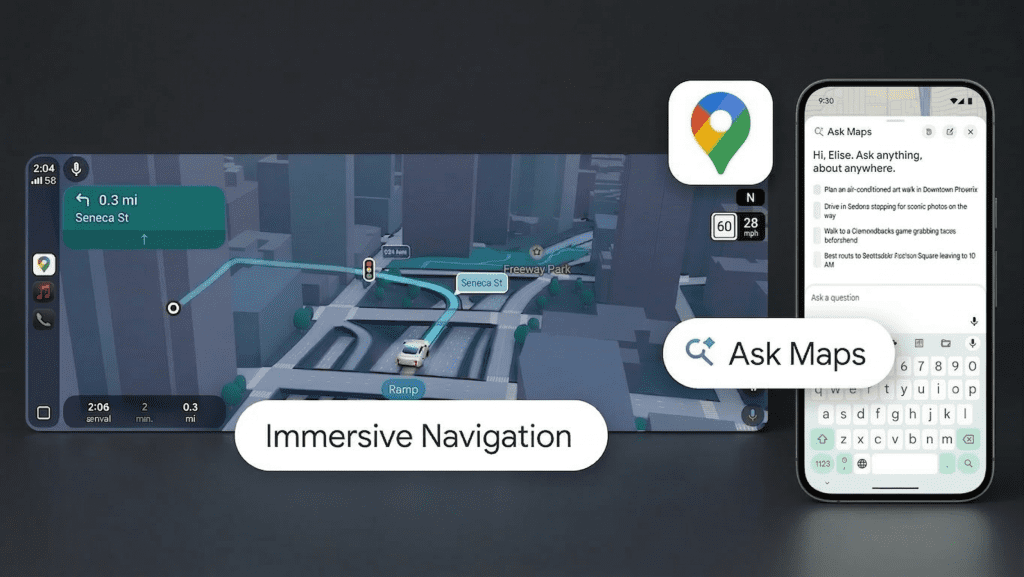
On March 12, 2026, Google announced two things, Ask Maps, a conversational AI discovery experience powered by Gemini, and Immersive Navigation, the platform’s most significant driving interface redesign in more than a decade. Together, they represent a structural shift in how consumers find and navigate to local businesses, and that means a structural shift in what local SEO work needs to prioritize.
This is not about chasing a new algorithm update. It is about understanding that the discovery model has changed, and making sure your business is built to be found within it.
Ask Maps, How Gemini Is Changing Local Discovery
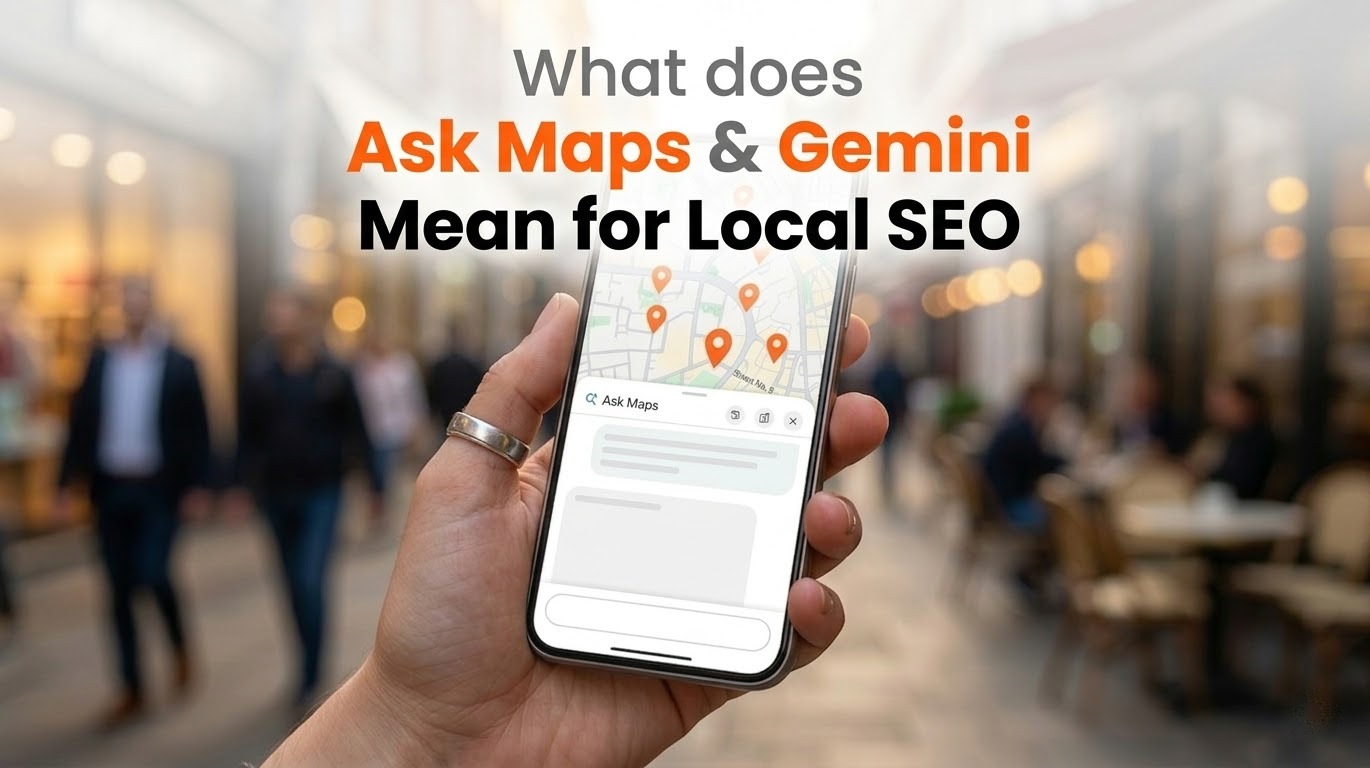
Ask Maps is a new conversational experience inside Google Maps, powered by Gemini models, that lets users ask complex, contextual questions and receive a personalized answer alongside a customized map. Users can now ask things like “Is there a public tennis court with lights on that I can play at tonight?” or “My phone is dying, where can I charge it without waiting in a long queue for coffee?” and get a direct, actionable result.
This is a fundamentally different kind of search behavior from what local SEO has traditionally been built around.
Historically, local discovery on Maps showed predictability – a user searched a keyword, a local pack surfaced, and a business either appeared or did not. Ask Maps breaks that model. Discovery is now conversational, contextual, and deeply personalized. Google has confirmed that Ask Maps draws on data from over 300 million places and synthesizes contributions from more than 500 million community contributors to build its answers.
The Personalization Layer Is the Critical Detail
Ask Maps tailors results based on a user’s prior search and save history inside Maps. A user asking for “cozy dinner spots with a table for four at 7pm” will see results filtered through their personal preferences, including dietary requirements revealed through prior behavior on the platform. A user who regularly saves vegan restaurants will get vegan filtered results for that query, without specifying it.
This means the traditional goal of ranking for a keyword is giving way to a different objective: being the correct answer to a question you may never see in advance. Local businesses whose GBP profiles are rich, accurate, and thoroughly reviewed give Gemini the raw material it needs to match a multidimensional conversational query. Businesses with sparse profiles, outdated attributes, or thin review content have no material to contribute to that matching process.
Pro Tip – Ask Maps is rolling out now in the US and India on Android and iOS, with desktop coming soon. Start auditing your GBP attribute completeness today, before the rollout reaches full coverage.
What Ask Maps Means for Your Local SEO Work
The implications are specific, not abstract. Here is where attention should go.
GBP attributes are now discovery inputs. Ask Maps needs raw data to construct a personalized answer. Amenities, accessibility features, operating hours, parking availability, service options, and payment types are all fields that Ask Maps can use to match a nuanced conversational query. An incomplete attribute section is a closed door to that matching process.
Review specificity beats review volume. When a user asks for “insider tips from real people,” Ask Maps draws on community contributed content and synthesizes it through Gemini. A review that describes seating, atmosphere, wait times, and specific dishes contributes meaningfully to that synthesis. A review that says only “great coffee” contributes almost nothing. Encouraging detailed, specific reviews from customers is now a legitimate local SEO lever.
Photo volume and currency are ranking inputs. Ask Maps surfaces visual, contextual information about places. Businesses with rich, current photo libraries provide more signal for Gemini to use when building a personalized map for a searcher. Interior shots, product photos, accessibility features, and parking areas all contribute.
Booking integrations capture intent at discovery. Ask Maps allows users to book reservations and take direct actions from the conversational result, before they ever visit a website. Businesses with Google’s booking integrations active are positioned to convert intent at the point of recommendation rather than requiring an extra journey to a website.
Immersive Navigation, Why the Drive to Your Door Now Affects Your Rankings
Immersive Navigation is Google’s redesigned driving experience. It uses Gemini models alongside Street View imagery and aerial photography to render a vivid 3D view of the driving environment, including buildings, overpasses, lanes, crosswalks, and traffic signals. Voice guidance has been updated to sound conversational. Alternate route tradeoffs are now surfaced explicitly. And the final stretch of any drive includes real time guidance on parking, building entrances, and the correct side of the street to approach from.
On its face, this reads as a navigation product update. The local SEO implications run deeper.